Brown versus green treatment pigments
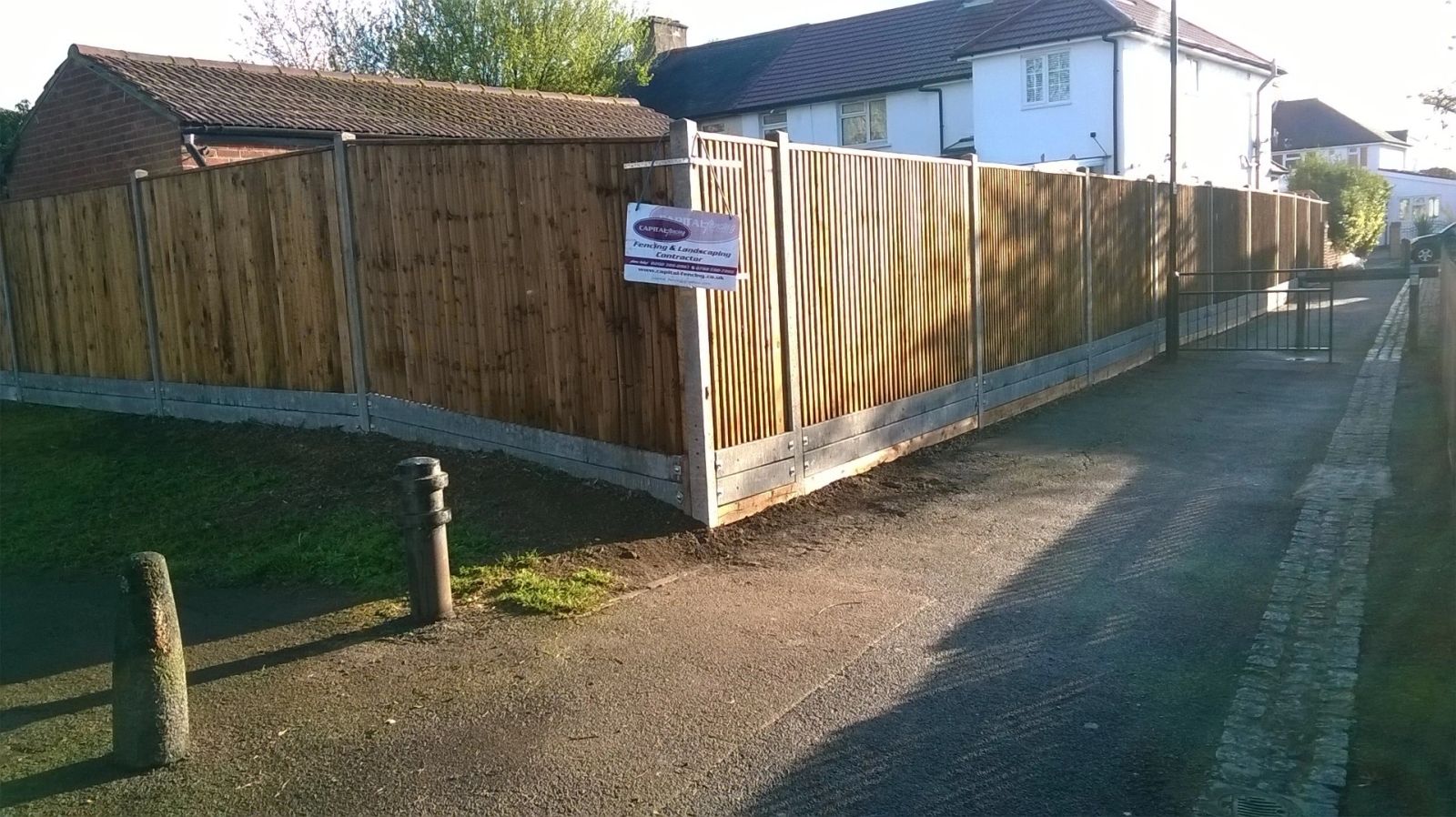
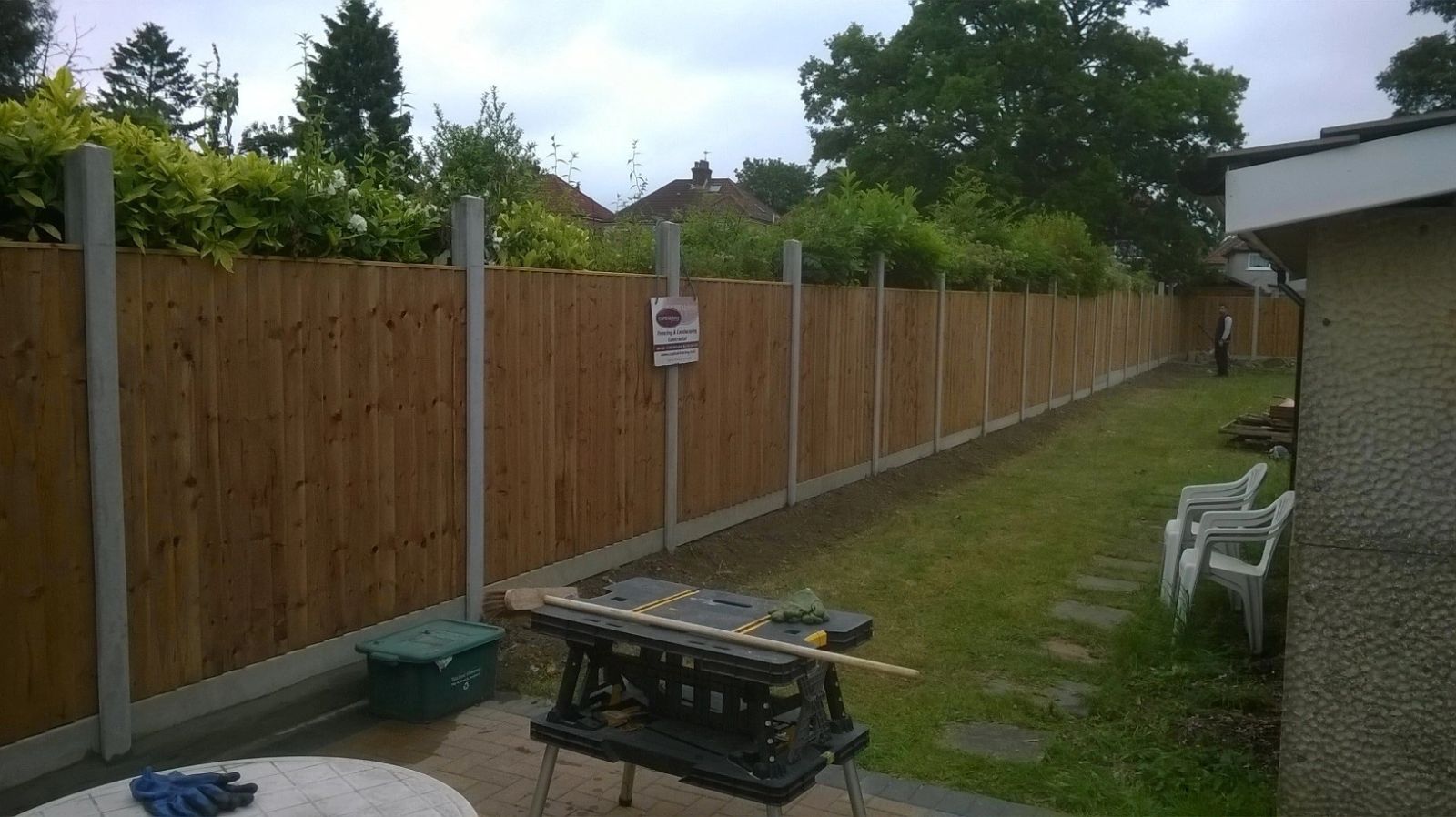
The green or brown tint in pressure-treated softwood comes from a pigment or dye added to the preservative solution during treatment, largely as a visual indicator that the timber has been through the process rather than for any protective purpose.
Green pigments were historically more common but have become less fashionable, with brown or 'tanalised brown' now the more usual finish for fencing timber sold in the UK.
Because the colour is only pigment-deep in places, freshly cut ends and any surface planing during fitting will expose the paler, untreated-looking wood beneath, which is another reason to treat cut ends separately.
Rendered masonry as an acoustic option
A rendered blockwork wall offers high mass and a continuous, joint-free face once rendered, which gives strong acoustic performance without relying on timber joints staying sealed over time.
The trade-off is a masonry wall's foundation and planning requirements, which are more involved than a timber fence on posts, and its appearance reads as a wall rather than a garden fence, which doesn't suit every setting.
Getting pre-application planning advice for boundary work
Most local planning authorities offer a paid pre-application advice service, which can give a reasonably reliable steer on whether a specific boundary proposal needs formal permission before committing to it.
This is particularly useful for larger, taller, or unusually positioned boundary structures where the answer isn't obviously covered by the standard permitted development rules.
While it isn't free, the cost is generally modest compared with building something that later needs to be altered or removed following enforcement action.
Planting distances from a new fence line
Shrubs and hedging planted hard against a new fence eventually push against the panel faces as they mature, trapping moisture against the timber and making later maintenance or panel replacement far harder without disturbing established roots.
A gap of a few hundred millimetres, sized to the expected mature spread of the species chosen, keeps airflow behind the fence and leaves room to work if a panel needs replacing years later.
This is worth raising at the design stage, since it is far easier to plan spacing before planting than to relocate mature shrubs once they have grown into the fence line.
Realistic panel replacement frequency on an exposed plot
A standard timber panel on a sheltered suburban plot might reasonably be expected to last a decade or more before replacement; the same panel on a genuinely exposed, wind-loaded boundary can fail in structural terms — cracked rails, a bowed or blown-out panel — well inside that timeframe regardless of treatment quality.
Setting client expectations around this at quote stage, rather than after an early failure, avoids the impression that a product or installation was faulty when the real cause is unmanaged exposure.
Where budget allows, specifying for the exposure from the outset is cheaper over the fence's life than replacing a standard panel repeatedly on the same exposed run.
Salt and de-icing near a pavement
A front boundary fence close to a pavement or road gritted in winter is exposed to salt spray and run-off that a rear-garden fence never sees, and that salt accelerates corrosion in untreated steel fixings and speeds up timber degradation at ground level.
Galvanised or stainless fixings resist this better than standard bright steel, and are worth specifying as standard on any boundary within a few metres of a regularly gritted surface.
Salt-laden ground also tends to stay damp for longer after a thaw, extending the period a post base is sitting in wet conditions each winter.
Wind loading on exposed runs
A fence on an open, elevated or unsheltered boundary — a plateau, a field edge, or a long unbroken run with no buildings breaking the wind — takes a real structural load that a sheltered suburban garden never sees.
Standard 75x75mm posts and full-height solid panels are the combination most likely to fail here; heavier posts, shorter bays between them, and a slatted or louvred profile that lets some wind through all reduce the load rather than fighting it head-on.
It's a specification decision made at quote stage, not something to retrofit after the first panel goes over in a storm.
Timber grading marks
Structural and treated timber is typically stamped with a grading mark showing the strength class, treatment use class, and sometimes the treatment company's code, which is the practical way to verify what was actually supplied rather than taking a description on trust.
For fencing, the marks that matter most day to day are the use class (confirming it's rated for the ground or above-ground exposure intended) and a visible batch or treatment date, useful if a defect needs tracing back to a supplier.
Unmarked or unstamped 'treated' timber from an unclear source is harder to verify and is one of the more common shortcuts on cut-price quotes.
Hedgehog gaps and protected species awareness
A small gap at the base of a fence panel, often around 13cm square, lets hedgehogs and other small wildlife move between gardens, which is increasingly encouraged as gardens become more enclosed.
Separately, some sites may have protected species such as bats, nesting birds or great crested newts present, and disturbing them during certain works can be a legal matter regardless of boundary ownership.
Where there's any reason to suspect protected species on a site, checking with an ecologist or the local authority before groundworks is the sensible route rather than assuming it won't apply.