Capping rails and finials
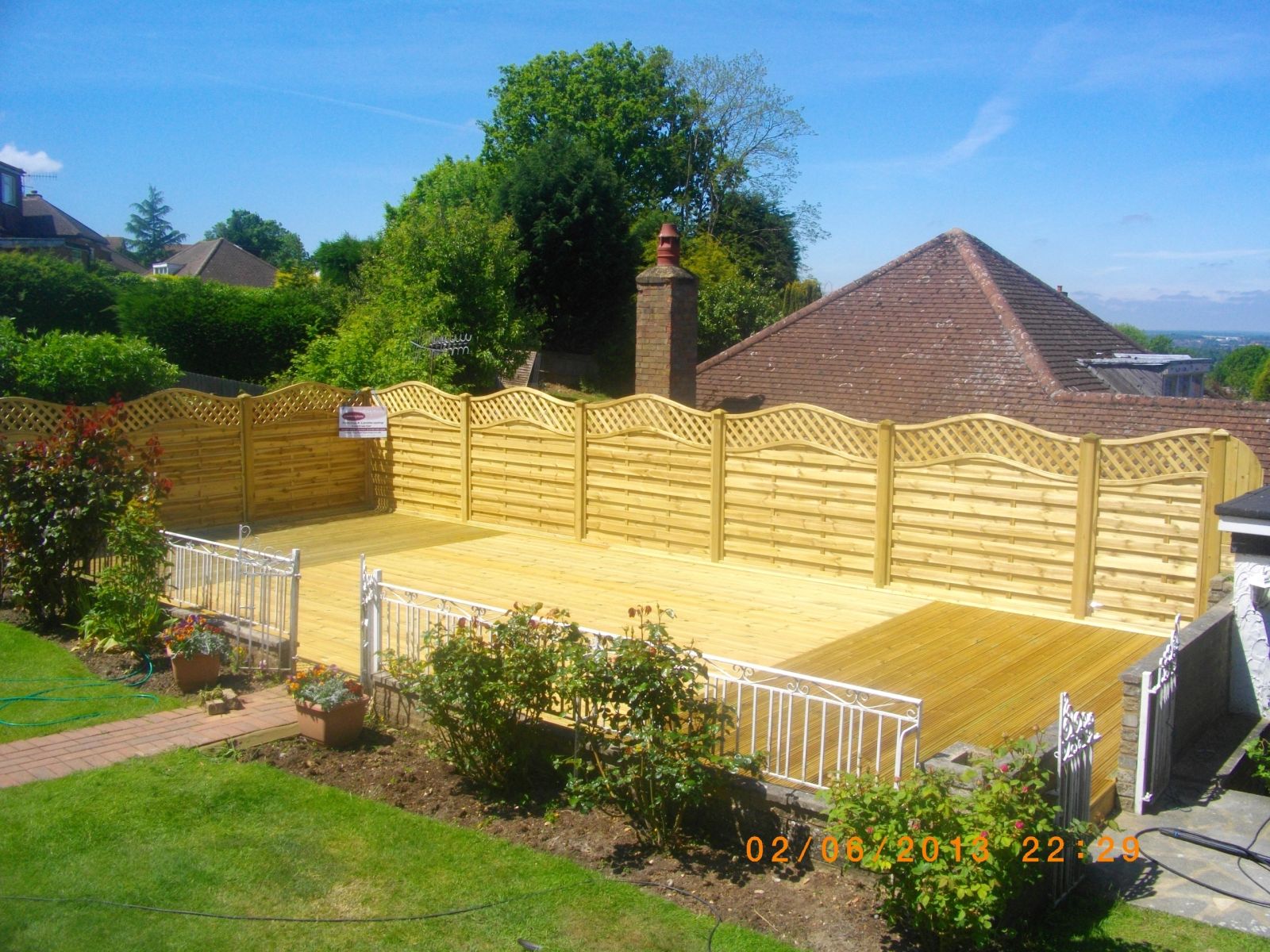
A capping rail along the top of a fence run does more than tidy the appearance — it sheds rainwater off the end grain of vertical boards, which is otherwise the fastest point for water to soak in and start rot.
Decorative finials on posts are largely an aesthetic choice, but a domed or sloped post cap still serves the same water-shedding purpose as a capping rail along a panel top.
Skipping a capping rail to save cost on a budget job is one of the more common reasons a fence's boards fail from the top down within a few years, even when the rest of the construction is sound.
Post-mix curing times
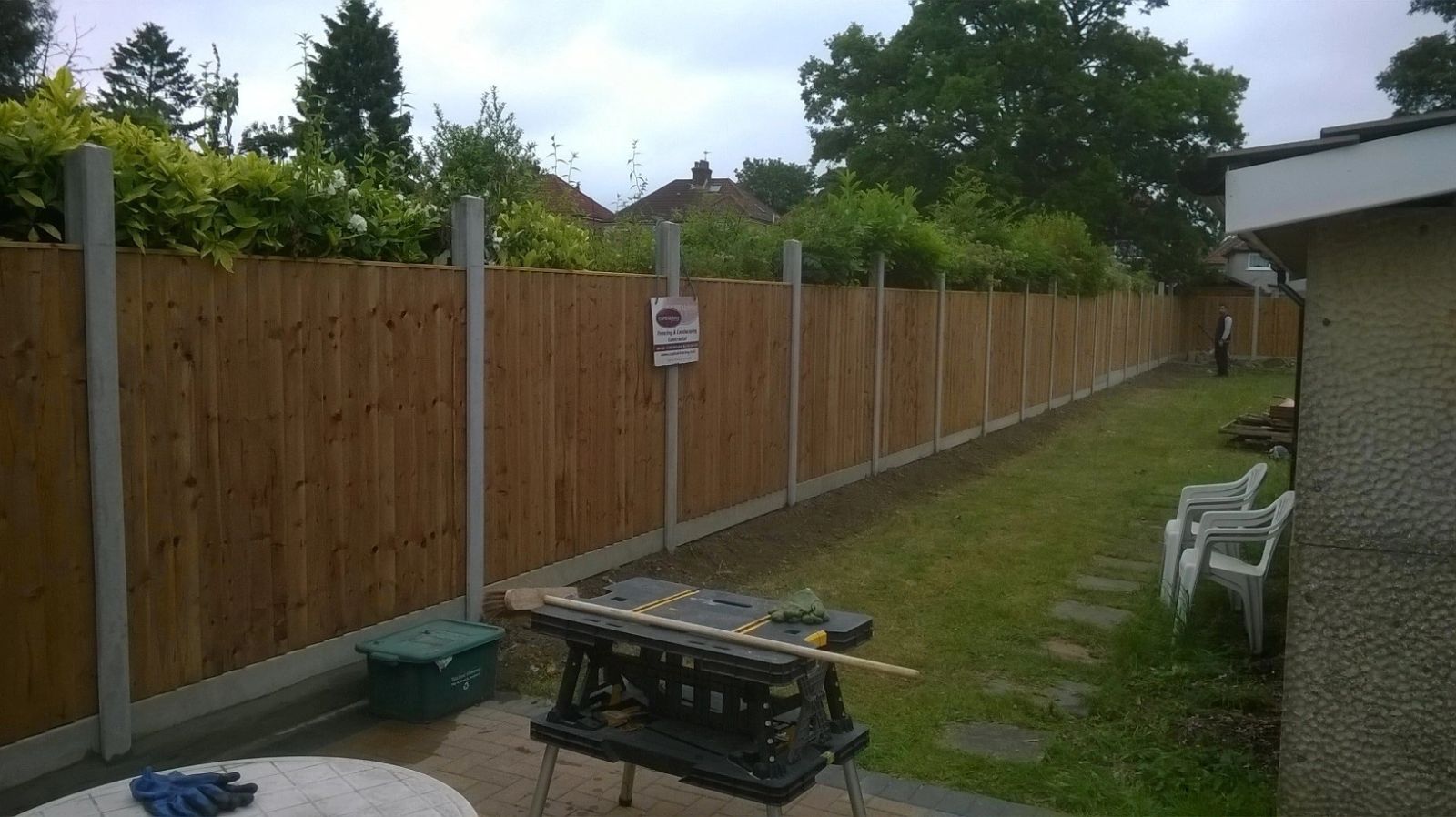
Fast-setting post-mix concrete typically reaches a workable set within 10-30 minutes, holding a post upright without props, but its full design strength isn't reached for several days afterwards, and lateral loads applied too soon can shift the post before it's cured.
Standard site-mixed concrete cures more slowly than fast-setting post-mix but generally achieves a denser, less porous final material, which some contractors prefer for structural gate posts subject to repeated racking loads.
Cold weather slows the curing chemistry considerably in both cases, and concrete placed close to freezing can be seriously weakened if it freezes before curing, which is why exposed posts set in winter often need extra time before load is applied.
Douglas fir for structural fencing timber
Douglas fir is a stronger, stiffer softwood than typical whitewood or redwood, with a pronounced grain pattern and moderate natural durability in its heartwood, making it a common choice for structural posts and gate framing rather than boarding.
Its resin content is generally lower than pine, which reduces the risk of resin bleed showing through a painted or stained finish.
Because of its strength-to-weight ratio it's often specified for longer unsupported spans, such as wide gate frames, where a lighter section still needs to resist twisting under its own weight.
Community-wide hedgehog gap linking across multiple boundaries
A single hedgehog gap in one fence achieves little if the neighbouring boundaries along the same row of gardens remain solid, since the animal still can't move beyond the first connected garden.
Some local wildlife groups now coordinate gap positions across a terrace or street so that a continuous corridor is created through several gardens rather than isolated single gaps.
Where a client is enthusiastic about this, it's worth suggesting they mention it to neighbours early, since agreeing gap positions in advance avoids gaps that don't line up once each fence is finished.
North-facing boundaries and slower drying
A north-facing boundary receives little or no direct sun through autumn and winter, so rainfall sits on the timber and in the surrounding ground noticeably longer than on a south-facing equivalent.
This affects concrete curing time as well as timber drying — a post base poured on a north-facing run in cold weather takes longer to reach working strength and shouldn't be loaded or backfilled early just because a south-facing base nearby has already set.
Over the life of the fence, the practical effect is usually a shorter repaint or restain interval on the shaded side than the rest of the same boundary.
Checking post plumb tolerance after installation
A post that's slightly off plumb when first set can be adjusted while the concrete is still workable, but once cured the only fix is breaking out and resetting it, so plumb is checked with a spirit level in two directions before the pour rather than assumed from a quick visual check.
A run of posts each slightly off plumb in the same direction is usually a sign of a systematic setting-out error rather than individual mistakes, and is worth catching after the first two or three posts rather than the whole run.
Boundary treatments for flats and maisonettes
Shared amenity gardens attached to flats or maisonettes usually have boundary decisions made collectively through a management company or freeholder rather than by an individual leaseholder, which changes who needs to sign off a fence or gate change.
Lease terms sometimes specify who's responsible for maintaining which boundary, and altering a shared boundary without checking the lease is a common source of dispute between leaseholders.
Where several flats share a single rear garden, dividing it with new fencing usually needs agreement from all affected leaseholders, not just the person requesting the work.
Post caps and end-grain protection
A timber post's end grain sits at the top, cut across the fibres, and that exposed grain draws in water far faster than the treated face of the post, which is why an unprotected post top is often the first place rot takes hold.
A weathered or pyramid-cut post cap sheds water off the end grain instead of letting it pool, and a cap that oversails the post slightly also keeps water from tracking down the sides at the joint.
It's a small, low-cost detail that's frequently skipped on budget jobs, and its absence is a reliable way to predict which posts in an older fence will need replacing first.
Mineral-wool cassette panels
A cassette-style acoustic panel encloses a mineral-wool core within a rigid outer frame, giving a factory-sealed unit that avoids the on-site infill and drying-out risks of a built-up double-skin timber panel.
Cassette panels are typically fixed between posts with a captive rebate, and a damaged unit can usually be lifted out and replaced individually rather than requiring the whole run to be rebuilt.