Secure by Design principles for boundaries
Secure by Design is a police-backed set of principles covering layout, lighting, sightlines and boundary treatment that developments are assessed against, and fencing specification is one part of meeting it.
Applying the principles generally means avoiding blind corners, keeping sightlines open where surveillance matters, and using proportionate rather than maximum height and solidity on each boundary.
Boundary fencing on an allotment site
An allotment site boundary is often lower-spec than a commercial compound but still needs to deter casual theft of tools, produce and sheds, so a stock fence or low chain-link topped with a single strand of barbed wire is a common, proportionate choice.
Individual plot gates within the site are usually simpler again, since the main perimeter is doing the primary security work and plot-level fencing is more about defining boundaries between tenants.
Letterbox and parcel provision in a secure gate
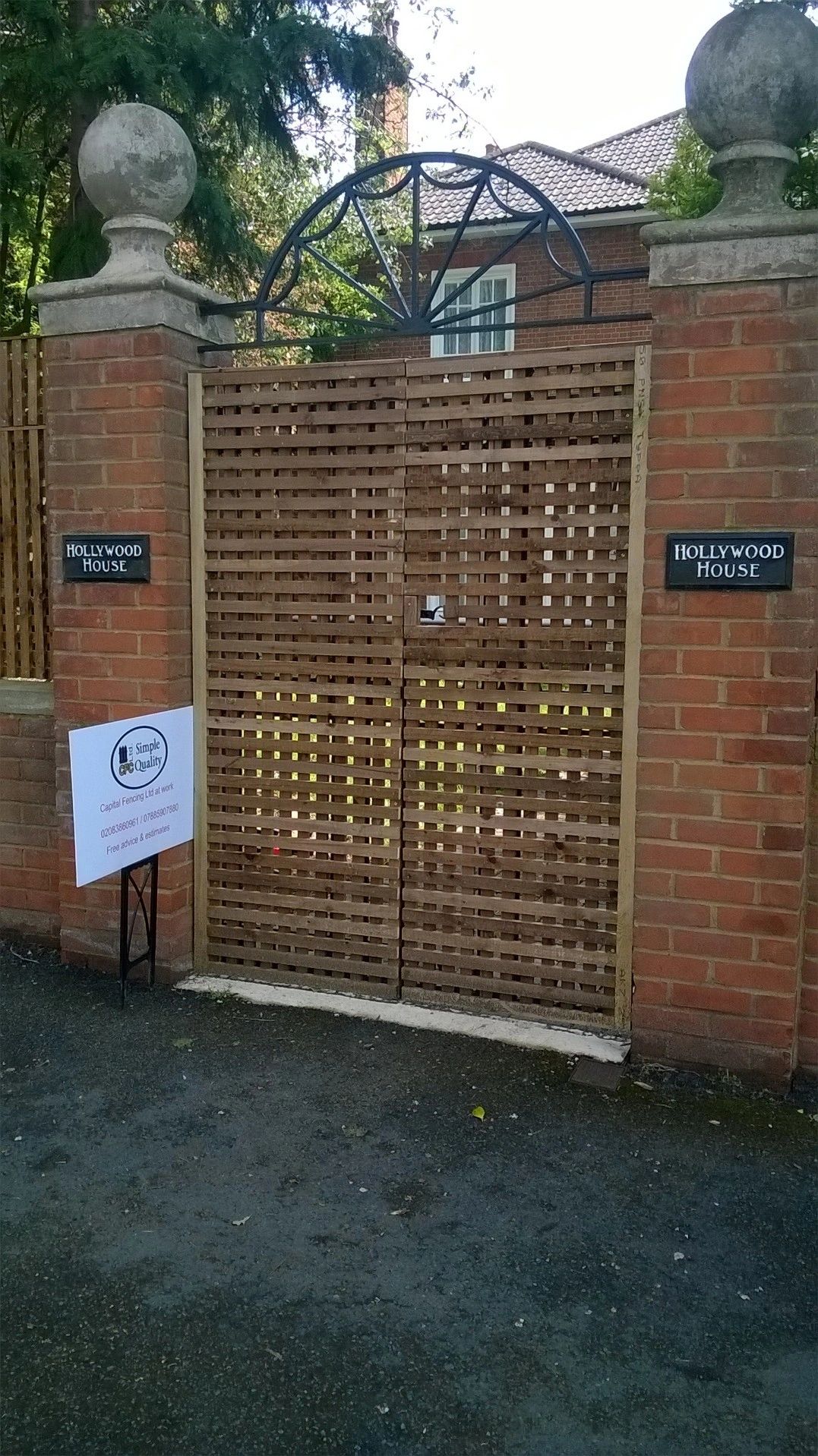
A fully secured pedestrian gate can leave deliveries with nowhere to leave post or parcels, so a secure gate-mounted letterbox or a parcel box positioned outside the locked line is worth planning at design stage.
Positioning it so it can be reached without opening the gate keeps the boundary genuinely closed while still allowing routine deliveries.
The highway 1m rule in practice
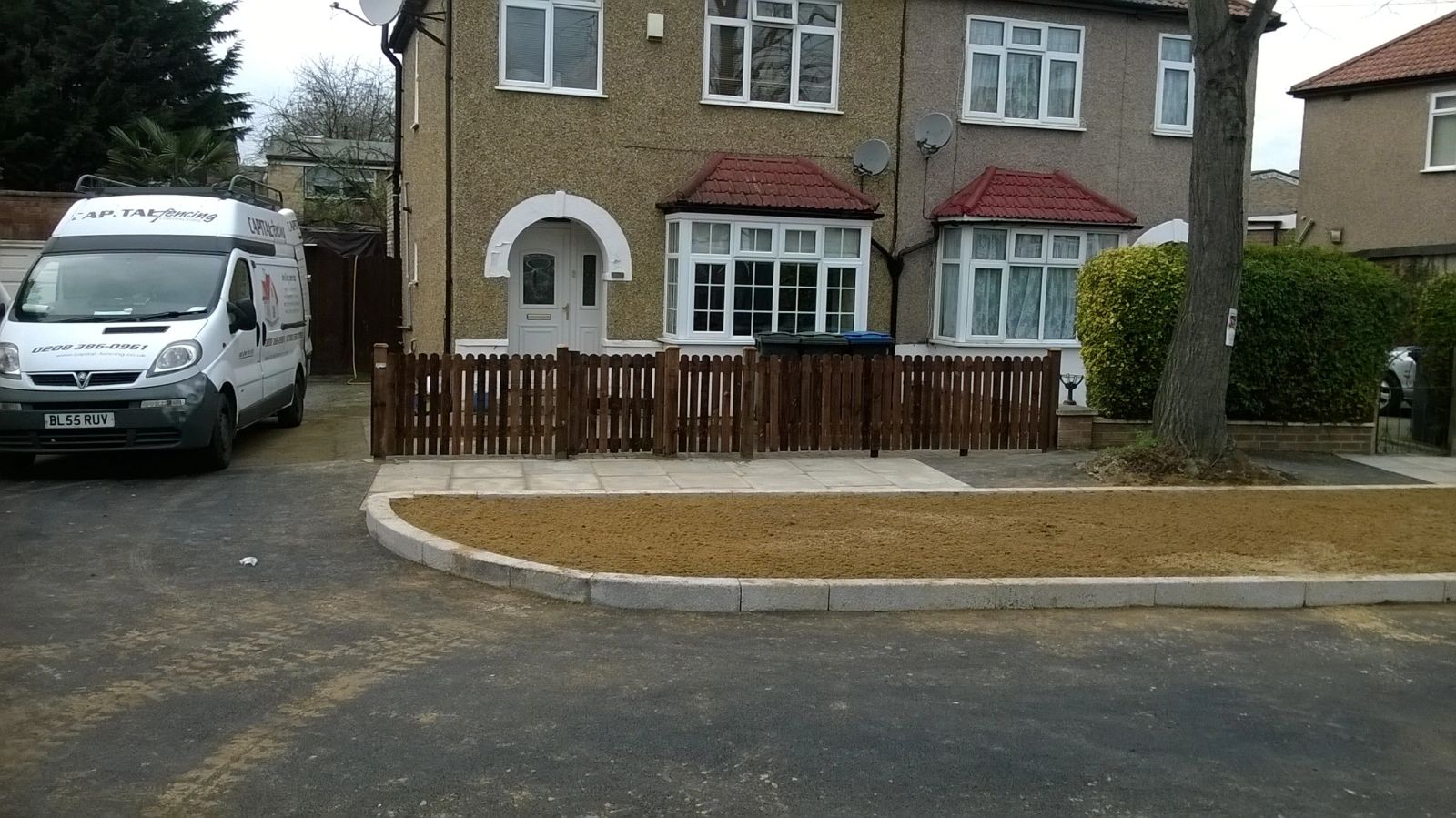
The 1m permitted development limit applies to any boundary that fronts a highway used by vehicular traffic, which in practice includes most adopted roads and many unadopted estate roads that carry regular car use, not just classified A and B roads.
A footpath-only right of way at the front of a plot doesn't trigger the lower limit on its own, but councils interpret 'used by vehicles' broadly, so a shared driveway serving several houses usually counts.
Where it's unclear, checking with the local planning authority before building is cheaper than a retrospective application after a 1.8m fence goes up on what turns out to be a vehicular frontage.
Aftercare guidance for the first season
Newly set posts need their first winter to fully settle, and a slight tightening of gate hinges or latch alignment after the first few months of seasonal movement is normal rather than a sign of poor work.
Untreated or lightly treated timber benefits from an owner-applied preservative or stain within the first year, particularly on end grain and cut edges exposed during installation, since factory treatment doesn't reach every surface once a panel's been cut to fit.
Clearing leaves and debris from the base of gravel boards each autumn, where they trap moisture against the timber, is a simple habit that measurably extends the life of a fence beyond what the initial installation alone determines.
Protecting a boundary fence during nearby building work
Where building work, an extension or a loft conversion is happening on an adjoining property, existing boundary fences and their footings are sometimes shifted, undermined or damaged by machinery or excavation.
It's reasonable to raise this in advance with a neighbour undertaking major building work, ideally recording the fence's condition beforehand with photographs.
Where a party wall notice has been served for related works, that process can sometimes address boundary condition issues as part of a schedule of condition, which is worth asking about.
Setting corner posts before intermediate posts
Corner and end posts are normally set first and their positions checked and finalised before any intermediate post along the run, since every other post's position is measured relative to those fixed points.
Setting intermediate posts first and corners last risks a corner ending up slightly off the true line established by the string, which then means either accepting a visible kink or redoing intermediate posts to correct it.
This sequence matters even more on a run with two changes of direction, where getting one corner wrong compounds the error along the whole of the next leg.
Community Infrastructure Levy and larger boundary projects
The Community Infrastructure Levy is a charge some councils apply to larger new development, and while it rarely touches ordinary domestic fencing, larger boundary projects tied to bigger planning permissions can occasionally interact with it.
This is a specialist area mainly relevant to substantial developments rather than a single garden fence, but worth being aware of if boundary work forms part of a larger planning permission.
Anyone unsure whether a larger project's boundary elements might be affected should check with the council's planning or CIL team directly.
Self-closing pedestrian gates
A self-closing hinge or spring closer on a pedestrian gate stops it being left open by accident, which matters on a boundary where the fence is only as secure as the gate that's routinely used.
On a school, nursery or pool boundary a self-closing, self-latching gate is often a specific requirement rather than an optional extra, and the closer needs enough force to shut fully without slamming.