Maintaining a sealed acoustic run
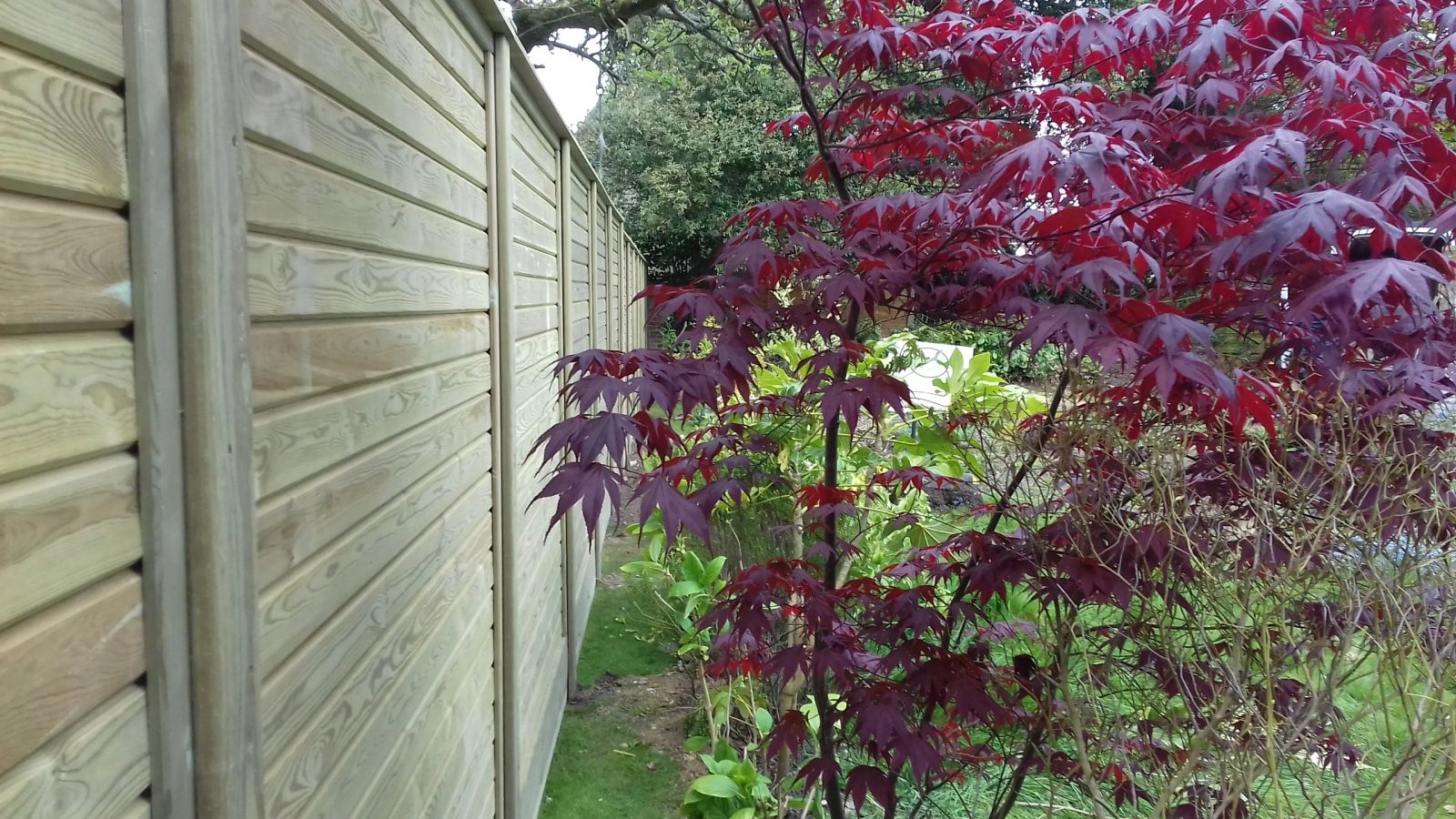
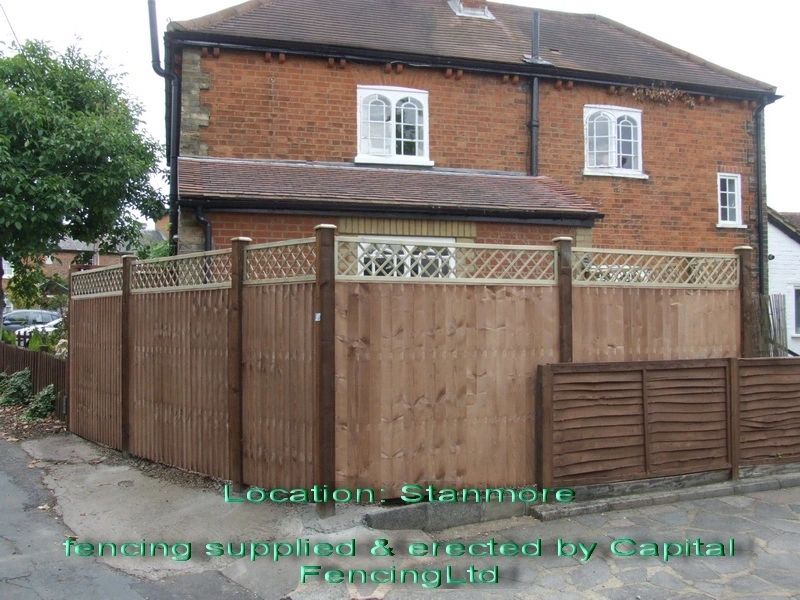
The acoustic benefit depends on continuity, so a maintenance check for this kind of boundary focuses on any joint opening up, a board warping away from its neighbour, or a gap appearing at the base — all of which let sound leak through a previously sealed line.
Repainting or re-treating the outer skin on a normal cycle also protects the timber that's now doing double duty as a noise barrier, not just a boundary.
Drainage channels behind a long acoustic run
A long, solid acoustic run without any breaks can act as a dam for surface water running across a sloped garden, causing pooling on the uphill side that wasn't a problem with a more open fence.
A drainage channel or a low-level gap fitted with a flap or grille at the lowest point of the run lets water through without significantly compromising the acoustic seal higher up the panel.
Sports clubs
Sports club boundaries need to withstand impact from balls and players far more than an ornamental garden fence, which usually means heavier-gauge mesh or rebound-rated panel rather than standard closeboard along pitch-facing runs.
Ball-stop netting on posts set back from the fence line is a common addition where a pitch runs close to a public path or road, and post spacing for that netting is tighter than for a standard fence line.
Clubhouse car parks and pitch perimeters are also often used for match-day parking, so access for fencing work needs scheduling around the fixture calendar rather than assumed to be free every weekend.
Front garden boundary height compared to side and rear
The permitted development height limits genuinely differ by which boundary is involved — the 1m limit for frontages next to a road contrasts with the 2m general limit that applies to side and rear boundaries.
On corner or through-plots, more than one boundary can count as 'fronting a highway', which sometimes surprises homeowners who assume only the main road-facing side is restricted.
Checking which of a property's boundaries actually meet the legal definition of fronting a highway, rather than guessing from appearance, avoids building something that later needs adjusting.
Landlord and void-period turnarounds
Boundary repairs between tenancies are usually driven by a tight void period, where the priority is a straightforward, durable, easy-to-maintain spec rather than a bespoke design, since the landlord isn't the one living behind it.
Standard panel heights and widely-available materials also matter here, because a future repair after another tenant needs to match without a special order or long lead time.
Where several rental properties share the same landlord or managing agent, batching repairs across more than one property in the same visit is often the most efficient way to keep void periods short.
Waney-edge boards
Waney-edge boards, sometimes called weatherboard, retain the natural, uneven outer edge of the log they were cut from, including some bark-line curvature, rather than being sawn to a straight parallel edge.
They're generally cheaper than feather-edge because more of the log's cross-section can be used, but the irregular edge means overlaps vary along the length of each board and can't be set as precisely.
The rustic appearance is often the main reason they're chosen over feather-edge, particularly for informal or rural boundary fencing where a uniform finish isn't the priority.
Land registered as a town or village green
Land formally registered as a town or village green carries strong legal protection against enclosure or obstruction, including from fencing, under the Commons Act 2006.
This status can sometimes apply to open spaces that don't look obviously like a traditional village green, following a successful community application to register them.
Checking the relevant register before fencing land bordering an open green space avoids inadvertently obstructing protected land.
Freeholder consent for leasehold flats
Where a garden or yard is demised under a long lease rather than owned outright, the lease itself often requires the freeholder's written consent before any structural alteration, and a new fence, wall or gate can count as an alteration even in a small private yard.
Some leases route this through a managing agent who needs formal notice and a fee before works start, and skipping that step can technically breach the lease even where the work itself is uncontroversial.
It's worth reading the relevant clause of the lease, or asking the managing agent directly, rather than assuming that owning the flat gives unrestricted rights over its garden boundary.
Deciding between stepping and raking a panel run
Stepped panels stay level themselves and drop in increments post to post, leaving a small triangular gap under each panel that grows towards the low end of a run; raked panels are cut at an angle so the top edge follows the slope continuously with no gap.
Stock panels can be stepped without alteration, but raking almost always means cutting a panel's top rail and infill to an angle on site, which only works with materials that can be cut and re-fixed cleanly, such as featheredge or slatted boards.
A steep, uneven slope generally favours stepping for speed and future repairability; a long, gentle and even gradient often looks better raked, since the steps would otherwise be very shallow and visually fussy.