Fence or gate height near roof-mounted solar panels
A tall fence, gate, or dense trellis topper built close to a boundary can cast shade onto a neighbouring roof-mounted solar array during parts of the day, which isn't usually a planning matter but can become a point of neighbourly friction worth being aware of.
This is a relatively new consideration compared with the traditional daylight and boundary height concerns, but is increasingly relevant as more households install solar panels close to shared boundaries.
Discussing height and position informally with a neighbour before installing a particularly tall boundary feature near their south-facing roof avoids a dispute that has no clear formal regulation to resolve it.
Setting out a straight run with string lines
A straight fence line starts with two fixed end points and a string line pulled taut between them, usually run just above where the posts will sit rather than at ground level where it snags on grass or debris.
On a long run the string sags under its own weight, so an intermediate profile or peg is needed every few bays to keep the sight line true rather than trusting a single span.
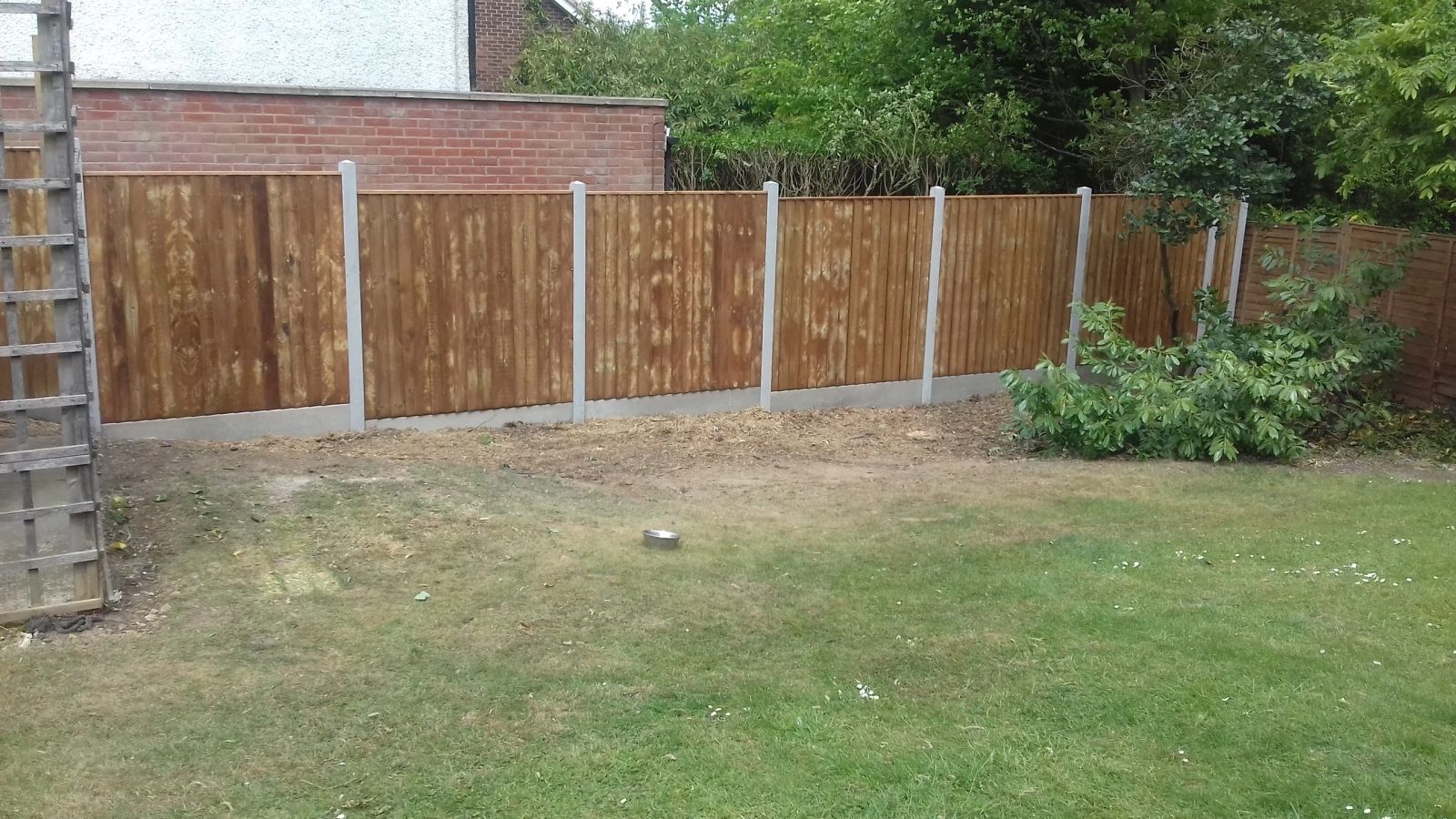
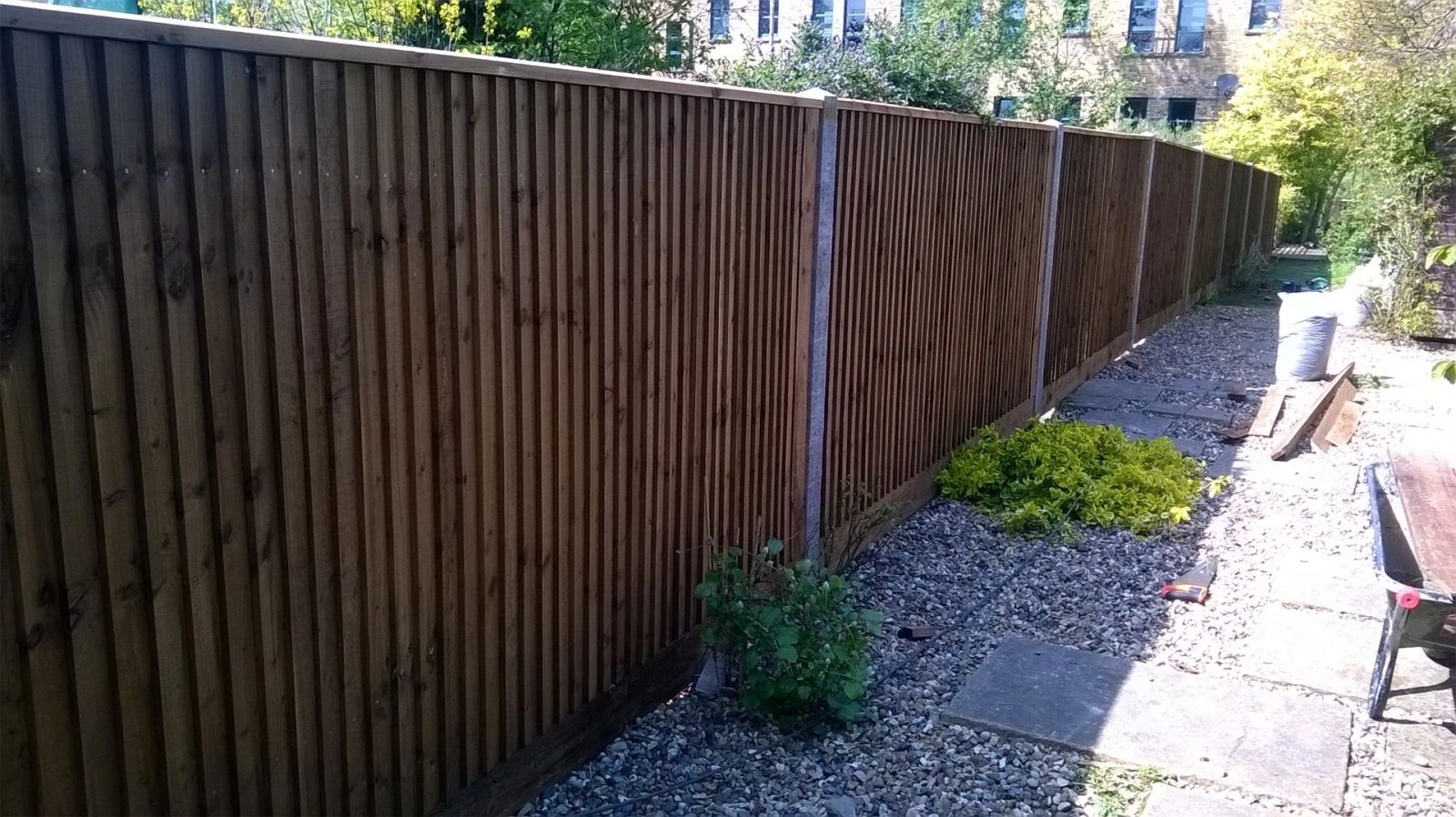
Any post that's set even 10-15mm off that line becomes visible once panels go in, because the eye picks up a wander in a boundary far more readily than a small step in level.
Adjusting closing force on a self-closing gate
A spring or hydraulic closer set too strong can slam a gate hard enough to damage the latch or frame over repeated cycles, while one set too weak may not fully latch, especially into a headwind on an exposed boundary.
Closers are adjustable and should be tuned on site after fitting rather than left at a factory default, with a final check that the gate reliably latches under the worst wind condition it's likely to face.
Temporary bracing while concrete cures
A freshly-concreted post has no strength to resist knocks or wind until the concrete has gone off, so it needs temporary raking struts or timber braces fixed to hold it plumb and in line while curing.
Braces are best left in place for at least the manufacturer's stated initial cure time, and longer in cold weather, rather than removed as soon as the concrete looks solid on the surface.
A post nudged out of true during this window is much harder to correct afterwards than one checked and adjusted while the mix is still workable, so the check-and-brace step is worth the extra few minutes per post.
Choosing between razor wire and barbed tape toppings
Barbed tape has a flat steel strip with stamped barbed edges wound into a coil, giving a denser and more visually aggressive deterrent than traditional twisted barbed wire, which is now used less often on new commercial work.
Both carry a real injury risk and are generally reserved for boundaries without public pedestrian access, since a topping that could injure a passer-by on a footpath side raises liability concerns a lower-risk topping avoids.
Protecting a patio surface during fencing work
Dragging posts, panels or a wheelbarrow across paving can chip edges or scratch a polished or textured finish, so boards or protective sheeting laid along the route reduce that risk on a patio the client wants kept intact.
Concrete spillage from mixing or haunching is another common cause of permanent staining on natural stone or porous paving, and it sets far harder to remove than it is to prevent with a simple dust sheet under the mixing point.
Where post holes have to be dug close to a patio edge, protecting the adjoining slabs from spoil and tool marks is worth doing before digging starts rather than cleaning up afterwards.
Right to light and boundary structures
A right to light is a legal easement that can be acquired after twenty years of uninterrupted light through a defined window, and it protects a level of illumination to that window rather than an open view or unobstructed garden outlook.
An ordinary garden fence or low wall almost never generates a right to light issue, but a tall close-boarded fence, high wall or dense screening structure built close to a window that has enjoyed light for decades in principle could, particularly in dense urban plots.
In practice this rarely affects standard fencing height, but it's a different legal question from planning permission and worth being aware of on unusually tall or solid boundary structures near windows.
Phasing a perimeter security upgrade
Replacing an entire perimeter in one go isn't always practical on an occupied commercial site, so work is often phased section by section, with each completed run left secure before the next section is opened up.
Phasing needs a sequence that never leaves the whole boundary compromised at once — usually working round from the least to most vulnerable elevation rather than a simple left-to-right order.
Sizing gates for specific vehicle types
A driveway gate wide enough for a family car may still be too narrow for a van, motorhome or trailer, which is worth checking against the actual vehicles a household owns or plans to own rather than a generic standard opening.
Turning circle matters as much as raw width on a tight driveway, since a gate that technically fits a vehicle's width can still be unusable if there isn't room to straighten up before passing through it.
For a household with mixed vehicle needs, a wider single gate or double gates with an off-centre split (one narrow, one wide leaf) can give flexibility that two equally-sized leaves don't.