Safeguarding considerations on school and nursery sites
Fencing and gate work on a school or nursery site typically has to be scheduled around supervised access, since contractors are usually required to sign in, wear visible identification, and avoid unsupervised contact with children during term time.
Perimeter security fencing for these sites is often specified with anti-climb profiles and minimum heights well above a typical domestic garden fence, reflecting safeguarding rather than purely boundary-marking needs.
Work is frequently timetabled for holidays or after hours specifically to avoid any overlap between contractors on site and children present, which affects programme length more than the fencing work itself.
Metal panel systems as an alternative on very exposed sites
On sites where timber panel failure from wind loading is a recurring problem despite heavier posts and shorter bays, a powder-coated steel or aluminium panel system offers a genuinely different approach, since the material doesn't flex, crack or delaminate the way a timber panel eventually does under repeated wind load.
These systems cost more than timber upfront and have a different aesthetic that not every client wants, but on a genuinely difficult exposed boundary they remove the recurring panel-replacement cycle entirely.
It's worth presenting as an option specifically where a client has already replaced timber panels on the same exposed run more than once, rather than as a default first suggestion.
Downpipe discharge points near a fence base
A downpipe discharging directly onto open ground near a fence line, rather than into a proper drain or soakaway, concentrates a large volume of roof water at one specific point along the boundary during heavy rain.
Over time this creates a permanently saturated patch that behaves like a high water table locally, even though the rest of the garden drains normally.
Redirecting the discharge with a short length of pipe or a small soakaway a metre or two from the fence line resolves the issue far more effectively than trying to compensate with a more resistant post base.
Planning material handling for single-access rear gardens
A rear garden with no side access at all means every post, panel and bag of aggregate has to go through the house, so protecting flooring and doorways along that route is as much a part of the job planning as the fencing itself.
Breaking deliveries into smaller loads that fit through internal doorways and turns avoids the alternative of discovering a full-length panel won't clear a hallway corner on the day.
Where the volume of material makes carrying through the house impractical, a temporary lift or chute over a side wall, arranged and agreed with the client in advance, is sometimes the more efficient option despite the extra setup time.
Post-war estates and uniform frontages
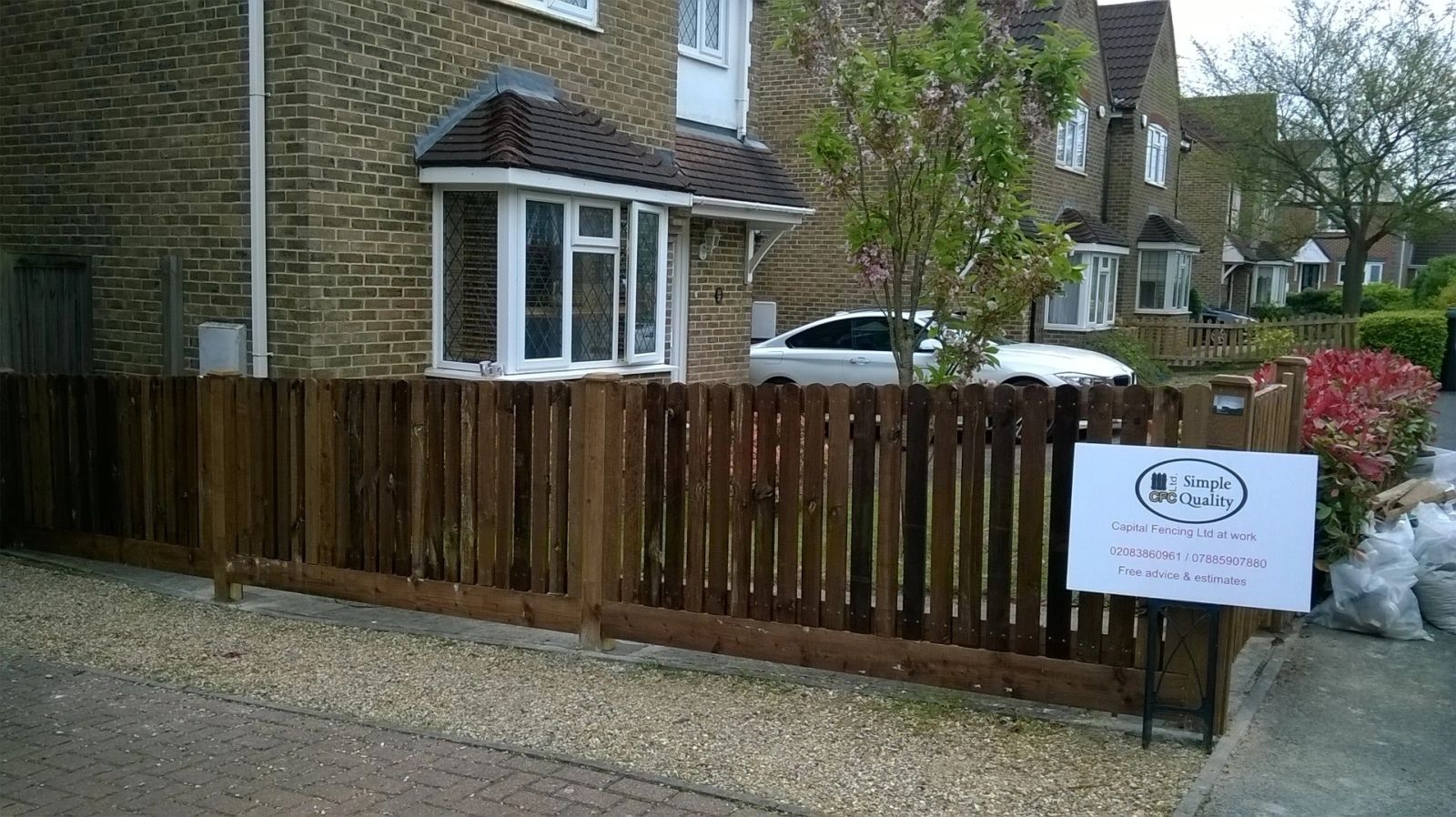
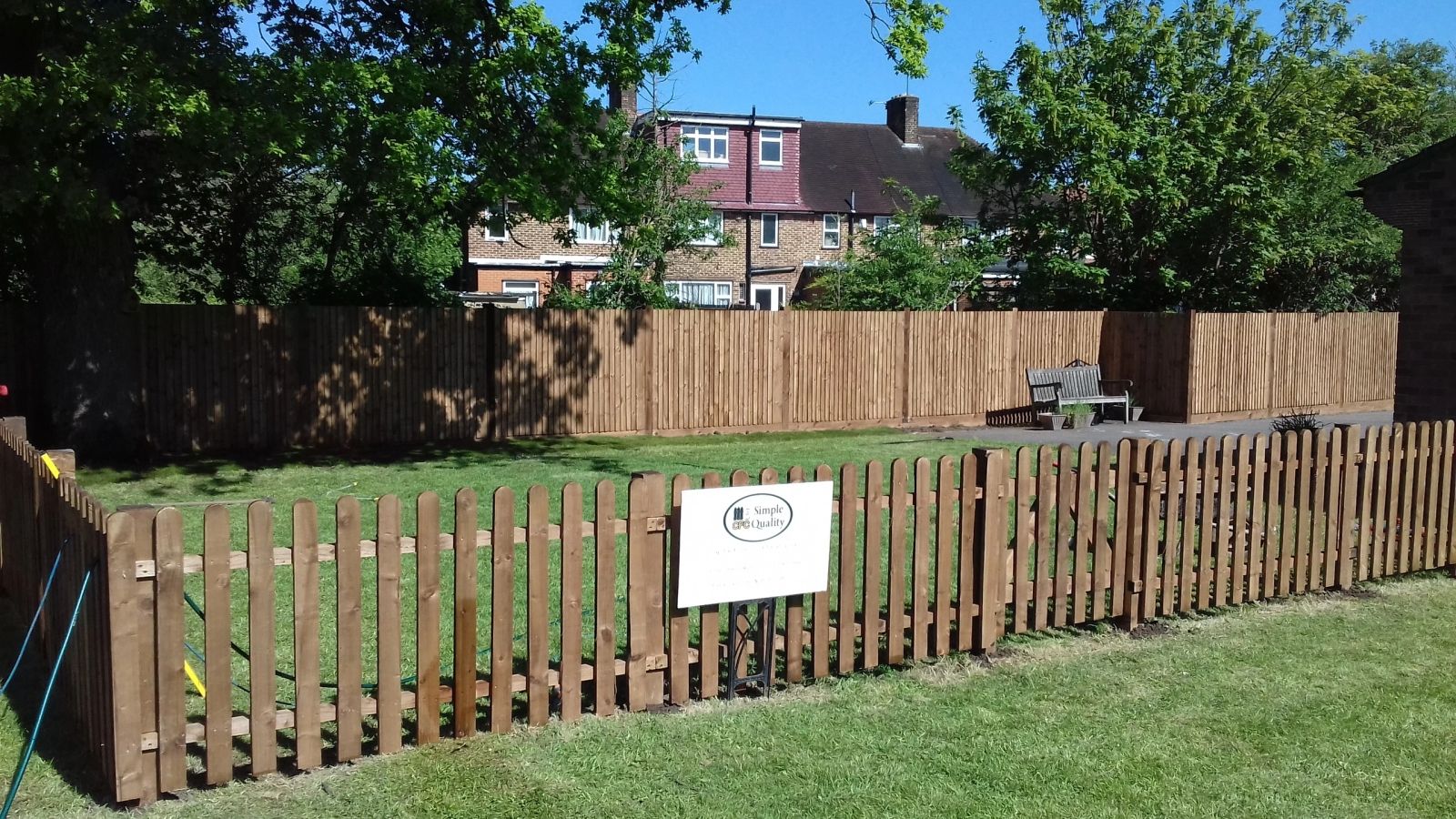
Post-war council and private estates were often built with a consistent low front boundary — dwarf wall, hedge or short picket — as part of the original street design, and some retain a restrictive covenant or estate management scheme controlling what can replace it.
Swapping a low picket for a tall close-boarded front fence on these estates can breach the covenant even where planning permission wouldn't be needed under general permitted development rules.
It's worth checking the original conveyance or asking the estate's management company before ordering material, since covenant breaches are a civil matter between neighbours or the management company rather than something the council enforces.
Slotted versus morticed concrete posts
Slotted concrete posts have a continuous groove cast into two or four faces so panels slide down into the slot from above, which makes them fast to erect but means every panel in a run has to come out to replace one in the middle.
Morticed concrete posts have discrete rectangular pockets for arris rail ends instead, matching closeboard or panel construction where individual boards or panels can be replaced without disturbing the rest of the run.
The choice is largely dictated by the fencing system being used — panel fencing wants slotted posts, boarded fencing wants morticed — rather than being a free preference at quote stage.
Fencing a marina or boatyard compound
A marina or boatyard compound combines standard perimeter security with exposure to salt air and standing water, so galvanising specification and fixing hardware are upgraded from a typical inland commercial job to resist accelerated corrosion.
Gate access often needs to accommodate trailered boats and cradles passing through, which pushes toward a wide sliding gate or a removable section rather than a fixed-width pedestrian-scale opening.
Using wall plates to transition timber to masonry
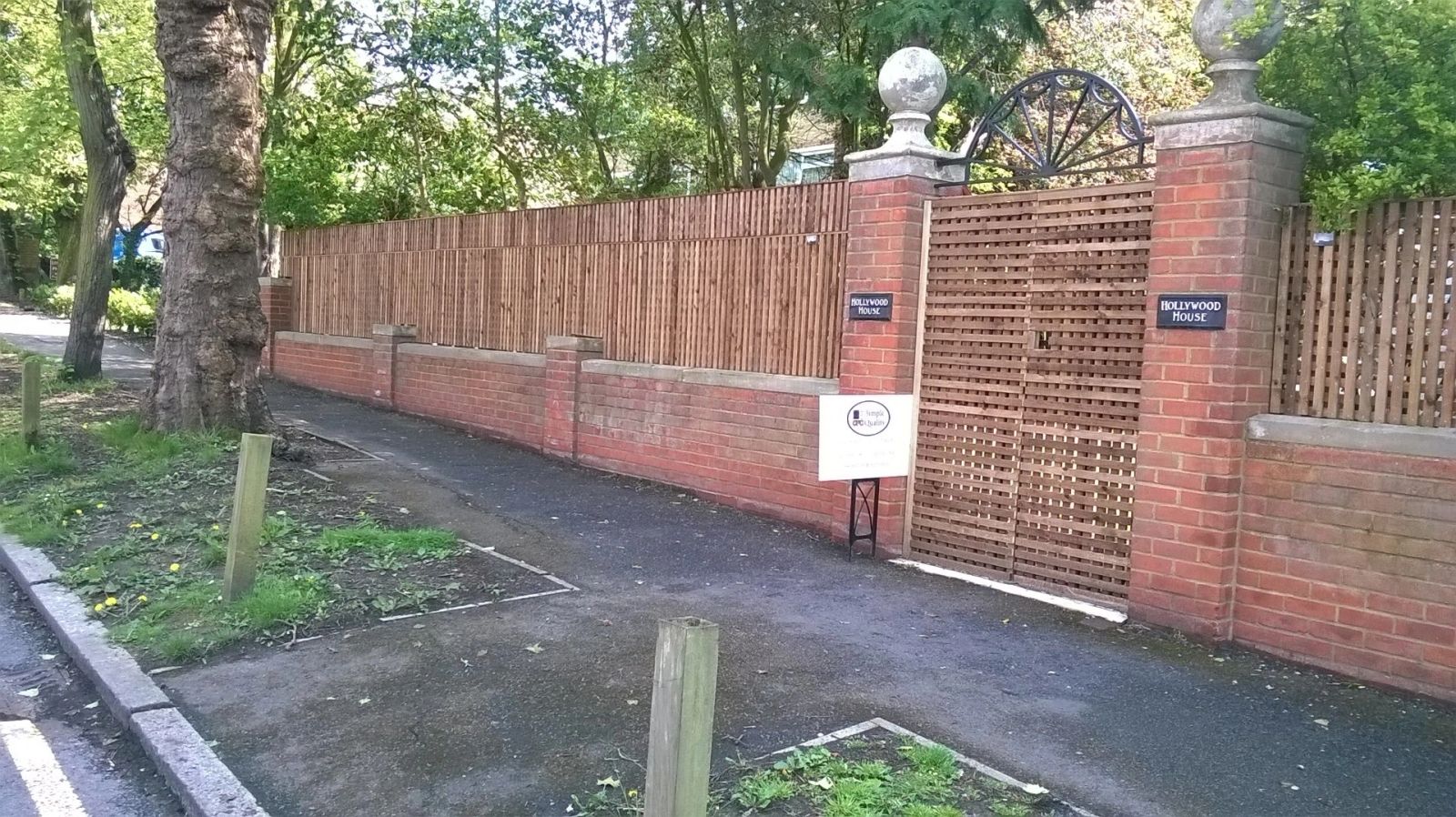
A wall plate — a length of timber bolted flat to a masonry wall — gives a stable timber fixing point for arris rails or panel frames to run into, avoiding the need to drill and plug the wall at every rail height individually.
Setting the plate slightly proud of the wall face with packers behind it can help keep it clear of surface damp on an older solid wall, rather than fixing it flush against a face that holds moisture.
The bolts holding the plate need to be sized for the wall material — heavier-duty fixings for old lime-mortar brickwork than for modern dense blockwork — since an undersized fixing can work loose under repeated wind load on the panels.
Handling excavated spoil on a fencing job
Digging even a modest run of post holes generates a surprising volume of spoil, and leaving it in a single heap on a lawn for the duration of a job kills the grass underneath if left more than a few days.
Spreading spoil thinly on a border, bagging it for removal, or arranging same-day disposal all avoid that dead patch, and the right choice depends on whether the client wants the spoil kept for landscaping elsewhere on the plot.
Heavy clay spoil is particularly slow to dry and awkward to barrow once it's rained on, so timing the dig to avoid leaving wet spoil sitting overnight where possible reduces both the mess and the extra effort of moving it later.