Pressure-washer damage on soft timber
A pressure washer used too close, or at too high a setting, strips the softer spring-growth wood fibres from softwood faster than the harder summer-growth bands, leaving a rippled, furry surface texture that no longer takes stain evenly.
This damage is largely irreversible on a panel face and usually shortens the remaining life of the timber by exposing more surface area to moisture uptake.
A wide fan nozzle held well back, or a lower-pressure setting reserved for decking rather than fence panels, cleans without cutting into the timber surface.
Timber strength grading classes
Structural timber is graded into strength classes such as C16 or C24 based on visual inspection of defects like knots and slope of grain, or by machine stress grading that measures stiffness directly.
C24 timber has been graded to a higher strength and stiffness threshold than C16, and is specified where a structural calculation demands it, such as a longer unsupported gate post span, rather than chosen purely by appearance.
Fencing timber is rarely strength-graded in the same formal way as construction timber, which is one reason gate posts subject to real structural calculation sometimes specify a graded section rather than standard fencing stock.
Made ground from Victorian development
Much of the Victorian terraced housing across north London sits on plots that were levelled, infilled or built over earlier brickfields, clay pits and market gardens, leaving inconsistent fill rather than natural strata close to the surface.
A trial dig on these plots can turn up broken brick, ash, clinker or timber offcuts within the first spade's depth, none of which gives a post anything solid to bear on.
Where fill depth is unpredictable across a single run, post depths sometimes need to vary hole to hole rather than following one fixed spec for the whole boundary.
Manhole covers sitting on or near a boundary
It's not unusual for a drainage manhole cover to sit directly on, or very close to, a garden boundary line, reflecting how shared drainage runs were originally laid out.
Water companies and building control generally expect ongoing access to manhole covers to be maintained, which can rule out building a fixed fence panel or post directly over one.
Where a boundary run includes a manhole cover, planning a removable panel section or routing the fence slightly around it avoids blocking access that may later be needed for drain clearance.
Green walls and planting myths
A green wall or dense hedge is often assumed to block noise the way a solid fence does, but foliage alone has very little mass and provides only a small acoustic benefit, mostly by adding minor absorption rather than blocking a sound path.
Planting in front of a solid acoustic fence can genuinely help at the margins and improve the visual outlook, but it isn't a substitute for the barrier itself.
Bollards and hostile-vehicle basics
Bollards protect a pedestrian area or building frontage from vehicle incursion and are specified separately from the fence line itself, usually to a recognised impact rating for the vehicle speed and mass expected.
Fixed, removable and retractable bollards each suit different access patterns — removable bollards are common where delivery vehicles need occasional access through an otherwise protected frontage.
Retrospective planning applications for boundary work
Where boundary work turns out to have needed planning permission that wasn't obtained, it's possible to apply retrospectively, though this carries the real risk of the council refusing and requiring the structure to be altered or removed.
A retrospective application doesn't guarantee approval just because the work is already complete, and the council assesses it on the same planning merits as if it hadn't been built yet.
Checking whether permission is needed before work starts is considerably less stressful and less costly than applying retrospectively after the event.
Appearance from both sides
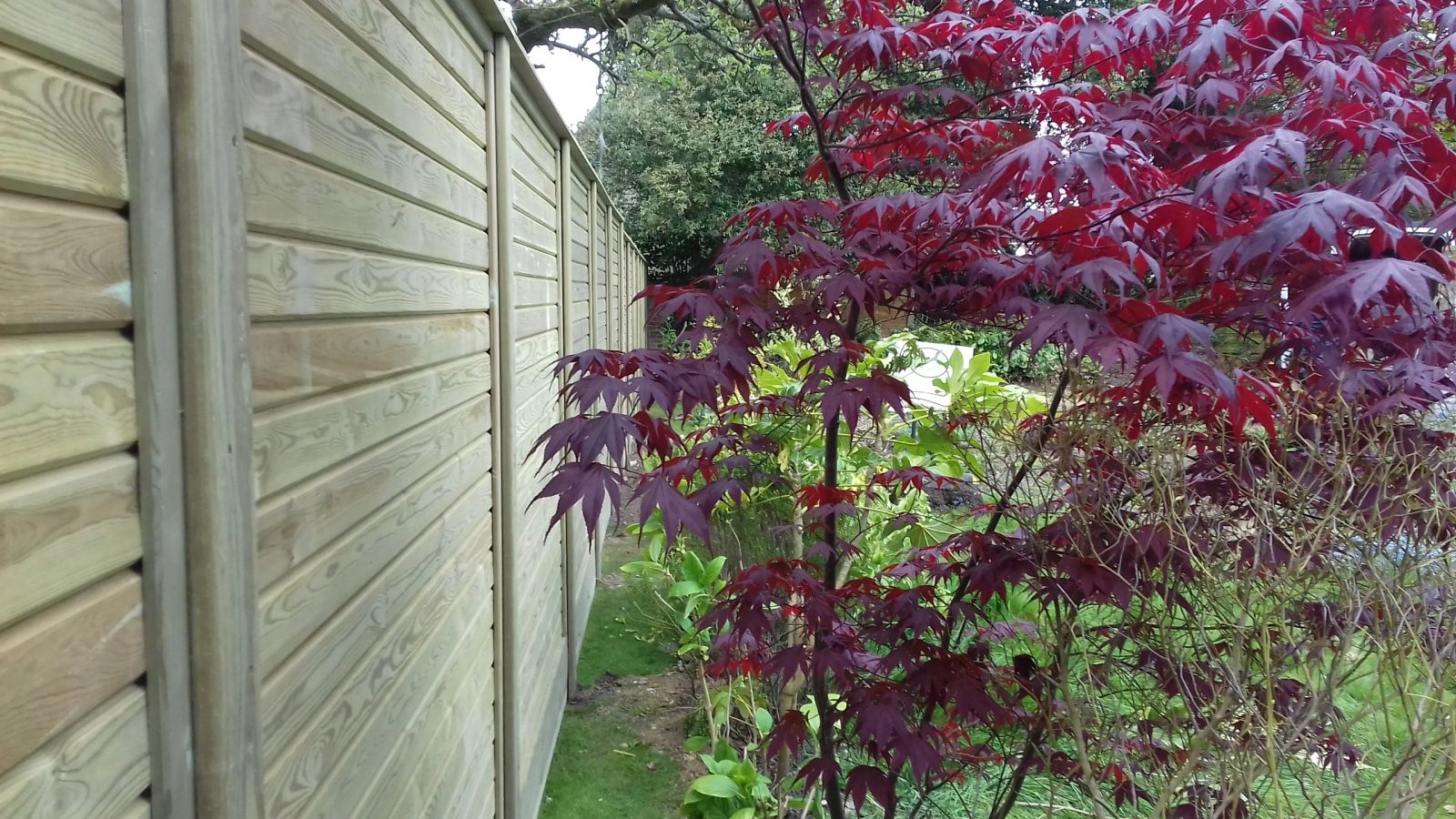
A heavier acoustic fence often has a different appearance on each face depending on which skin is presented outward, so it's worth agreeing with a neighbour which side gets the finished face where the boundary is shared.
Where both sides need to look presentable, a symmetrical double-skin build avoids one side being left with a plainer structural face.
Compost bins and damp concentration against a fence
A compost bin or heap placed directly against a fence line concentrates moisture and organic decay right at the timber surface, which is a common and avoidable cause of localised rot on an otherwise healthy run.
A gap of even a few hundred millimetres between the bin and the fence, or a bin set on a hard base rather than directly against timber, avoids this concentrated exposure.
It's a detail worth raising with clients at handover, since it's the kind of everyday garden use that isn't obvious as a fence maintenance issue until the damage has already occurred.