Driveway gate sizing and swing arc
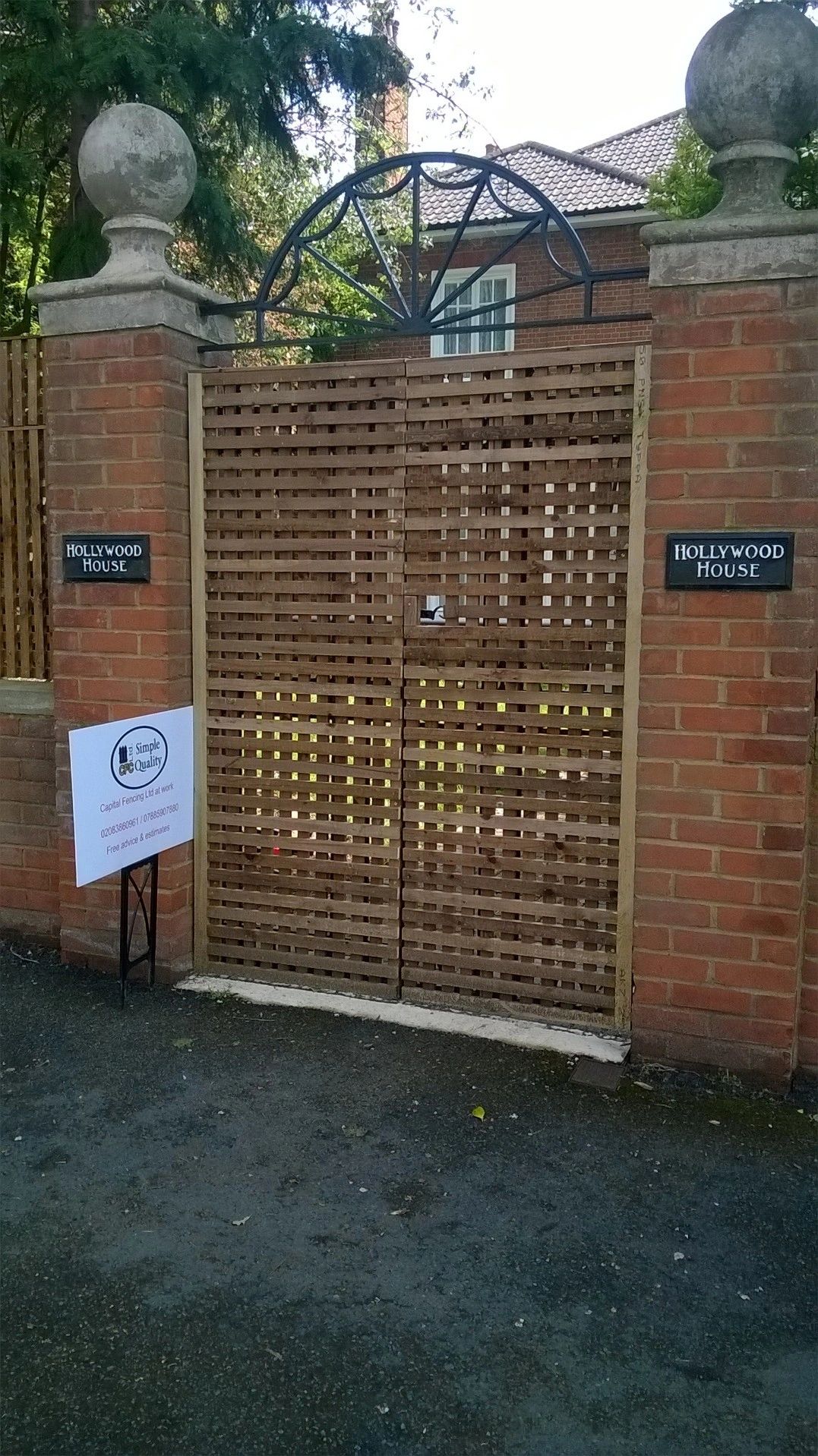
A driveway gate needs its swing arc checked against the car actually parked behind it, not just the opening width, since a gate that clears a small hatchback can still clash with a larger estate or a roof box.
Outward-opening gates onto a public footway are generally avoided because they can obstruct pedestrians and pushchairs, which is why most residential driveway gates are hung to open inward onto the drive itself.
Sliding gates are a practical alternative on a short or sloping driveway where there isn't room for a swing arc, though they need a level track run and enough side clearance to slide fully open.
Decking substructure ventilation
A decking substructure needs airflow underneath it to dry out after rain, which is why ground-level decks are built with a ventilation gap rather than sitting directly on solid paving or soil, and why skirting the underside solid on all sides is a common cause of premature substructure rot.
Low decks close to the ground are the highest risk, since there's little room for cross-ventilation, and some ground preparation — a weed membrane and gravel bed rather than bare soil — helps keep humidity down in that void.
Composite deck boards themselves tolerate damp better than timber, but a timber joist substructure underneath a composite deck still needs the same ventilation and ground clearance as it would under timber boards.
Sports-pitch ground with irrigation
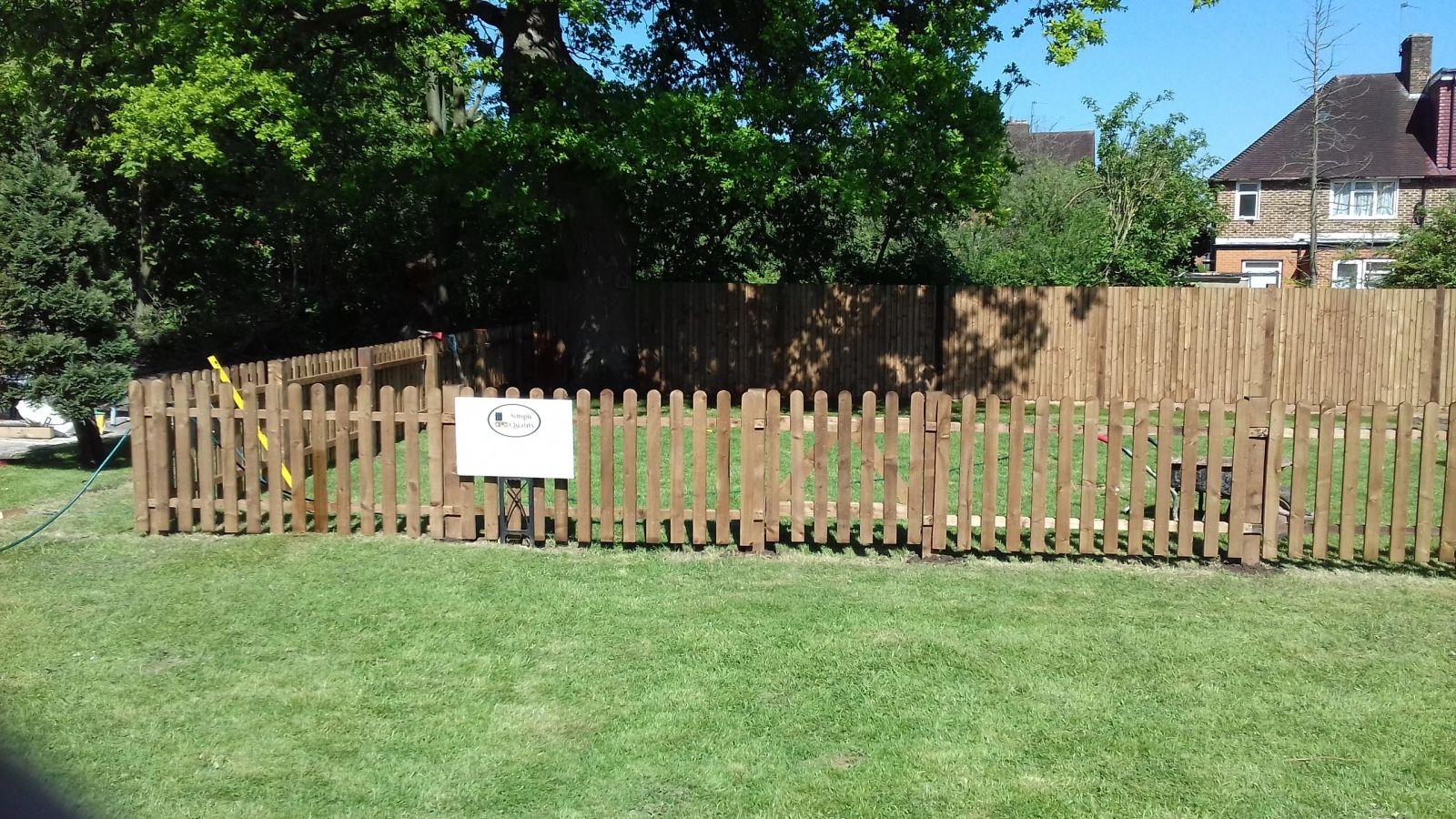
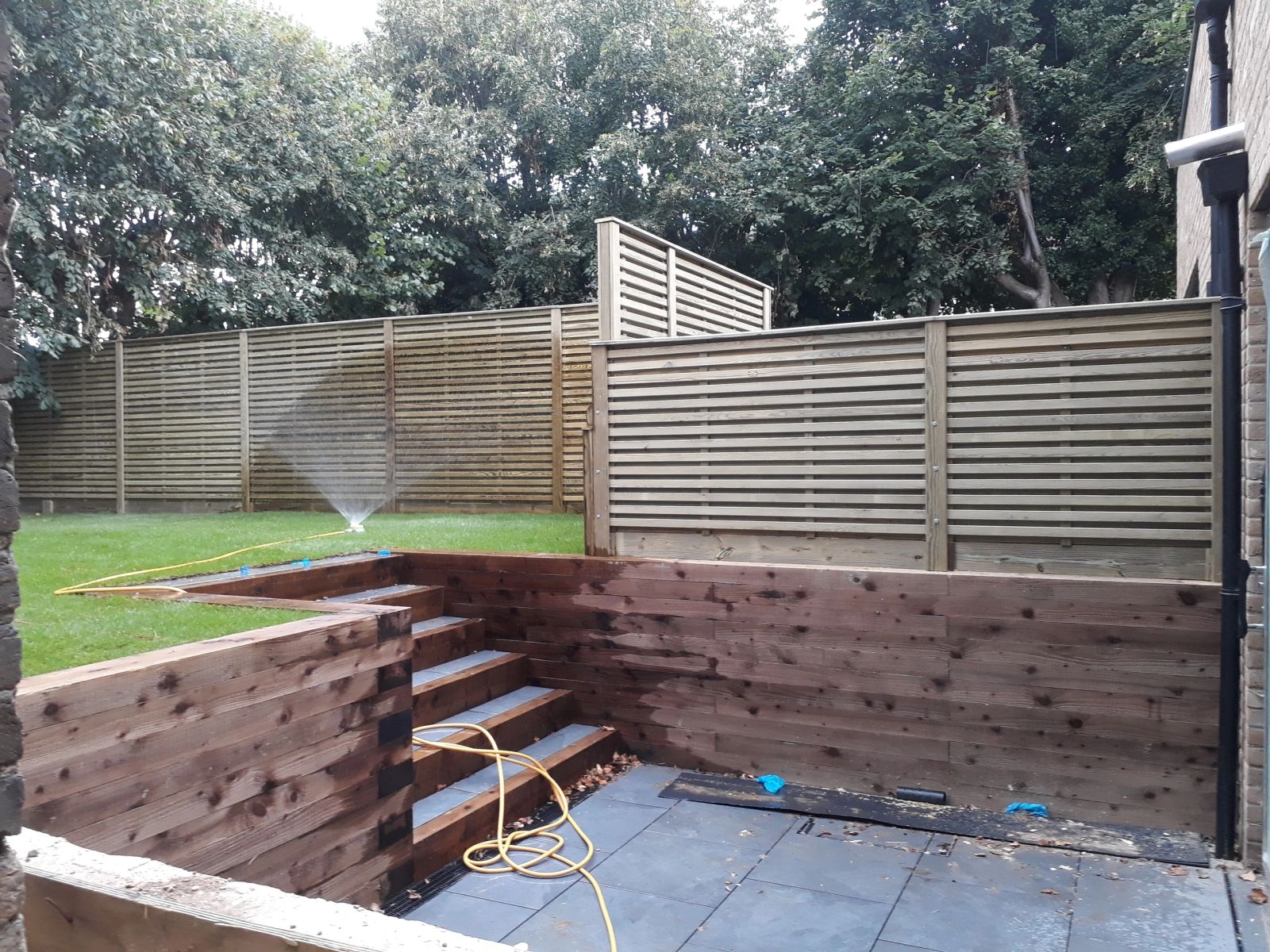
Perimeter fencing around a sports pitch or playing field often runs over ground with an engineered drainage or irrigation system just below the surface, including sand-slit drains or pop-up sprinkler lines that aren't always accurately recorded.
Damaging a drainage lateral while setting posts can cause localised waterlogging on the pitch itself long after the fencing work is finished, which is a far more costly problem to fix than the original fence job.
Liaising with the groundskeeper or facilities manager over exact drain and irrigation layout before digging is standard practice on this type of site, rather than relying on a general services scan alone.
Positioning posts relative to existing paving slabs
A post position that lands directly on or straddling an existing paving slab or patio edge either means lifting and relaying that slab, or nudging the post along the line to land in a joint or open ground instead.
Where lifting a slab is unavoidable, checking what's bedded underneath — a solid mortar base rather than loose sand — before committing to reinstating it in the same spot avoids an unpleasant surprise partway through.
On a patio the client wants kept intact, agreeing acceptable post positions against the actual slab layout at the survey stage avoids a decision being made on the day between two imperfect options.
Garden orientation and post-rain drying time
A south or west-facing garden dries out after rain considerably faster than a north or east-facing one, purely because it receives more direct sun through the day, which has a real effect on how long timber sits wet and therefore how fast rot and mould can establish.
This is worth factoring into treatment choice as much as species choice — a slower-drying orientation benefits more from a breathable stain that lets residual moisture escape than from a heavier film-forming coating that traps it in.
Two identical fences in the same postcode but opposite orientations can have meaningfully different realistic maintenance intervals for this reason alone.
Historic ha-ha and ditch boundaries
Some older rural and semi-rural Hertfordshire properties retain a ha-ha — a sunken ditch-and-wall boundary designed to keep a view open while still containing livestock — rather than a conventional fence line.
Where a ha-ha exists on a historic estate boundary, it's sometimes a designated heritage feature in its own right, in which case altering or fencing over it needs the same care as any other listed landscape feature.
More often a ditch boundary is simply a drainage feature rather than a heritage one, in which case a fence set back from the ditch edge, rather than spanning it, avoids undermining the bank.
Powder coating versus galvanising for steel security fencing
Hot-dip galvanising bonds a zinc layer to the steel that self-heals minor scratches through sacrificial corrosion, making it the more durable base finish for an exposed or coastal boundary.
Powder coating adds colour and a smoother surface but relies on the coating staying intact — galvanised-then-powder-coated steel combines both, giving corrosion protection under a decorative finish, and is the usual spec where appearance matters as much as longevity.
Surface-water run-off across a boundary
Where one garden sits higher than its neighbour, or has a hard surface that sheds rain quickly, surface water often crosses the boundary line rather than staying on the plot it fell on.
A solid close-boarded fence with gravel boards set into the ground can act as an unintended dam, backing water up against the base and accelerating rot in the boards nearest the high side.
A small gap under the boards, or a French drain running parallel to the fence line, lets water pass through without saturating the timber, and is worth raising with a client before installation rather than after a wet winter.
Care homes
Care home boundaries need to manage two directions of risk at once: keeping the site secure from outside, and, where residents live with dementia, preventing unsupervised exit through a garden gate that looks like a normal feature of the grounds.
Gates onto care home gardens are often specified with a delayed-release or coded latch rather than a simple thumb-turn, agreed with the home's management against its own care regulator requirements.
Access for contractors on an occupied care site usually needs coordinating around resident routines and quiet hours rather than a standard domestic working day.