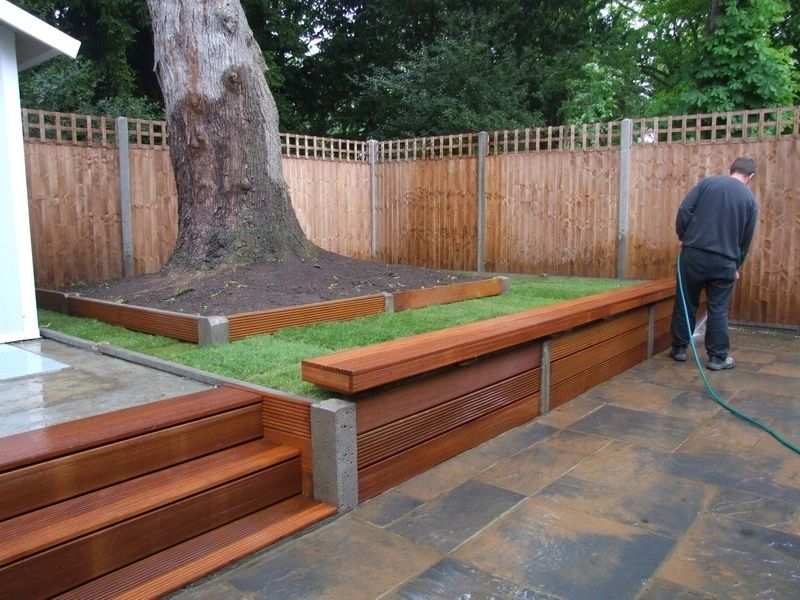
Tree root heave near posts
A root growing under or beside a post footing can lift or crack the concrete over several years as the root thickens, distorting the post's alignment even though the timber itself may be sound.
Repairing a post affected by root heave sometimes means offsetting the new footing slightly rather than resetting it in exactly the same spot, particularly where the tree is protected and the root can't be cut.
Cutting a panel down for a short bay
A lap or closeboard panel can usually be cut down in width by removing boards from one edge and refixing the cut edge to the panel's own frame, provided there's still a batten or rail to fix into once the cut is made.
Concrete panels generally can't be cut at all, which is one of the practical reasons timber is chosen over concrete gravel-board-and-panel systems on an irregular boundary with several odd-width bays.
Whatever is cut, the new edge needs its own vertical support — either an extra batten screwed to the frame or, for a wider cut-down section, a slip post — so the panel doesn't flex or drop at the trimmed end.
Sequencing work when more than one person is digging
On a longer run with more than one person digging simultaneously, working from both ends toward the middle rather than each person working independently along the same stretch reduces the risk of small setting-out errors compounding in the middle of the run.
Whoever sets out the string line and corner points needs to communicate any adjustment immediately to everyone digging, since a post dug to an outdated mark before a correction is passed on means redoing that hole.
Checking in at the midpoint, where the two ends meet, catches any accumulated drift before panels are ordered or cut to a spacing that assumed the line stayed perfectly true throughout.
Diagnosing which of the three usual causes applies
Almost every failing gate comes down to the hinge side, the frame or the ironmongery, and diagnosing which one it actually is before quoting avoids paying for a new gate that wasn't needed.
We check hinge fixings, frame square and latch alignment separately on site rather than assuming from how the gate looks.
Low-voltage lighting built into decking
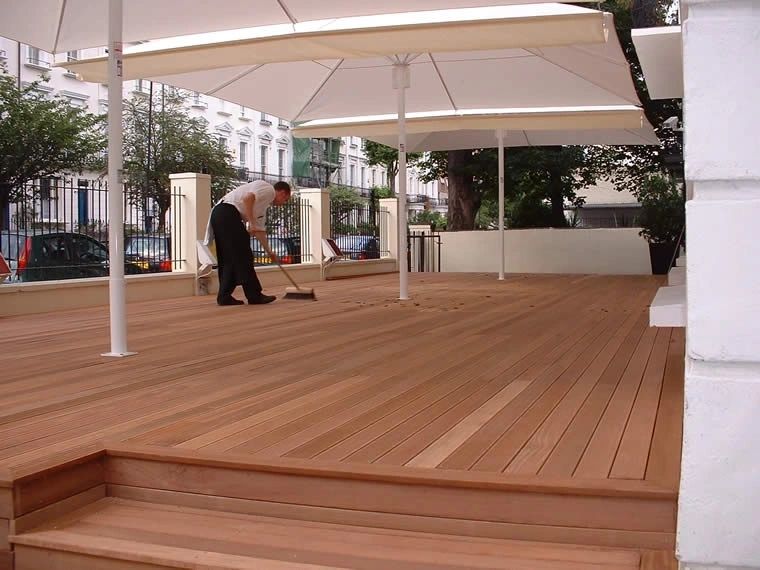
Recessed low-voltage deck lights, usually built into the timber before boards are laid, extend a deck's usable hours into the evening without the trip hazard of surface-mounted fittings.
Cable routes need planning before the substructure is closed in, since retrofitting lighting into a finished deck usually means lifting boards rather than a simple add-on.
Outdoor low-voltage systems still need a transformer and cabling installed to the relevant electrical safety standard, even though the voltage itself is lower than mains.
Storm damage to a boundary fence and insurance
Standard buildings insurance policies frequently exclude fences from cover for storm damage, or cover them only up to a modest specified limit, which surprises many homeowners after a bad storm.
Where a fence is shared or ownership is unclear, storm damage can also raise the question of whose policy, if either, is expected to respond.
Checking a policy's specific wording on fences and gates before relying on it for storm repair avoids finding out about exclusions only after a claim is made.
Post spacing and panel stiffness
Reducing the gap between posts on a heavy acoustic run increases the stiffness of the overall structure and reduces the deflection any individual panel experiences under wind load, which in turn helps joints stay tight over time.
This means an acoustic run is sometimes specified with closer post centres than a standard fence of the same height, adding to the materials cost but reducing the risk of gradual joint opening from repeated flexing.
Building decking around an existing tree
Decking built around a retained tree needs a gap between the boards and the trunk to allow for trunk growth over the coming years, since a tight-fitting frame will eventually be split or lifted as the tree thickens.
Foundations for the deck itself should avoid sitting directly over major roots, favouring a raised beam-and-post structure that spans over the root zone rather than ground-bearing pads dug into it.
Where the tree is protected by a Tree Preservation Order, any excavation for deck supports within its root protection area may need council notification before work starts.
Post-support metal spikes and why they loosen
A drive-in metal spike relies entirely on ground compaction around the socket for stability, so any repeated wind loading or ground softening after heavy rain gradually works the socket wider and the post starts to rock.
Once a spike has loosened it rarely re-tightens on its own; the usual fix is a larger spike bedded in fresh concrete or a switch to a concreted timber post if the ground repeatedly won't hold a spike.
Keeping vegetation clear of a sealed panel face
Climbing plants or dense shrub growth pressed against an acoustic panel face can trap moisture against the timber, accelerating rot exactly at the sealed joints where damage is hardest to spot early.
Keeping a small clearance between planting and the panel face, and cutting back growth that does make contact, protects the sealing details without requiring the planting to be removed altogether.
Removing an old panel without damaging sound posts
Panels are usually fixed to posts with clips, brackets or nails through the frame, and levering a panel out with a bar without first locating and releasing those fixings risks splitting a post that would otherwise have been reusable.
Cutting through corroded nails with a reciprocating saw, rather than forcing the panel free, is often quicker and safer for the post than sustained levering.
Where only one panel in a run has failed, working carefully to free just that panel's fixings keeps the neighbouring panels and their posts undisturbed rather than loosening more of the run than necessary.