Acoustic fencing compared with planting-based screening
Dense planting alone reduces perceived noise mostly by psychological and visual screening rather than genuine sound-blocking, since a hedge thin enough to see through offers little real acoustic mass.
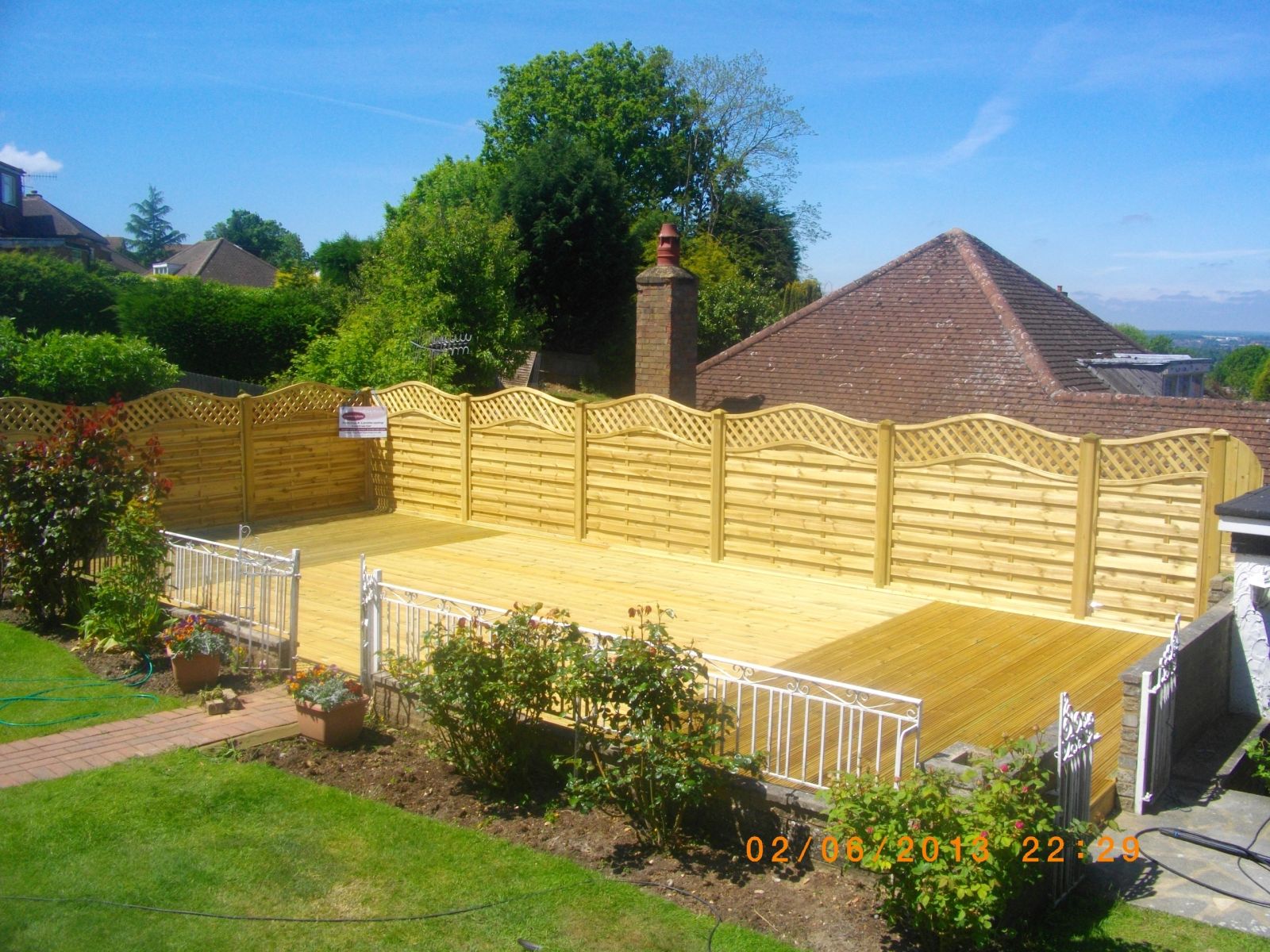
A solid acoustic fence combined with planting in front of it gets the best of both — genuine sound reduction from the solid barrier, softened by greenery that also helps with dust and visual softening.
Where space is tight, prioritising the solid barrier over depth of planting usually gives a better acoustic result than a wide but thin screen of shrubs.
Snow load and drifting against capping
Snow rarely loads a vertical fence face directly, but it drifts and settles along the top of a run, especially against capping or trellis toppers that catch and hold it rather than shedding it.
A sustained thaw-freeze cycle on wet capping timber is a common cause of splitting, since water trapped in the grain expands as it freezes and opens up hairline cracks that widen each winter.
A capping profile with a slight fall to shed water, rather than a flat top, reduces how much moisture sits there in the first place.
Snagging checklist items on a completed security run
A snagging check on a finished security boundary covers gate alignment and latch engagement, gap sizes at ground level and junctions, fixing torque on any tamper-proof bolts, and that capping or gravel boards sit flush along the whole run.
Any item that's marginal on day one — a slightly sticking latch, a small ground gap — is worth fixing immediately rather than left as a wear item, since these are exactly the points a determined attempt will test first.
Conservation covenants affecting boundary land
A relatively newer legal tool, the conservation covenant, allows landowners to agree binding restrictions on land use for conservation purposes, which can in principle extend to boundary treatments on affected plots.
These are still uncommon on ordinary residential properties but more likely on larger plots, smallholdings, or land near protected habitats.
Checking the title register for any registered covenant of this kind is worth doing on larger or more unusual plots before assuming standard rules apply.
Aluminium and steel railings
Aluminium railings are lighter, don't rust, and hold a powder-coated finish well without the ongoing maintenance steel needs, which makes them common for low-boundary and pool-safety railings where upkeep is meant to be minimal.
Steel railings are heavier and stiffer for the same section size, which suits taller or higher-security applications, but the finish has to be maintained — a scratch through galvanising or powder coating exposes bare steel to rust from that point.
Both are usually supplied as welded panels between posts rather than built up rail-by-rail on site, so panel width and post spacing need to be agreed before ordering rather than adjusted afterward.
Boundary questions following inheritance or probate
Properties passing through inheritance sometimes bring boundary questions to light for the first time, particularly where an elderly relative had an informal understanding with neighbours that was never documented.
Executors and new owners are generally well advised to check the title plan and deeds carefully during this process rather than simply continuing an inherited informal arrangement without confirming it.
Where a boundary genuinely wasn't clear to the previous owner, this is a reasonable moment to check with the neighbour and consider formalising a written agreement.
Pet-proofing a garden boundary
Dogs that dig will often go under a fence line rather than over it, so a gravel board or buried mesh apron at the base does more to keep a determined digger in than extra height above ground.
Gaps at gate thresholds and where a fence meets a wall or building are the most common escape points, and are worth checking specifically rather than assuming a continuous fence line is actually continuous at ground level.
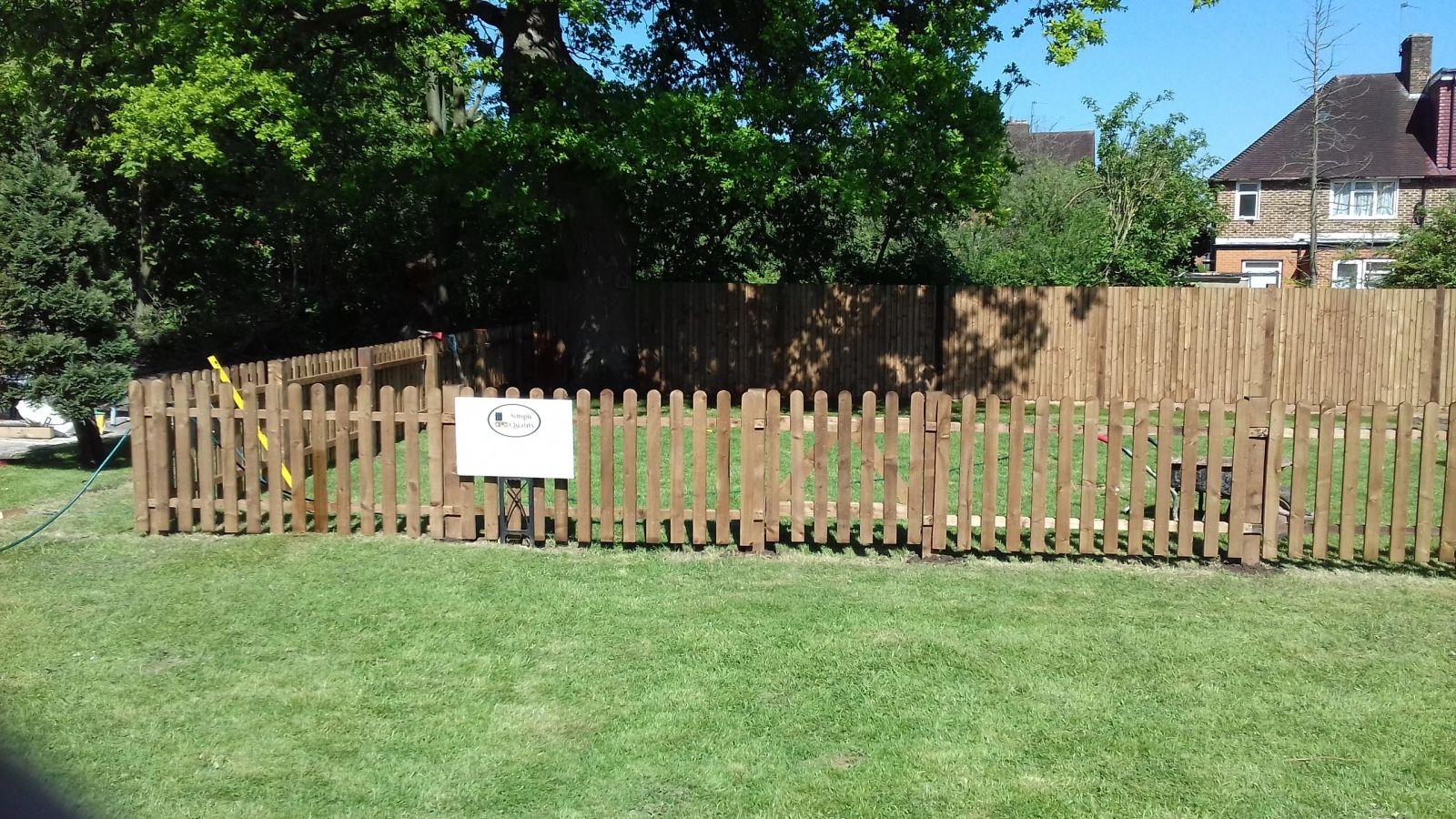
Smaller or younger dogs and cats can fit through gaps that look too small to be a concern, so picket or trellis-style boundaries usually need a solid section or mesh backing if pet containment is the priority.
Gate widths for cycle access
A side gate wide enough for a wheelbarrow isn't automatically wide enough for a cargo bike or a bike with panniers, which is worth checking against the actual bikes a household owns rather than a generic standard width.
Cycle storage tucked behind a side gate also needs a gate that can be propped open safely while wheeling a bike through, rather than one that swings shut under its own weight mid-manoeuvre.
Where cycle access is a genuine daily-use requirement, a slightly wider opening at quote stage is a cheap addition compared with widening an existing narrow gate later.
Boundary ownership evidence and T-marks
A 'T' mark on a title plan, pointing inward from the boundary line towards a particular plot, is the traditional (though not universal) convention indicating that plot owns and is responsible for that boundary structure.
Where both sides of a boundary carry a T, or neither does, the deeds are silent and ownership defaults to whatever can be evidenced by other means — old photographs, the position of fence posts, or long-standing maintenance history.
T-marks aren't a legal guarantee and can be missing or wrong on older plans, so where a boundary is disputed it's worth treating the mark as a starting point for discussion rather than conclusive proof.