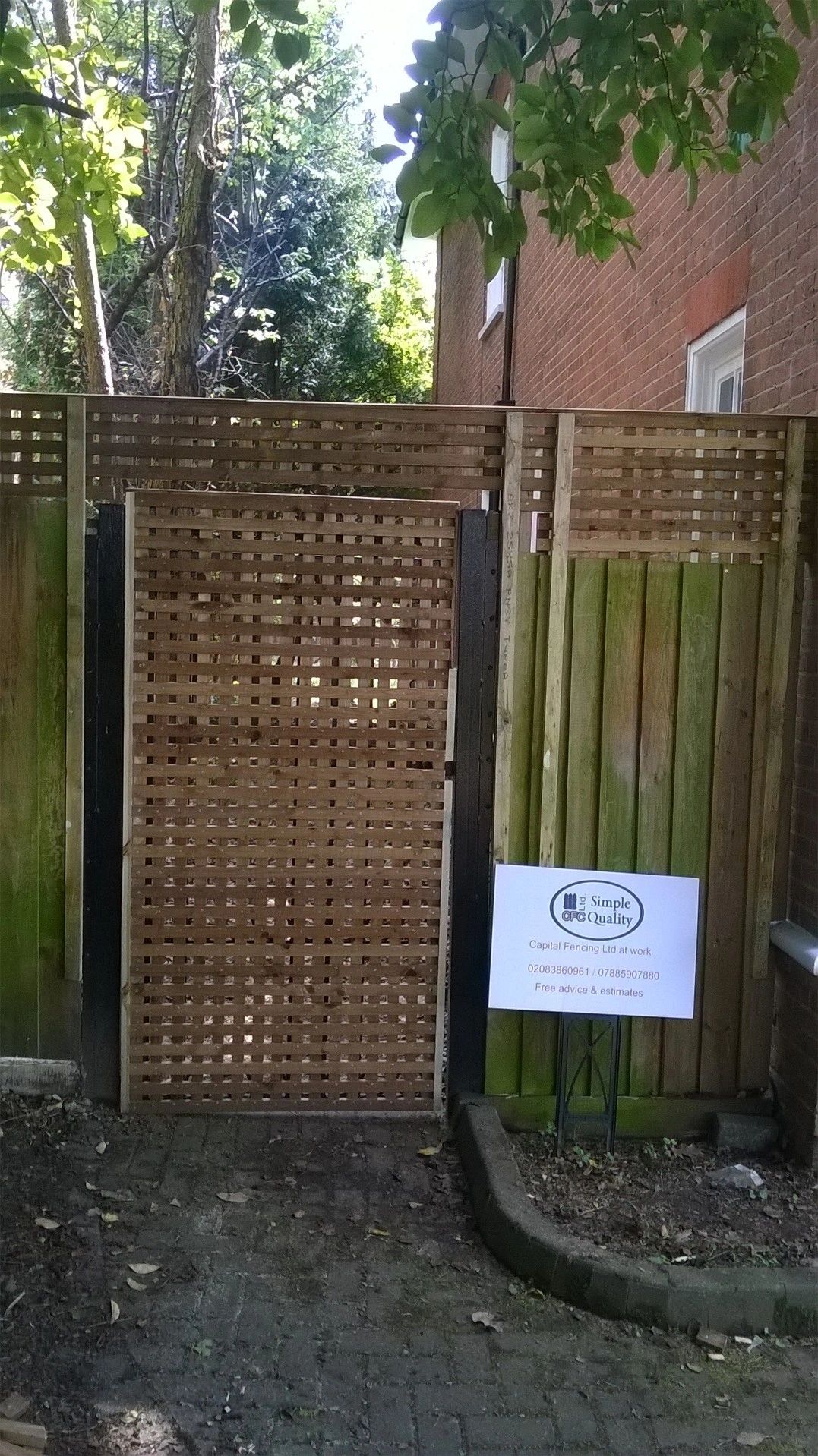
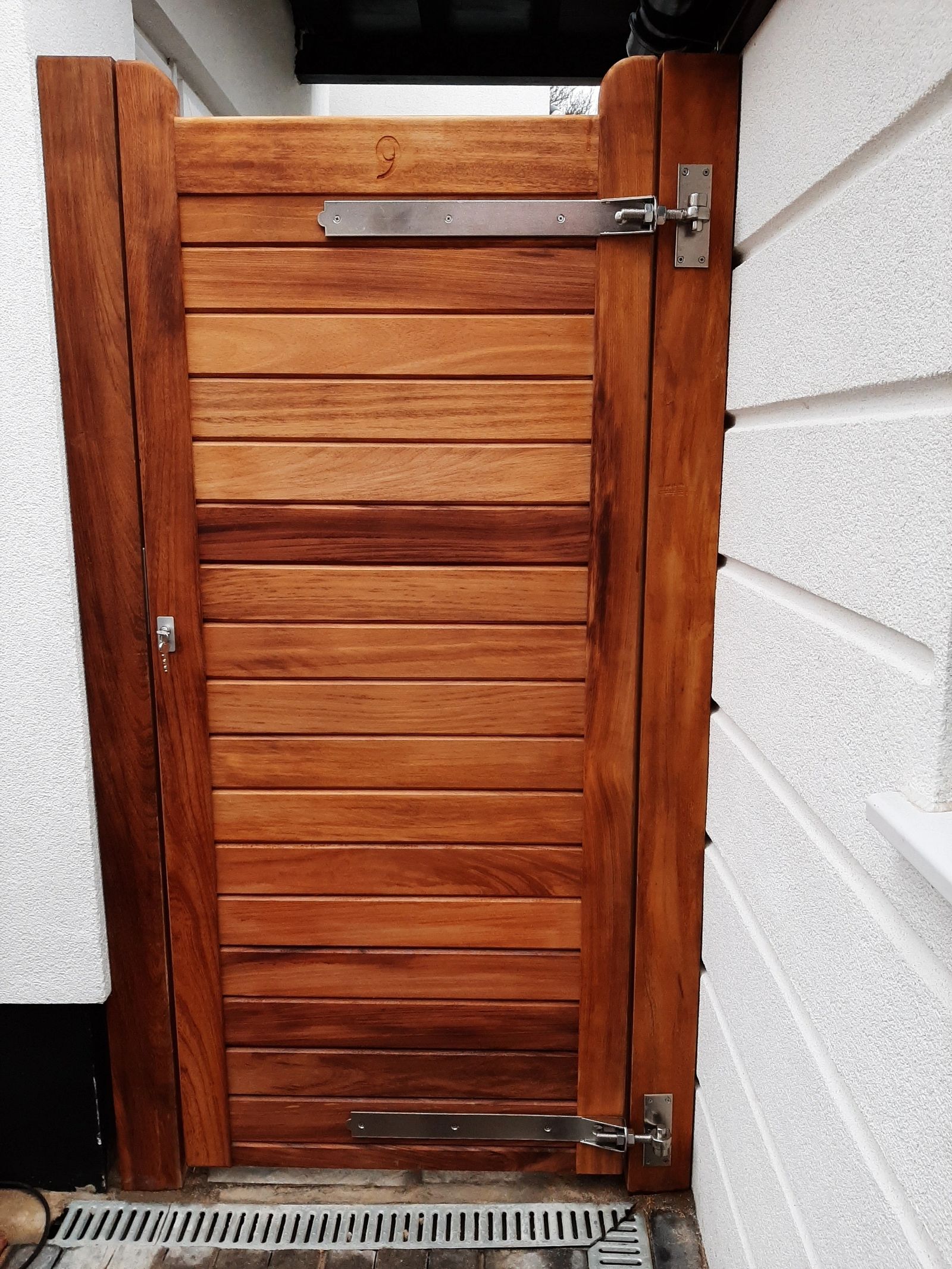
The gate as a persistent acoustic weak point
Even a well-fitted gate within an acoustic run has a working clearance around its edges that a fixed panel doesn't need, and that clearance is the single most likely place for sound to leak through an otherwise sealed boundary.
Overlapping stops, a drop seal at the base, and compressible strips along the closing edges reduce this gap, though a gate will still never seal as completely as the solid panels either side of it.
Offsetting the string line to protect it during digging
A string line pulled exactly along the intended post centre line gets in the way of digging and is easily knocked or buried in spoil, so many installers set it slightly to one side and measure across to it rather than digging directly beneath it.
A fixed offset distance, checked and noted once at the start, lets every post position be measured consistently from the same reference without needing the string itself to survive undisturbed through a full day of digging.
Re-checking the offset periodically through the day catches the line if it's been nudged, since a small unnoticed shift partway through a run throws every subsequent post slightly off true.
Frost heave effects on shallow-set posts
Frost heave occurs when water in saturated soil freezes and expands, lifting the ground surface and any shallowly set post embedded in it, sometimes by several millimetres each freeze-thaw cycle over a winter.
Posts set below the typical frost penetration depth for the region are far less affected, since the freezing zone that drives heave rarely reaches that far down, which is one reason recommended minimum depths are deeper in areas with harder winters.
A post that's visibly risen slightly over a hard winter, without any sign of the concrete cracking, has often been affected by heave rather than a failed footing, and it can sometimes settle back as the ground thaws.
Creosote and its substitutes
Traditional creosote, a tar-oil wood preservative, gives strong protection against rot and insects but is now restricted to professional and agricultural use in the UK following changes in chemical regulation, and isn't available for general retail sale.
Modern water-based and oil-based substitute preservatives aim to replicate creosote's protective performance without the same handling and environmental restrictions, though some traditionalists consider the older tar-oil formulations more effective on long-term exposed structural timber.
Fencing sold as 'creosoted' to the public today is typically treated with one of these substitute formulations rather than genuine creosote, since supply of the original product to non-professional users has been curtailed.
House numbering and signage fixed to gates
A house number, nameplate or intercom panel is sometimes fixed directly to a gate rather than a post or wall, and this needs planning into the gate's design so the fixing doesn't interfere with the frame's structural members or the gate's swing clearance.
Retrofitting signage to an existing gate should avoid fixing through a stile or rail in a way that weakens it, favouring surface-mounted brackets instead where possible.
Sports-pitch ground with irrigation
Perimeter fencing around a sports pitch or playing field often runs over ground with an engineered drainage or irrigation system just below the surface, including sand-slit drains or pop-up sprinkler lines that aren't always accurately recorded.
Damaging a drainage lateral while setting posts can cause localised waterlogging on the pitch itself long after the fencing work is finished, which is a far more costly problem to fix than the original fence job.
Liaising with the groundskeeper or facilities manager over exact drain and irrigation layout before digging is standard practice on this type of site, rather than relying on a general services scan alone.
Wheeling barrows over lawn without lasting damage
Repeated barrow runs over the same strip of lawn compact the soil and flatten the grass, and on wet ground a laden barrow can rut the turf enough that it doesn't recover without reseeding.
Laying scaffold boards or trackway matting along the barrow route spreads the load and protects the same strip from repeated single-wheel pressure, which is worth doing on any job running more than a day or two.
Choosing a slightly longer but firmer route — along a path rather than across open lawn — often does less lasting damage than the shortest direct line, even though it takes a little longer per trip.
The highway 1m rule in practice
The 1m permitted development limit applies to any boundary that fronts a highway used by vehicular traffic, which in practice includes most adopted roads and many unadopted estate roads that carry regular car use, not just classified A and B roads.
A footpath-only right of way at the front of a plot doesn't trigger the lower limit on its own, but councils interpret 'used by vehicles' broadly, so a shared driveway serving several houses usually counts.
Where it's unclear, checking with the local planning authority before building is cheaper than a retrospective application after a 1.8m fence goes up on what turns out to be a vehicular frontage.
Seasonal restrictions on hedge and vegetation clearance
Clearing vegetation or a hedge to make way for a fence during bird nesting season, broadly March to August, risks disturbing an active nest, which is a wildlife offence regardless of whether the fencing work itself is otherwise unrestricted.
A quick visual check for active nests before cutting back growth is standard practice, and where a nest is found the sensible step is working around it rather than pushing ahead with clearance.
Outside nesting season, most routine hedge cutting ahead of fencing work has no seasonal restriction, though thicker or more established hedgerows may still need the checks covered elsewhere for protected hedgerows.
When a boundary camera becomes part of a wider dispute
Boundary and fencing disagreements sometimes escalate to include complaints about cameras, lighting or noise, which can broaden a straightforward property dispute into several overlapping issues at once.
Keeping these strands separate in any correspondence — addressing the boundary question and any camera or nuisance concern individually — tends to keep discussions more focused and productive.
Where a dispute has genuinely broadened like this, a mediator or solicitor experienced in neighbour disputes more generally, rather than boundary-only expertise, may be the more useful next step.
Combining a low mound with a fence on top
A modest earth mound topped with a fence can achieve a similar overall screening height to a much taller fence alone, while needing less imported barrier height and giving a softer, planted appearance at the base.
This combination suits a plot with enough depth to accommodate the mound's footprint, and the fence portion still needs the same attention to sealing and joint detail as a full-height barrier on its own.