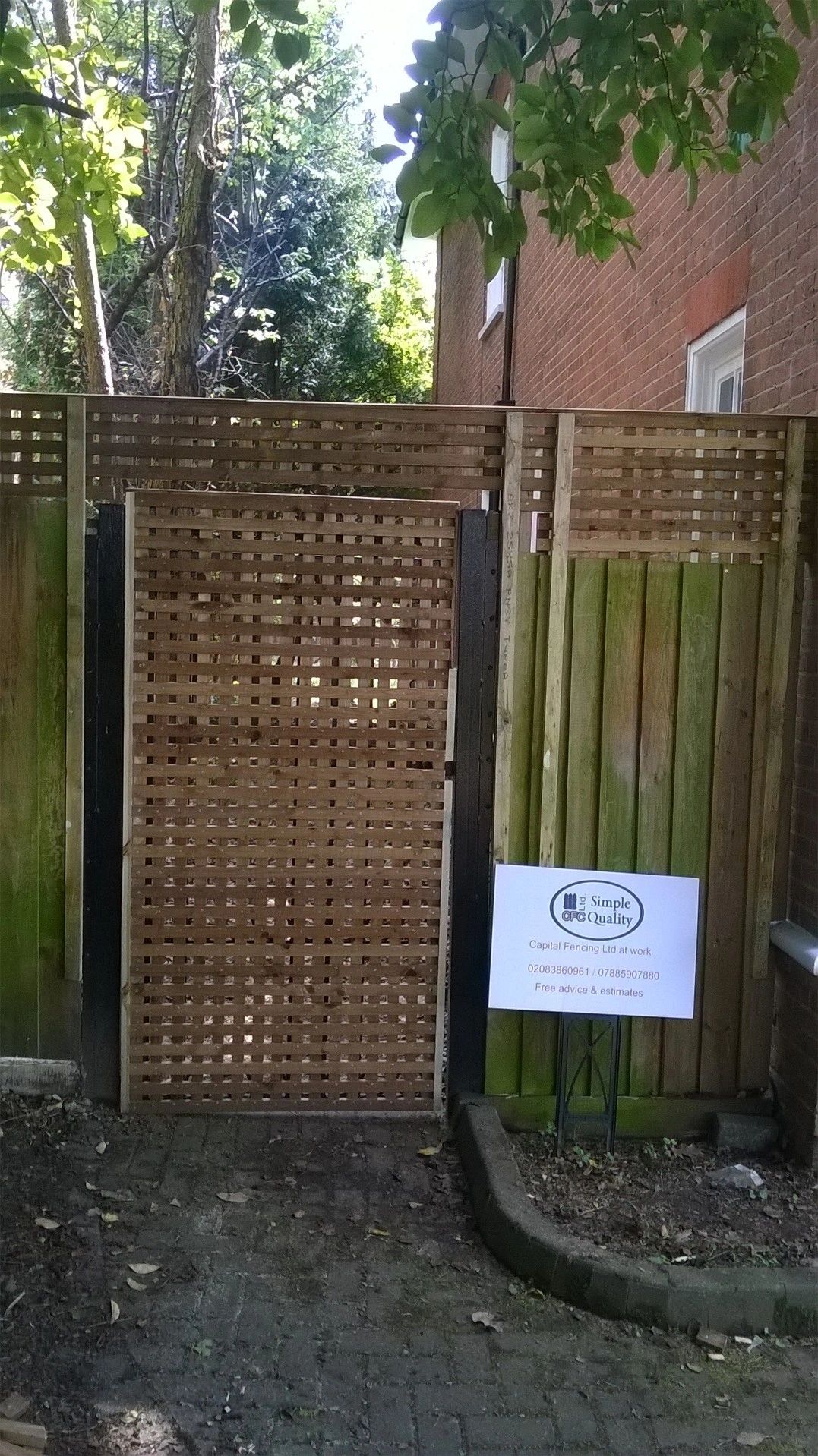
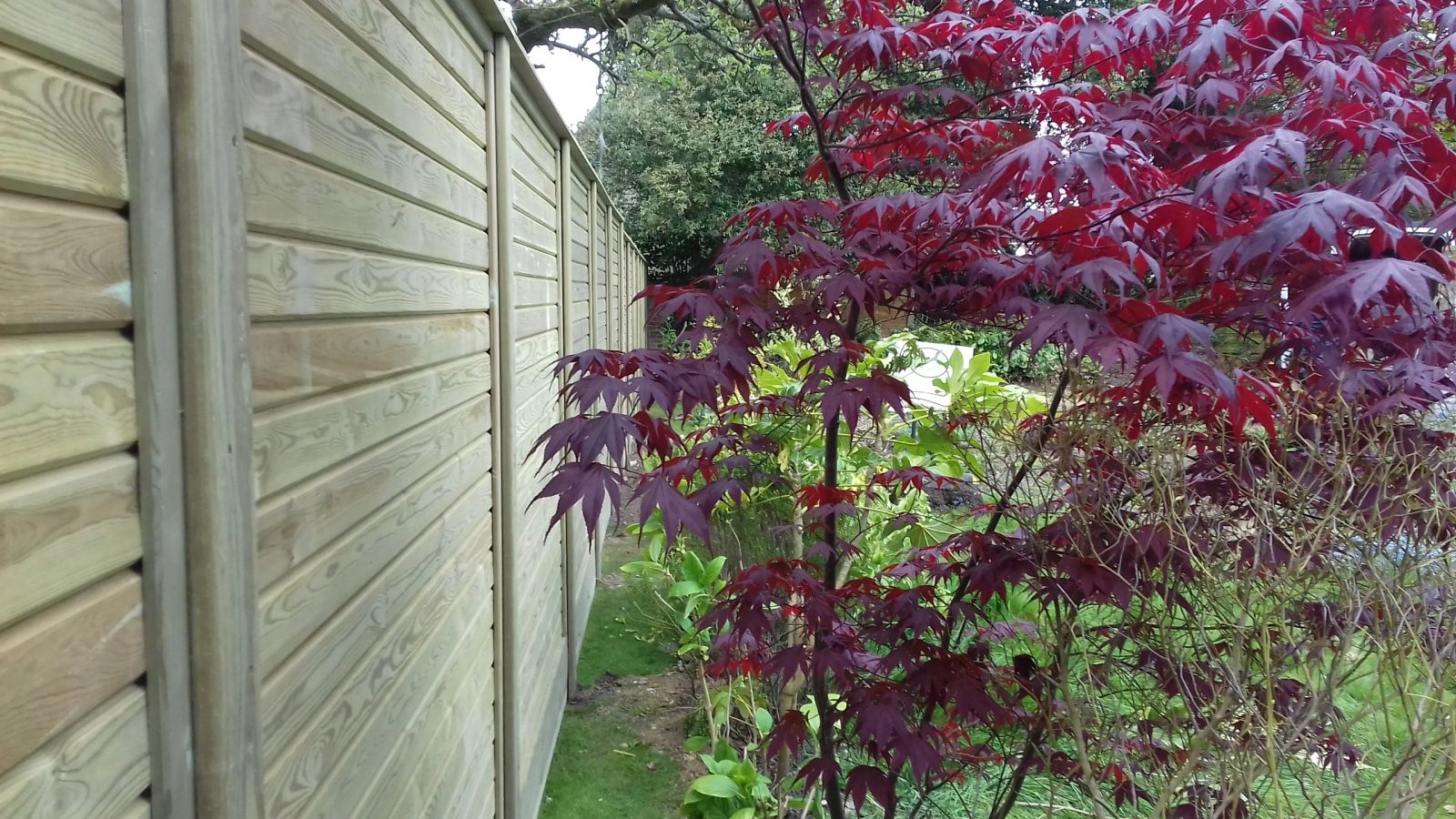
Post fixing for a security-rated boundary
A security fence lives or dies on the post fixing, not the panel — a run that can be rocked loose at the base gives an intruder a lever the panel design can't fix. We set posts into concrete to a depth that matches the height and loading of the run, not a single stock depth for every job.
Where ground is soft or made-up, post spacing is tightened rather than left at a standard interval, because a wider gap between fixings is exactly the weak point a determined push targets first.
Handling excavated spoil on a fencing job
Digging even a modest run of post holes generates a surprising volume of spoil, and leaving it in a single heap on a lawn for the duration of a job kills the grass underneath if left more than a few days.
Spreading spoil thinly on a border, bagging it for removal, or arranging same-day disposal all avoid that dead patch, and the right choice depends on whether the client wants the spoil kept for landscaping elsewhere on the plot.
Heavy clay spoil is particularly slow to dry and awkward to barrow once it's rained on, so timing the dig to avoid leaving wet spoil sitting overnight where possible reduces both the mess and the extra effort of moving it later.
Striker plate material and post protection
A metal striker plate let into the post protects the timber from repeated latch impact and gives the latch bolt a hard, true surface to engage with, rather than relying on the post timber itself to take that wear.
A post without a striker plate develops a worn, rounded hole around the latch opening over time, which eventually stops the latch holding securely even if realigned.
Boundary questions following inheritance or probate
Properties passing through inheritance sometimes bring boundary questions to light for the first time, particularly where an elderly relative had an informal understanding with neighbours that was never documented.
Executors and new owners are generally well advised to check the title plan and deeds carefully during this process rather than simply continuing an inherited informal arrangement without confirming it.
Where a boundary genuinely wasn't clear to the previous owner, this is a reasonable moment to check with the neighbour and consider formalising a written agreement.
Stainless fixings in exposed positions
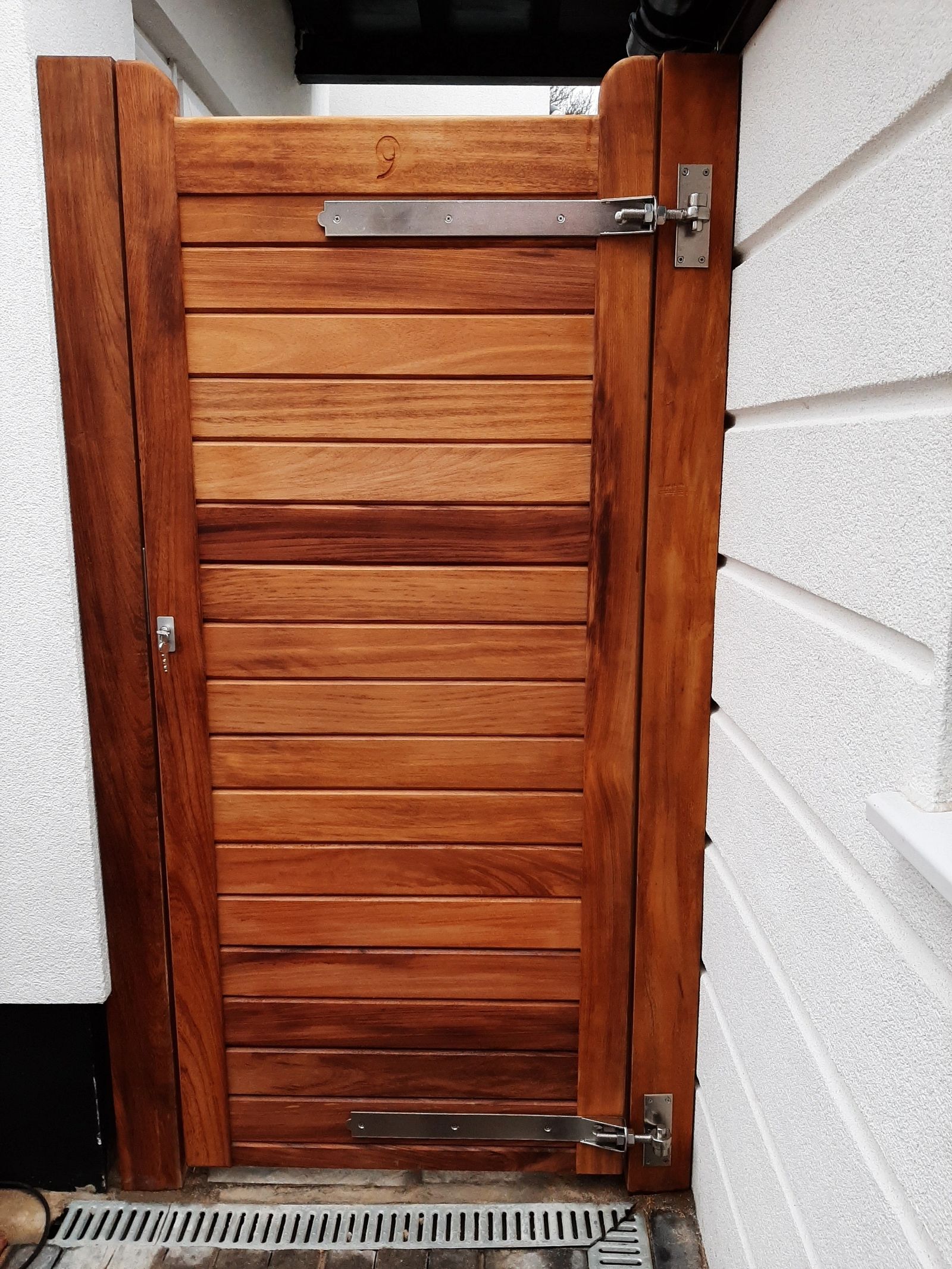
Stainless steel fixings resist corrosion better than galvanised equivalents and don't leave the dark rust streaks that a failing galvanised screw head can bleed into pale or oiled timber.
They're specified more selectively than as a blanket upgrade, typically on coastal or otherwise highly exposed sites, on hardwood where tannins react badly with ordinary galvanised steel, or on visible ironmongery where staining would be obvious.
Grade matters even within stainless — 304 is adequate for most exposed domestic fencing work, while a genuinely coastal or salt-exposed site is better served by the more corrosion-resistant 316 grade.
Stainless fixings near a road
Fixings on a gate close to a public road pick up more airborne grit, salt spray in winter and general moisture than one set back in a garden, which accelerates corrosion on standard galvanised screws and bolts.
Stainless steel fixings cost more but resist this environment noticeably better, and are worth specifying on any roadside gate repair.
Hedgehog gaps and protected species awareness
A small gap at the base of a fence panel, often around 13cm square, lets hedgehogs and other small wildlife move between gardens, which is increasingly encouraged as gardens become more enclosed.
Separately, some sites may have protected species such as bats, nesting birds or great crested newts present, and disturbing them during certain works can be a legal matter regardless of boundary ownership.
Where there's any reason to suspect protected species on a site, checking with an ecologist or the local authority before groundworks is the sensible route rather than assuming it won't apply.
Corrosion inspection on buried metal fixings
Metal post anchors, brackets and shoes set at or below ground level corrode out of sight, meaning surface appearance above ground can look sound even where the buried portion has significantly deteriorated.
Rust staining bleeding up the timber post from ground level, or visible movement at the base despite an apparently solid concrete surround, are common indirect signs of corrosion happening below the visible surface.
Because the failure mode is progressive and hidden, periodic inspection of exposed fixings as a proxy, combined with checking for movement, is generally the practical approach rather than routinely excavating buried anchors.
Checking joist bearing sits level across uneven support pads
Deck support posts or pads set at even so-slightly different heights throw the whole joist run out of level, which shows on the finished deck as a barely perceptible but persistent lean across its width.
Checking each support with a long level laid across several posts at once, rather than checking each post in isolation, catches a gradual drift in height across the run that individual checks would miss.
Packing shims under a joist to correct a low support point is an acceptable fix for a small discrepancy, but it isn't a substitute for getting the support posts themselves right in the first place on a new build.
Absorptive facing material choice
An absorptive facing typically uses a perforated timber, metal or composite skin over a porous backing, and the size and density of the perforations affect which frequencies it absorbs best rather than the facing having uniform effect across all noise.
Choosing a facing suited to the noise source's typical frequency content, rather than a generic absorptive product, gives a more useful outcome than treating all absorptive facings as interchangeable.
RAL colours and UV fade
RAL is a standardised colour matching system widely used for powder coating and factory paint finishes on metal fencing and gates, allowing a specific shade to be reordered consistently years apart.
Darker RAL shades, particularly reds and some greens, tend to fade faster under UV exposure than blacks and greys, since the pigments used to achieve those colours are often less UV-stable.
South-facing runs in direct sun for most of the day will fade noticeably faster than a shaded run of the same colour and coating, which is worth factoring in in when matching an extension to existing fencing.