Sliding versus swing gate security
A sliding gate needs a clear track run alongside the opening and doesn't sweep into the site, which suits a tight yard or a gate that has to sit flush with a boundary wall; a swing gate needs clearance to open but is generally simpler to fix and repair.
For security, a sliding gate is harder to force from a stationary position because the load runs along a track rather than through a single hinge post, but its track and rollers need regular clearing to keep operating.
Pale spacing tolerance on a palisade run
Palisade pale gaps are set to a maximum spacing so a foot or hand can't find purchase between adjacent pales, and drift beyond that tolerance over a long run is usually a sign the pales were fixed by eye rather than gauged off a jig.
A gauge batten cut to the exact centre spacing keeps every bay consistent, which matters more on security runs than on a purely decorative fence because a single wider gap becomes the obvious point of attack.
Extending an existing acoustic fence upward
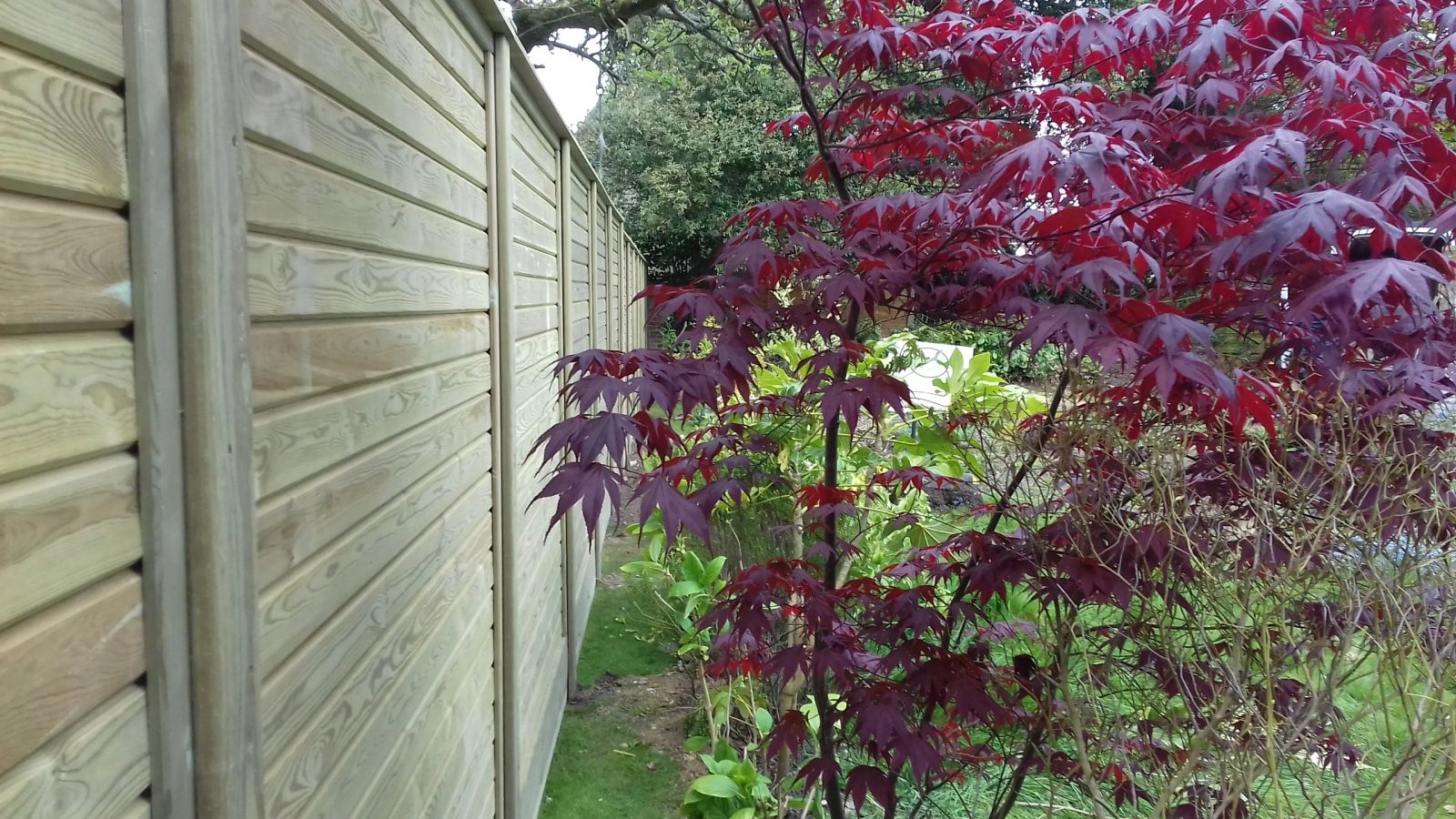
Adding height to an existing acoustic panel run means checking the existing posts and foundations can carry both the extra weight and the increased wind loading a taller panel brings, rather than simply bolting more panel onto what's there.
In many cases the existing posts were sized for the original height only, and extending upward without checking this can lead to lean or failure that a like-for-like replacement wouldn't have caused.
Pool and hot tub enclosure fencing logic
While UK regulations don't mandate pool fencing the way some other countries do, insurers and safety guidance still recommend a self-closing, self-latching gate and a barrier without easy footholds around any domestic pool or hot tub, particularly where young children have access to the garden.
The latch or lock should sit high enough that a small child can't reach it even standing at the gate, and the gate should swing away from the pool area rather than toward it so it can't be propped open accidentally.
A solid or closely-spaced barrier at least 1.2m high with no horizontal rails low enough to climb is the general standard worth applying even without a specific legal requirement to do so.
HMO licensing and boundary obligations
A licensed House in Multiple Occupation can carry specific conditions relating to the external areas of the property, including secure and well-maintained boundary fencing, safe means of escape through a rear garden, and bin storage screened from the street.
Licensing officers inspecting the property will check the condition of boundary structures as part of the wider fire safety and amenity standards, and a broken or unsafe fence can be flagged as a licence condition breach requiring remedy within a set period.
Landlords of licensed HMOs should treat boundary repair requests from the council's licensing team as time-limited compliance matters rather than routine maintenance to schedule at leisure.
Rising butt hinges for self-lifting clearance
A rising butt hinge lifts the gate slightly as it opens, which helps it clear a rug, threshold upstand or slightly uneven paving that a standard hinge would catch on, then lowers it again as it closes.
They're more common on side gates and garden doors than on driveway gates, where the clearance problem they solve is less likely to occur.
Applying for a Land Registry boundary determination
Where a boundary's exact position is genuinely disputed, it's possible to apply to HM Land Registry for a 'determined boundary', which involves a formal survey and legally fixes the line rather than leaving it as a general indication.
This process is comparatively rare for domestic disputes because of the cost and evidence involved, and is normally a last resort after direct discussion has failed.
Most everyday fence replacement work never needs this, but it exists as a formal route for the minority of cases where agreement genuinely can't be reached.
Choosing a fence stain or paint finish
Fence stains range from clear or lightly tinted preservatives that let the timber grain show through, to fully opaque paints that behave more like a coating than a stain and hide the wood's natural texture.
Darker stains show dust and cobwebs less but can absorb more heat in direct summer sun, which slightly increases how much the timber expands and contracts through the day.
Whatever finish is chosen, re-application intervals differ significantly between a thin stain and a heavier paint system, which is worth factoring into the long-term maintenance plan rather than just the initial look.
Checking post bases for corrosion under heavy load
A steel post base carrying the weight of a dense acoustic panel is under more sustained load than the same post supporting an open fence, so any corrosion at the base has a greater effect on the post's ability to stay upright.
An annual check at ground level, where moisture and debris tend to collect against the post, catches early corrosion before it compromises a post that's carrying more weight than a standard fence post would.
Meeting stiles on double gates
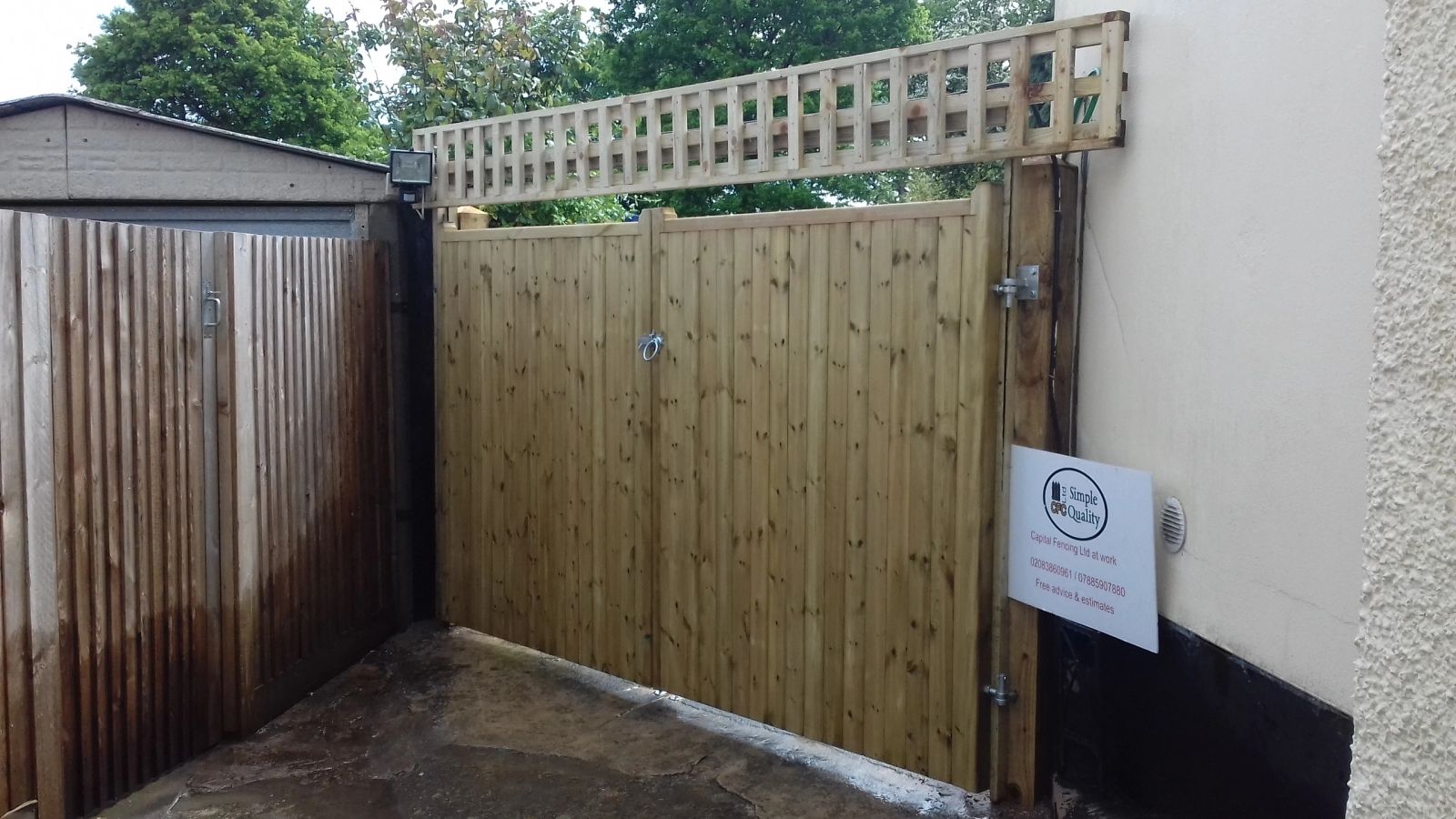
Where two leaves of a double gate meet in the middle, the meeting stiles need to stay flush and aligned with each other for the latch or bolt arrangement to work, and seasonal movement or a dropped hinge on either leaf throws this alignment off first.
We check both leaves together rather than adjusting one side in isolation, since a fix on one leaf alone can leave the meeting point mismatched.
Realistic maintenance intervals
Pressure-treated softwood fencing generally wants a re-application of preservative or stain every two to three years to keep the surface protected, more often on a south-facing run that gets constant UV exposure.
Gate hinges and latches are worth checking annually for movement or corrosion, since a small adjustment caught early avoids the gate racking out of square and needing a rebuild.
Decking boards benefit from a yearly clean to clear leaf litter and algae from the gaps, which is what actually causes most of the slipperiness people blame on the timber itself.