Checking for adjacent drainage runs before excavating
A land drain or perimeter drainage run laid to keep a garden from waterlogging is easy to miss during a routine dig, since it's often shallower and less obviously marked than a mains service.
Digging through one doesn't usually cause an immediate problem visible on the day, but it can quietly reintroduce a waterlogging issue the drain was originally installed to solve, sometimes not noticed until the following wet season.
Where a garden has a known history of standing water that was previously addressed with drainage work, it's worth asking the client what's down there before digging rather than finding out by breaking through a pipe.
Snagging checklist items on a completed security run
A snagging check on a finished security boundary covers gate alignment and latch engagement, gap sizes at ground level and junctions, fixing torque on any tamper-proof bolts, and that capping or gravel boards sit flush along the whole run.
Any item that's marginal on day one — a slightly sticking latch, a small ground gap — is worth fixing immediately rather than left as a wear item, since these are exactly the points a determined attempt will test first.
Post spacing and panel stiffness
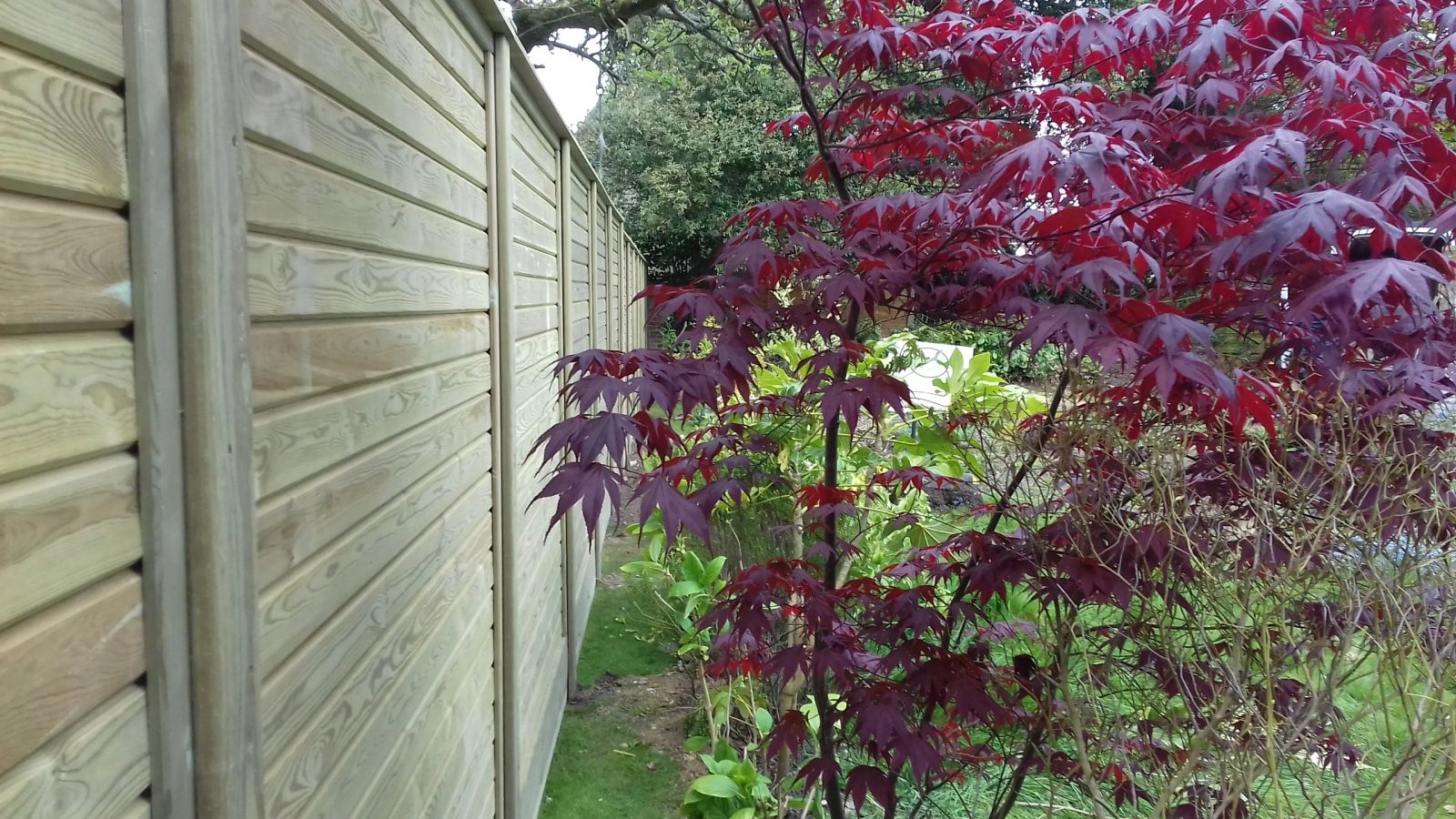
Reducing the gap between posts on a heavy acoustic run increases the stiffness of the overall structure and reduces the deflection any individual panel experiences under wind load, which in turn helps joints stay tight over time.
This means an acoustic run is sometimes specified with closer post centres than a standard fence of the same height, adding to the materials cost but reducing the risk of gradual joint opening from repeated flexing.
Timber versus concrete gravel boards
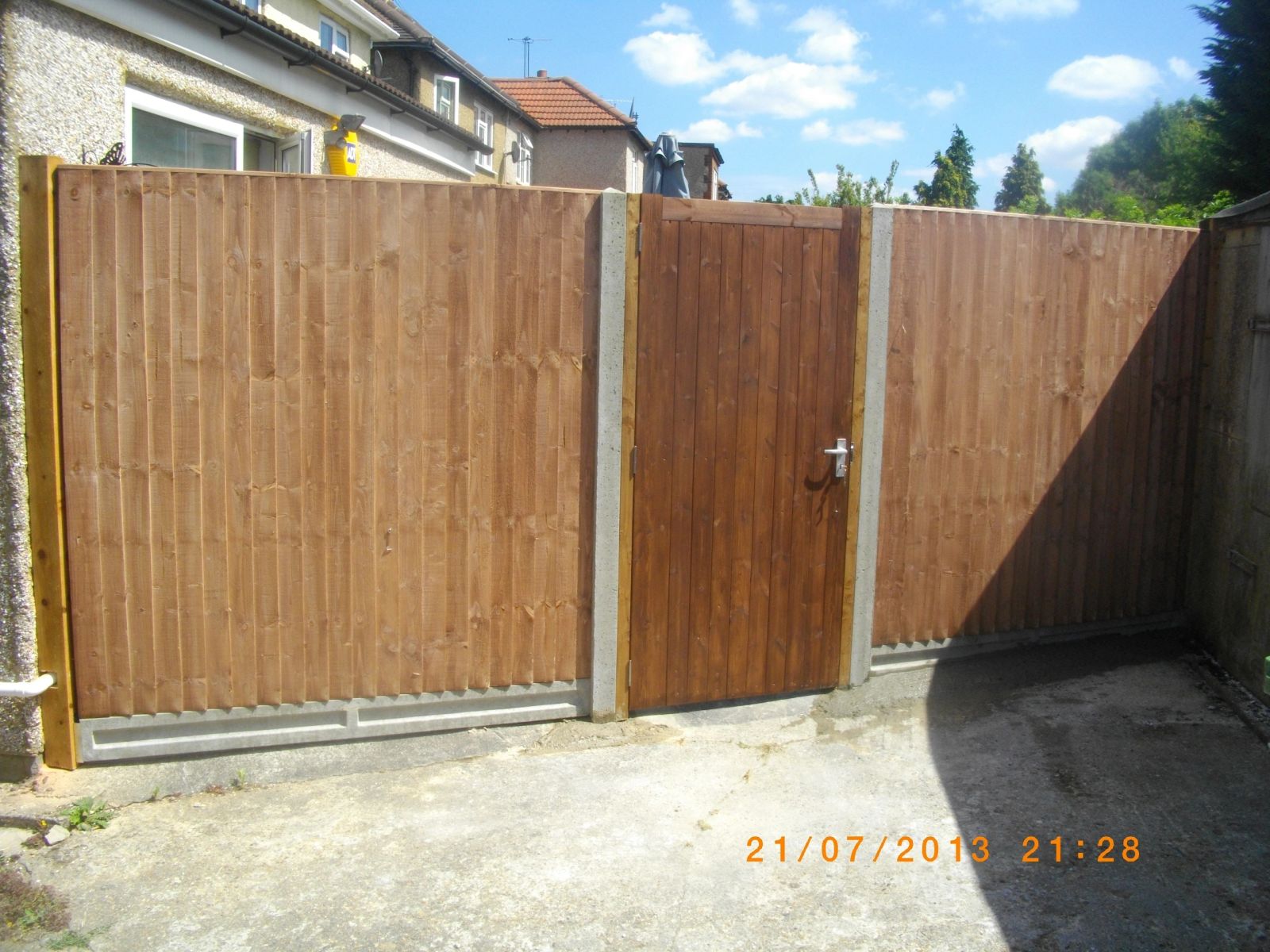
A gravel board sits at the base of a fence panel to keep the panel itself clear of standing water and direct ground contact, which is where rot usually starts on an otherwise sound fence.
Timber gravel boards are cheaper and easier to match to a timber fence's finish, but need replacing more often than concrete boards, which resist rot indefinitely but can crack under impact and don't take a stain or paint finish as readily.
On a plot with poor drainage or a known damp problem, concrete gravel boards are usually the more economical long-term choice despite the higher initial cost.
Sizing a driveway gate
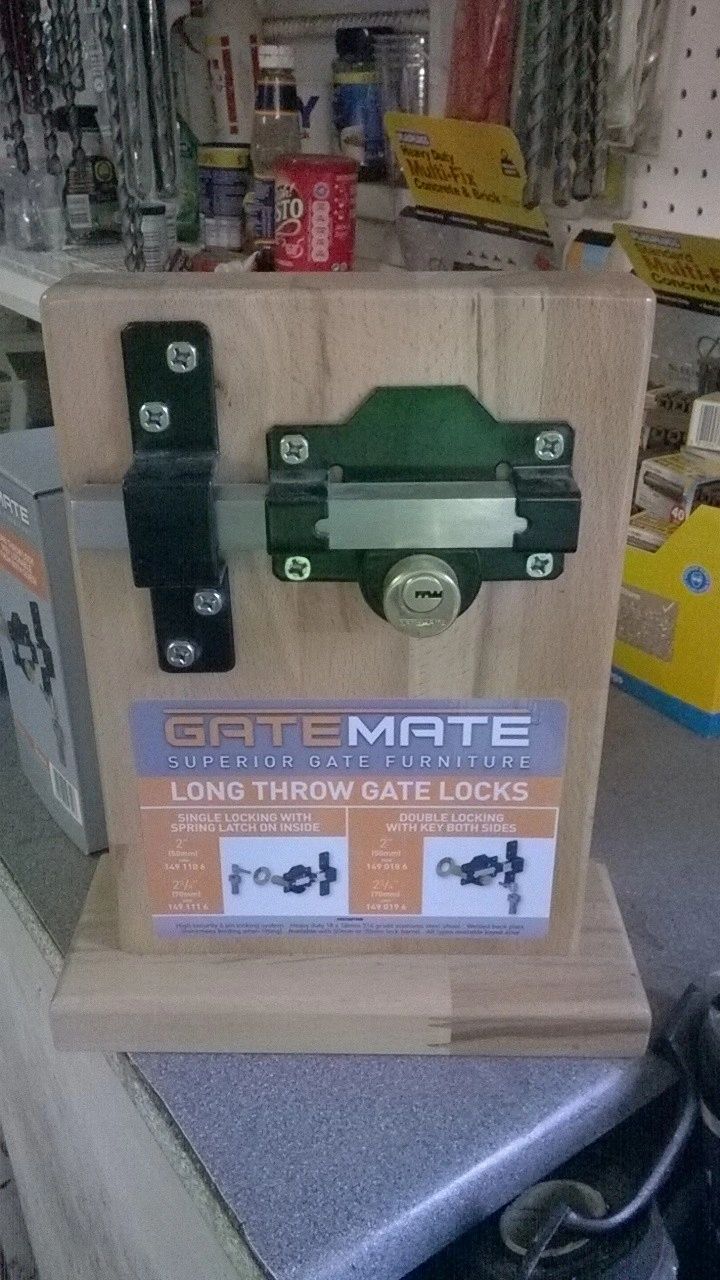
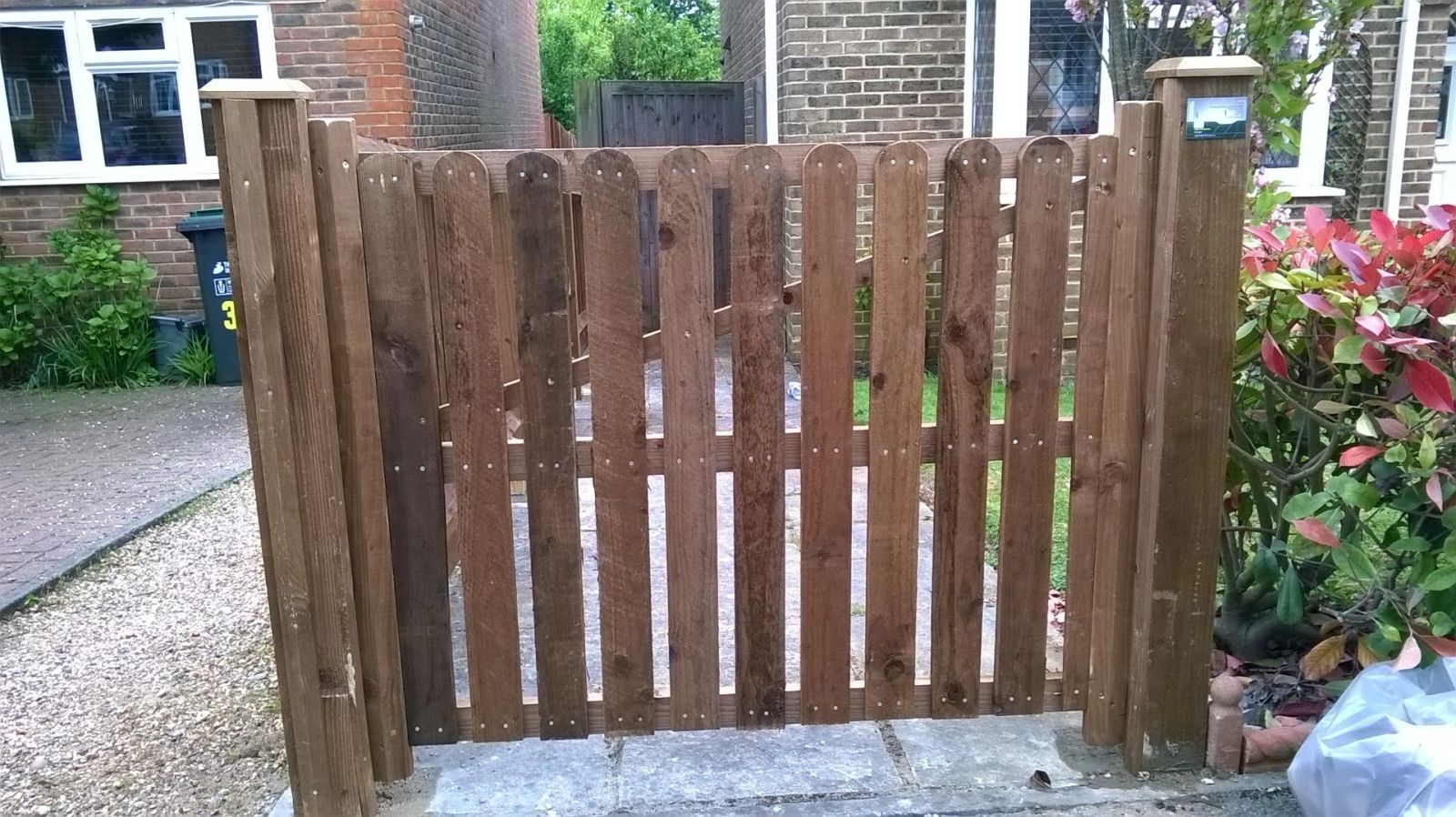
A single driveway gate needs enough swing clearance to open fully without catching a kerb, a parked car, or a slope in the drive itself, which is worth checking with a tape measure rather than assuming a standard width will fit.
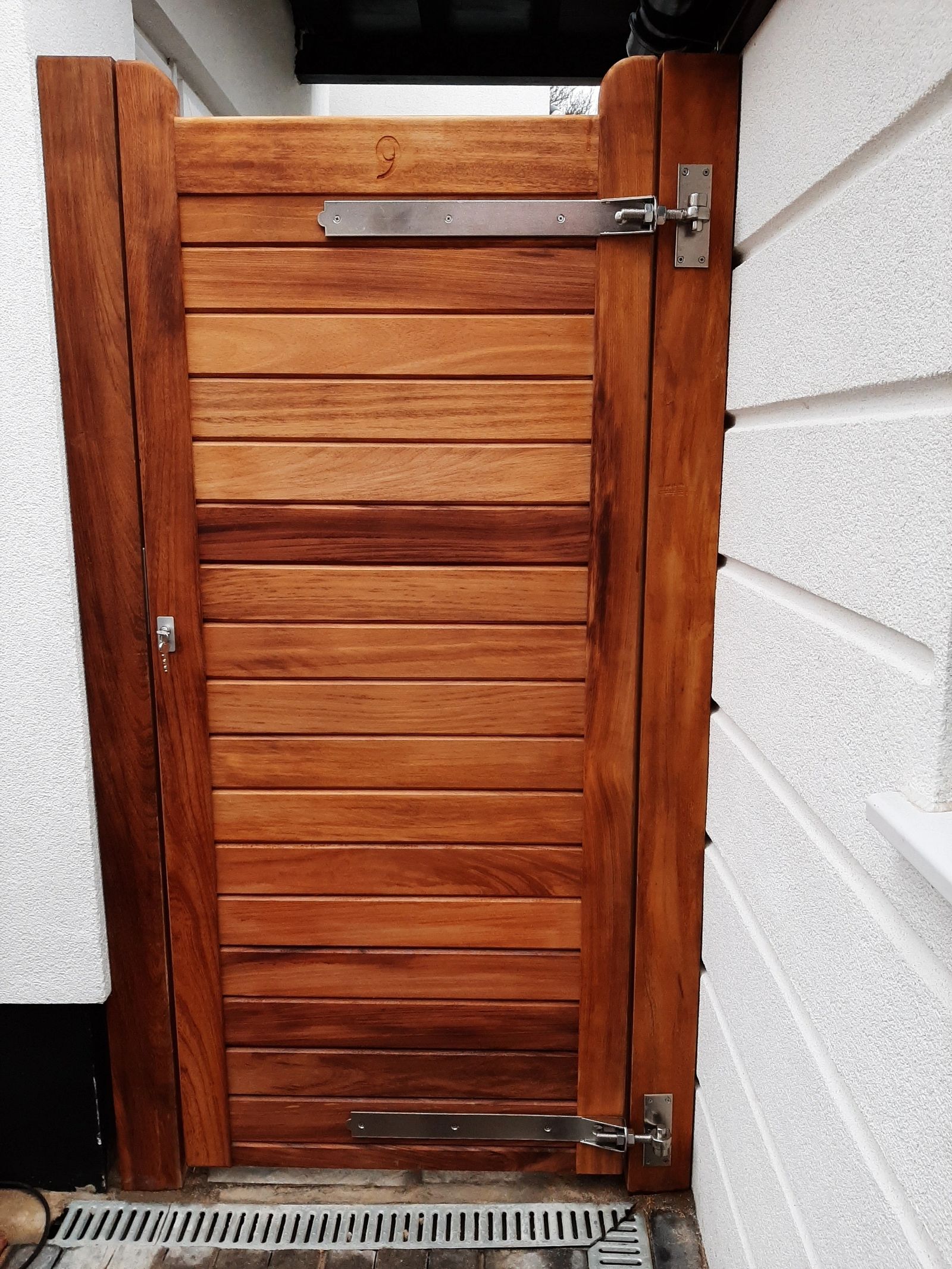
Double gates spread the load and swing arc across two leaves, which suits wider openings and reduces the strain on any one hinge post, but need a solid centre stop or drop bolt so the leaves meet cleanly and don't rack under wind load.
Automation, if it's wanted, changes the gate's structural requirements too — motorised gates need a rigid, properly braced frame and adequate foundations for the motor mounts, which is worth specifying before the gate is built rather than retrofitting later.
Extending an acoustic run along a boundary
Where only part of a boundary needs acoustic treatment — the section directly facing the noise source — we match the height and detailing into the standard fencing either side so the transition doesn't leave a weak gap at the join.
On a shared boundary, coordinating with a neighbour who might extend the same treatment later keeps future work compatible.
Footway licences for materials on a pavement
Storing fencing materials, a small skip, or scaffolding on a public footway, even briefly, can require a licence from the council responsible for that stretch of highway.
This is separate from any parking suspension for a vehicle, and covers the physical obstruction of pedestrian space rather than the road itself.
On narrow residential pavements it's worth checking the council's footway licence requirements ahead of a delivery, since blocking a pushchair or wheelchair route without authorisation can draw a complaint.
Diagnosing which of the three usual causes applies
Almost every failing gate comes down to the hinge side, the frame or the ironmongery, and diagnosing which one it actually is before quoting avoids paying for a new gate that wasn't needed.
We check hinge fixings, frame square and latch alignment separately on site rather than assuming from how the gate looks.
Low-frequency limits of a fence barrier
Low-frequency noise, such as heavy diesel engine rumble or bass from nearby plant, is inherently harder for any fence-height barrier to reduce than higher-frequency noise, because long sound wavelengths diffract over a barrier more readily.
We're upfront that a fence will typically do more for the higher-frequency content of traffic noise than for a low, droning hum, since that's a limitation of physics rather than of the build quality.
Data protection basics for boundary CCTV
Domestic CCTV covering only a homeowner's own property is generally exempt from full UK GDPR obligations, but that exemption narrows considerably once cameras capture a neighbour's garden, shared paths, or public areas.
Where wider coverage is genuinely needed, clear signage and being able to explain why footage is captured helps if a neighbour raises a concern with the Information Commissioner's Office.
Positioning cameras to focus tightly on a homeowner's own boundary and property, rather than sweeping across a neighbour's space, is the simplest way to avoid this becoming an issue.
Working off a ladder without scaffold on fencing jobs
Most domestic fencing and gate work is low enough to manage from stepladders rather than needing scaffold, but a ladder still needs a firm, level footing and, on soft ground, a board or plate under the feet to stop it sinking unevenly.
Working at the top of a tall gate post or over a wall with a ladder means keeping three points of contact and avoiding overreaching sideways, which is usually the point a ladder starts to slide rather than tip.
Where capping or a top rail needs fixing along an entire run at height, moving the ladder in short, frequent steps is safer and generally faster than overreaching from a single position to save moving it.