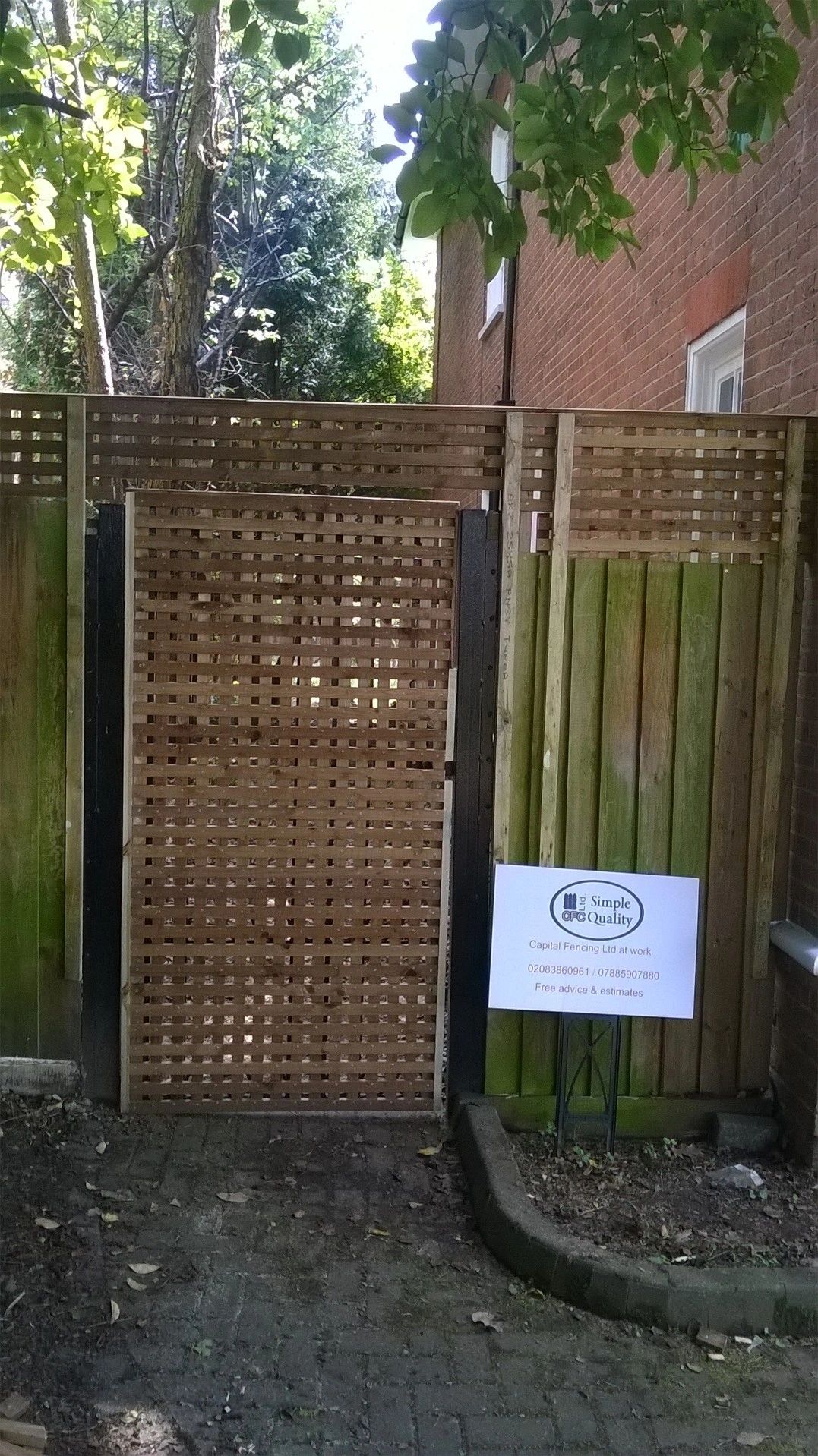
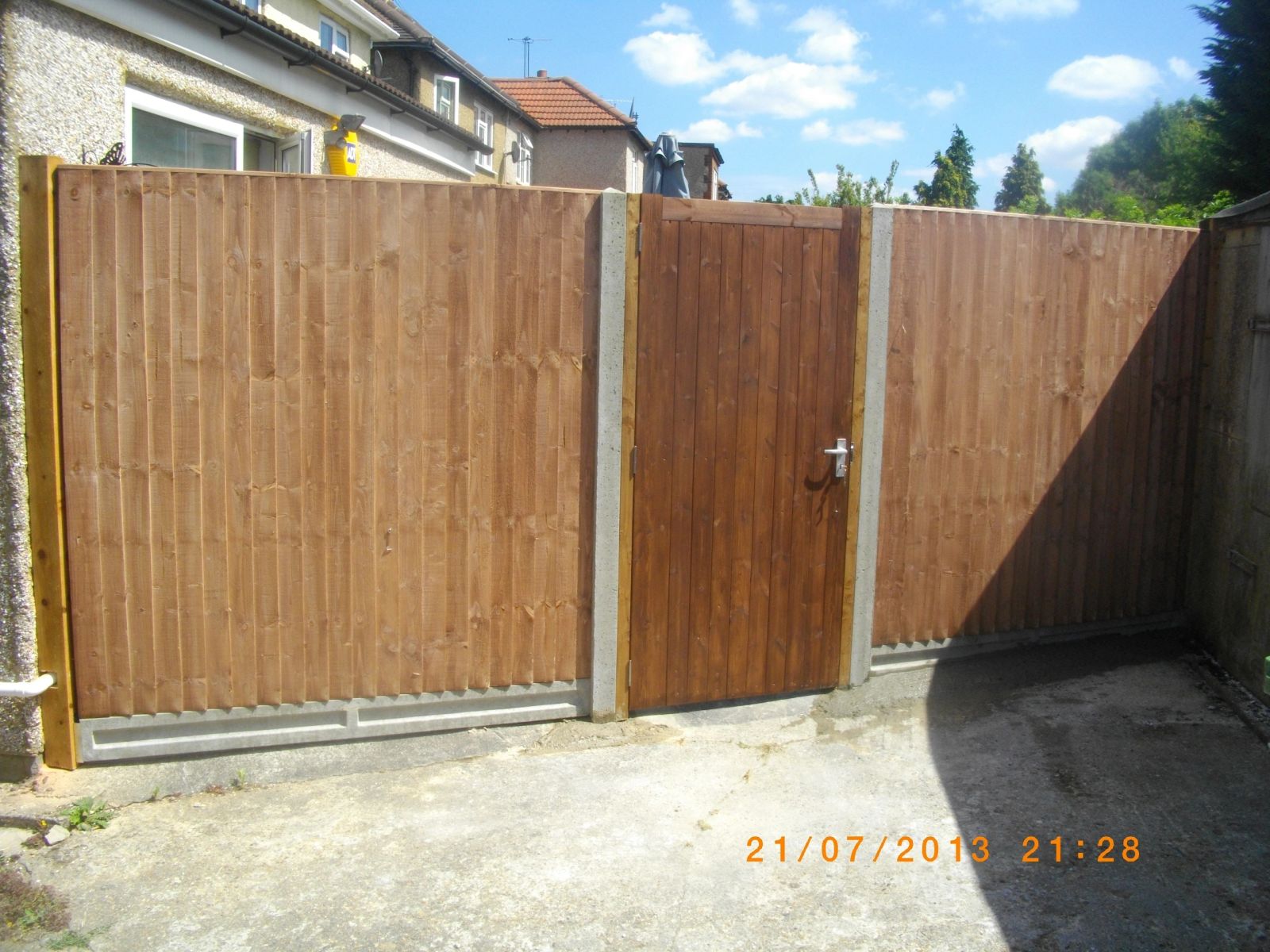
Mechanical condition needed before adding automation
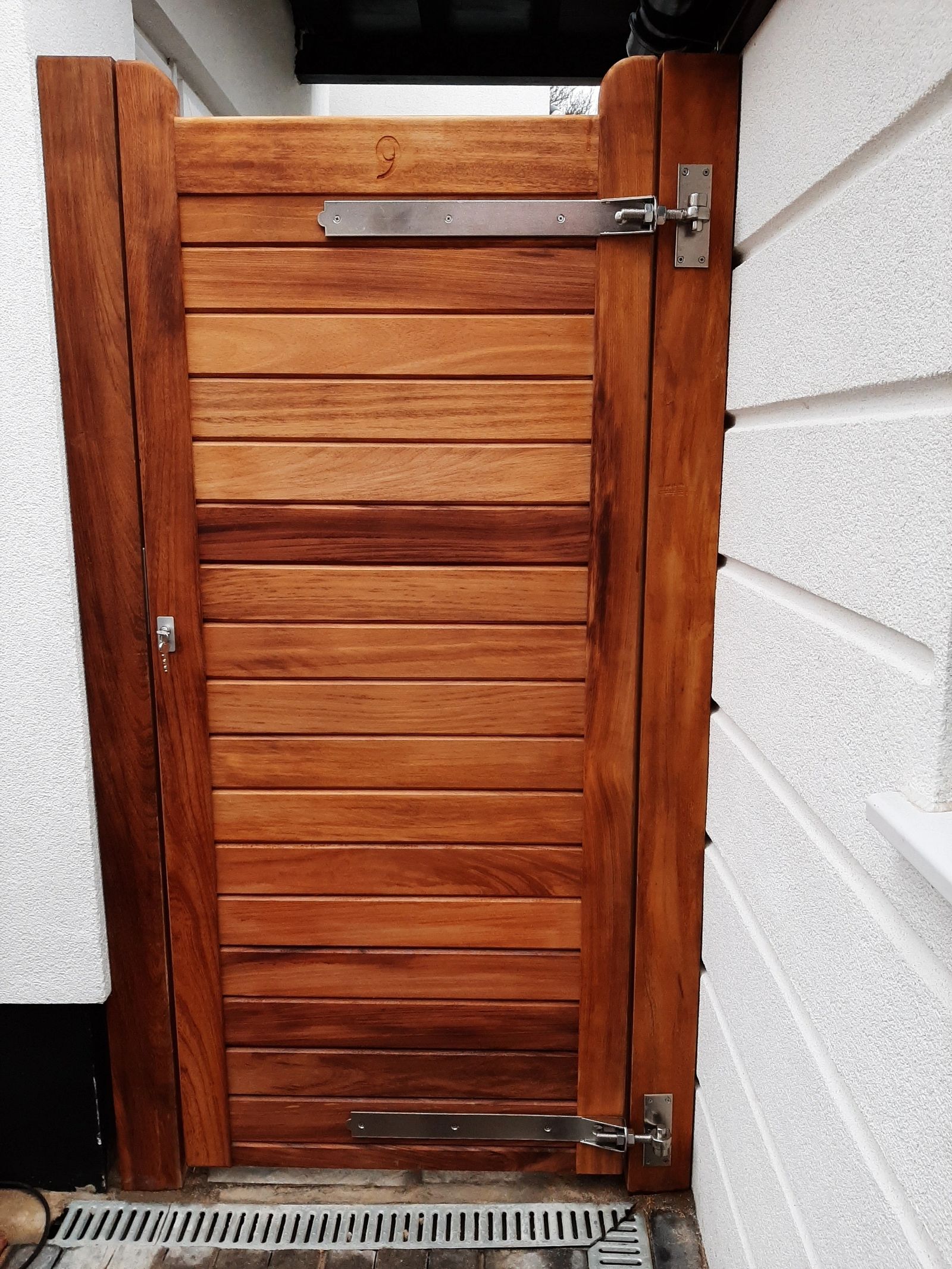
A gate being considered for automation needs to swing or slide freely by hand first, since an automated opener will struggle with — and can be damaged by — a gate that already binds, drags or requires extra force to move manually.
Addressing hinge, track or frame issues before automation is fitted avoids putting new load on a mechanical fault that was already present.
Recycled plastic fence posts
Posts made from recycled plastic, sometimes blended with additives for UV resistance and rigidity, avoid timber's rot and insect vulnerability entirely, since the material has no organic content for fungi or insects to attack.
They tend to be more flexible than an equivalent timber section of the same size, which can be an advantage in absorbing impact but a disadvantage where rigidity is needed to resist sustained wind load without visible sway.
Their thermal expansion behaviour is closer to other polymer products than to timber, meaning fixings and adjoining materials need similar allowance for movement as with composite boards rather than being treated as a timber-equivalent product.
Utility marker posts near a boundary line
Small yellow, blue or red marker posts near a boundary often indicate a buried gas, water or telecoms service running close to or along the line, placed there by the relevant utility company.
These markers are a useful early warning but aren't a precise map, so it's still worth requesting formal utility plans from the relevant providers before digging post holes nearby.
Damaging a utility service while digging can be both costly to repair and, in the case of gas or high-voltage cabling, genuinely dangerous, which is why checking first matters more than the fence design itself.
Comparing a garden barrier with indoor glazing upgrades
A boundary barrier and secondary or acoustic glazing address different noise paths — one the garden and open windows, the other noise transmitted through the building fabric — and comparing them purely as alternatives misses that they solve different problems.
Where budget is limited, prioritising whichever path is currently the weakest link, rather than defaulting to a fence because it's the more visible option, generally gives a more noticeable improvement.
Bin and bike access considerations
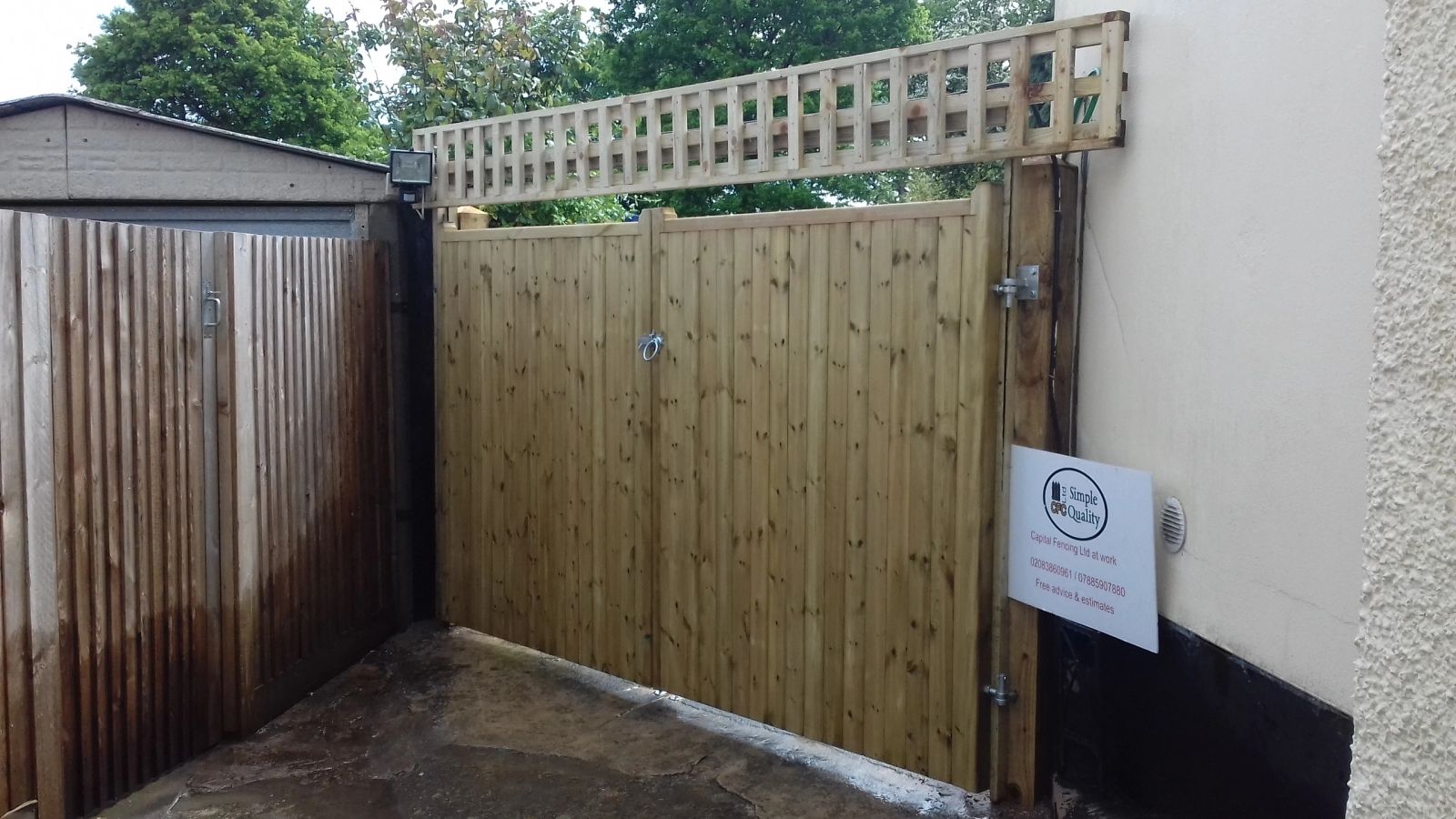
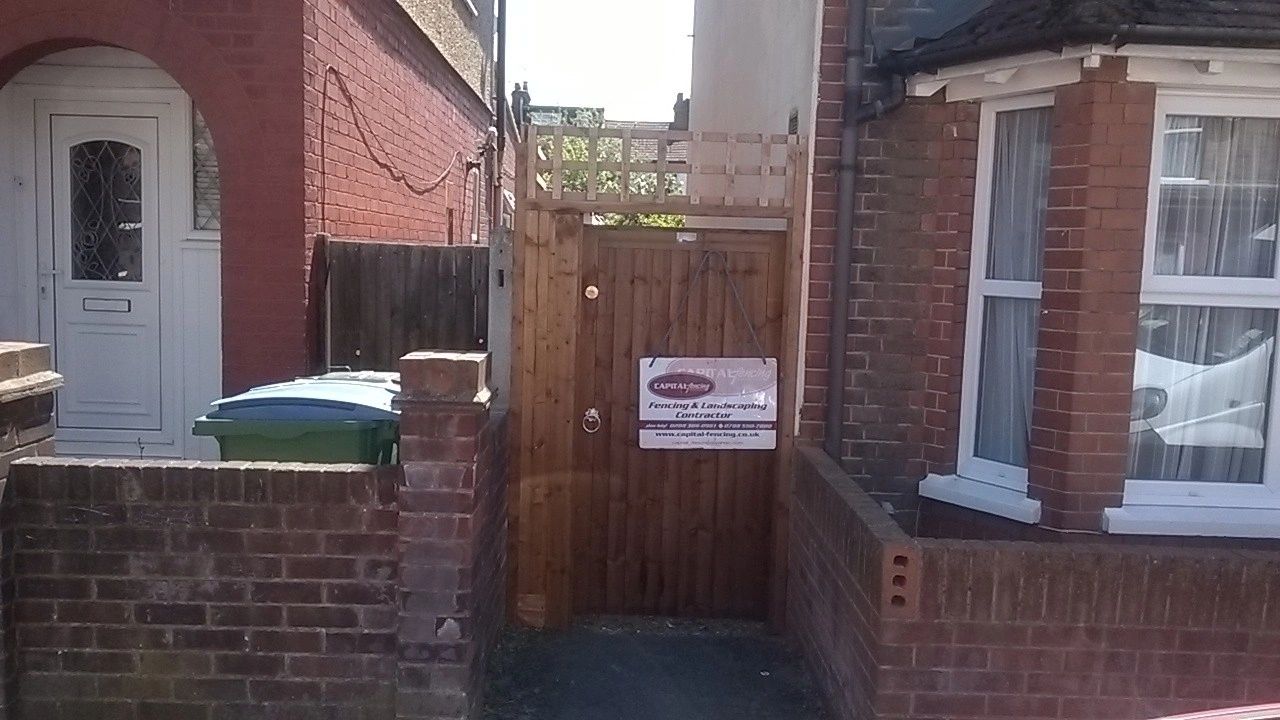
A gate used regularly to move bins or bikes through needs enough clear width and a low enough threshold that wheels don't catch, which is a different design priority to a gate that's mostly left closed.
Where this is the main use of a side gate, we factor it into leaf width and threshold detail at repair or replacement time rather than defaulting to a standard pedestrian gate size.
Electrified topping wire basics
An electrified topping wire adds a pulsed low-current deterrent above an existing fence line and is installed to specific clearance and signage rules rather than fitted freely, since it counts as a controlled hazard.
Specialist installers handle the energiser and wiring; the fencing contractor's role is limited to providing insulated brackets and a structurally sound top line for the wire to run along.
Fence height and boundary lighting interaction
A taller solid fence can throw a shadow line that defeats existing security lighting, creating a dark strip right where an intruder would approach the boundary.
Lighting angles are worth reviewing alongside any height change, and a fence contractor should flag an obvious shadow problem even though relocating the light itself is usually a separate trade.
Resealing joints on an acoustic run
Timber movement over successive seasons can open a joint that was tight at installation, and resealing or refitting that joint restores the barrier's continuity rather than leaving a small gap to worsen.
This check is worth doing as part of a periodic maintenance visit rather than only after noise is noticeably getting through, since a small early gap is easier to fix than a run that's shifted significantly.
Dog-proofing details at ground level and gaps
Dogs test a fence at ground level far more than at height, so gaps under gravel boards, worn hollows on sloping ground, or wide overlaps between adjacent panels are the points most likely to let a determined dog through or under.
A close-fitting concrete gravel board set with minimal gap to the ground, rather than a timber board that can warp and lift, closes off the most common escape route without changing the overall fence design.
For persistent diggers, a buried mesh apron or paving strip just inside the fence line at ground level stops excavation without needing to alter the visible fence at all.
Why frequency content matters as much as level
Two noise sources measured at the same overall level can feel very different to hear — a source dominated by low frequencies, like a distant motorway, is harder to screen and often more intrusive indoors than a higher-frequency source of similar measured level.
This is why a barrier that clearly helps with one type of noise can feel less effective against another nearby source, even where the two are broadly similar in loudness on paper.
When a Party Wall Act notice might apply
The Party Wall etc. Act 1996 mainly concerns shared walls between buildings and excavations near a neighbour's structure, and doesn't generally apply to an ordinary timber garden fence.
It can become relevant where work involves a masonry party fence wall genuinely astride the boundary, or excavation for posts close enough to a neighbour's foundations to fall within the Act's distance rules.
Where there's doubt about whether notice is needed, a party wall surveyor or solicitor can confirm this far more reliably than guessing on site.