Working near a live road or railway boundary
An acoustic fence often sits right against a busy road or a railway cutting, so work is planned to keep materials and tools clear of the carriageway or track side at all times, with extra care taken on any section within reach of passing traffic.
On a school-boundary job, timing around drop-off and pick-up avoids disruption on both sides of the fence.
Diffraction over the top of a barrier
Sound bends over the top edge of any barrier, a behaviour called diffraction, which is why a fence's effectiveness depends heavily on height relative to the source and the listener rather than on the barrier material alone.
Adding even a modest amount of extra height near the top edge can improve performance more than making the whole barrier more massive, because it lengthens the path the diffracted sound has to travel.
Masking noise with water features and planting
Masking works by adding a pleasant, gentle sound — such as moving water — that draws attention away from an intrusive background noise, rather than physically reducing the level of that noise reaching the garden.
It's a genuinely useful complement to a barrier for making a space feel calmer, but it's presented honestly as psychological masking rather than as an acoustic reduction, since the underlying noise level is unchanged.
Bollards and hostile-vehicle basics
Bollards protect a pedestrian area or building frontage from vehicle incursion and are specified separately from the fence line itself, usually to a recognised impact rating for the vehicle speed and mass expected.
Fixed, removable and retractable bollards each suit different access patterns — removable bollards are common where delivery vehicles need occasional access through an otherwise protected frontage.
Timber versus metal post stiffness comparison
A steel or reinforced concrete post of comparable cross-sectional size is generally stiffer than an equivalent timber post, meaning it deflects less under the same wind load, though timber has the advantage of some flexibility that can absorb sudden impact loads without snapping.
Timber's stiffness also varies with moisture content and species in a way that steel's doesn't, meaning a timber post's real-world performance is less predictable across seasons than a steel post's largely temperature-independent behaviour.
Mixed systems using steel posts with timber panelling attempt to combine steel's structural predictability with timber's more traditional appearance, at the cost of managing the dissimilar-material fixing and corrosion issues that come with it.
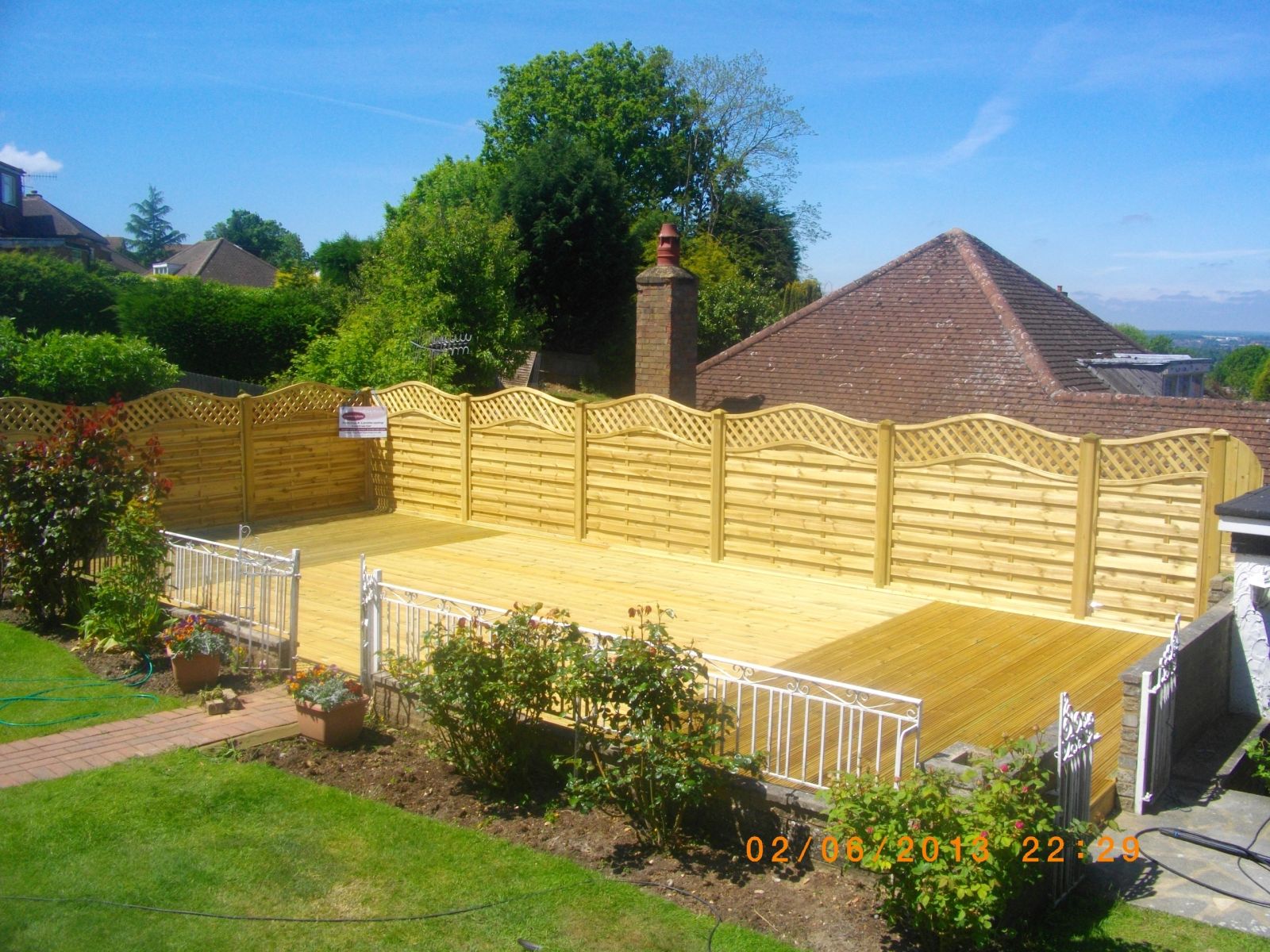
Levelling ground before building a decking substructure
A decking frame built over uneven ground without first levelling or terracing the site ends up with support posts of wildly inconsistent length, which is harder to get right and more prone to individual post settlement than a site graded roughly level first.
Removing turf and topsoil under the deck footprint rather than building over it also reduces the organic material that would otherwise decompose and settle unevenly under the structure.
Where the ground has a genuine and significant fall, working out whether to terrace the ground itself or simply vary support post heights is a decision made before any joists are cut, since it changes the whole substructure design.
Waterlogged clay and accelerated post rot
Heavy clay that holds standing water around the base of a post keeps the timber saturated for long periods, which is the single biggest driver of rot at ground level regardless of how well the timber was treated.
The visible sign is usually a post that snaps cleanly at or just below ground level while the section above ground still looks sound, because that is exactly where moisture content stays highest for longest.
A free-draining stone key at the base of the hole, rather than a solid concrete collar with no escape for water, reduces how long the timber sits wet after rain.
Gate detailing on sites prone to flooding
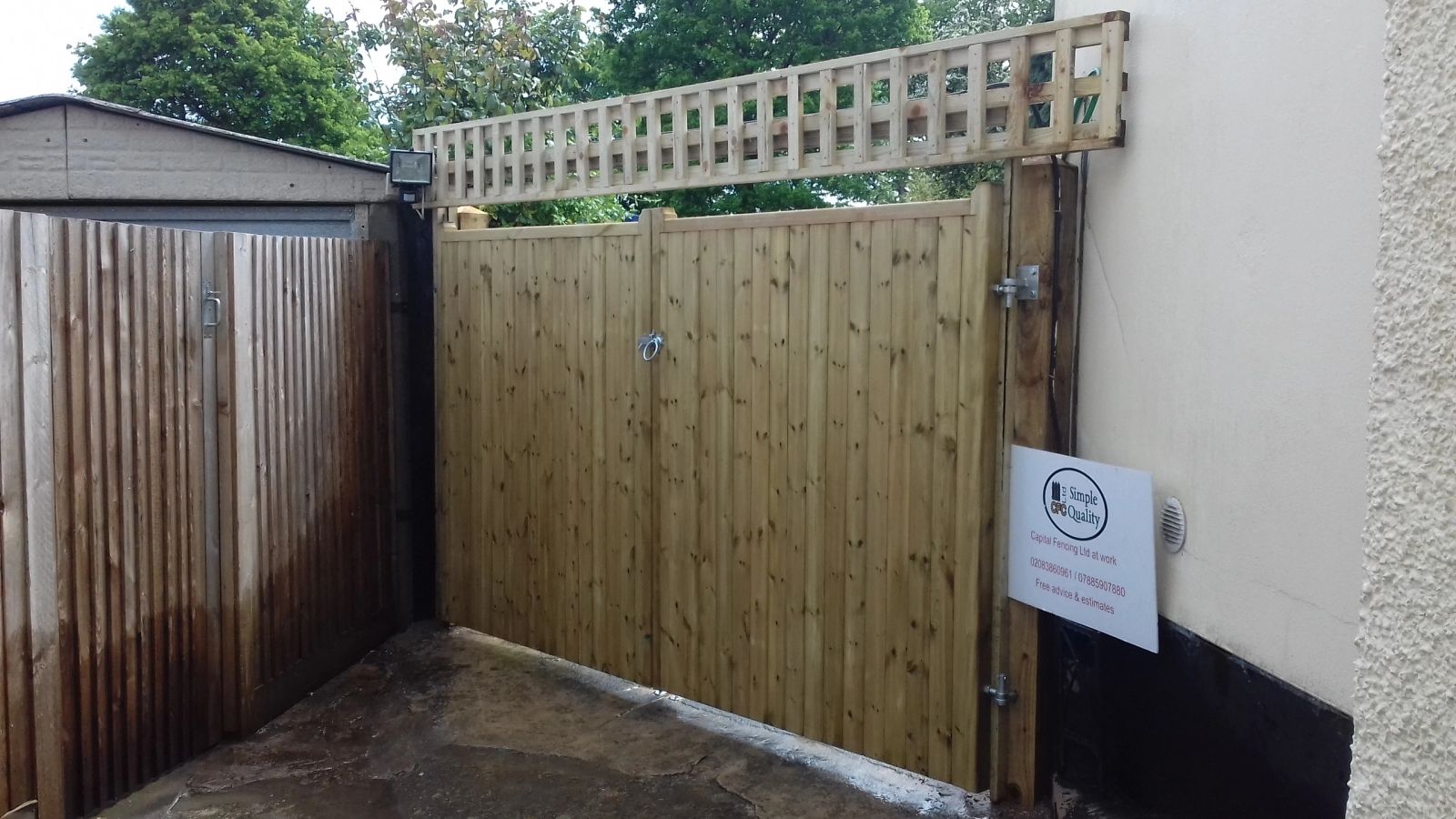
A gate on a boundary that's prone to periodic flooding benefits from open rather than solid infill low down, allowing floodwater to pass through rather than build up against a solid face and load the frame or undermine the posts.
Post fixings on flood-prone ground also need to account for the ground becoming waterlogged and softer than normal during a flood event, not just its condition in dry weather.
Permitted development height limits
Under the General Permitted Development Order, a fence, wall or gate can normally go up to 1m without planning permission where it fronts a highway used by vehicles, and up to 2m elsewhere on the plot.
That 2m figure is measured from the natural ground level, not from the base of a retaining structure, which catches people out on sloping plots where the fence ends up effectively taller on the low side.
Corner plots, listed buildings and land inside a conservation area all tighten these limits, so it's worth checking the local authority's own guidance before ordering materials rather than after.
Pub garden and commercial extract noise
Noise from a pub garden or a kitchen extract fan tends to combine intermittent voice noise with a continuous mechanical hum, and each needs addressing differently — extract fan noise responds well to a close, solid enclosure, while voice noise from an open garden area is harder to contain fully.
A barrier here is usually one part of a wider noise-management approach alongside operational measures on the commercial side.
Where acoustic and privacy needs overlap
A solid acoustic barrier usually also delivers strong visual privacy as a side effect of its sealed, gap-free construction, even where privacy wasn't the original driver for the project.
Conversely, a fence chosen purely for privacy using a lighter overlap or slatted construction won't deliver much acoustic benefit, so it's worth being clear at the outset which of the two needs is actually the priority.