Rear alley gating orders
A council-issued gating order allows residents to install a locked gate across a shared rear alley or ginnel that's become a route for anti-social behaviour, converting what was a public right of way into a controlled access point.
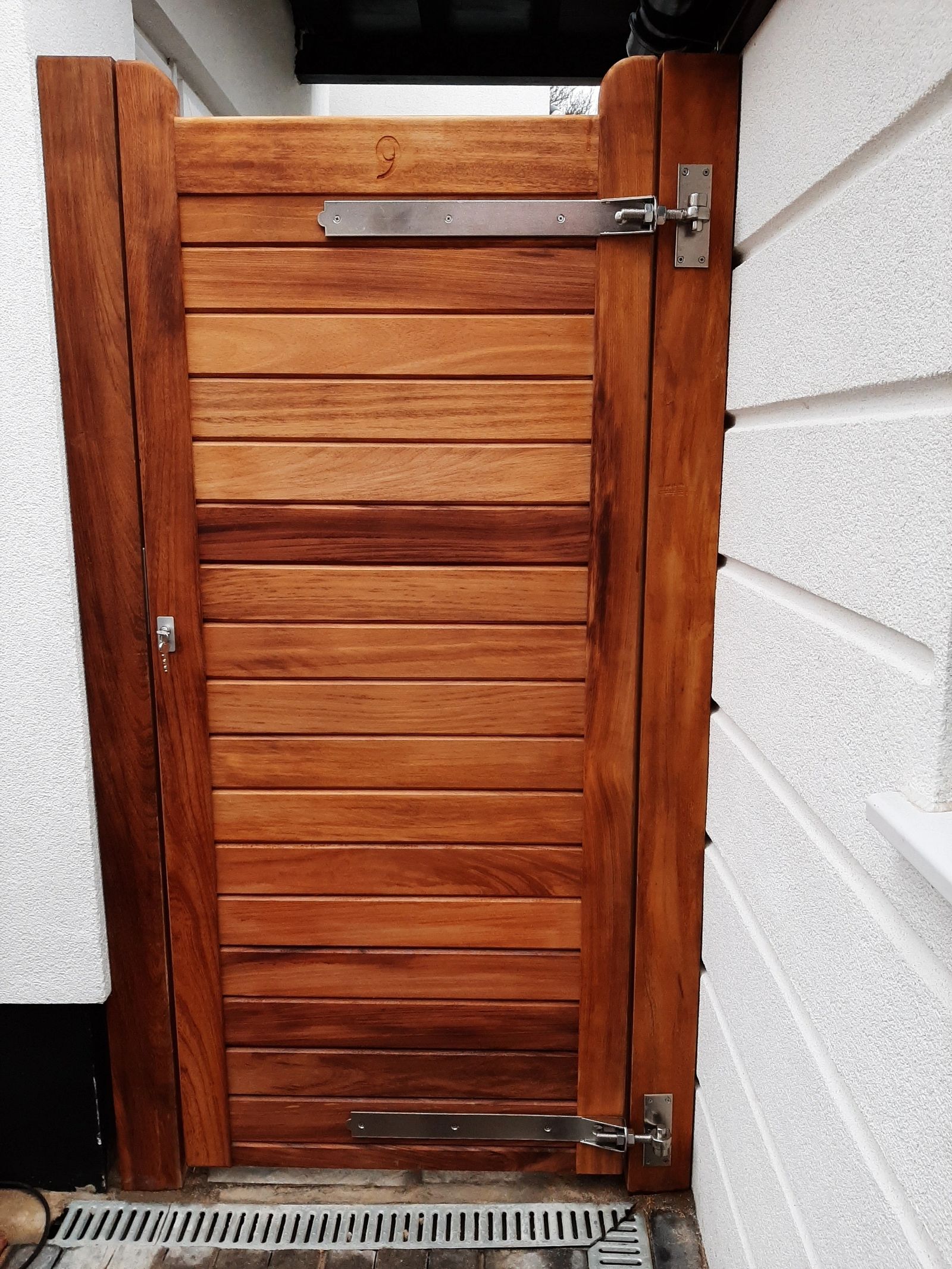
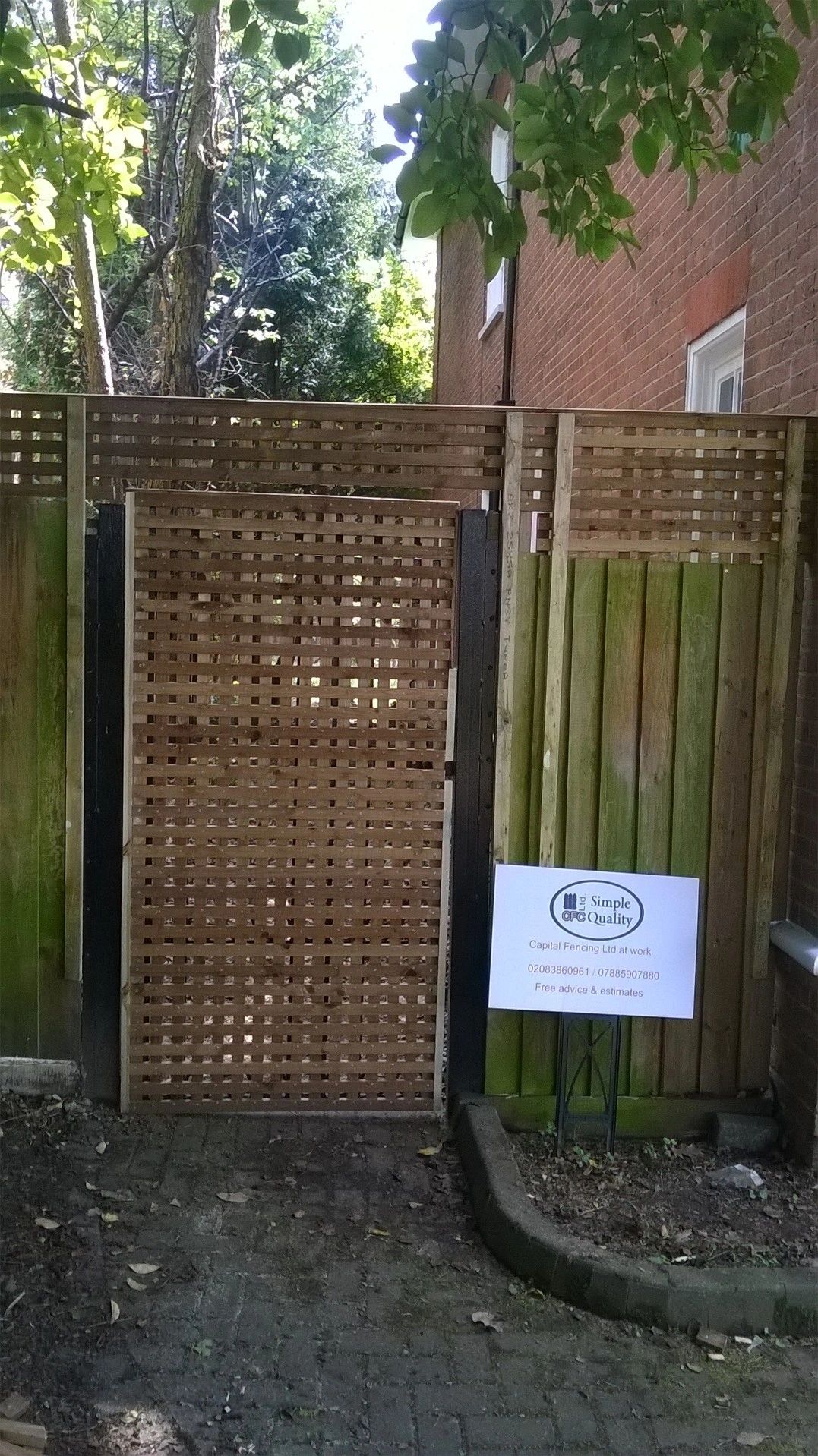
Gates fitted under a gating order usually need to match a specification set by the council, including emergency-service access provision, rather than being chosen freely by residents.
Simple maintenance that prevents gate failure
Checking hinge screws are still tight and that the gate still closes flush against the frame once or twice a year catches the early stages of sag before it becomes a full repair job.
A gate that's starting to catch on the ground is far cheaper to fix at that stage than after the frame has racked further out of square.
A physical boundary survey versus the title plan
A chartered surveyor's physical boundary survey measures the actual position of fences, walls and other features on the ground, which can differ noticeably from the general boundary shown on a Land Registry plan.
These two sources sometimes tell different stories on older plots, particularly where fences have shifted, been rebuilt slightly off-line, or the original conveyance plan was drawn at a small scale.
For a routine fence replacement this rarely matters, but where a genuine discrepancy is suspected, a professional survey carries more evidential weight than either party's assumption.
London Clay shrink-swell behaviour
London Clay is one of the most shrinkable soils in the country, expanding when saturated over winter and pulling away from anything set in it during a dry summer, sometimes opening a visible gap around a post base.
That cycle is what loosens posts that were adequately firm when first concreted in, rather than any fault in the original installation.
Depth and a granular key at the base do more to resist this movement long-term than simply increasing the volume of concrete around a shallow post.
Rights of way crossing a boundary line
A right of way recorded on a title can allow a third party — a neighbour, or sometimes the public — to cross land that would otherwise be private, which affects where a continuous fence line can practically go.
Fencing across a recognised right of way without providing for continued access can itself become a legal problem, regardless of who owns the underlying land.
Checking the title register for registered rights of way before finalising a fence layout is worthwhile wherever a path, gate or informal shortcut already crosses the plot.
Ground-line collars on timber posts
A plastic or metal collar fitted around a timber post at the point where it enters the ground creates a physical break between the post and the surrounding soil, reducing direct abrasion and moisture wicking at that specific zone.
Ground level is where oxygen, moisture and soil organisms are all present together in the right combination for decay fungi to thrive, which is why this narrow band is disproportionately where post failure originates compared with either the fully buried or fully exposed sections.
A collar doesn't replace preservative treatment but adds a secondary physical barrier specifically targeted at this highest-risk zone, similar in principle to the extra retention already specified for ground-contact use-class timber.
Adjusting a gravity latch's catch point
A gravity latch relies on the gate's own weight to drop a weighted bar into a fixed keep as it swings closed, and it stops catching reliably if the gate's resting angle changes even slightly from wear or ground movement.
Re-setting the keep position, rather than replacing the latch, is usually the fix once the gate's resting swing has shifted.
Chain-link and stock fencing for allotments and paddocks
Chain-link is a low-cost, low-maintenance option for allotments, paddocks and utilitarian boundaries where appearance matters less than containment and budget.
Straining wires and correctly tensioned line wire at top and bottom keep chain-link from sagging over a long run, which is the most common complaint about a poorly installed mesh fence.
Where the boundary needs to keep livestock in rather than just mark a line, stock fencing with a smaller mesh at the base stops smaller animals getting through in a way that standard chain-link doesn't.
Keeping fence design clear of utility meter access points
Gas, electric and water meter boxes set into or near a boundary wall or fence line need to remain accessible for reading and emergency isolation, so a new fence or gate design shouldn't block or panel over an existing meter box without providing an equivalent access route.
This is occasionally missed on a full boundary replacement where the new design closes up an old gap that happened to give meter access, leading to a return visit to cut an access panel back in.
Checking for meter boxes and stopcock covers along the boundary line during survey avoids this rework.
Comparative shrinkage rates across species
Different timber species shrink by noticeably different amounts for the same change in moisture content, with some tropical hardwoods moving comparatively little and some softwoods, particularly in the tangential direction, moving considerably more.
This matters when mixing species within the same structure, such as a hardwood gate frame with softwood infill boards, since the two materials can move at different rates and open gaps or induce stress at their junctions.
Manufacturers' technical data sheets for structural and decorative timber usually list expected shrinkage percentages, which is the more reliable way to anticipate this than relying on general species reputation alone.
Gas and water service positions near boundaries
Gas and water services typically run from the property boundary to the meter position in the shortest practical line, which on many plots means they cross close to or directly under a side boundary fence.
Utility companies can usually supply a service plan on request, though older properties sometimes have connections that predate accurate record-keeping and were never mapped precisely.
Where a plan shows a service crossing the fence line, hand-digging that section and setting the post either side of the marked route avoids the need to relocate a damaged supply.