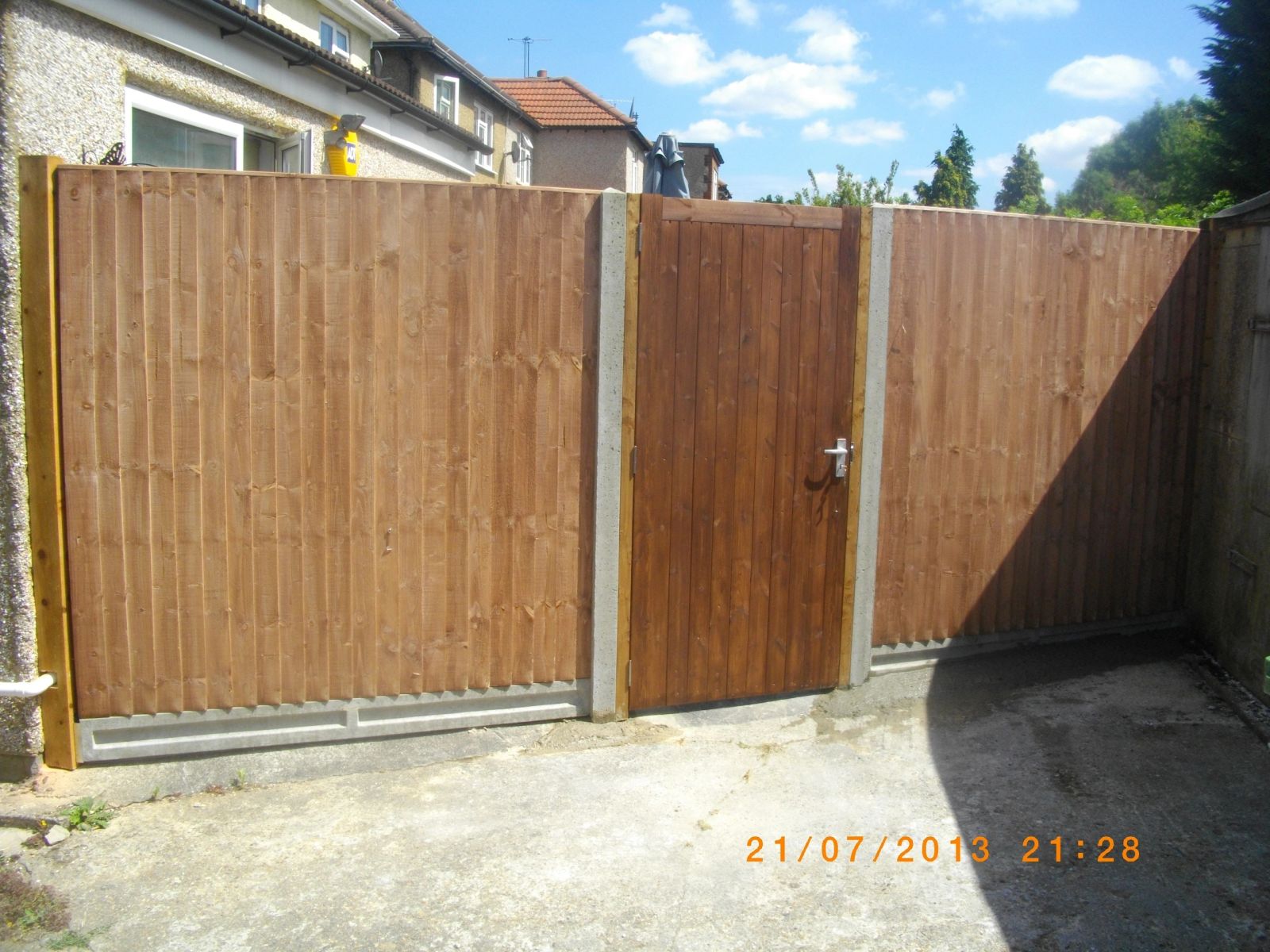
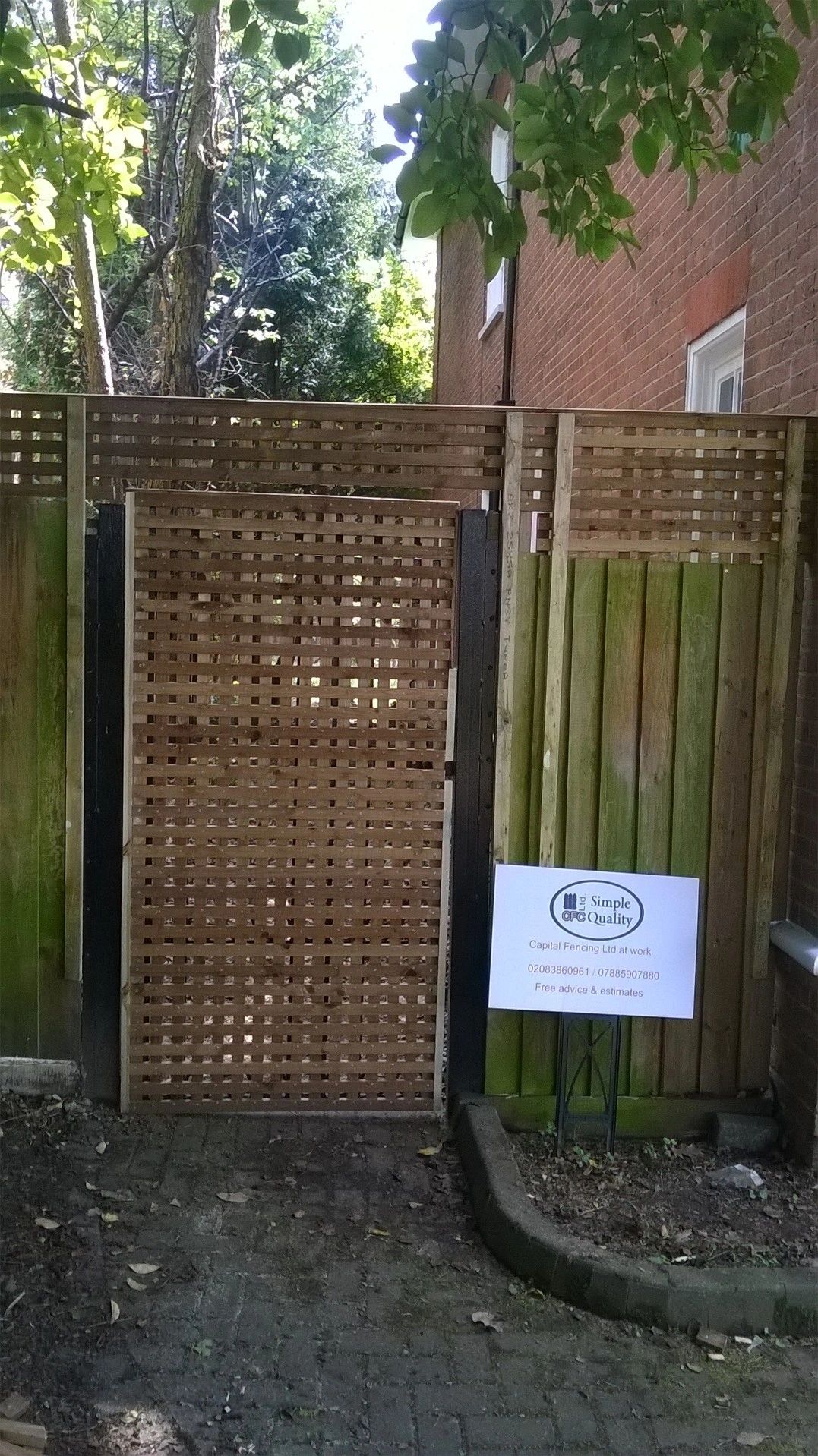
Timber grading and treatment for a security spec
Where timber is used on a security run, a denser, higher-grade section holds up to sustained pressure at gate junctions and pedestrian pinch points better than a standard fence-grade board, and pressure treatment needs to penetrate fully rather than sit on the surface.
We spec the grade to the load the section will actually see, not a single grade across the whole job.
Decking substructure ventilation
A decking substructure needs airflow underneath it to dry out after rain, which is why ground-level decks are built with a ventilation gap rather than sitting directly on solid paving or soil, and why skirting the underside solid on all sides is a common cause of premature substructure rot.
Low decks close to the ground are the highest risk, since there's little room for cross-ventilation, and some ground preparation — a weed membrane and gravel bed rather than bare soil — helps keep humidity down in that void.
Composite deck boards themselves tolerate damp better than timber, but a timber joist substructure underneath a composite deck still needs the same ventilation and ground clearance as it would under timber boards.
Combining a windbreak hedge with a lighter fence
Planting a windbreak hedge or shrub line on the exposed side of a fence reduces the wind load the fence structure has to carry directly, since the vegetation absorbs and diffuses much of the force before it reaches the panels.
This takes several years to become effective as the planting matures, so it's usually specified alongside a fence built to cope with full exposure initially, with the expectation that loads reduce over time rather than the reverse.
It's a useful option where a client wants a lighter, less heavily-specified fence than pure exposure would otherwise demand, provided they accept the interim years before the hedge does its share of the work.
Concrete post reinforcement
Precast concrete fence posts are reinforced internally with steel rods or mesh running the post's length, which gives the otherwise brittle concrete the tensile strength to resist bending loads from wind pressure on the panels it holds.
The reinforcement needs adequate concrete cover on all sides to stop moisture reaching the steel and causing it to rust and expand, a process that can crack the post from the inside out over time, known as spalling.
A concrete post with reinforcement bar visible or rust-staining at the surface has usually already lost some of its cover and is worth replacing before the cracking spreads further along its length.
Water company build-over positions
Public sewers can run beneath private gardens, and water companies generally require notice, and sometimes formal approval, before any structure — including some fence post foundations — is built close to or over them.
The exact rules and required clearance distances vary by water company, but ignoring a known public sewer line when positioning posts risks a dispute or requirement to remove work later.
A free sewer map is normally available from the relevant water company, which is worth requesting before finalising post positions on any plot with an older or shared drainage system.
Timber species and seasonal movement differences
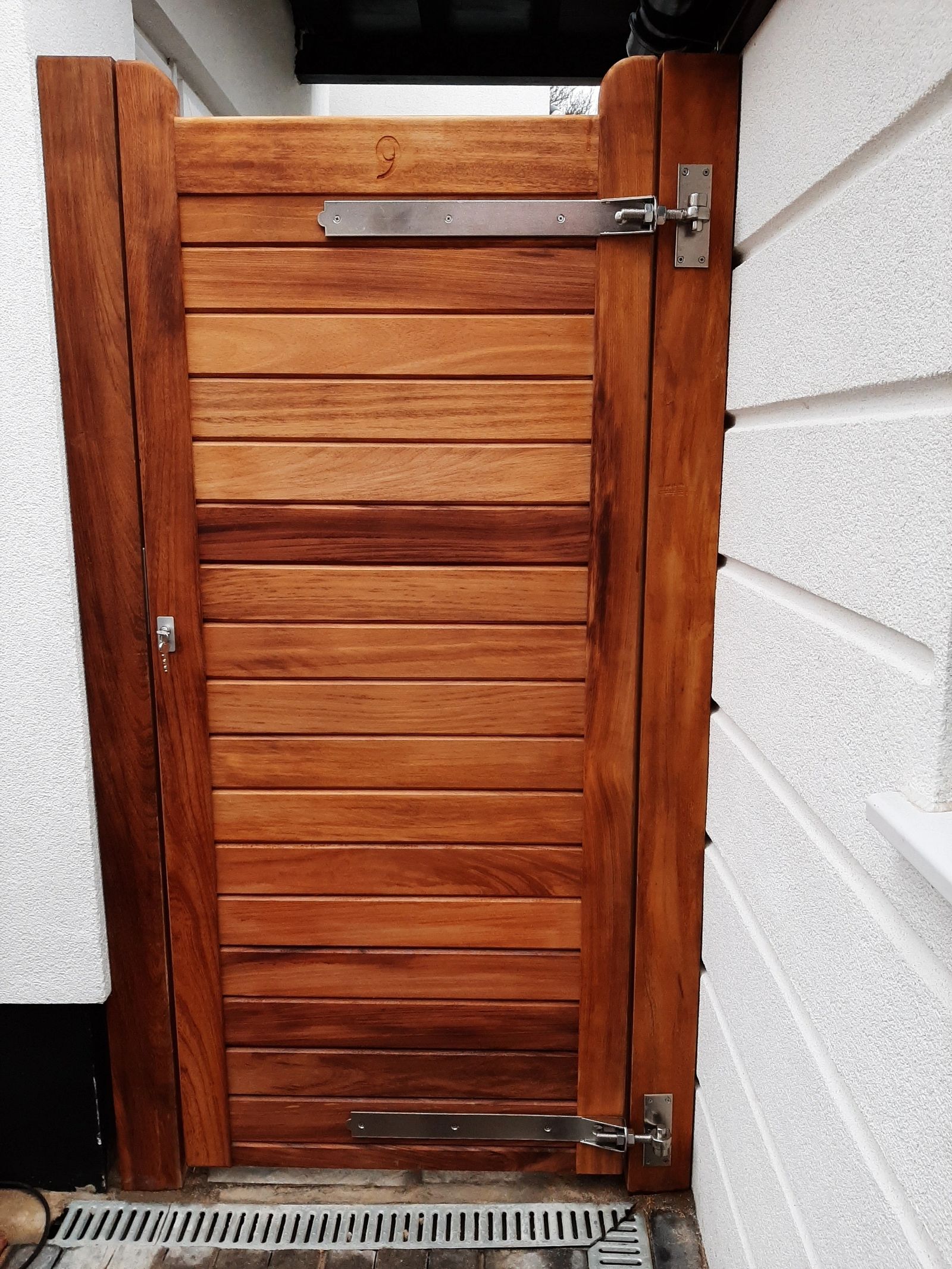
Softwood gate frames move more with seasonal humidity changes than a hardwood equivalent, which is why a softwood gate that fitted well in summer can bind noticeably by winter, while a well-seasoned hardwood frame shows less variation.
Understanding which timber a gate is built from helps set realistic expectations for how much seasonal adjustment it will need rather than treating every gate the same way.
Matching joist centres to the deck board chosen
Choosing the decking board before finalising joist centres avoids a common sequencing mistake, since a thinner or more flexible board specified after the substructure is already built may need joists closer together than what's already in the ground.
Board thickness, species and orientation (laid along or across the joists) all interact, so a change to any one of them partway through a project can mean revisiting the joist layout rather than just swapping the board.
Getting board specification confirmed before ordering joist timber is a small step that avoids costly rework on a part-built substructure.
Seasonal foliage and hedge screening effect
A deciduous hedge or row of trees offers noticeably more acoustic benefit in full leaf during summer than in winter once the foliage has dropped, which is worth factoring in if planting is being relied on alongside a fence.
An evergreen hedge maintains a more consistent, if generally modest, screening contribution year-round, which makes it a more predictable companion to a solid barrier than a deciduous alternative.
Why front and rear boundaries on the same property often differ
A front garden boundary facing an open street with no buildings opposite can have meaningfully different wind and rain exposure to a rear garden boundary sheltered by the house itself and neighbouring gardens, even on the same property.
This is why a single specification for 'the fencing' on a property sometimes needs to vary between front and rear runs, rather than defaulting to one standard chosen for the more visible frontage.
It's worth assessing each boundary on a property independently during a site visit rather than assuming uniform conditions simply because it's all one garden.
Windbreak netting as an interim exposure measure
On a newly exposed plot, such as after a neighbouring hedge or building is removed, temporary windbreak netting fixed to the existing fence can reduce load on the structure while a longer-term solution like replanting or upgrading the fence itself is arranged.
This is a genuinely useful stop-gap rather than a permanent fix, since netting left up long-term degrades in UV and adds its own wind resistance once it starts to fray and catch more air than when new.
It buys time to plan a proper specification change rather than leaving a suddenly-exposed fence to fail before a permanent upgrade can be arranged.
Keeping post positions clear of drainage gulleys and channels
A surface drainage channel or gulley running near the boundary needs to stay clear and functioning, so a post landing directly over or immediately beside one can block flow or make future clearing of the channel awkward.
Where the fence line has to cross a channel, spanning it with a slightly wider gap under the gravel board, rather than boxing the channel in completely, keeps it accessible for clearing leaves and debris.
It's worth running water through the channel before finishing the job, where practical, to confirm the new fence hasn't inadvertently altered how it drains.