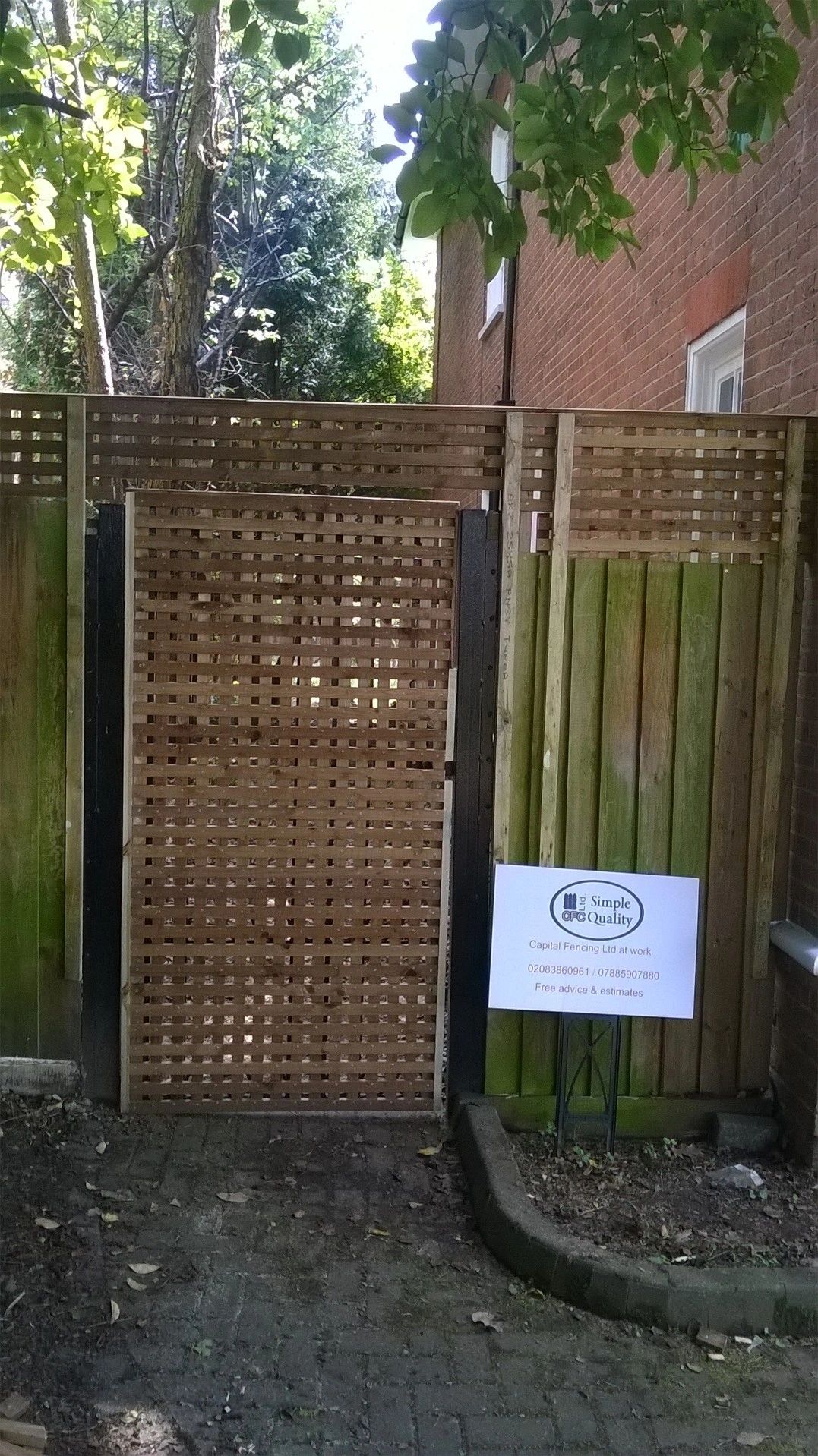
Preparing a weathered gate surface before refinishing
A timber gate that's greyed and roughened from UV and weather exposure needs its surface sanded back to sound wood before a new stain or paint is applied, since coating over a degraded surface fails much sooner than one applied to properly prepared timber.
Loose or flaking old paint in particular needs removing fully rather than painting over, as trapped moisture behind a failed coating accelerates rot underneath.
Drive-through lane and order-point noise
A drive-through lane generates queuing engine idle, order-point speaker announcements and stop-start acceleration in a fairly continuous stream during trading hours, which differs from the short bursts typical of a delivery yard.
Because the order point itself sits at a fixed location, a barrier positioned to break the sightline to that specific point often does more than a longer run along the whole lane.
Estate gates hung from masonry piers
An estate-style gate is often hung from brick or stone piers rather than timber posts, which changes the repair approach entirely since a loose hinge fixing means re-drilling or resin-fixing into masonry rather than replacing a post.
Pier movement itself, from ground settlement or frost heave, can throw two gates out of alignment with each other even when both gates and their hinges are otherwise sound.
Low-voltage lighting built into decking
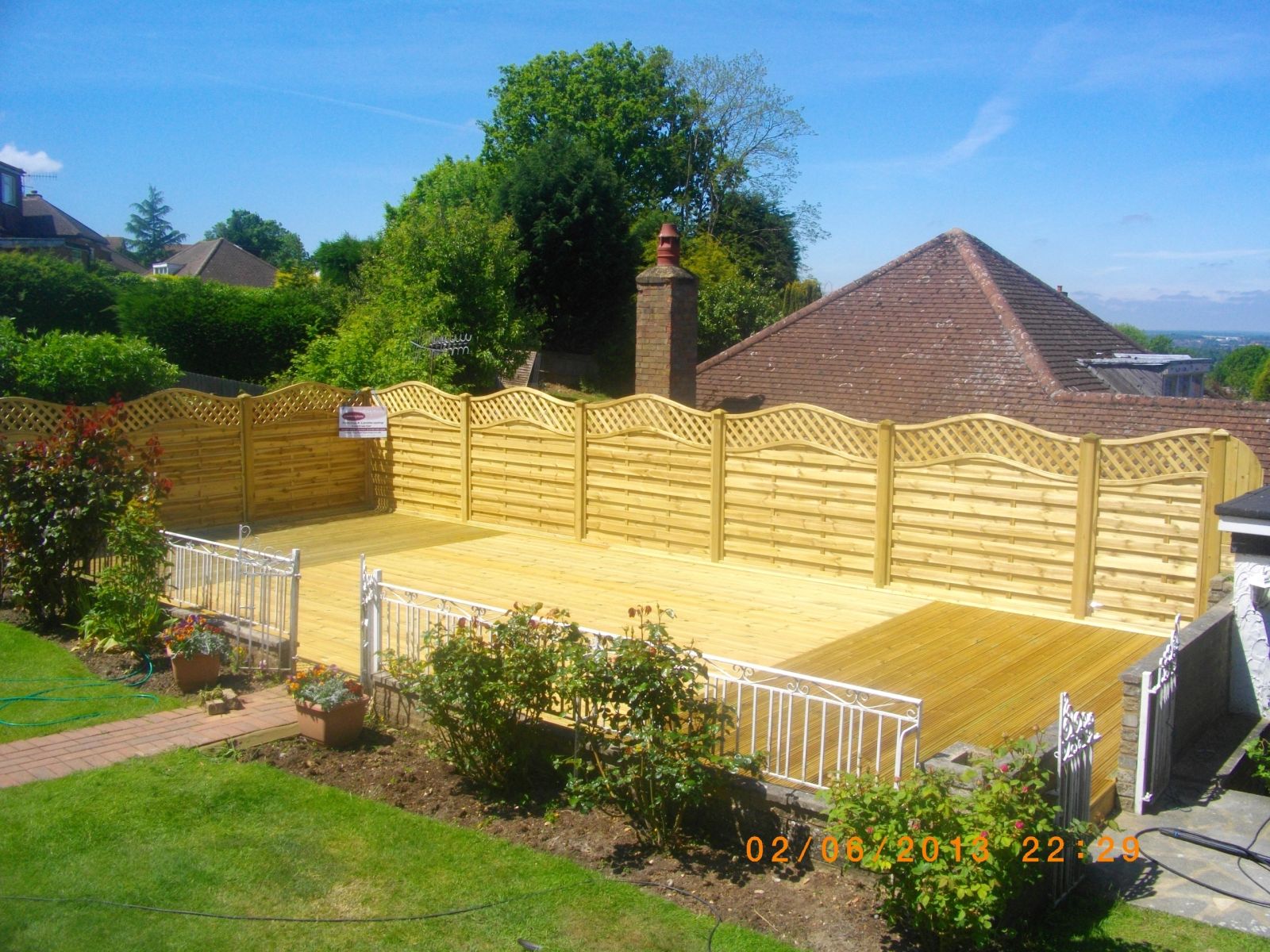
Recessed low-voltage deck lights, usually built into the timber before boards are laid, extend a deck's usable hours into the evening without the trip hazard of surface-mounted fittings.
Cable routes need planning before the substructure is closed in, since retrofitting lighting into a finished deck usually means lifting boards rather than a simple add-on.
Outdoor low-voltage systems still need a transformer and cabling installed to the relevant electrical safety standard, even though the voltage itself is lower than mains.
Mesh infill security gates
A mesh security gate uses a welded steel mesh panel within a frame rather than solid boarding, giving visibility through the gate while still resisting climbing, and the mesh-to-frame weld or clip fixing is the usual point of failure rather than the frame itself.
A mesh panel that's come loose from its frame at one corner will often rattle before it fully detaches, which is worth catching early.
Rotating spike toppings as a climb deterrent
A rotating spike topping uses a free-spinning tube studded with blunt spikes along the top of a wall or fence, so that a hand or foot pressing down on it spins rather than gripping, which defeats a climbing attempt without the injury risk of a fixed razor product.
It's most often fitted to a boundary wall in a residential or light-commercial setting where a coil topping would look too industrial, and it needs periodic checking that the rotating mechanism hasn't seized with paint overspray or corrosion.
Replacing a fence on the same line as before
Replacing a fence exactly where the old one stood is generally the lowest-risk approach from a boundary perspective, since it maintains a position both neighbours have already implicitly accepted for years.
It's still worth flagging the planned replacement to a neighbour beforehand, particularly if the new fence will be a different height, material or style to what's there now.
Where the old fence's exact line is unclear because it has leant or shifted over time, marking out the intended new line and briefly confirming it with the neighbour avoids later disagreement.
Construction hoarding versus the permanent boundary
Temporary site hoarding during a build is a separate specification from the permanent boundary that eventually replaces it — hoarding is chosen for site security and public safety during works, often under a party wall or highways licence, while the permanent fence is chosen for the finished property.
Where a boundary needs both, it's worth planning the sequence so the permanent fence isn't installed and then damaged by ongoing construction traffic before the build finishes.
Hoarding on a public highway usually needs its own licence from the council, separate from any planning permission covering the building work itself, and unlicensed hoarding on a footway can be removed by the authority.
Protecting a patio surface during fencing work
Dragging posts, panels or a wheelbarrow across paving can chip edges or scratch a polished or textured finish, so boards or protective sheeting laid along the route reduce that risk on a patio the client wants kept intact.
Concrete spillage from mixing or haunching is another common cause of permanent staining on natural stone or porous paving, and it sets far harder to remove than it is to prevent with a simple dust sheet under the mixing point.
Where post holes have to be dug close to a patio edge, protecting the adjoining slabs from spoil and tool marks is worth doing before digging starts rather than cleaning up afterwards.
Matching paint or stain colour to an existing scheme
Replacing or refinishing a single gate on a property with an established fence or gate colour scheme needs the new finish matched as closely as possible, since a slightly different tone stands out far more on a single gate than it would across a whole run of fencing.
Weathering of the existing scheme also needs accounting for, since a colour matched to a faded existing finish can look mismatched again once the new work weathers at a different rate.
Matching a new run to an existing style
Matching an extension or repair to an existing fence starts with identifying the actual system in use — panel type, post type, rail count, board profile — rather than assuming any similarly-priced product from a different range will look consistent alongside it.
Weathered timber and faded composite are both difficult to match exactly with new material, so a visible seam between old and new sections is often unavoidable and worth agreeing with the client at quote stage rather than promising an invisible join.
Where a manufacturer has changed a profile or a colour range since the original was fitted, matching sometimes means re-doing a full run rather than extending it, which is worth flagging before ordering a small top-up quantity.