Installation sequencing for heavy panels with limited access
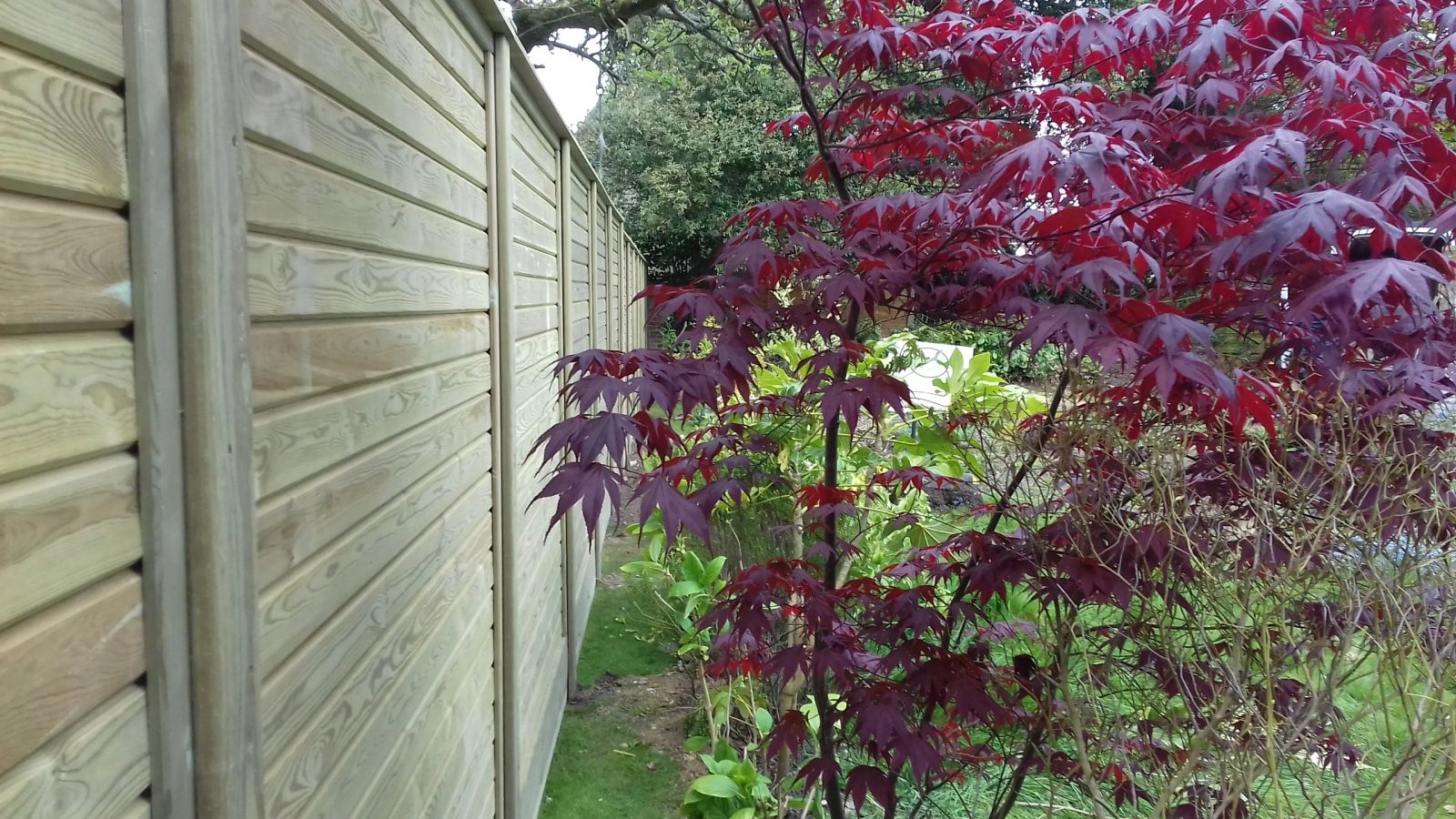
On a site with narrow side access or no vehicle route to the rear boundary, heavier acoustic materials are broken down into smaller loads and carried through in a planned sequence rather than delivered as full panels that can't physically get through.
Sequencing posts, infill and skins to match what can realistically be moved through restricted access avoids delays discovered only once the job is underway.
Boundary ownership before an acoustic upgrade
An acoustic upgrade often means removing a low or gappy boundary and replacing it with something taller and more solid, which is exactly the kind of change that should be agreed with a neighbour in writing first if the boundary is shared.
On a terraced row backing onto a noise source, several neighbouring gardens often want the same upgrade, and coordinating the spec across them keeps the finished line consistent.
School and nursery boundary rules
School and nursery boundaries are typically specified higher than a domestic fence and without footholds, finger-trap gaps or climbable rail patterns, because the boundary has to keep young children in as well as keep intruders out.
Gate self-closing and self-latching, non-climbable infill and a lockable-from-outside-only pedestrian gate are common requirements checked against the site's own policy rather than a general rule of thumb.
How an acoustic build is sequenced on site
The frame and posts go in first and are left to cure before the first skin is fixed, since loading a fresh post with a heavy panel too early risks it moving out of line.
The inner skin, infill and outer skin are then fitted in sequence so the mineral wool is never left exposed to weather overnight.
Checking a post is plumb in two planes
A post checked with a spirit level on only one face can still be leaning across the run even though it looks vertical along it, so plumb needs confirming on two adjacent faces at right angles before concrete goes in.
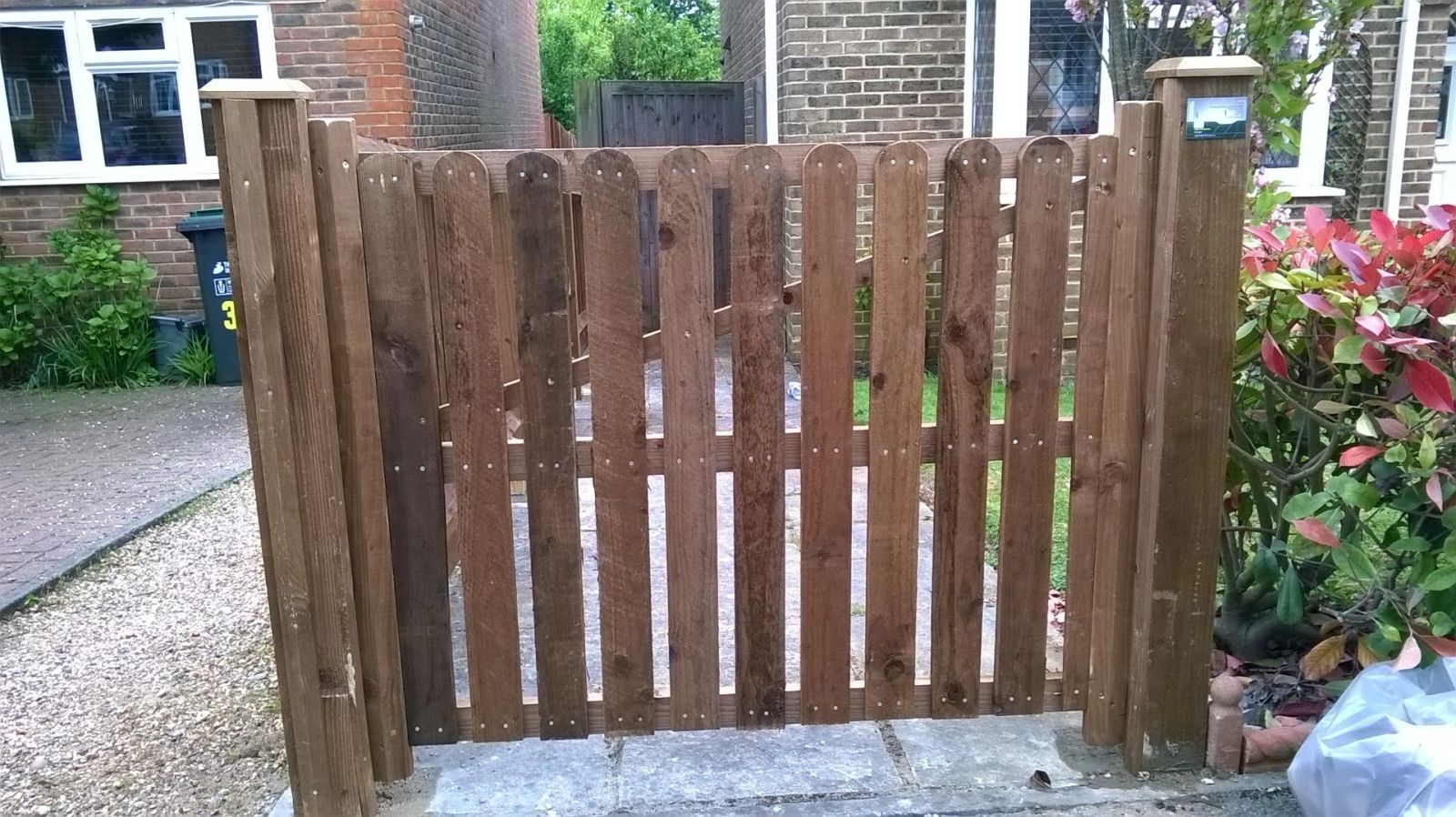
This matters most on corner and gate posts, where a lean invisible from the main run direction becomes obvious the moment a gate is hung and doesn't swing true.
Rechecking plumb again just before the concrete starts to go off catches any post nudged out of position while backfilling or bracing, since that's a common point for a post to drift slightly unnoticed.
Removing an old panel without damaging sound posts
Panels are usually fixed to posts with clips, brackets or nails through the frame, and levering a panel out with a bar without first locating and releasing those fixings risks splitting a post that would otherwise have been reusable.
Cutting through corroded nails with a reciprocating saw, rather than forcing the panel free, is often quicker and safer for the post than sustained levering.
Where only one panel in a run has failed, working carefully to free just that panel's fixings keeps the neighbouring panels and their posts undisturbed rather than loosening more of the run than necessary.
What a like-for-like quote comparison should include
Two quotes for what looks like the same job can differ significantly once post spacing, timber grade, gravel board inclusion, waste removal and warranty terms are properly compared line by line rather than just as a single headline figure.
A cheaper quote that's silent on post spacing or omits gravel boards and waste removal often isn't actually cheaper once those items are added back in to match a more detailed competing quote.
Asking each quote to specify the same checklist of items — materials, spacing, base type, removal, and what's covered afterwards — is the most reliable way to compare on a level footing.
Timber sourcing and certification schemes
FSC and PEFC certification track timber back through the supply chain to a managed, legally-harvested source, and UK public sector specifications increasingly require one or the other for any structural or landscaping timber.
For a domestic fence this isn't a legal requirement, but certified stock gives a paper trail on sourcing that some clients specifically ask for, particularly on larger commercial or estate contracts where corporate sustainability policy applies.
Certification is about the chain of custody rather than the treatment or grade of the wood, so it sits alongside, not instead of, checking the timber is correctly treated for its intended use class.
Boundary treatments in a conservation area
Being inside a conservation area doesn't automatically ban garden fencing, but many councils apply an Article 4 direction locally that removes some permitted development rights, meaning even modest boundary changes may need planning permission.
Where this applies, guidance often favours traditional materials and finishes that suit the area's character over modern composite or brightly coloured alternatives.
The only reliable way to know what applies to a specific property is to check with the local planning authority, since conservation area rules vary considerably between councils.
Drainage channels behind a long acoustic run
A long, solid acoustic run without any breaks can act as a dam for surface water running across a sloped garden, causing pooling on the uphill side that wasn't a problem with a more open fence.
A drainage channel or a low-level gap fitted with a flap or grille at the lowest point of the run lets water through without significantly compromising the acoustic seal higher up the panel.
Gate hardware for a deck-level opening
A gate set into a deck balustrade, for example at the top of external steps or beside a pool, benefits from a self-closing hinge and childproof latch in the same way a pool or driveway gate would, particularly where there's a fall risk beyond it.
Hardware exposed to full weather on an open deck needs the same corrosion-resistant fixings as an exterior fence gate, since a deck gate often sees more direct rain and UV exposure than a gate tucked against a house wall.
The gate frame needs bracing consistent with the balustrade posts either side of it, since a lightweight infill gate hung between two structural posts is only as safe as its own resistance to being pushed or leant on.