How a security survey is carried out
A security survey walks the whole perimeter, not just the section that prompted the enquiry — low runs, blind corners and gate junctions elsewhere on the boundary are usually the actual weak point, even when the call came in about one obviously damaged section.
We note sightlines from the street and from within the property, because a fence that blocks a view outward can work against security as easily as a low fence works against it from the other side.
Resin bleed from softwood
Softwoods such as pine and spruce contain resin pockets that can continue to weep sticky sap for months after installation, especially on timber that's been kiln-dried quickly or exposed to strong summer sun.
Resin bleed shows up as a darkened, tacky patch on the surface and can telegraph through paint or stain if the timber isn't left to stabilise, or if a sealer coat isn't applied over the affected area first.
It's a cosmetic issue rather than a durability one, and it typically resolves itself as the timber fully seasons, though staining over an active resin pocket without treating it first often needs redoing.
Diverting a public right of way away from a new fence
Where a registered public right of way crosses land that's being fenced, it's not something that can simply be blocked — a formal diversion order from the council is needed to legally move its route.
This process typically involves public consultation and can take a meaningful amount of time, so it needs building into any project timeline where it's relevant.
Checking the definitive map of public rights of way, held by the county or unitary council, before finalising a fence layout avoids inadvertently obstructing a protected path.
Kiln-dried versus green timber movement
Green, or unseasoned, timber still holds a significant amount of moisture from milling and will keep shrinking as it dries out in situ, which can open gaps, twist boards or loosen fixings within the first year.
Kiln-dried timber has already been brought down to a stable moisture content under controlled heat, so it moves far less once installed, though it costs more to produce and can be less forgiving if left stacked in wet conditions on site.
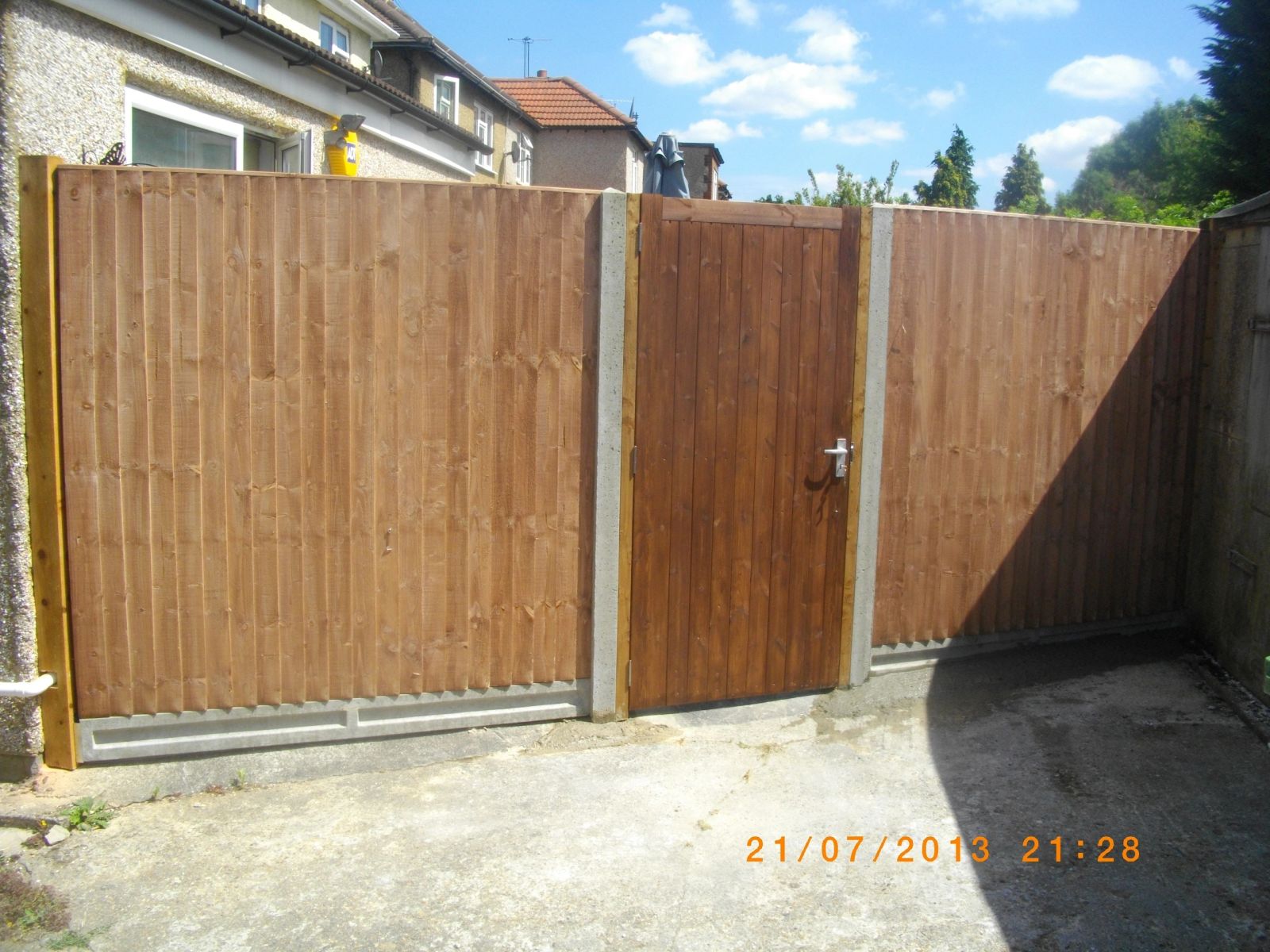
Feather-edge and featheredge-style fencing is particularly sensitive to this, since green boards fitted tight can shrink into visible gaps by the following summer even though they looked fully overlapped on the day of installation.
Keeps and hasps for padlocking
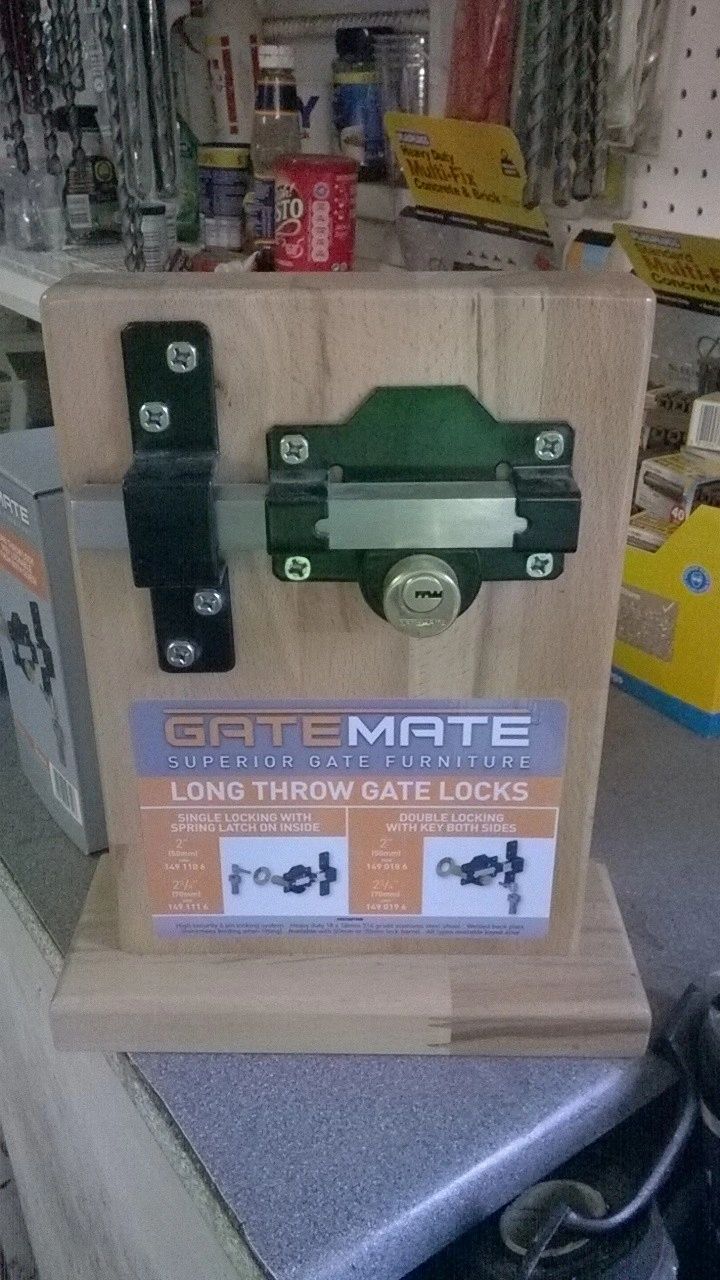
A keep holds a sliding or dropping latch bar, while a hasp is the separate hinged plate that a padlock passes through — the two are often confused but serve different jobs and aren't interchangeable on most gate designs.
Hasp screws are a common weak point since they're fitted from the accessible face; through-bolting a hasp gives more resistance to forcing than screws alone.
Boundaries against a railway embankment
A boundary running along a railway embankment is very often owned and maintained by the railway infrastructure operator rather than the adjoining householder, and any work close to the operator's land, including digging near its toe or crest, usually needs prior notice or permission.
Embankment ground can also be made up of variable historic fill rather than natural strata, since many were built up from spoil during original construction, which affects both digging and the stability assumptions for post bases near the base of the slope.
Access for materials and machinery along these boundaries is frequently restricted, so confirming land ownership and any operator consent needed is a necessary step before quoting the work.
Corner visibility splays affecting fence height specifically
Some corner plots have a specific visibility splay condition attached to their planning history that limits fence, hedge or wall height at the junction to well below the normal 1m road-facing limit.
This is separate from the general permitted development height rule and takes precedence where it applies, since it's usually tied to road safety at a specific junction.
Checking the property's planning history for this kind of condition before fencing a corner plot boundary avoids building something that later needs cutting back.
Sourcing reclaimed or discontinued timber to match an existing run
Older properties sometimes have a fence built from timber sections, profiles or panel sizes no longer in standard production, which makes an exact match difficult without sourcing reclaimed stock or having a bespoke run cut.
Reclaimed timber needs the same checks as new stock — treatment condition, rot, and structural soundness — before reuse, since visually matching timber that's structurally compromised isn't a genuine repair.
Where matching isn't practical, agreeing a deliberate, tidy transition point with the client (a change of panel style at a natural break, like a corner post) usually looks better than trying and failing to blend two slightly different materials seamlessly.
Wayleaves for overhead cables crossing a boundary
A wayleave is an agreement, sometimes recorded on the title, allowing a utility company to run cables or equipment across private land, which can include overhead lines crossing directly above a garden boundary.
Fence or gate height near a low-slung overhead cable is worth checking against the clearance the utility company expects, particularly for any structure involving machinery or long materials being lifted into place.
Where an overhead line crosses close to planned fence or gate posts, contacting the relevant utility company for guidance before work starts is the sensible precaution.
Stepping panel height on a sloping acoustic boundary
Where the ground falls along a boundary that needs consistent acoustic screening, stepping the panel height with the slope keeps the top of the run at a consistent level relative to the noise source, rather than following the ground and creating a dip in coverage partway along.
A raked top edge, following the slope directly, can leave a section of the run lower relative to the source than intended, opening a partial sightline exactly where the ground falls away.
Protecting an adjoining property while working a boundary corner
Work at a corner post often means standing tools, ladders or spoil temporarily on or very close to a neighbour's side of the boundary, which is worth agreeing in advance rather than assuming implied consent.
Where the corner adjoins a neighbour's planted border or a section of their own fence, photographing the condition before work starts gives both parties a clear reference if any question arises afterwards about pre-existing damage.
Finishing and clearing a corner section fully before moving along the rest of the run, rather than leaving it half-done for days, reduces the time any disruption to the neighbour's side is visible or ongoing.