Material delivery constraints on restricted-access sites
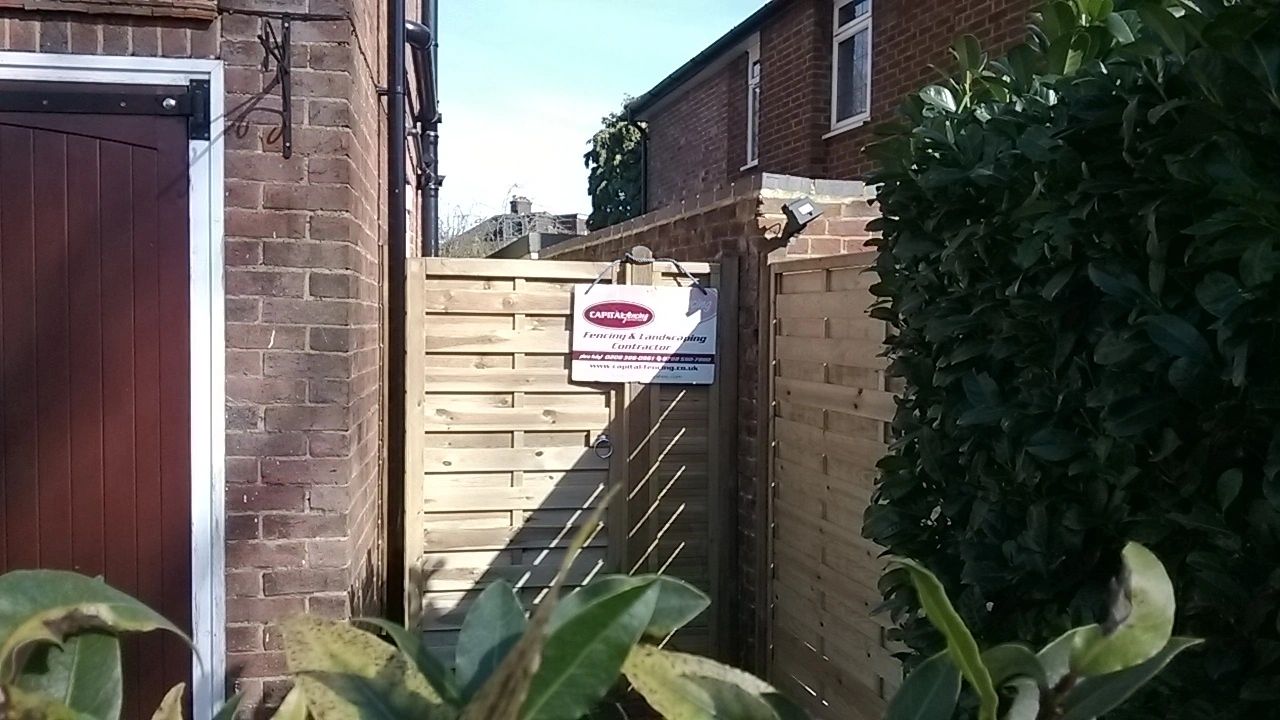
A property reached only by a narrow alley, a flight of steps, or a shared passage without vehicle access changes how gate materials are delivered and handled, since a full-size gate leaf, a bag of postmix or a length of steel box section may need carrying in by hand over some distance.
This constraint is worth identifying before materials are ordered, since it can affect what size or weight of gate is practical to specify for that particular access route.
Fastener embedment depth in timber
A fixing's holding strength in timber depends heavily on how far its threaded or ring-shanked section penetrates into the receiving timber, not just its total length, since a screw mostly passing through a thin outer board contributes little grip in that board alone.
General guidance for screwed timber connections aims for at least the full thread length engaged in the receiving member, which for a typical fencing fixing means selecting screw length based on both boards' combined thickness rather than the visible board alone.
Under-length fixings that barely reach the receiving timber are a common, easily overlooked cause of boards or rails working loose within a season, particularly where a shorter screw was substituted for convenience during fitting.
Waney-edge boards
Waney-edge boards, sometimes called weatherboard, retain the natural, uneven outer edge of the log they were cut from, including some bark-line curvature, rather than being sawn to a straight parallel edge.
They're generally cheaper than feather-edge because more of the log's cross-section can be used, but the irregular edge means overlaps vary along the length of each board and can't be set as precisely.
The rustic appearance is often the main reason they're chosen over feather-edge, particularly for informal or rural boundary fencing where a uniform finish isn't the priority.
Setting out a straight run with string lines
A straight fence line starts with two fixed end points and a string line pulled taut between them, usually run just above where the posts will sit rather than at ground level where it snags on grass or debris.
On a long run the string sags under its own weight, so an intermediate profile or peg is needed every few bays to keep the sight line true rather than trusting a single span.
Any post that's set even 10-15mm off that line becomes visible once panels go in, because the eye picks up a wander in a boundary far more readily than a small step in level.
Absorptive versus reflective barrier faces
A hard, flat, reflective face — most solid timber or masonry barriers — bounces sound back the way it came rather than absorbing it, which is fine where there's nothing on the other side to reflect noise onto.
An absorptive face, typically with a porous or perforated finish over sound-absorbing material, reduces that reflected energy and is more relevant where the barrier faces another building or a neighbouring garden that would otherwise catch the reflection.
Mesh aperture and 358 prison mesh
358 mesh — so called for its 3mm wire, 5mm x 76mm aperture — is specified where cutting or climbing resistance matters, because the small aperture won't take a boot toe or bolt-croppers the way a standard weld mesh will.
Standard weld mesh apertures run larger and cheaper for general perimeter use; the tighter 358 pattern is reserved for compounds, substations and sites where the threat model justifies the extra cost per metre.
Sliding gate track and roller wear
A sliding gate runs along a ground-mounted track or is carried on top rollers against a guide rail, and debris or corrosion in the track is one of the most common causes of a sliding gate becoming stiff or jamming partway through its travel.
Clearing and checking the track for level is usually the first step in diagnosing a sliding gate fault before assuming the rollers themselves need replacing.
Tongue-and-groove privacy panels
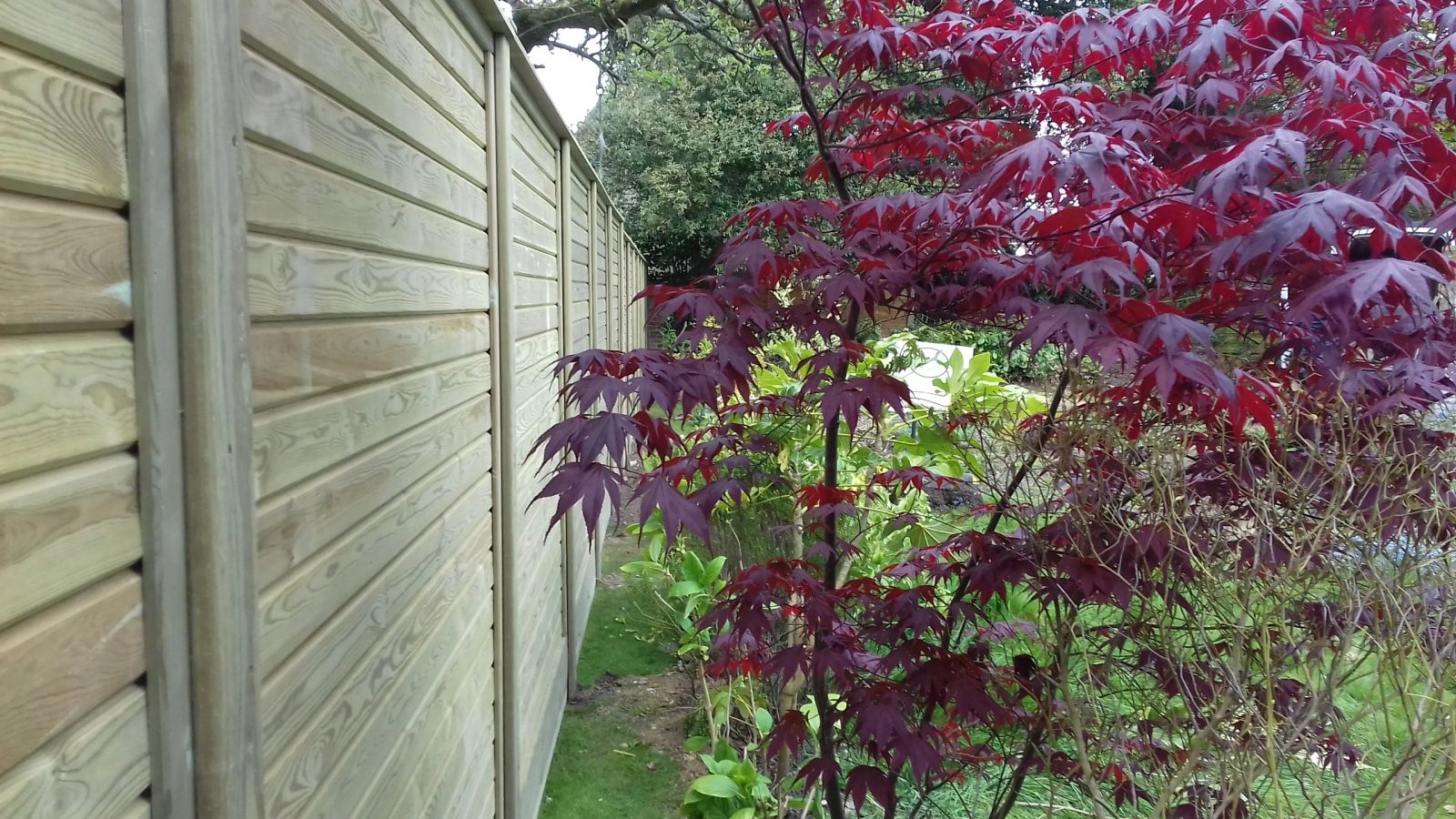
Tongue-and-groove boards interlock edge to edge with no overlap, giving a genuinely solid, gap-free face that's the most private board profile available in timber fencing.
Because the boards key into each other rather than overlapping, the panel needs to be built with a small allowance for seasonal swelling, or the interlocking edges can bind and cup as the timber moves.
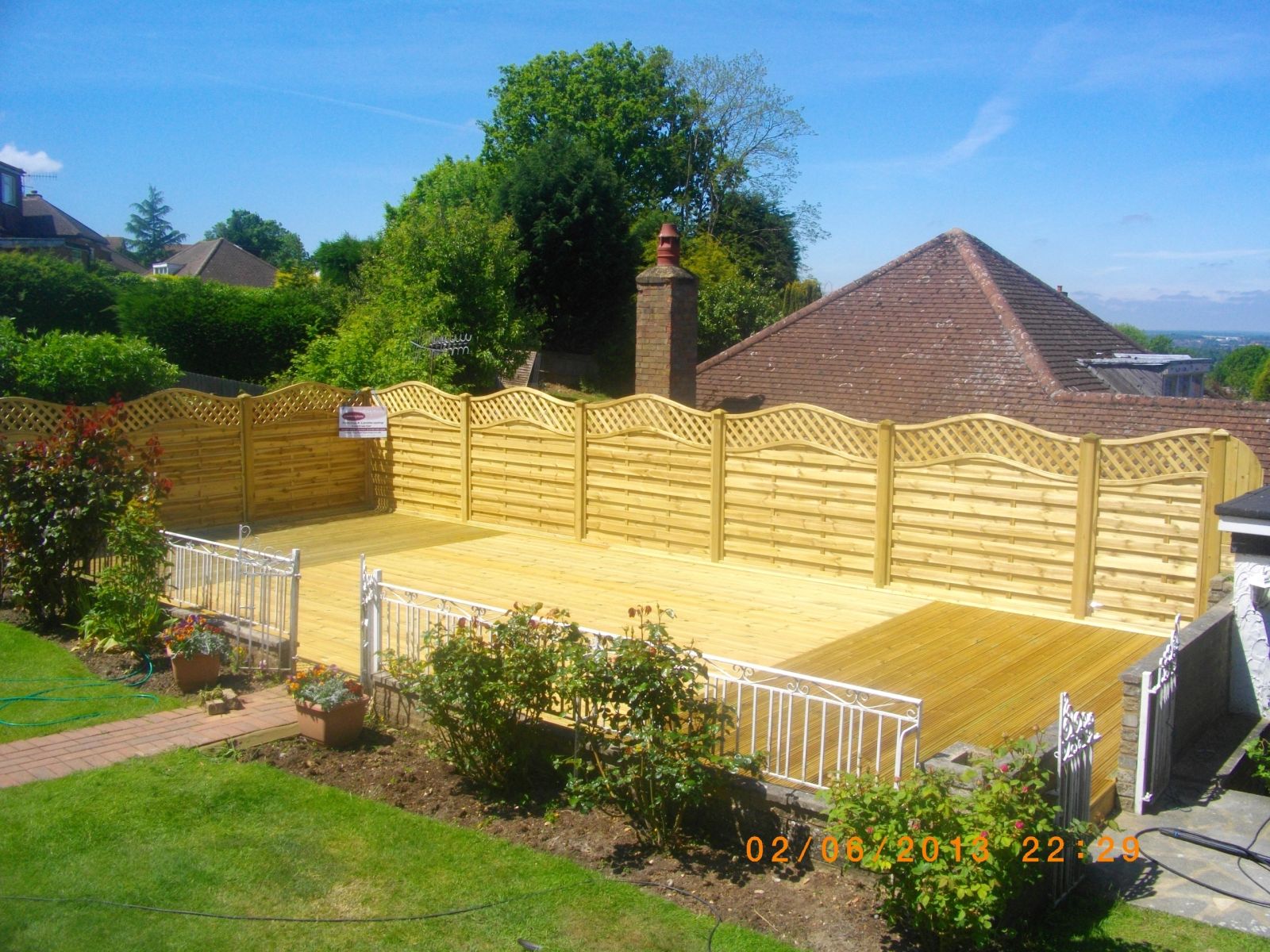
It's a heavier, stiffer panel than lap or slatted profiles, so it's usually paired with more substantial posts, and it's a common choice for pool or hot-tub screening where sightlines matter more than airflow.
Kiln-dried versus green timber movement
Green (wet, unseasoned) timber is cheaper and easier to nail without splitting, but it shrinks noticeably as it dries in situ, which opens gaps between overlapping boards and can loosen fixings within the first year.
Kiln-dried timber has already lost most of that moisture before it reaches site, so it holds its dimensions far better once fixed, at a higher material cost.
Closeboard fencing traditionally tolerates green feather-edge boards reasonably well because the overlap absorbs some shrinkage, but a tight tongue-and-groove or slatted panel is far less forgiving and benefits from kiln-dried stock.
Inspecting welded joints on mesh panel frames
A welded mesh panel's frame corners are a common early failure point under repeated wind loading or impact, since a poor weld can crack internally while still looking intact from the outside until the joint finally gives way.
A visual check for hairline cracking, rust bleeding from a joint, or slight movement when the frame corner is pushed by hand can catch a failing weld before the panel actually comes loose from its post.
Seasonal ground heave
Ground heave is the upward or lateral movement of soil as it absorbs water and expands, most pronounced in clay-rich ground after a wet autumn following a dry summer.
A post that was plumb in August can be measurably out of true by the following spring purely from this cycle, without any external damage to the fence.
Where heave is a known issue on a plot, deeper posts and a looser granular surround give the soil room to move without directly loading the post, rather than locking post and ground rigidly together.