Closing gaps and finger-trap risk
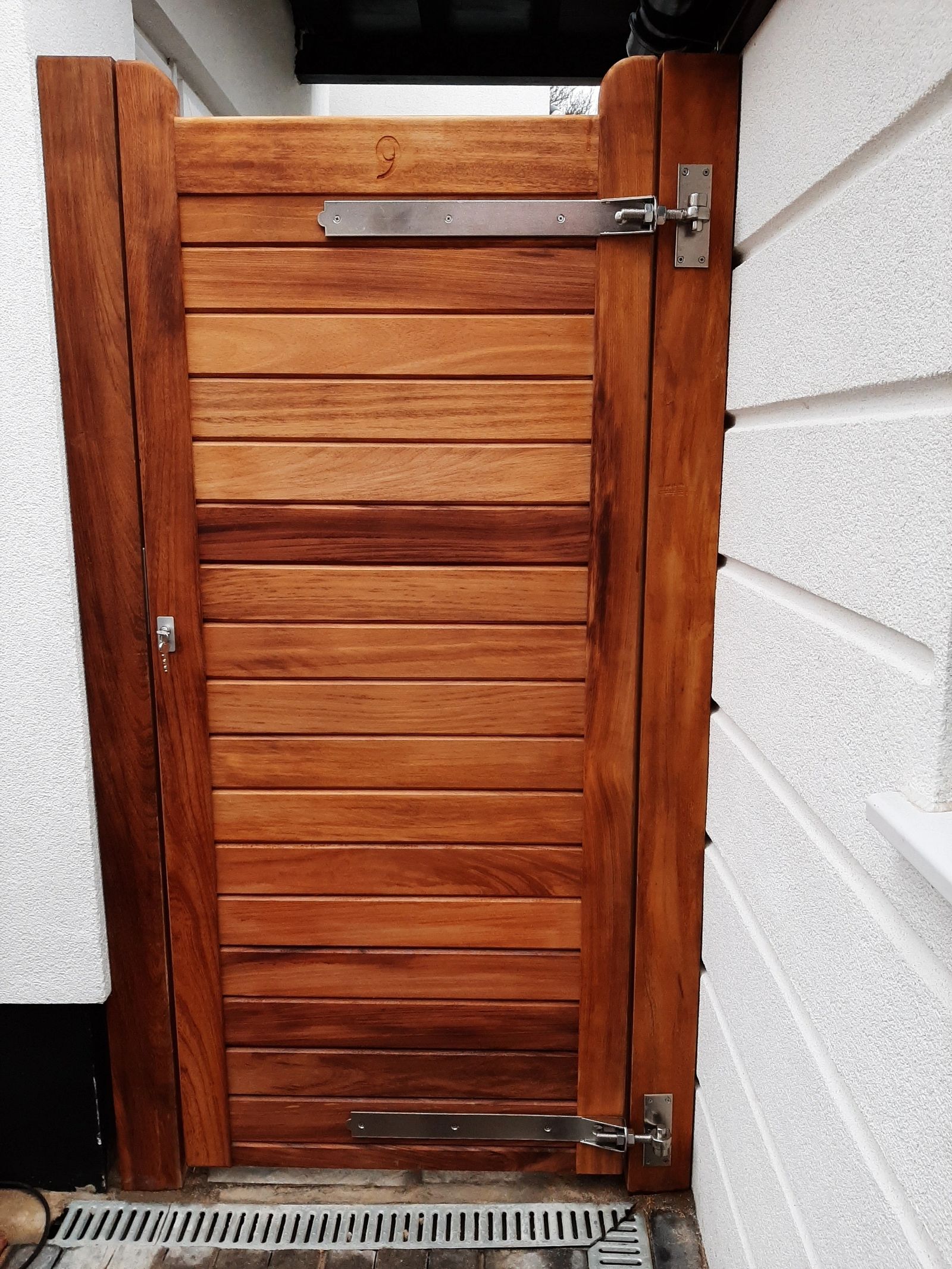
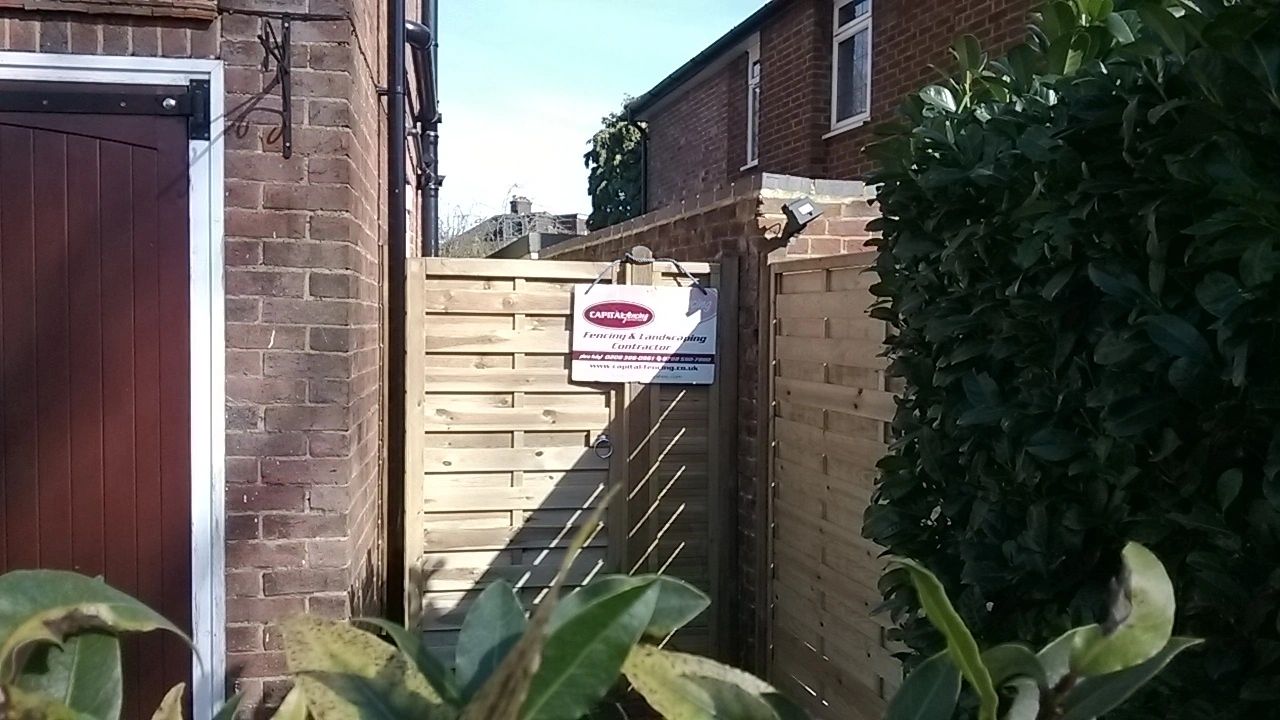
A gap left between a closing gate and its post or an adjacent leaf can trap fingers, particularly at a height a child would reach, and this is worth checking on any gate serving a garden used by young children.
Closing plates or adjusted hinge geometry can reduce the gap without replacing the gate itself.
Weight distribution on double driveway gates
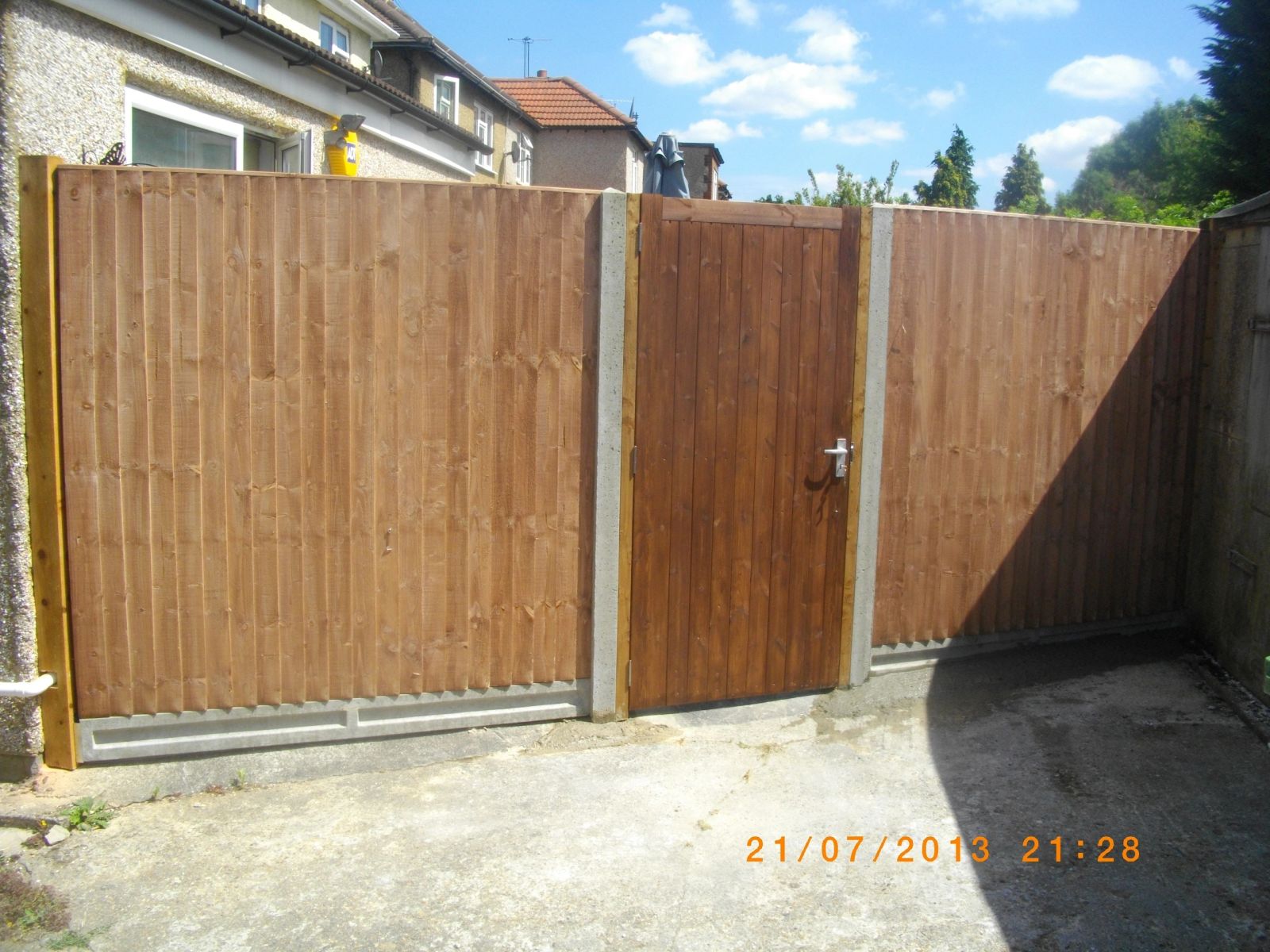
A pair of driveway gates carries its weight on two separate hinge posts rather than one, so an imbalance between leaves — one heavier, one lighter, or one dropped more than the other — shows up as an uneven meeting line at the centre.
Correcting this usually means addressing each leaf's hinges independently rather than adjusting only the leaf that looks worse.
Brush application versus spray for treatment
Brush application works the treatment into the grain and end grain more thoroughly, which matters most at cut ends and joints where untreated timber is exposed and most vulnerable to moisture uptake.
Spray application covers a large run far faster and gives a more even surface finish on smooth-planed boards, but relies on good weather and overspray control, and can leave the coating sitting on the surface rather than penetrating as deeply.
A practical approach on a full boundary is spraying the open panel faces for speed and finish, then finishing post tops, end grain and capping joints by hand with a brush.
Night latches on garden and side doors
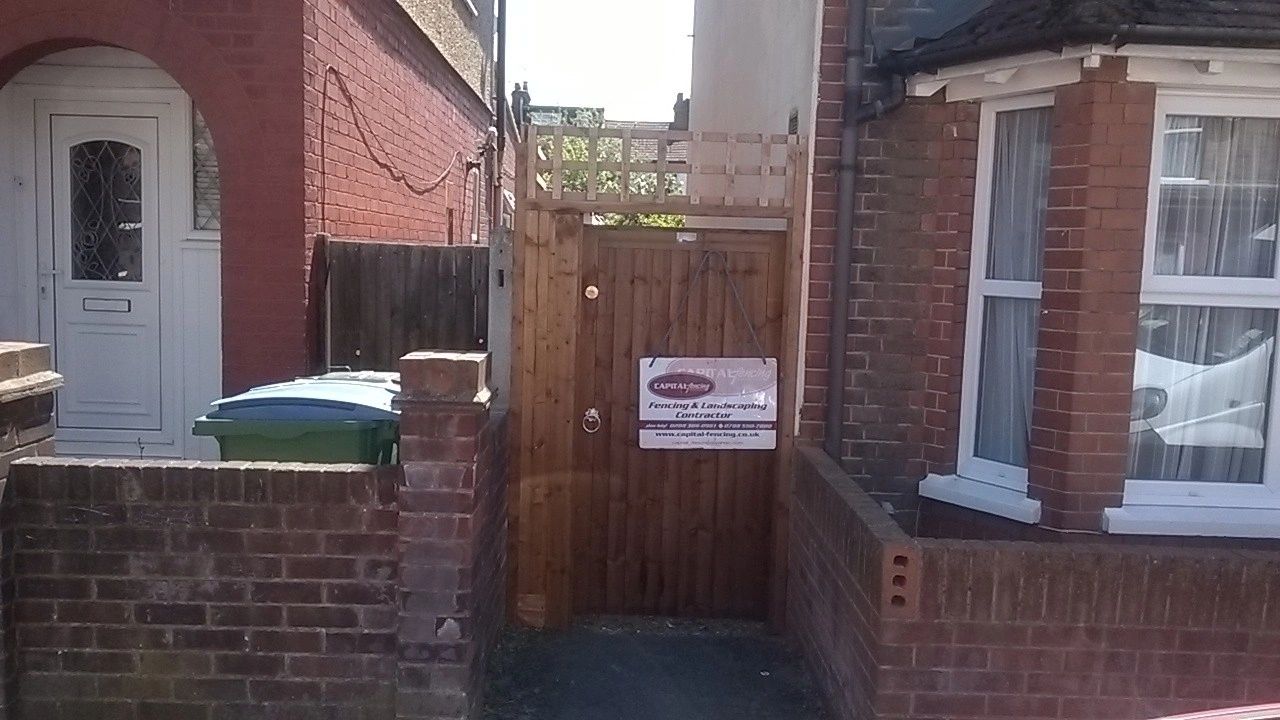
A night latch, more commonly seen on house front doors, is sometimes fitted to a solid garden door or side gate door for self-latching convenience, engaging automatically on closing while still allowing free egress from inside.
It needs a solid, well-fitted frame to work reliably outdoors, since timber movement that would be barely noticeable indoors can be enough to throw an exterior-mounted night latch out of alignment.
Temporary fencing while a permanent boundary is rebuilt
Removing an old boundary fence before the new one is built leaves a gap that matters for security, for keeping pets or children contained, and for site safety around an open excavation.
A simple temporary screen — netting on stakes, or hurdles wired together — bridges that gap without committing to a full second install, and is worth agreeing with the client if the job will span more than a day.
On a site backing onto a road, path or shared area, a temporary barrier around open post holes overnight is also a basic precaution against someone stepping into an unmarked hole in the dark.
Wind load on solid faces and post upsizing
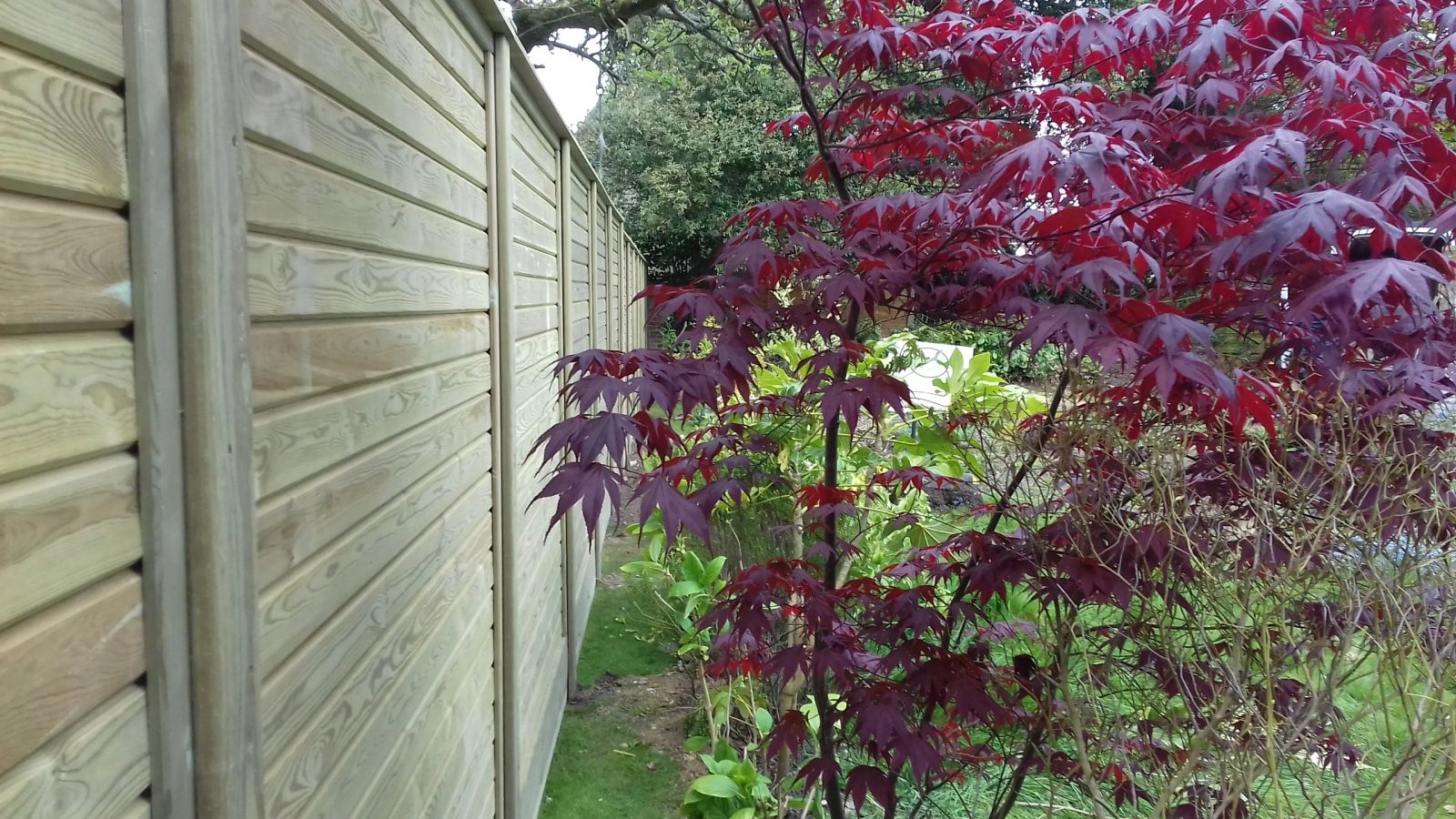
A solid acoustic face presents far more surface area to wind than an open picket or lattice fence, so the wind load transferred to each post is correspondingly higher and has to be designed for rather than assumed to match a standard fence.
Post sections are upsized and bay spans shortened on exposed acoustic runs specifically because of this higher wind loading, not purely for extra mass.
Fixing detail for cassette panels between posts
Cassette acoustic panels are dropped into a captive rebate machined into the post face, which keeps the panel edge sealed against the post without relying on face-fixed battens that could work loose.
The rebate depth and tolerance need to suit the specific cassette thickness supplied, so posts are matched to the panel system rather than treated as a generic fencing post.
Keeping mineral wool infill dry
Mineral-wool infill loses its acoustic performance if it gets wet and stays wet, so the base of an acoustic run needs a gravel board detail that keeps ground moisture away from the infill rather than wicking it upward.
Standing water at the post base is dealt with before the panel goes up, not left to be a problem discovered after the infill is already packed in.
Checking which face of a panel should face outward
Many panel styles have a clear 'good' face with a neater finish and a reverse face showing the frame, battens or rail ends, and getting this the wrong way round means the less tidy side ends up facing the client's own garden or the neighbour's, depending on convention and agreement.
Where a boundary is shared, it's worth agreeing in advance which side the good face should present, since local convention varies and assuming it defaults toward the neighbour without discussion can cause an avoidable dispute.
Checking panel orientation before fixing, rather than after several panels are already up, saves having to unfix and turn a run of panels that all went in the wrong way round.
Choosing rail section size for a security run
Rails on a palisade or railing run are sized in cross-section to the span between posts, not to the pale height alone, because a rail that's too slender for its span will visibly deflect under a leaning or pushing load.
A heavier box-section or channel rail is specified on wider bays or taller runs, and increasing bay width to save on posts only works if the rail section is upsized to match the extra span.
How a security job is sequenced
Work generally runs boundary-first — posts and the main line go in before gates, so gate openings are set against a fixed, already-concreted frame rather than guessed at in advance.
On a longer commercial perimeter the line is broken into manageable sections so part of the site can stay secure while another part is being worked on.