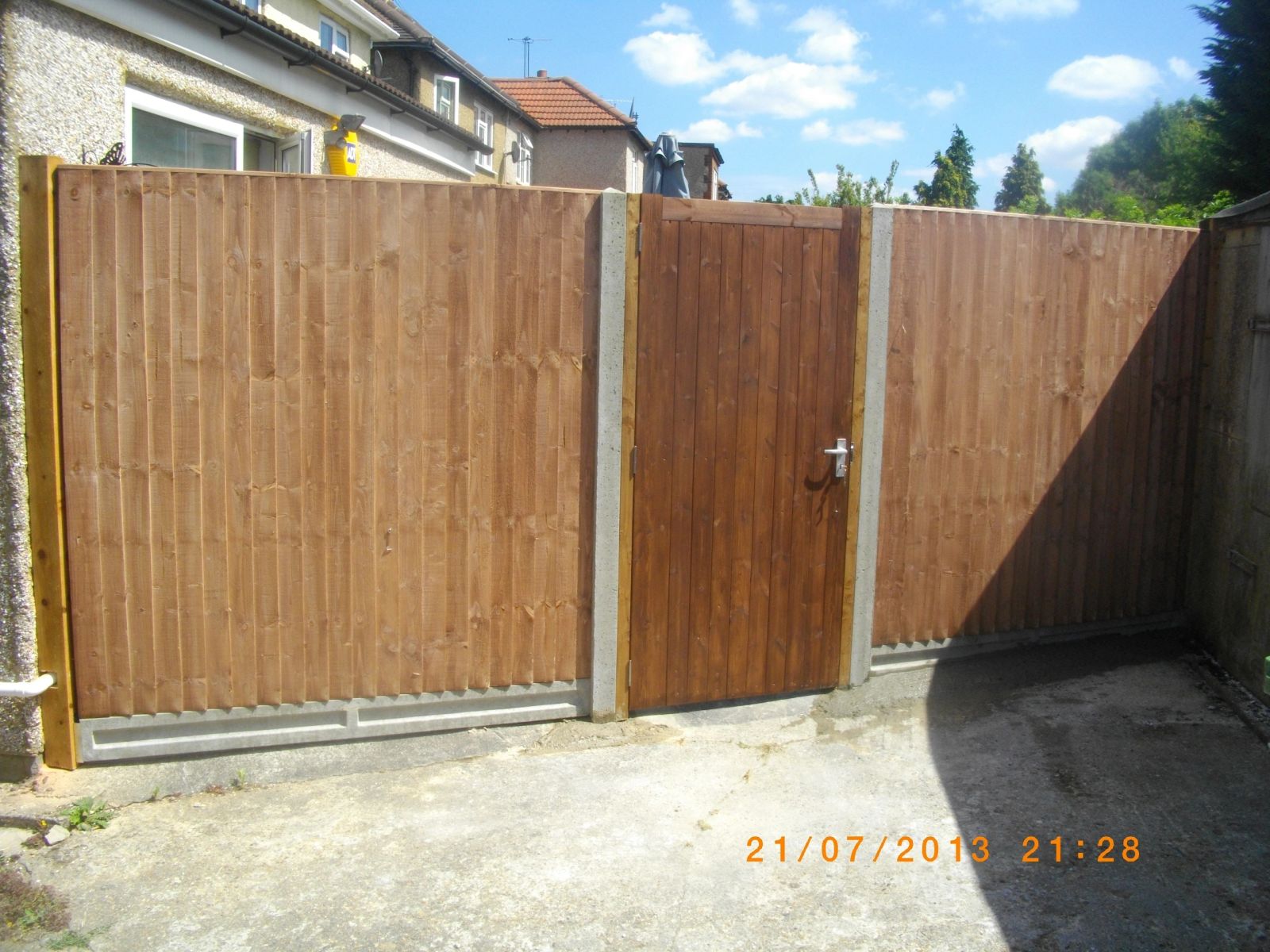
Removing an existing low fence before an acoustic upgrade
Where an existing low or open fence is being replaced with a solid acoustic build, old post stumps and concrete are broken out rather than built around, since a new heavier panel needs its own correctly positioned foundation.
Salvaged materials from the old fence are cleared from site as standard, and any boundary marker or shared feature is noted before removal in case a neighbour raises a query later.
Sealing at post junctions
The junction where a board meets a post is a common leak point for sound if the board is simply butted against the post face rather than housed or sealed into it.
Rebating the post or fitting a batten behind the joint closes this gap, and that detail is checked at every post along an acoustic run rather than only at the ends.
Self-storage and depot perimeters
Self-storage sites and vehicle depots typically run a continuous high-security perimeter with limited access points, and any repair work has to maintain that perimeter's integrity throughout rather than leaving a gap open overnight.
Because these sites often operate extended or 24-hour access for customers or drivers, fencing work needs scheduling around live access hours, with any section requiring full closure agreed and communicated in advance.
Lighting and CCTV mounted on perimeter fencing at these sites adds a coordination step most domestic jobs don't have — services need identifying and protecting before any post is removed or reset.
Removing old fencing and waste
Old fence panels, rotten posts and broken concrete bases don't disappear on their own, and a domestic wheelie bin won't take timber or rubble — it needs a licensed waste carrier and, for larger volumes, a registered waste transfer note.
Treated timber in particular shouldn't go on a garden bonfire, since older stock may have been treated with preservatives that produce harmful smoke when burned.
We'd always confirm whether removal and disposal of the old boundary is included in a quote, since it's one of the most common items left out of a cheaper like-for-like comparison.
Fixing a fence run to an existing masonry wall
Tying a timber fence into an existing brick or block wall usually means fixing a timber post or batten flat to the wall face with masonry bolts or heavy-duty frame fixings rather than digging a post hole hard against the footing.
The wall's own condition matters before any fixing goes in — loose pointing, spalled brick faces or a wall already leaning shouldn't be relied on to carry lateral load from a fence panel.
Where the wall belongs to a neighbour or is shared, fixing into it without agreement can be a boundary matter in its own right, separate from the fencing work itself.
Key-alike locking across multiple gates
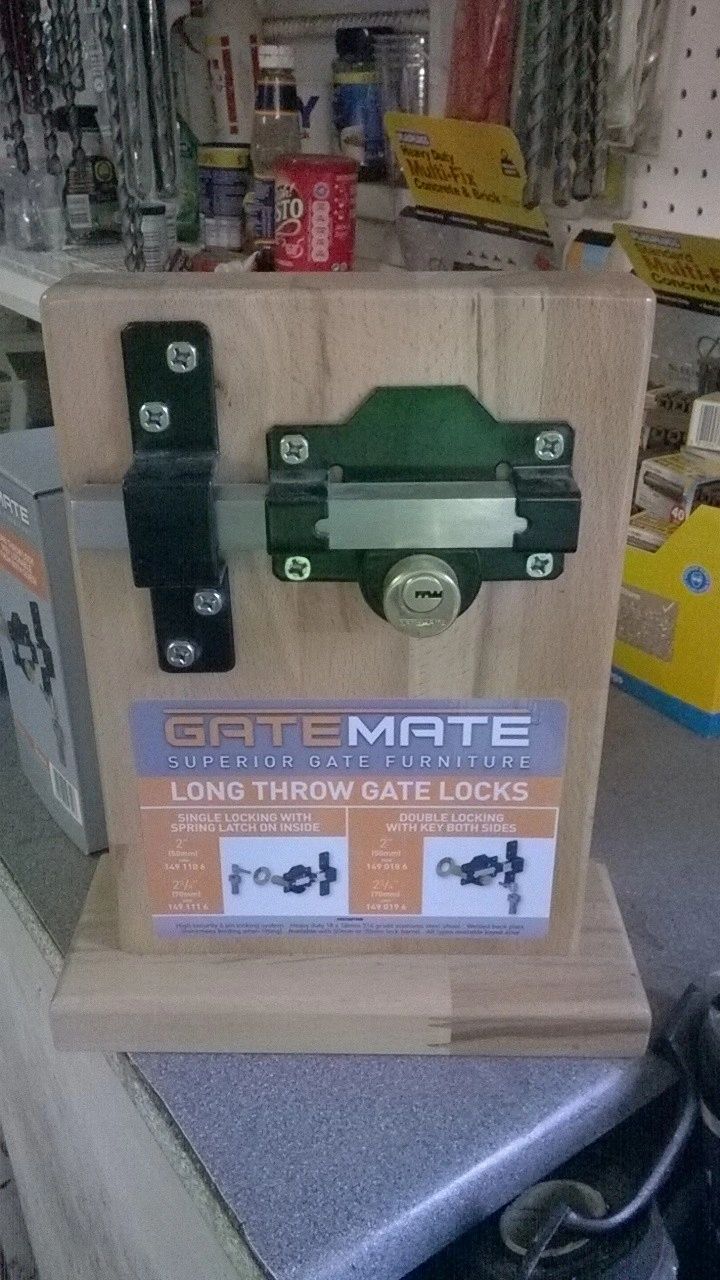
Where a property has several gates, key-alike cylinders let one key operate all of them instead of carrying a separate key for each, which is a straightforward upgrade at the point locks are being replaced anyway.
This needs cylinders sourced as a matched set from the outset rather than retrofitted individually afterwards.
Noise build-up in an enclosed courtyard
An enclosed courtyard surrounded by hard walls on several sides can trap and reflect noise between those surfaces, sometimes making an internal noise source feel louder than it would in an open garden of the same size.
Introducing an absorptive surface on one or more of those walls, rather than adding more barrier height, is often the more effective response in a courtyard where the noise is already largely contained by the surrounding structure.
Hinge screw pull-out and through-bolting
Screws pulling out of a timber hinge post is one of the most common gate faults, usually caused by repeated leverage working the fixing loose in the grain over time rather than a single overload event.
Through-bolting the hinge with a coach bolt and washer plate on the far side of the post gives a mechanical fixing that doesn't rely on the timber's grip the way a screw does.
Sleeper edging and planters
Softwood landscape sleepers are pressure-treated to a ground-contact use class and are generally cheaper and more consistent in size than reclaimed hardwood railway sleepers, which vary in condition and may carry historic residues such as creosote unsuitable for areas near planting or seating.
Sleepers used for raised beds or low retaining edges are usually stacked and pinned with long timber screws or steel rebar driven through pre-drilled holes rather than simply stacked loose, since an unpinned stack can shift as the ground behind it settles.
Where a sleeper structure is also expected to retain a meaningful depth of soil rather than just edge a bed, it moves into proper retaining-wall territory with its own drainage and structural considerations.
Boundaries next to an electricity substation
A local substation can produce a continuous low-level hum from transformer equipment, generally quieter than typical traffic noise but noticeable in an otherwise quiet garden, particularly at night when background noise drops.
A standard timber acoustic barrier can reduce the audible carry of this hum somewhat, though the fixed, unchanging nature of the source means the practical benefit is judged against a very specific quiet-hours baseline rather than a busy daytime one.
Tree roots and Tree Preservation Orders
Mature trees close to a boundary do two things to a fence: their roots can heave a post out of true over several years, and if the tree is protected by a Tree Preservation Order or sits in a conservation area, digging within its root protection area needs care and sometimes council sign-off.
Where roots are already present we'll usually hand-dig around them rather than auger through, and set the post slightly off the direct line if that avoids cutting a structural root.
It's worth checking with the local authority's tree officer before any excavation near a TPO tree, since unauthorised root damage carries the same penalties as felling the tree itself.