Post section choice for heavy acoustic panels
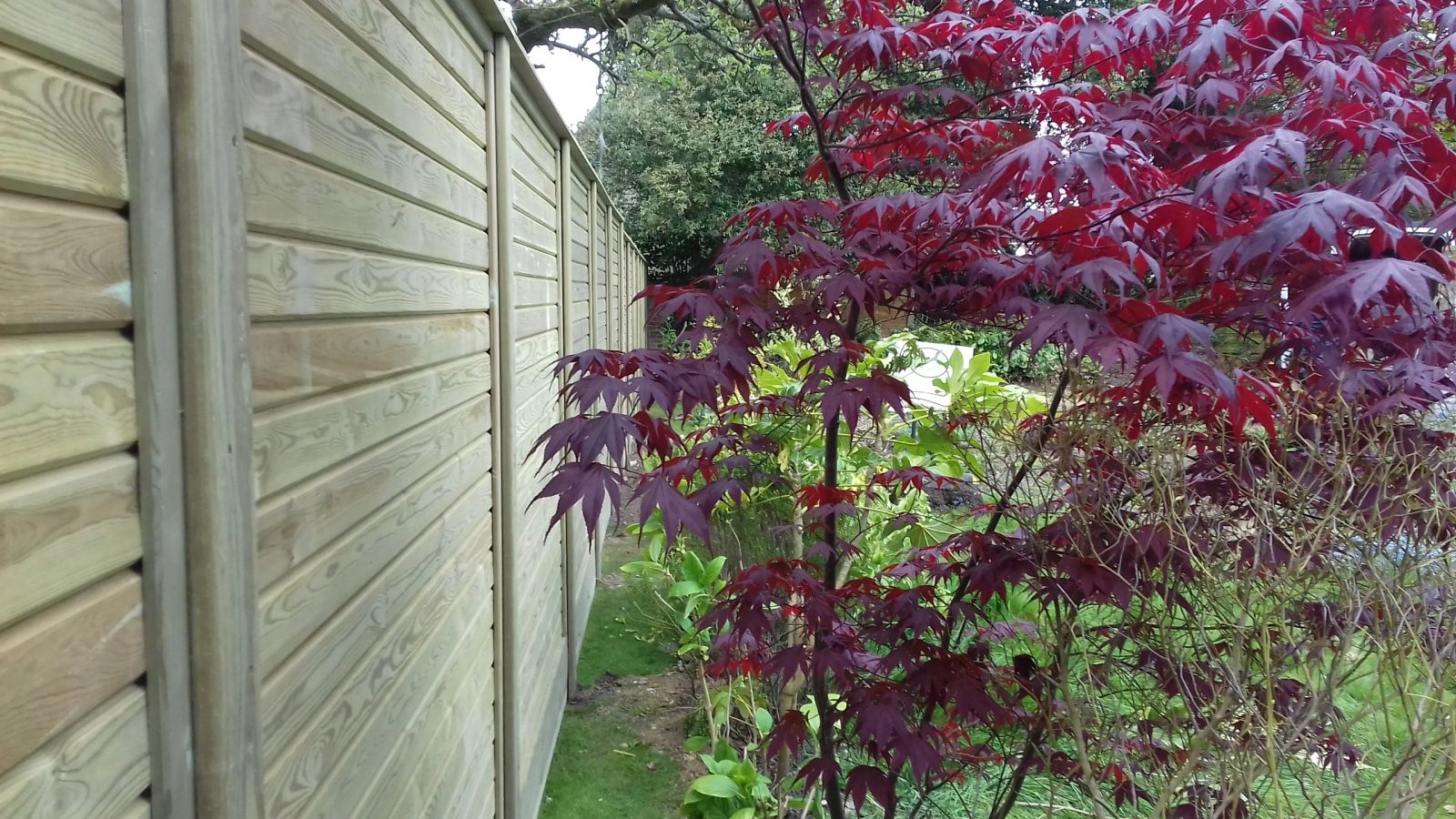
A slender fence post sized for a standard lap panel will flex or fail under the sustained weight and wind loading of a dense acoustic panel, so post section is upsized specifically for the extra mass being carried.
A box-section steel post or a substantial concrete post gives the stiffness needed to hold a heavy panel true over years of wind loading, rather than allowing gradual lean that opens joints and lets sound through.
Mediation as a step before a formal boundary dispute
Community and property mediation services exist specifically to help neighbours resolve disagreements, including boundary and fencing disputes, without going straight to solicitors or court.
Mediation is generally faster and considerably cheaper than formal legal action, and can preserve a working relationship between neighbours who will, after all, remain neighbours.
Where a boundary disagreement is becoming entrenched, raising the idea of mediation early is often more productive than escalating straight to legal correspondence.
Gates binding in winter
A gate that closes freely in summer but binds against its frame or post in winter is very often timber swelling from increased moisture rather than a hinge or frame fault, and easing the latch edge slightly is usually enough to fix it.
We check moisture-related binding before altering hinge position, since a hinge adjustment made to fix a seasonal swelling issue often needs reversing again in summer.
Checking existing boundary alignment before a like-for-like rebuild
Rebuilding a fence on the line of an existing one assumes that existing line was accurate, which isn't always the case — old fences can have drifted from the true boundary over successive repairs and replacements.
A quick check against any available reference, such as a boundary marker, an adjoining wall, or a neighbour's fence that's known to be accurate, is worth doing before assuming the old line should simply be copied.
Where a discrepancy is found, it's a conversation for the client and neighbour to have before rebuilding, since quietly correcting or quietly perpetuating a boundary error both carry consequences beyond the fencing job itself.
Gravel board material choices
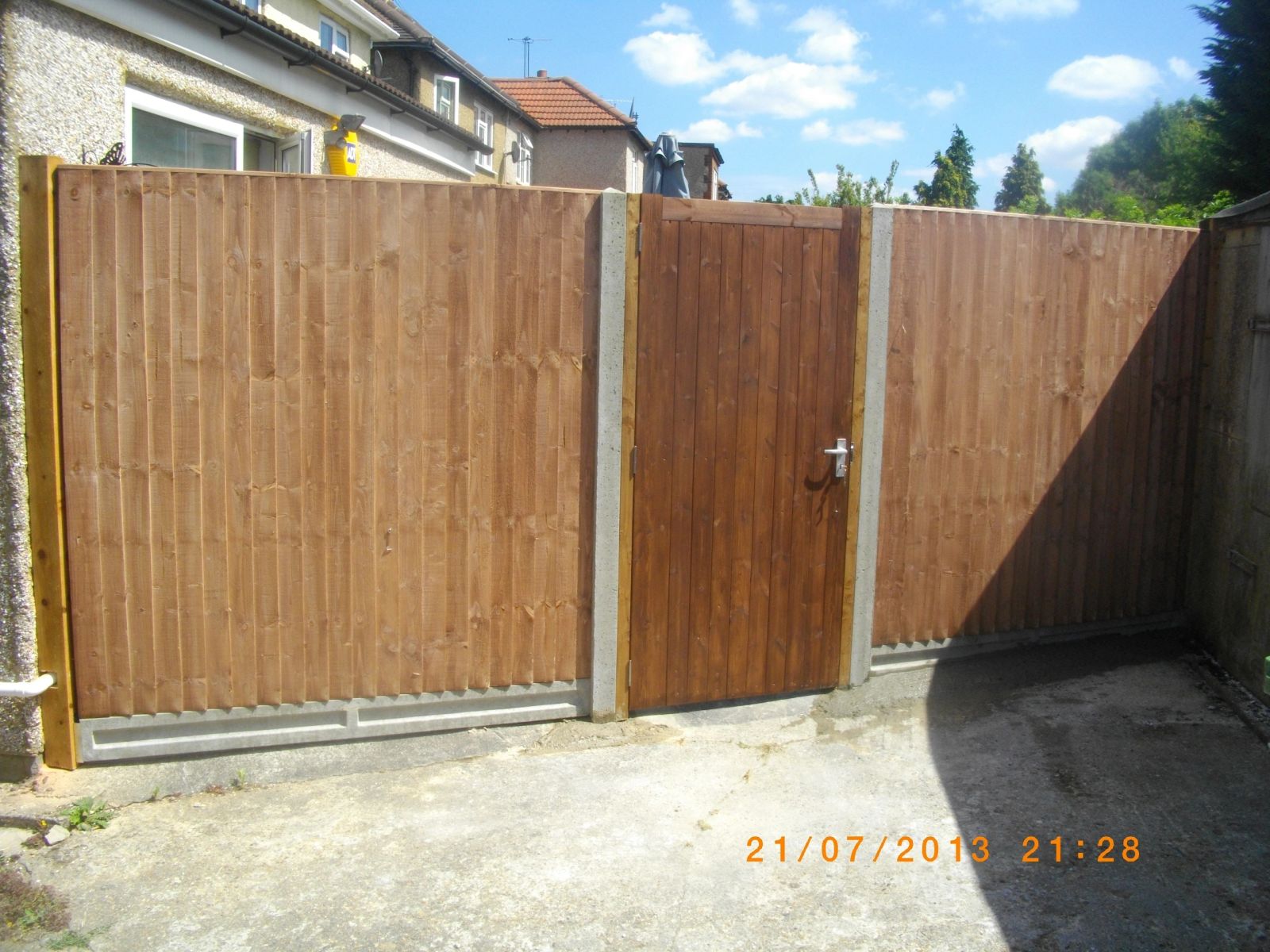
A gravel board sits at the base of a panel fence to keep the panel itself clear of ground moisture and splashback, and is commonly available in treated timber, concrete or composite, each with different durability trade-offs at that most exposed position.
Timber gravel boards are the cheapest to replace individually but also the first component to rot, since they sit closest to damp ground and soil splash, while concrete gravel boards resist rot entirely but can crack under impact or ground movement.
Composite gravel boards split the difference, resisting moisture better than timber without concrete's brittleness, though they typically cost more than either alternative for the same length.
Concreted posts against bolted baseplates for a semi-permanent compound
A concreted post gives a stronger, more permanent fixing appropriate to a fence expected to stay in place indefinitely, but it's disruptive and costly to remove if the boundary line needs to move later, such as when a leased yard's layout changes.
A bolted baseplate fixed to an existing hardstanding trades some ultimate strength for the ability to relocate or remove the fence relatively cleanly, which suits a semi-permanent compound on a leased site better than a fully concreted installation.
Garden levels raised by decking or patios
A raised deck or built-up patio on one side of a boundary can leave the finished surface level noticeably higher than the fence's original ground-level reference, sometimes reducing the effective fence height as seen from that side.
Where a neighbour raises their ground level after a fence is already installed, drainage that previously ran away from the fence can be redirected toward it, so it's worth checking finished levels on both sides before agreeing a new fence height or base detail.
A fence installed at the same time as a client's own raised patio should account for the new level from the outset, rather than being set to the pre-existing grade and later needing extension.
Letterbox and parcel provision in a secure gate
A fully secured pedestrian gate can leave deliveries with nowhere to leave post or parcels, so a secure gate-mounted letterbox or a parcel box positioned outside the locked line is worth planning at design stage.
Positioning it so it can be reached without opening the gate keeps the boundary genuinely closed while still allowing routine deliveries.
Checking cumulative ground level change along a long boundary
A gentle, barely perceptible slope checked only between adjacent posts can still add up to a substantial total fall over a long boundary, which is easy to miss without measuring from a single fixed datum along the whole run.
Taking level readings from one datum point at both ends and at intervals along the run, rather than only comparing each post to its immediate neighbour, reveals the true overall fall before panel and post heights are finalised.
This matters most for ordering materials in advance, since a run that turns out to need more steps or a longer rake than first estimated can mean extra cut panels or capping that weren't in the original take-off.
Perimeter fencing for a self-storage facility
A self-storage site's perimeter fence works alongside individual unit doors as a second layer of security, and is usually specified with a single controlled entry point so out-of-hours access can be logged or restricted even if some customers hold their own keys.
Height and topping on this type of perimeter tend toward the upper end of commercial practice because the contents behind any given unit door are unknown and the site is often unstaffed for long periods.
Ledged-and-braced gate construction
A ledged-and-braced gate is built from vertical boards fixed to horizontal ledges with a diagonal brace between them, rather than a mortice-jointed frame, which makes it cheaper to build but more dependent on the brace alone to resist racking.
Repairs on this type usually focus on the brace and its fixings rather than joints, since there's no mortice-and-tenon corner to come loose.