Cantilever sliding gate basics
A cantilever sliding gate has no ground track and instead balances on internal rollers running along a buried or surface-mounted beam, avoiding the debris problems of a ground-track design but needing a longer counterbalanced section behind the opening.
This type is more common on wider commercial or rural openings than standard domestic driveways because of the extra length needed either side of the gap.
Checking a post for twist before concreting
A post can be perfectly plumb on both faces yet still be twisted along its length, which only becomes apparent once a rail or panel is offered up and doesn't sit flush against the face it's meant to fix to.
Sighting down the length of a post before it's set, rather than only checking it once braced upright, catches a twist that's much harder to correct once concrete has gone off around the base.
Timber posts sawn from a slightly twisted length of stock are the usual cause, so it's worth setting aside a visibly twisted post for a less critical position, such as a short infill panel, rather than a gate post or corner.
Fencing a boundary alongside a watercourse
A boundary running alongside a stream, ditch or river usually needs consent from the relevant authority before fencing work close to the watercourse, since works within a defined distance of the bank can affect flood flow or maintenance access.
Posts are kept clear of the bank edge itself where erosion risk is present, and a fence design that could trap floating debris during high flow is generally avoided in favour of an open rail or wire design on that specific stretch.
Front boundary choices and kerb appeal
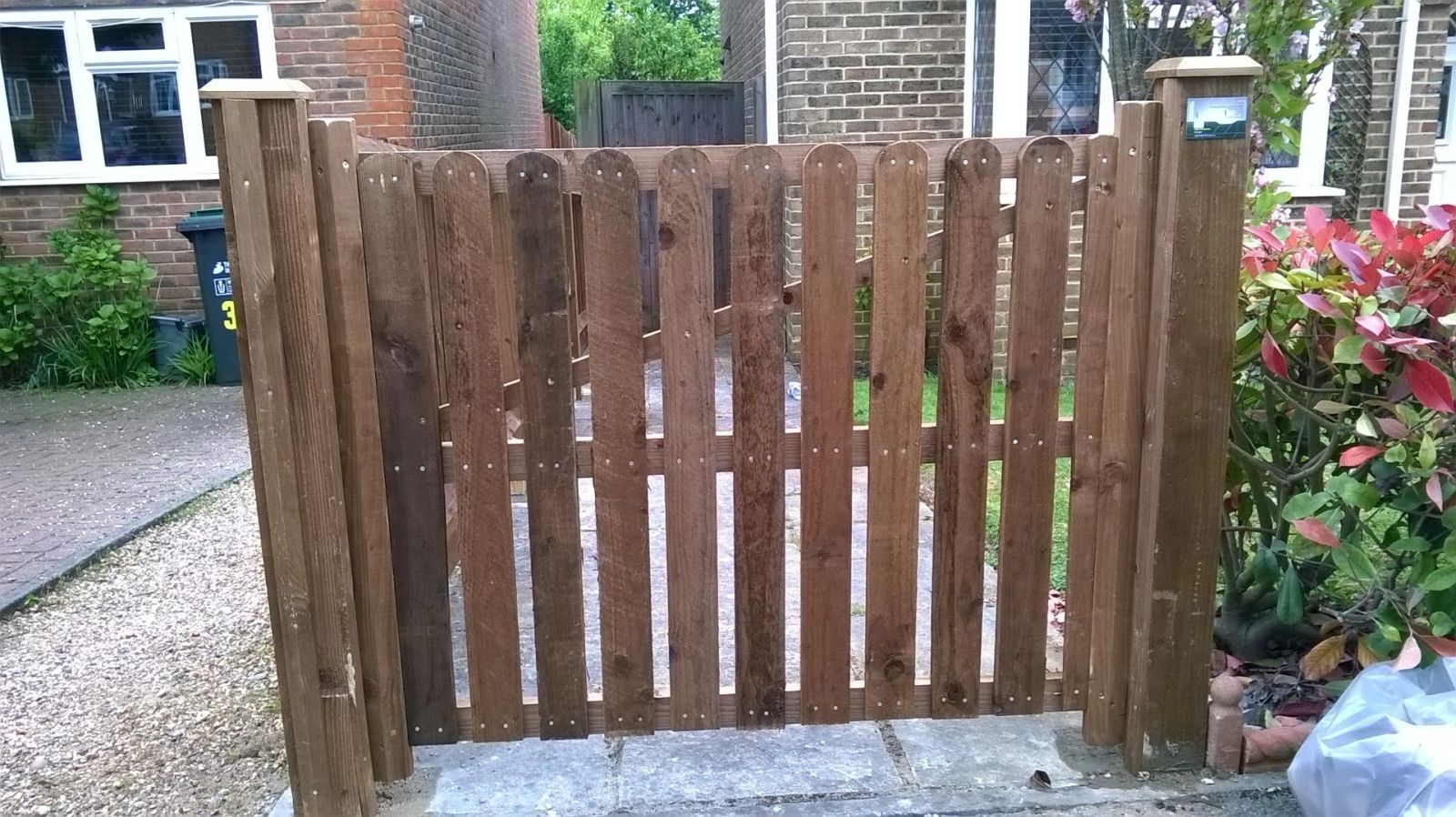
A front boundary is one of the first things anyone sees of a property, and low-key choices — a consistent gate style, tidy capping, a colour that complements the brickwork — do more for kerb appeal than an expensive but mismatched material choice.
Open or low front boundaries tend to suit properties where the frontage itself is attractive and worth showing off, while a higher, more solid front boundary suits a busier road or a desire for more privacy from passers-by.
It's worth thinking about a front boundary as a long-term fixture rather than following short-lived trends, since it's one of the more visible and slower-to-replace elements of a property's exterior.
Water ingress at the bottom rail
The bottom rail of a gate sits closest to splash-back from the ground and holds moisture longer than any other part of the frame, making it the most common place for rot to start on an otherwise sound gate.
Where a repair addresses bottom-rail rot, raising ground clearance slightly or improving drainage underneath is worth doing at the same time to slow the same failure recurring.
Alley gates on shared rear access
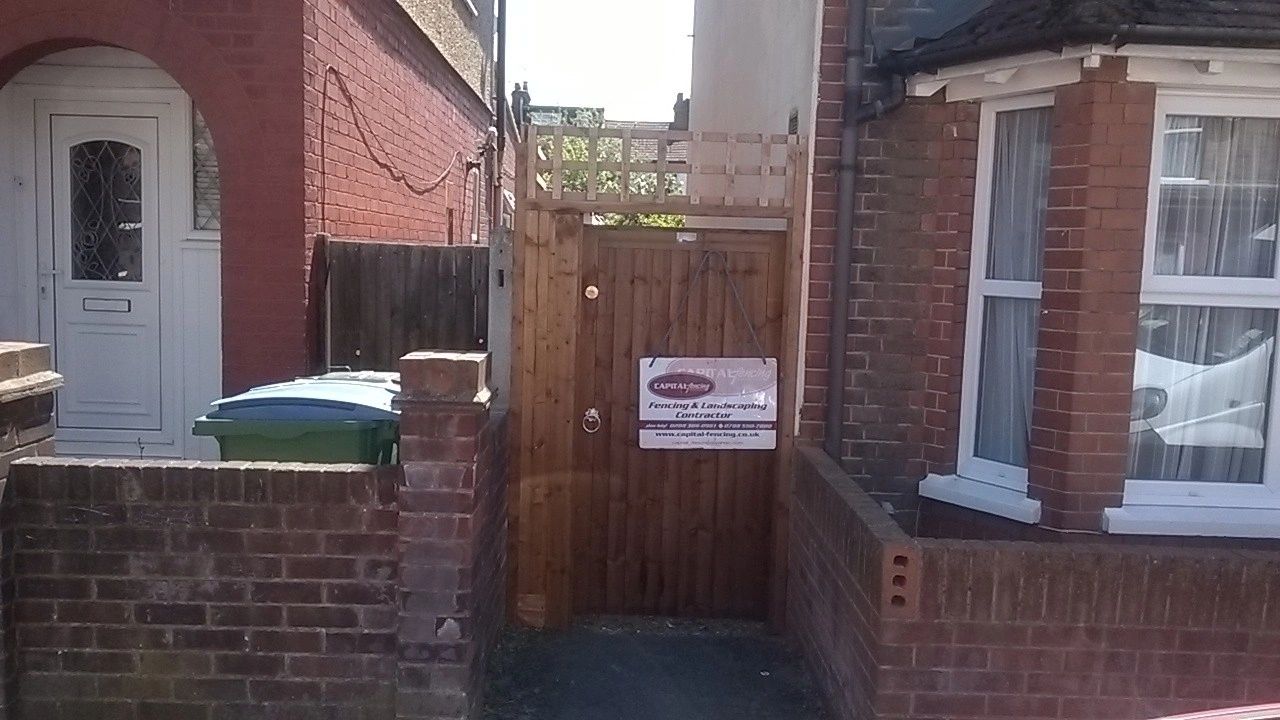
An alley gate closes off a shared rear passage between terraced properties and is typically installed and maintained under an agreement between several households or with local authority involvement, rather than by a single owner.
Repairs on these gates often need to account for multiple keyholders and heavier-than-domestic use, since several households pass through the same gate daily.
Security lighting and cameras near a shared boundary
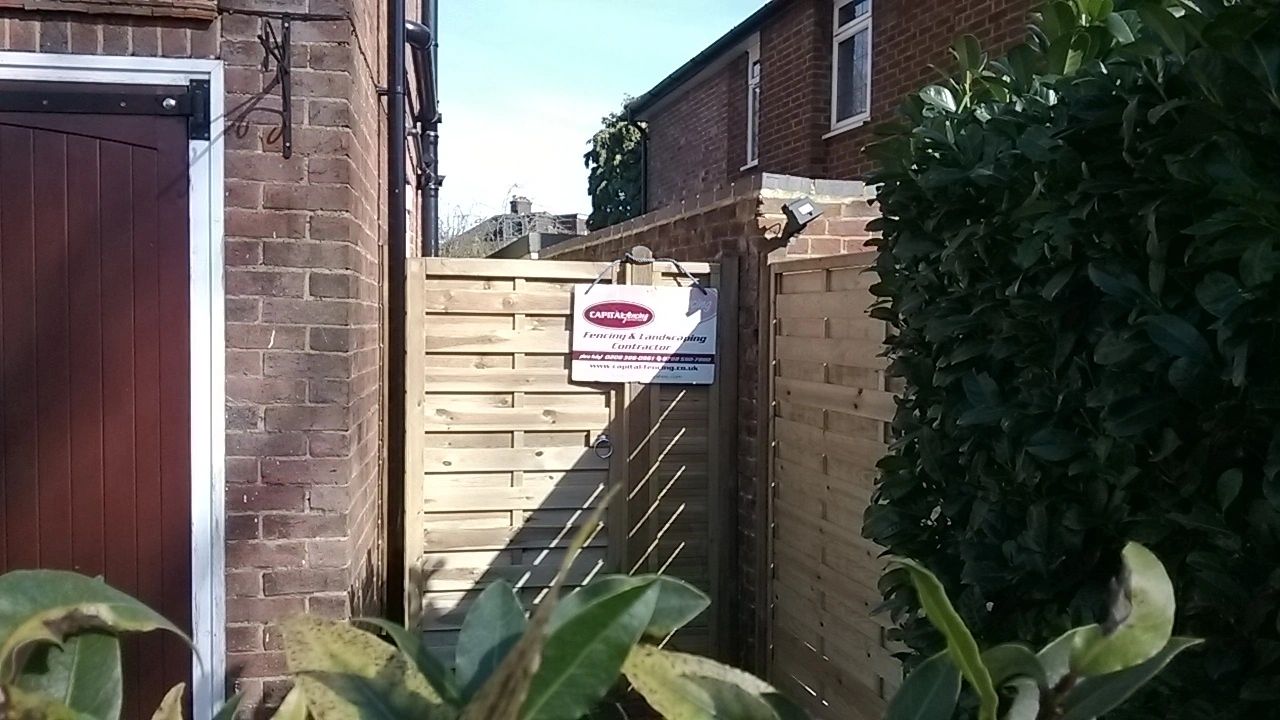
Security lighting or CCTV cameras fitted to a boundary fence can raise both nuisance and, for cameras capturing a neighbour's property, data protection considerations under UK GDPR if used inappropriately.
Positioning cameras to minimise capturing a neighbour's garden or windows, and using shielded lighting that doesn't spill excessively onto adjoining land, generally avoids most disputes before they start.
Where a neighbour raises a specific concern about a camera or light on a shared boundary, addressing it directly is usually simpler than waiting for a formal complaint to the council or Information Commissioner's Office.
Temporary hoarding compared with a permanent boundary fence
Temporary site hoarding erected during building works is generally treated differently under planning rules to a permanent boundary fence, often allowed for a limited period without full permission where it's clearly temporary and related to authorised works.
Problems arise where hoarding intended as temporary is left in place indefinitely once building work finishes, which can then be treated as an unauthorised permanent structure.
Anyone planning to convert temporary site hoarding into a permanent boundary feature should check whether separate permission is needed rather than assuming continuity is automatic.
Questions to ask any fencing contractor
Worth asking directly: who owns the boundary being worked on, what happens if buried obstructions are found, and whether waste removal and disposal are included in the price rather than charged separately afterwards.
It's also reasonable to ask what post-setting method will be used for the specific ground conditions on site, since a contractor who hasn't looked at soil type before quoting depth and concrete volume is guessing rather than specifying.
Asking how a contractor handles a shared boundary with a neighbour who hasn't been consulted is a good test of whether they've thought through the ownership question at all, rather than just the fence itself.
Mixed hedge-and-fence boundaries and shared responsibility
Many boundaries in practice aren't purely fence or purely hedge but a fence backed by an established hedge on one or both sides, which complicates simple assumptions about who maintains what.
Deeds rarely specify hedge maintenance in the same way they specify fence ownership, so in practice it tends to be agreed informally between neighbours, which is worth clarifying in writing before installing a new fence against an existing hedge.
A fence installed too close to an existing hedge on the boundary line can also restrict future access for cutting that hedge from one side, which is worth flagging before positioning posts.
Choosing a self-closing mechanism for pool or drive gates
A spring-loaded hinge, hydraulic closer, or gravity-hinge design (where the hinge itself is angled so the gate swings closed under its own weight) each achieve self-closing in a different way, with different maintenance needs and different feel in use.
Gravity hinges are mechanically simple and low-maintenance but rely on the gate post and hinge post staying accurately set, since any settling changes the closing behaviour.
Hydraulic or spring closers give a more consistent, adjustable close but are an additional mechanical component that itself needs occasional servicing or replacement over the gate's life.