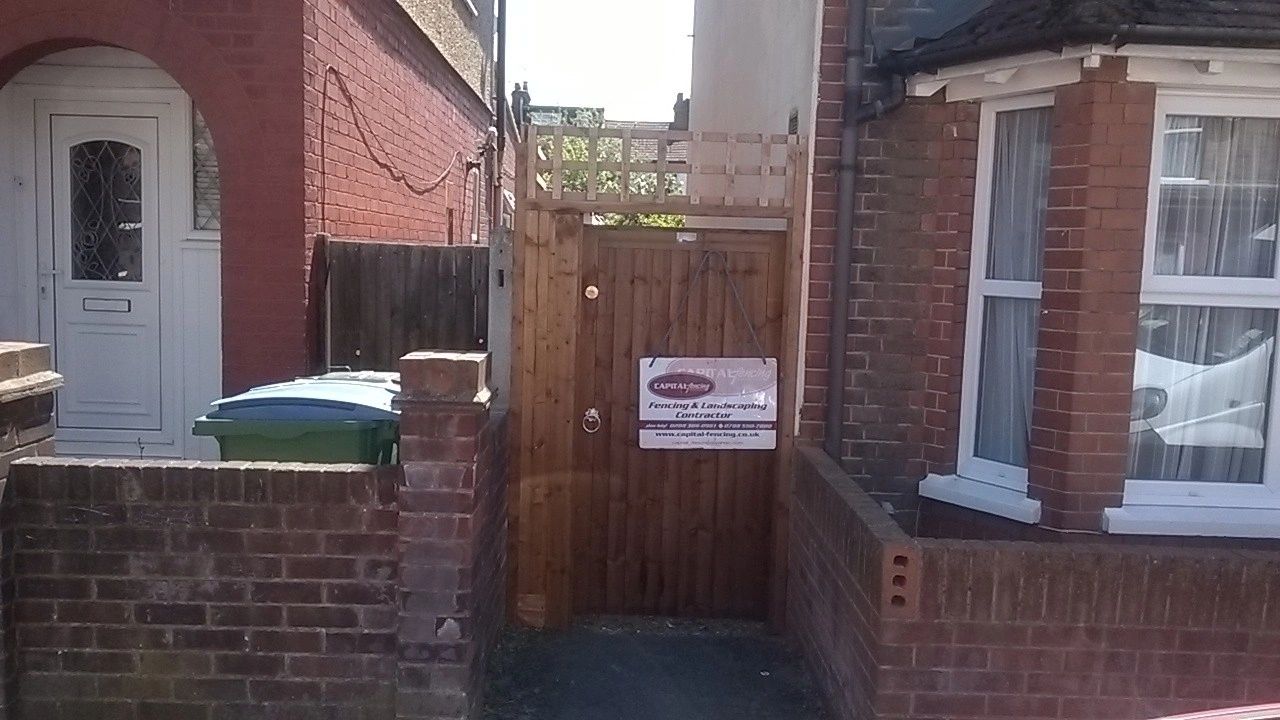
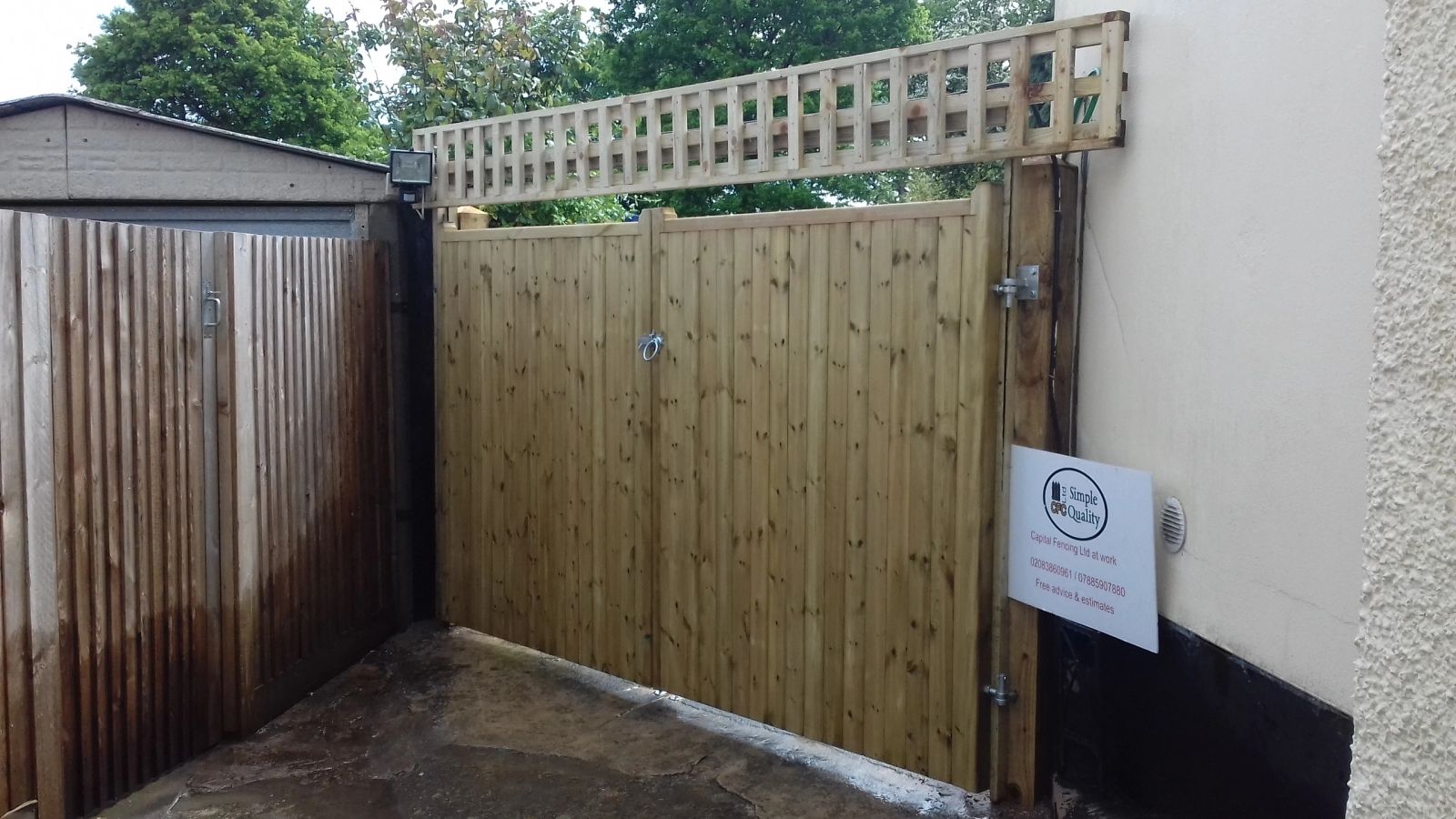
Boundary fencing around church grounds
Church grounds often combine a public-facing boundary that needs to stay welcoming during opening hours with a requirement to secure the building and any lead roof or metalwork against theft outside those hours, which can mean a lower decorative railing at the frontage and a more solid, higher-security line around the building itself.
Listed building status is common on older churches, so railing style and any new fixing into existing stone or brick boundary walls usually needs consent before work starts.
Post shoe drainage detailing
A metal post shoe supports a timber post above a concrete or paved surface, and the shoe's base plate needs a way for water to drain away rather than pooling directly under the post's end grain.
Shoes with a raised or perforated base, rather than a flat solid plate, let water that does reach the post's foot drain or evaporate rather than sitting trapped between metal and timber.
Even a well-designed shoe underperforms if it's set into a low point that collects surface water, so the surrounding ground or paving level, not just the shoe detail itself, needs to shed water away from the post base.
Selvedge detailing on chain-link mesh
The selvedge is the twisted or knuckled edge finish at the top and bottom of a chain-link roll, and a twisted (barbed) selvedge gives a rougher, harder-to-grip edge than a knuckled one, which is a small but relevant detail on a security-rated chain-link run.
A knuckled selvedge is safer where the fence is near public access because it removes the sharp twisted ends, so the choice between the two trades off deterrent value against injury risk in the same way as toppings do.
Joint sealing method between panel sections
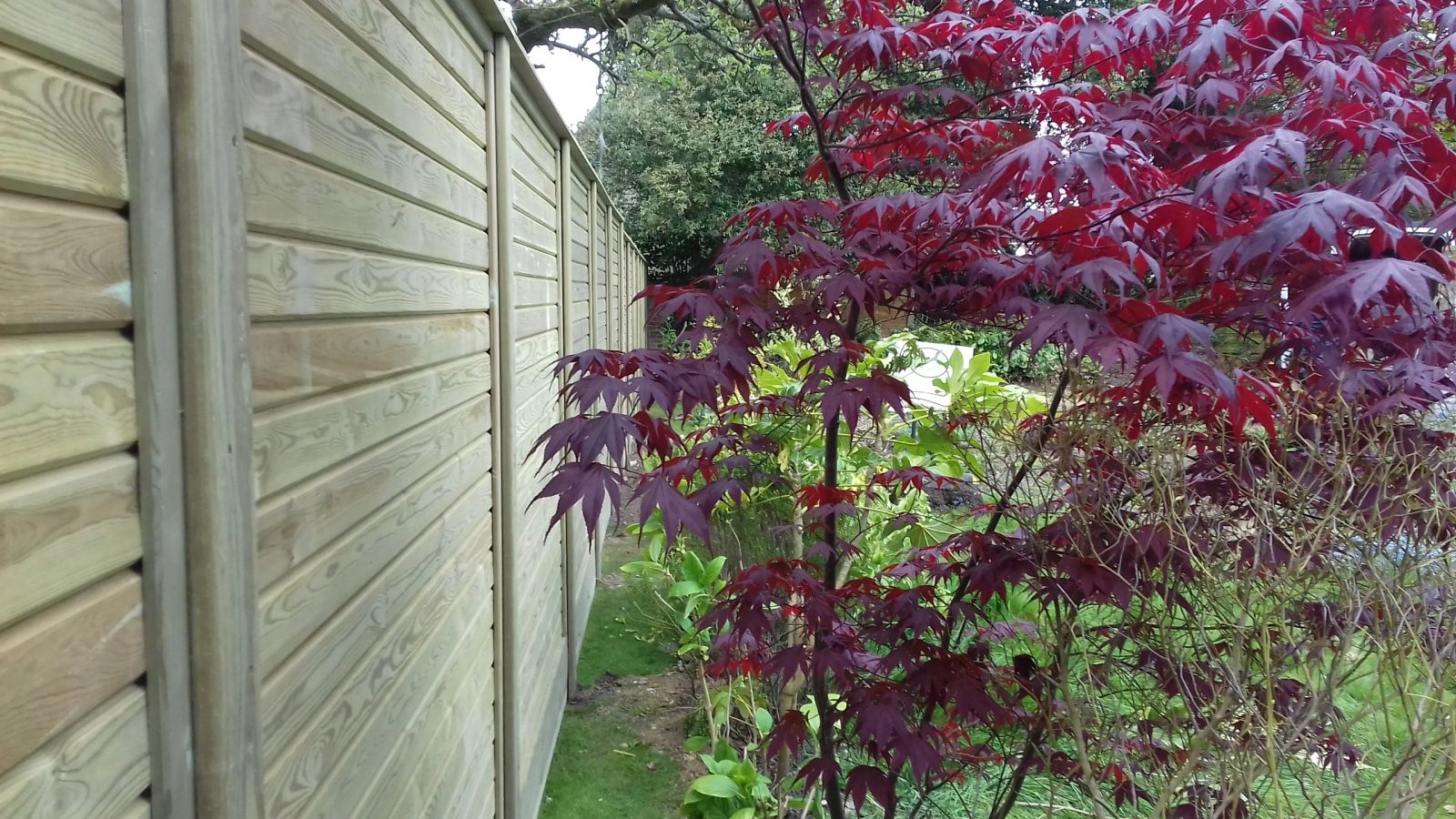
Where two acoustic panel sections meet, a simple butt joint leaves a hairline gap that widens slightly as timber moves with the seasons, and even a small gap can measurably undermine the seal of an otherwise solid run.
A rebated or shiplap joint, sometimes backed with a compressible sealant strip, keeps that junction closed through normal seasonal movement in a way a plain butt joint cannot.
Visibility splays at a driveway boundary
Some driveways, particularly on corner plots or busier roads, are subject to a required visibility splay — an area kept clear of tall obstructions so drivers can see pedestrians and other vehicles safely.
A fence built to the usual permitted development height can still breach a specific visibility splay condition attached to the property, especially where one was imposed when the driveway was originally created.
Checking historic planning conditions for the property, or asking the council's highways team, is worth doing before fencing close to any vehicle crossing.
Power supply and cabling for automated gates
An automated gate needs a reliable power supply run to the gate location, which on many plots means a new armoured cable run from the property rather than relying on an existing outdoor socket not rated for permanent outdoor use.
Solar-powered gate automation is an option on plots without easy mains access, though it needs a battery sized for the gate's actual cycle frequency rather than a generic system that undersizes for a busy driveway.
Any outdoor electrical work for gate automation should be certified by a qualified electrician under Part P of the Building Regulations, since it isn't the kind of job to treat as a DIY extension of the fencing work.
Allotments and community gardens
Allotment sites are typically let by the local authority or an allotment association under a tenancy agreement that sets rules on plot boundary fencing, often restricting height and material to keep sightlines open across the site.
Individual plot fencing usually needs to stop short of shared paths and communal water points, and materials have to be carried in by hand or barrow since most allotment sites don't allow vehicle access beyond a car park at the entrance.
Community garden boundaries also often need a design that keeps the plot secure from casual access out of hours while remaining welcoming during open sessions, which is a different brief from a private garden fence.
Positioning posts relative to existing paving slabs
A post position that lands directly on or straddling an existing paving slab or patio edge either means lifting and relaying that slab, or nudging the post along the line to land in a joint or open ground instead.
Where lifting a slab is unavoidable, checking what's bedded underneath — a solid mortar base rather than loose sand — before committing to reinstating it in the same spot avoids an unpleasant surprise partway through.
On a patio the client wants kept intact, agreeing acceptable post positions against the actual slab layout at the survey stage avoids a decision being made on the day between two imperfect options.
Noise travelling along a side alley or return
A narrow side alley or return between two properties can act as a channel that carries noise from a rear garden or road round to the front, or vice versa, bypassing a rear boundary fence entirely.
Where this kind of path exists, a gate or screen across the alley itself may do more to control noise reaching a specific window than additional height on the main rear boundary.
Freeholder consent for a leasehold garden
Leasehold houses and flats with a garden are usually still subject to the terms of the lease, which can require the freeholder's written consent before altering boundary structures.
This applies even where the leaseholder has full day-to-day use of the garden and has paid for previous fencing work themselves.
Checking the lease, or asking the managing agent, before committing to boundary work avoids a costly rebuild if consent turns out to be required and wasn't obtained first.
Fences crossing a natural drainage swale in the garden
Some gardens have a shallow natural low line, or swale, that carries surface water across the plot during heavy rain even without any formal drainage installed, and a fence built straight across it without allowance for that flow effectively becomes a small dam.
Water backing up against a fence in these conditions accelerates rot at that specific point and, in significant storms, adds a load the fence wasn't designed to resist.
A gap under the gravel board or a permeable section at the exact point the swale crosses the boundary lets water pass through rather than building up against the structure.