Ground movement and gate frame problems
Ground movement under a gate post — from clay shrinkage in dry summers or waterlogging in wet winters — is a common cause of a gate that suddenly starts sticking or dropping after years of working fine.
We check whether the post itself has moved before assuming the fault is in the hinges or the gate face.
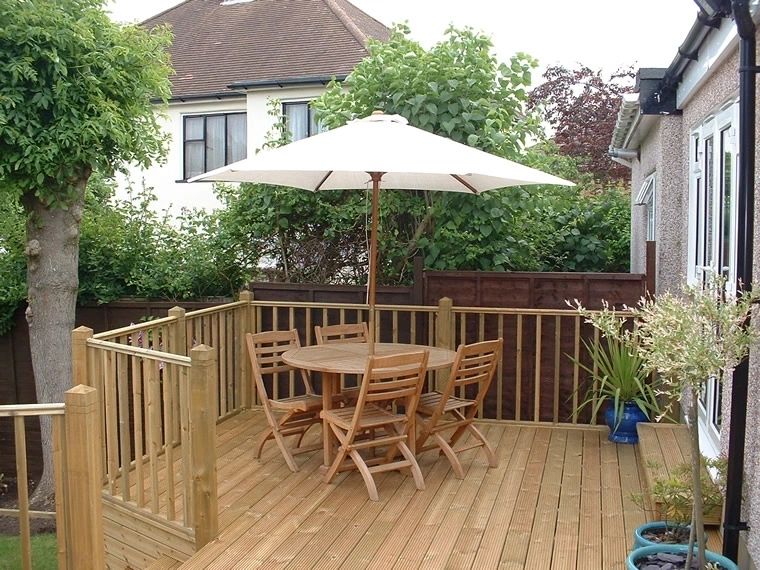
Levelling ground before building a decking substructure
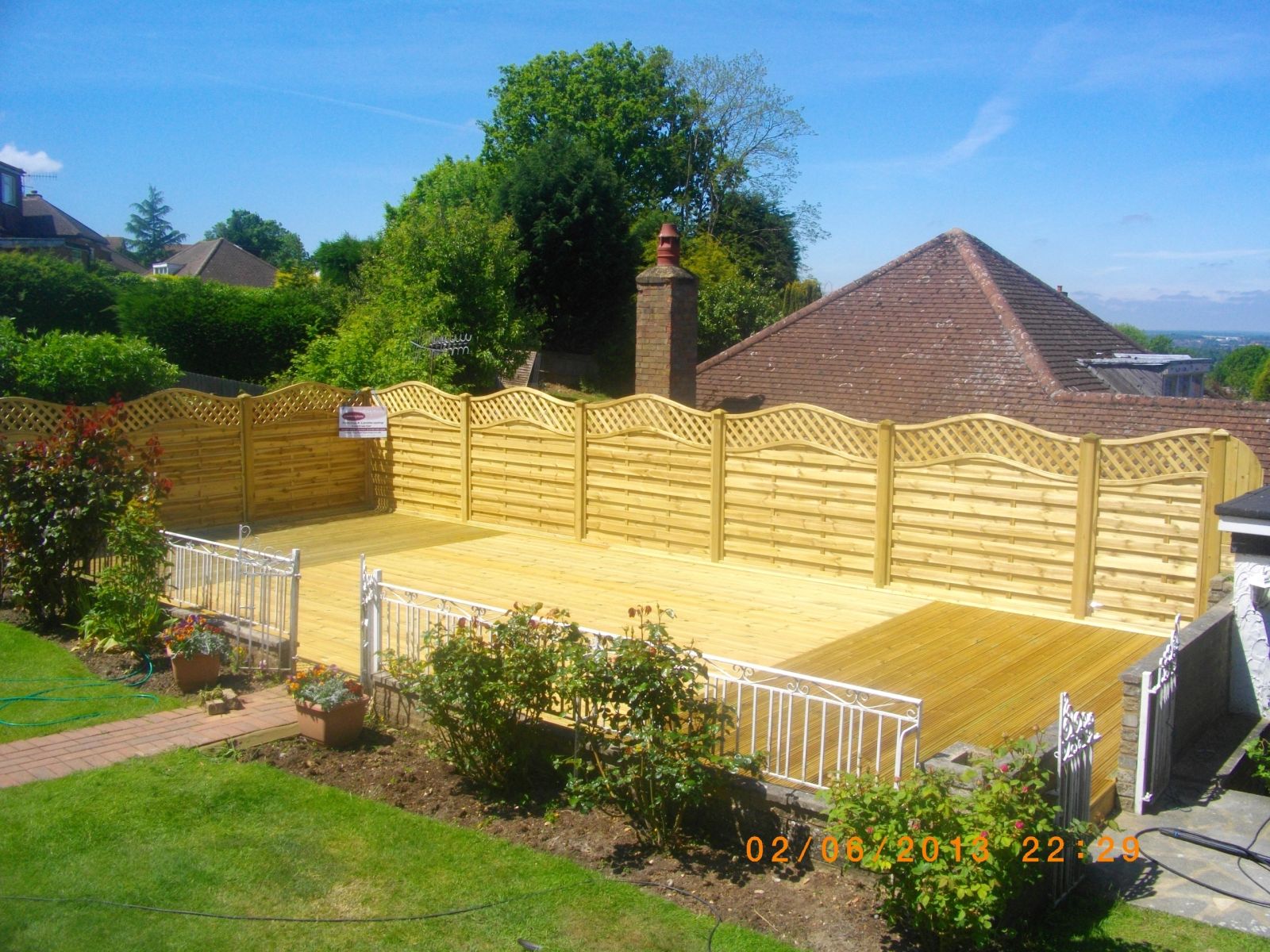
A decking frame built over uneven ground without first levelling or terracing the site ends up with support posts of wildly inconsistent length, which is harder to get right and more prone to individual post settlement than a site graded roughly level first.
Removing turf and topsoil under the deck footprint rather than building over it also reduces the organic material that would otherwise decompose and settle unevenly under the structure.
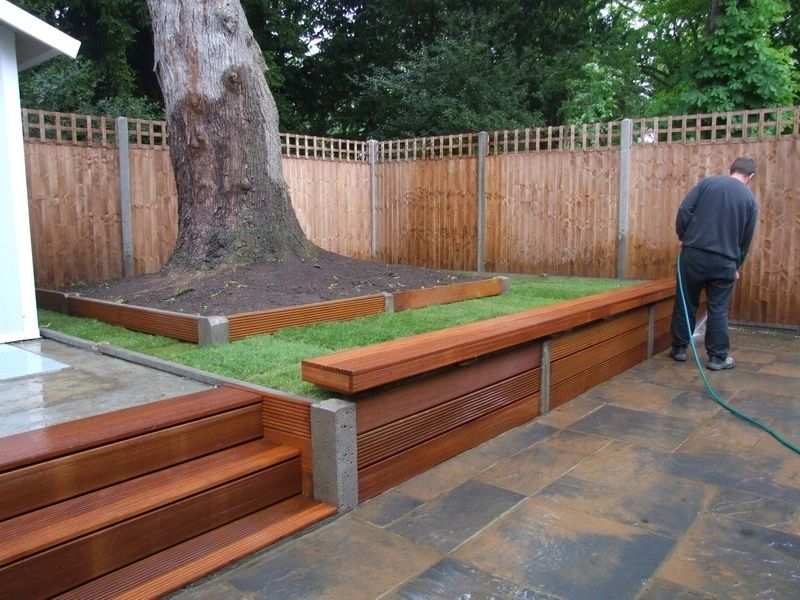
Where the ground has a genuine and significant fall, working out whether to terrace the ground itself or simply vary support post heights is a decision made before any joists are cut, since it changes the whole substructure design.
Resin anchoring a post base into an existing footing
Resin anchoring sets a threaded stud or spike into a drilled hole in sound existing concrete using a chemical resin, which can let a new post base be fixed onto an old footing that's otherwise still structurally usable.
It only works where the existing concrete itself is sound; resin anchored into cracked or spalled concrete has nothing solid to bond to and the fixing will fail alongside the concrete rather than because of the resin.
Stumps in the fence line
An old hedge or tree stump sitting directly on the new fence line needs grinding or digging out before a post can go in, since a post set against or on top of decaying root wood will eventually settle as that timber breaks down.
Stump grinding leaves a mix of wood chip and soil that compacts poorly, so backfilling a post hole in that material generally needs a wider excavation and imported hardcore rather than reusing the arisings.
Where a stump is close to but not on the line, it's often quicker to shift the post position slightly than to fully remove a large root system.
Gravel board rot and replacement
The gravel board takes the most ground contact and splashback of any timber component on the fence, so it's usually the first piece to need replacing regardless of how sound the panels or posts above it are.
Swapping a rotten timber gravel board for a concrete one at repair time removes that recurring failure point without needing to touch the panel above it.
Reflected noise onto neighbours
A solid barrier on one boundary can reflect noise across a garden onto a neighbour's property or an opposite building rather than simply removing it, particularly where two hard, reflective boundaries face each other.
This is worth considering on a narrow plot with barriers on both sides, since an absorptive facing on one side can reduce that bounce rather than trading one neighbour's noise problem for another's.
Timber post taper and strength distribution
A sawn timber post is typically a constant cross-section along its length, whereas the bending moment from wind load on the attached panel is greatest at ground level and reduces toward the top, meaning the post's strength margin isn't evenly used along its height.
This is why increasing embedment depth or post section size, rather than simply extending post height, is generally the more effective way to improve resistance to wind-induced snapping at ground level.
A post that fails from wind load almost always fails at or just below ground level rather than partway up its exposed length, reflecting where the bending stress genuinely concentrates.
Self-storage and depot perimeters
Self-storage sites and vehicle depots typically run a continuous high-security perimeter with limited access points, and any repair work has to maintain that perimeter's integrity throughout rather than leaving a gap open overnight.
Because these sites often operate extended or 24-hour access for customers or drivers, fencing work needs scheduling around live access hours, with any section requiring full closure agreed and communicated in advance.
Lighting and CCTV mounted on perimeter fencing at these sites adds a coordination step most domestic jobs don't have — services need identifying and protecting before any post is removed or reset.
Decking joist spans by board thickness
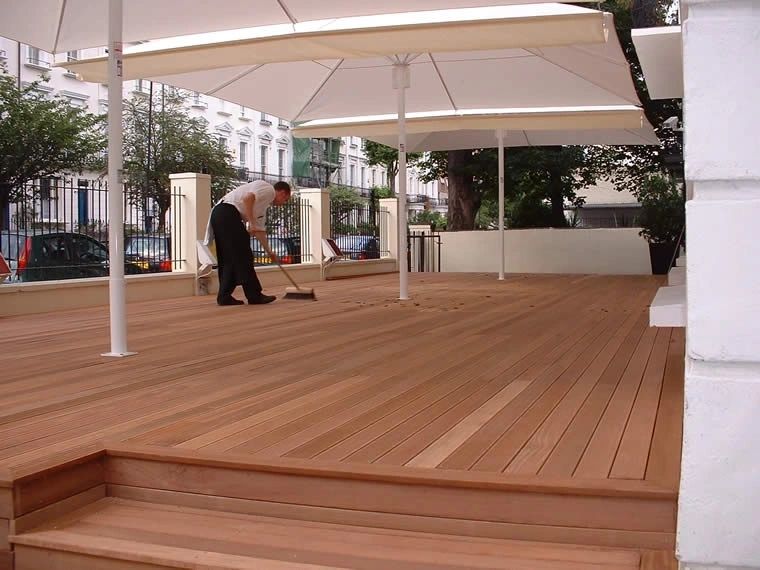
Joist spacing for a deck is set by the thickness and species of the board being laid over it, not by a single universal figure — a standard 28mm softwood board typically wants joists no more than about 400-450mm apart, while thinner composite boards often need closer spacing again.
Manufacturers publish specific span tables for their composite products because the flex characteristics differ from timber, and installing outside those tables is one of the most common causes of a bouncy or springy deck.
Diagonal laying patterns also reduce the safe span compared with a straight run, since the board is effectively supported at a shorter distance along its length.
Working safely on a tall or elevated fence repair
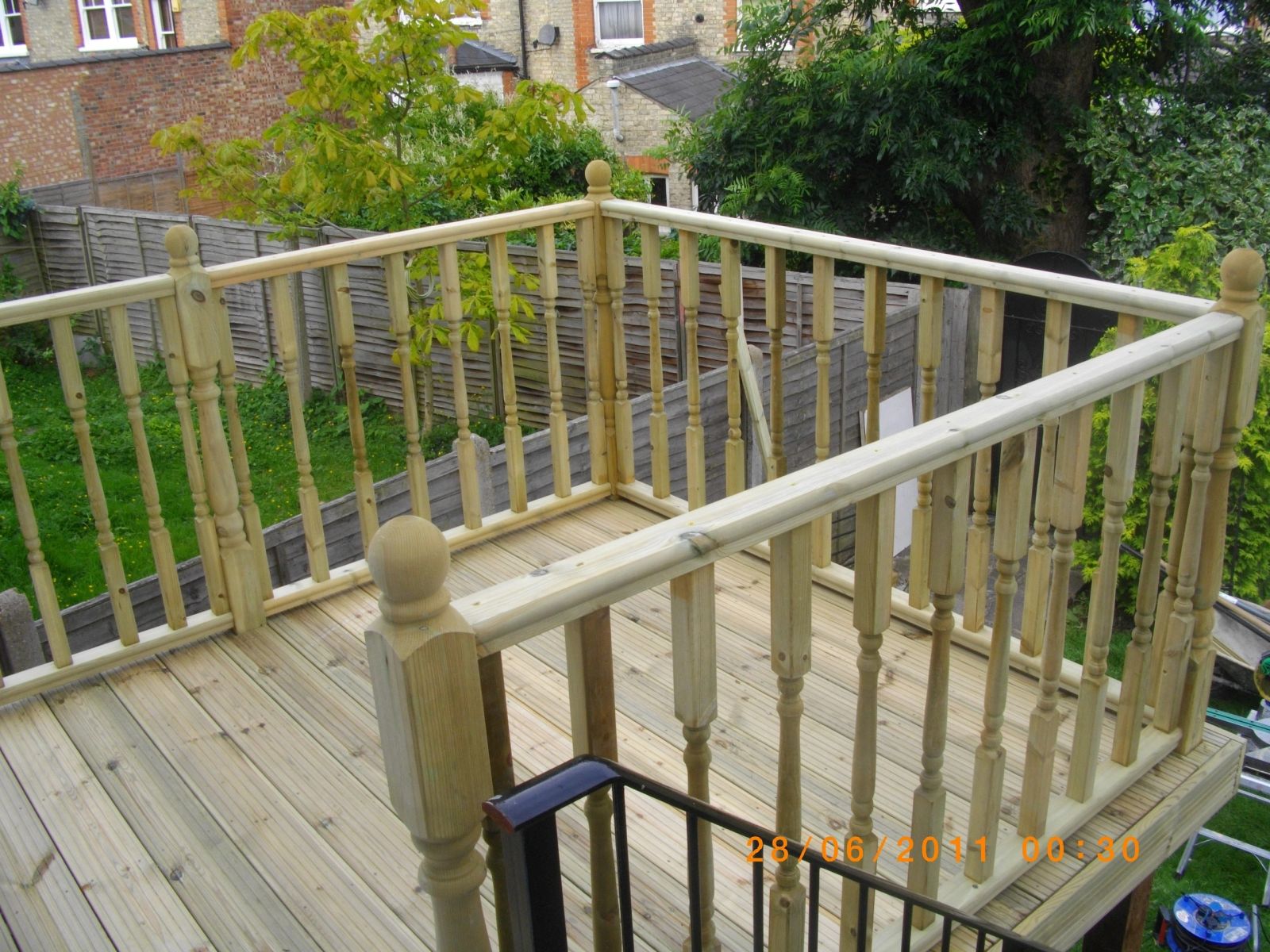
A repair on a taller run, or one set on a retaining wall or raised bank, sometimes needs a working platform or trestles rather than simply working from a stepladder against the fence itself.
Where a repair is above head height along its full length, planning safe access before starting reduces both the time on site and the risk of further damage to the fence being used as a support.
Dealing with a feather-edge board that has cupped
A board cups when one face dries and shrinks faster than the other, usually where the weathered outer face has taken more sun and rain cycling than the sheltered inner face, and it's most common on wide boards cut from flatter-sawn stock.
A cupped board rarely flattens back out once set, so repair is a straight swap rather than an attempt to refix it flatter, and choosing narrower or more vertically grained replacement stock reduces the chance of the same board cupping again.