Retrofit access-control readiness (mechanical side)
A gate can be prepared mechanically for future electronic access control — solid enough hinges, a squared frame and a latch position that suits an electric strike or maglock — without the electrical and control side being fitted at the same time.
We handle this mechanical preparation and refer the electronic access-control installation itself to a specialist.
Post cross-section and wind load resistance
A post's resistance to bending under wind load increases with the square of its cross-sectional depth in the direction the load is applied, meaning a modest increase in post thickness gives a disproportionately larger gain in stiffness.
This is why taller fences and larger gate leaves, which present more surface area to the wind, are specified with noticeably thicker posts rather than simply the same section set deeper, since depth alone doesn't address bending strength above ground.
Orientating a rectangular post section with its greater dimension facing the prevailing wind direction, where the panel design allows it, makes better use of the timber's strength than an arbitrary orientation chosen for appearance alone.
Industrial press and stamping noise
A stamping press or similar industrial machine produces sharp, repeated impact noise that can carry significant low-frequency content, and low-frequency impact noise is notably difficult for a garden-scale timber barrier to attenuate.
Where a residential boundary backs onto light industrial premises using this kind of equipment, a fence can reduce the higher-frequency component of the noise but rarely resolves the low-frequency thump on its own.
Checking an unstable adjacent structure before repairing the fence against it
Where a fence panel is fixed to or sits hard against a garden wall, shed or outbuilding that's itself showing signs of movement, repairing the fence without addressing the structure it depends on risks the same failure recurring.
This is worth flagging to a client as a separate issue rather than working around it silently, since a fence repair fixed to an unstable wall is only as reliable as that wall.
Post-mix density versus site-mixed concrete
Fast-setting bagged post-mix concrete is formulated to set rapidly with minimal water, but the resulting cured density and long-term strength are generally lower than a properly proportioned and compacted site-mixed concrete of the same nominal grade.
For a typical garden fence post carrying modest lateral load, post-mix's faster setting and convenience usually outweighs the modest strength difference, but for a heavily loaded gate post or long fence run, site-mixed concrete is sometimes specified for the added margin.
Both approaches depend on adequate hole diameter and depth relative to the post's exposed height, since undersized footings undermine either concrete type equally regardless of which mix is used.
Moisture content before staining or treating
Applying stain or preservative to timber that's still wet from recent rain or from fresh pressure treatment traps moisture under the coating rather than sealing it out, reducing how long the treatment lasts.
Repairs are timed, where possible, to let new or rain-affected timber dry to a suitable moisture level before any coating is applied.
Schools and nurseries
Boundary fencing around a school or nursery has a safeguarding function as well as a security one — height, anti-climb detailing and gate self-closing mechanisms are usually specified to stop children leaving unsupervised as much as to keep intruders out.
Work on an occupied site needs to be sequenced around the school day, with noisy or access-blocking tasks scheduled for after hours, weekends or holiday periods rather than during term-time drop-off and pick-up.
Any gaps at ground level under a boundary fence matter more here than on a typical domestic job, since a small child can get through a gap an adult wouldn't notice.
Automation compatibility checks and specialist referral
Before a gate is automated, its weight, swing clearance and frame rigidity need to suit the motor type being considered, and a gate that's sound for manual use isn't automatically suitable for automation without checking.
We check the gate itself is fit for automation and refer the motor, control-board and sensor installation to a specialist automation engineer.
Letterplates fitted into gate doors
A letterplate is occasionally fitted into a solid garden or side gate door serving as a secondary entrance, and its position needs to clear internal ledges, braces or a deadlock case before cutting the opening.
Weather sealing around a letterplate in an exterior gate door matters more than on a covered porch door, since the opening faces the weather directly with no canopy above it.
Wind uplift risk on raised, open-sided decking
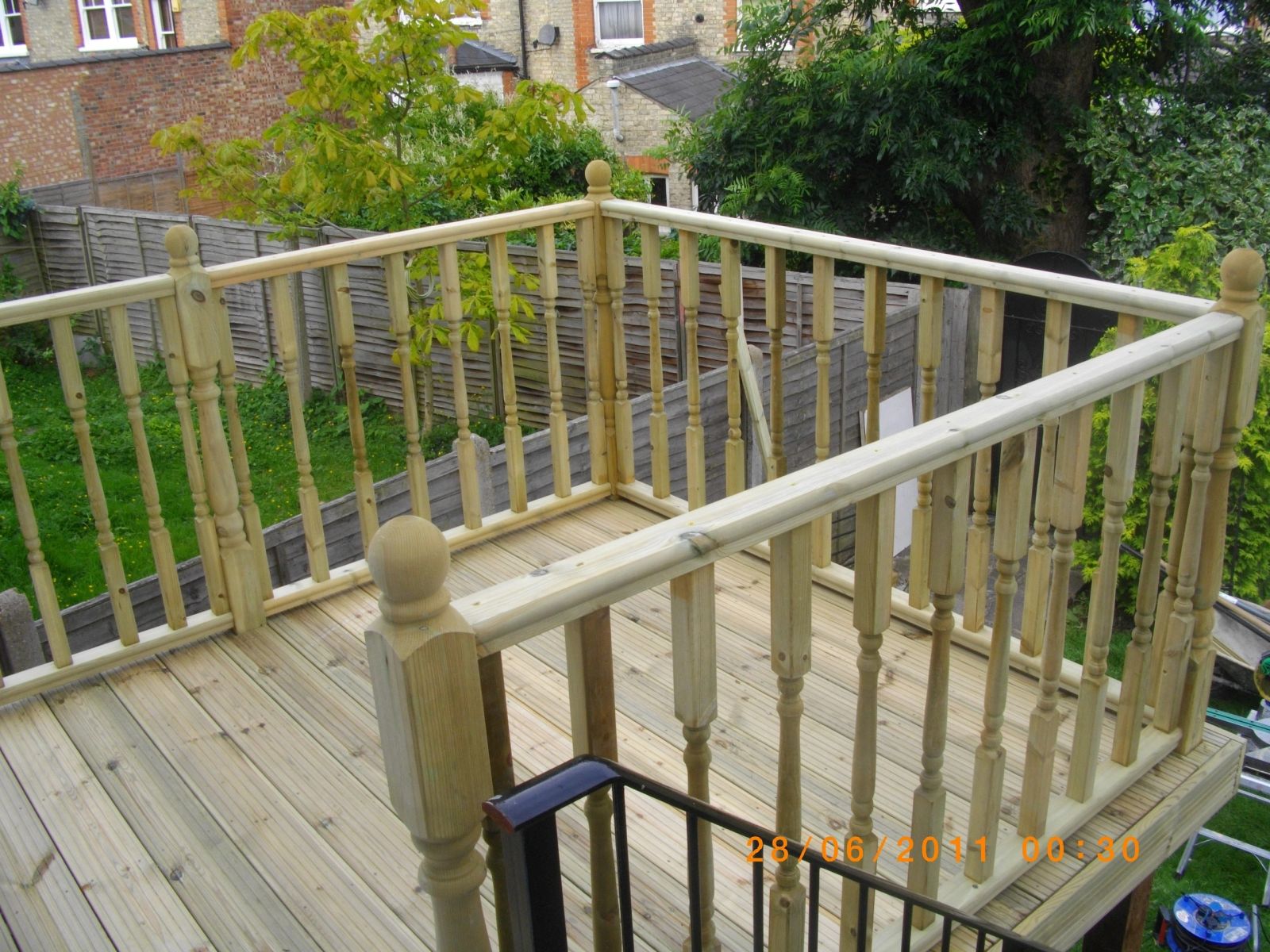
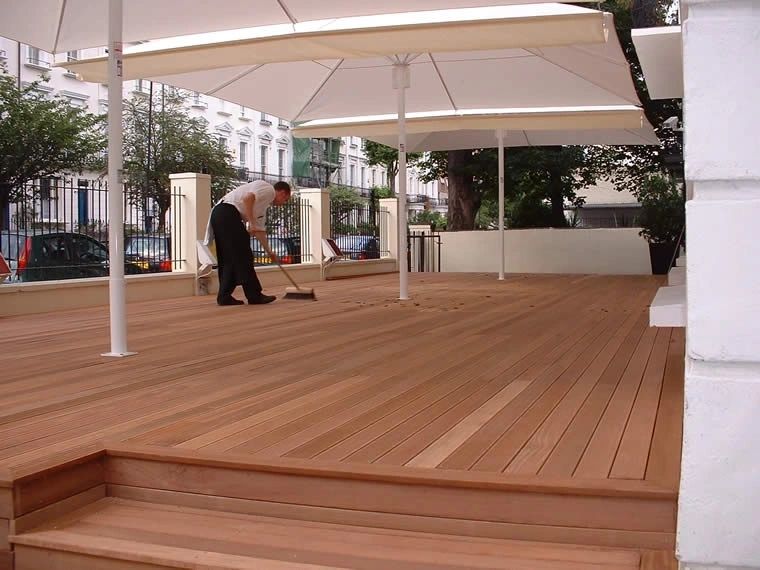
A raised deck open underneath on an exposed site can experience wind getting beneath the structure and creating an uplift force on the boards, distinct from the lateral wind loading that affects a fence panel.
This is rarely a problem on a low, well-fixed deck but becomes relevant on taller raised platforms in genuinely exposed locations, where board fixings need to resist being lifted as well as simply holding the board flat.
Screwing rather than hidden clip-fixing boards down in these conditions gives a more positive mechanical fixing against uplift, at some cost to the clean, fixing-free appearance clip systems are chosen for.
Removing or working around hedges
A mature hedge along a boundary line often needs partial removal or heavy cutting back before a new fence can go in behind or in place of it, and stump and root removal is usually a bigger job than the hedge above ground suggests.
Where a hedge is being kept and a fence added behind it, root disturbance during digging needs the same care as any other established planting — cutting a major root to fit a post line can visibly stress or kill the hedge over the following season.
Some hedgerows, particularly older boundary hedgerows in a rural or semi-rural setting, are protected under separate hedgerow regulations, so it's worth checking before removing one entirely rather than just cutting it back.