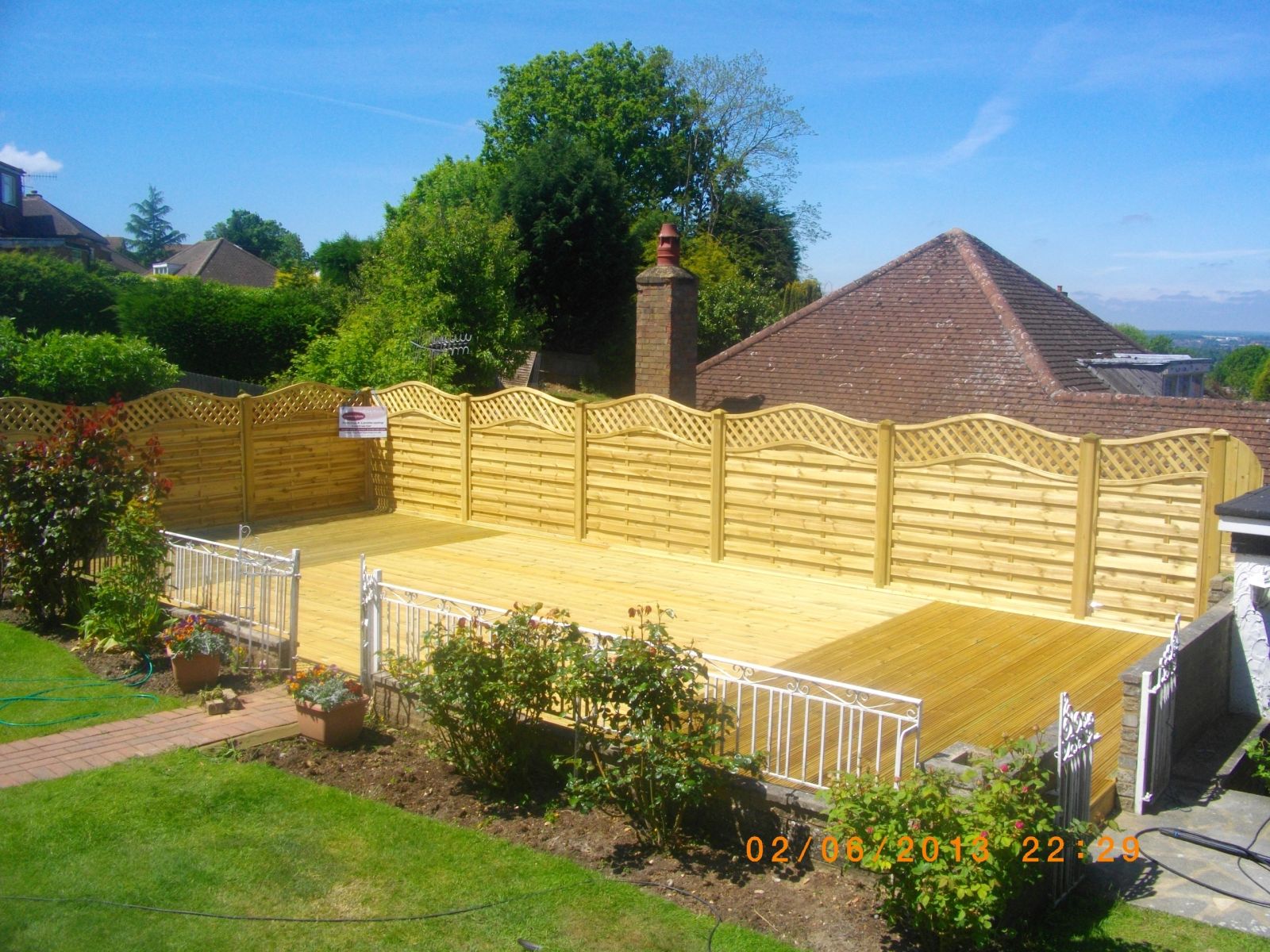
Post fixing for a heavier double-skin panel
A double-skin acoustic panel is considerably heavier than a standard lap-panel fence, so the post and base spec has to be upgraded to carry that extra weight over the long term, not just at installation.
A post that's undersized for the load will lean within a couple of seasons, which opens gaps at the joints and undoes the sealed-joint principle the whole build depends on.
Gate widths for cycle access
A side gate wide enough for a wheelbarrow isn't automatically wide enough for a cargo bike or a bike with panniers, which is worth checking against the actual bikes a household owns rather than a generic standard width.
Cycle storage tucked behind a side gate also needs a gate that can be propped open safely while wheeling a bike through, rather than one that swings shut under its own weight mid-manoeuvre.
Where cycle access is a genuine daily-use requirement, a slightly wider opening at quote stage is a cheap addition compared with widening an existing narrow gate later.
Splicing a new post section onto a sound base
Splicing joins a new length of post timber onto the sound lower section of an existing post using a scarfed or halved joint reinforced with bolts or a metal splice plate, used where the base and footing are solid but the post has failed higher up.
It suits posts damaged by impact or by a snapped rail rather than posts failed by rot, since a spliced joint relies on both pieces being genuinely sound timber to hold load reliably.
Why storm damage clusters at certain bays
Storm damage rarely hits a run evenly — a bay at the end of a straight run, or one next to a gap such as a gate, usually takes more wind load than the bays either side and fails first.
When repairing storm damage we check the bays either side of the failure too, since a post that's been leaned on hard by a falling neighbour is often compromised even if it's still standing.
Flats and maisonettes with communal gardens
Where a garden is communal to several flats, no single leaseholder normally has authority to alter the boundary fence unilaterally — that decision usually sits with the freeholder or a resident's management company under the lease.
Ground-floor maisonettes with an exclusive-use garden are a common exception, but the lease still often restricts fence height or style to protect the amenity of upper flats overlooking the space.
Any quote for work in a communal garden should confirm who is legally instructing the job and paying for it before work starts, since informal agreement from one resident isn't the same as management company sign-off.
Weather delays and rescheduling honestly
Concrete won't cure properly in a hard frost, and post holes dug in heavy rain can collapse or fill with water before the post goes in, so a genuinely bad-weather day is a legitimate reason to reschedule rather than push through and risk a poor-quality fix.
Wind strong enough to make handling full panels unsafe is a similarly clear-cut reason to delay, particularly when working at height on taller gates or fence runs.
Being upfront about a weather delay as soon as it's known, rather than on the morning the crew was due, gives the client time to adjust their own plans around the new date.
Gravel boards in timber and concrete
A gravel board sits at the base of a fence, between the ground and the lowest board or panel, taking the ground contact and splash-back so the panels above it don't have to.
A timber gravel board is cheaper and easier to cut to length but is the component most likely to need replacing within a few years, since it sits closest to damp ground; a concrete gravel board costs more up front but essentially removes that recurring repair.
Either type should sit slightly proud of finished ground level with a stone bed beneath it, rather than being buried, so water can drain away instead of sitting against the timber or panel edge.
Standby generator noise
A standby or backup generator produces loud, sustained engine noise during testing or an outage, concentrated into a mechanical drone with a strong low-frequency component from the engine block.
An enclosure or barrier built close around the generator location is generally more effective than a distant boundary fence, since it intercepts the sound at the point it's loudest rather than after it has spread across open ground.
Diverting a public right of way away from a new fence
Where a registered public right of way crosses land that's being fenced, it's not something that can simply be blocked — a formal diversion order from the council is needed to legally move its route.
This process typically involves public consultation and can take a meaningful amount of time, so it needs building into any project timeline where it's relevant.
Checking the definitive map of public rights of way, held by the county or unitary council, before finalising a fence layout avoids inadvertently obstructing a protected path.
Tongue-and-groove privacy panels
Tongue-and-groove boards interlock edge to edge with no overlap, giving a genuinely solid, gap-free face that's the most private board profile available in timber fencing.
Because the boards key into each other rather than overlapping, the panel needs to be built with a small allowance for seasonal swelling, or the interlocking edges can bind and cup as the timber moves.
It's a heavier, stiffer panel than lap or slatted profiles, so it's usually paired with more substantial posts, and it's a common choice for pool or hot-tub screening where sightlines matter more than airflow.
Getting pre-application planning advice for boundary work
Most local planning authorities offer a paid pre-application advice service, which can give a reasonably reliable steer on whether a specific boundary proposal needs formal permission before committing to it.
This is particularly useful for larger, taller, or unusually positioned boundary structures where the answer isn't obviously covered by the standard permitted development rules.
While it isn't free, the cost is generally modest compared with building something that later needs to be altered or removed following enforcement action.