Estate gates hung from masonry piers
An estate-style gate is often hung from brick or stone piers rather than timber posts, which changes the repair approach entirely since a loose hinge fixing means re-drilling or resin-fixing into masonry rather than replacing a post.
Pier movement itself, from ground settlement or frost heave, can throw two gates out of alignment with each other even when both gates and their hinges are otherwise sound.
Bat and bird nesting season timing
Wild bird nests are protected while in use under the Wildlife and Countryside Act, which in practice means hedge-cutting and dense vegetation clearance along a boundary is generally best avoided during the main nesting season, roughly March to August, unless the hedge has been checked and confirmed clear.
Bats are protected year-round, but works affecting their roosting sites — old sheds, mature trees with cavities, ivy-clad walls — carry particular risk in spring and autumn when bats are moving between summer and winter roosts.
On any boundary job involving significant vegetation or old structure removal, a quick visual check for active nests or signs of bat use before starting is a simple way to avoid inadvertently committing an offence.
Hit-and-miss fencing for windy plots
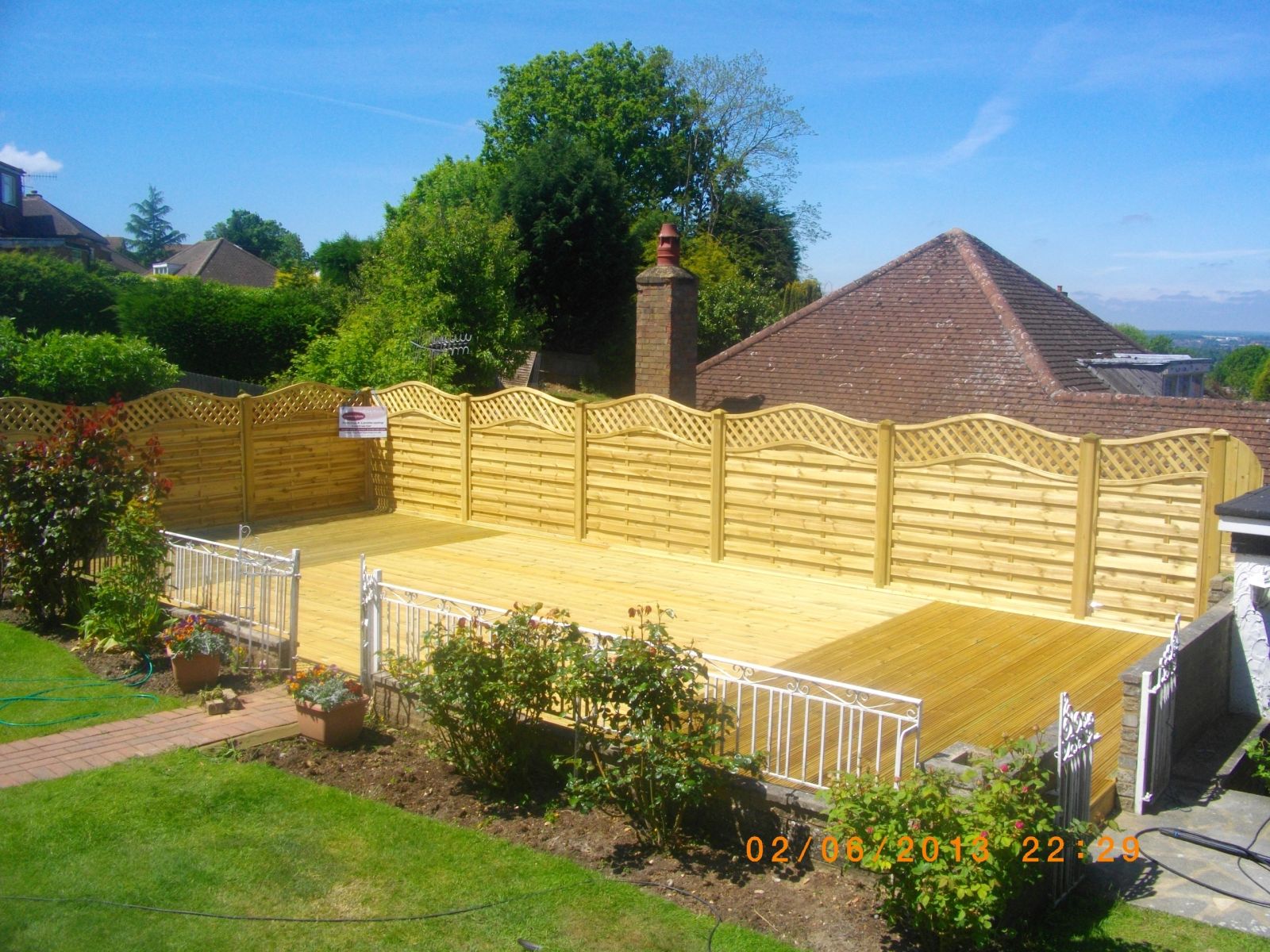
Hit-and-miss fencing alternates boards on either side of the rails so each gap on one face is covered by a board on the other, giving privacy from both sides while leaving narrow gaps through the panel itself.
Those gaps let a proportion of wind pass through rather than loading the whole panel face, which is why it's a common recommendation on exposed boundaries where a solid closeboard run would need heavier posts and shorter bays.
It uses more timber than a single-skin boarded fence for the same run length, so it's priced accordingly, but the reduced wind load can offset that in post and repair costs over time.
Car wash and jet-wash noise
A commercial car wash or a domestic jet-wash produces a high-pressure hiss along with motor noise from pumps and vacuums, and the hiss component sits at higher frequencies that a solid barrier generally handles well.
Where a neighbouring property runs a car wash or valeting business close to a boundary, a barrier close to that source captures more of the noise before it spreads than one set back into the receiving garden.
Outbuildings casting permanent shade onto a fence run
A shed, greenhouse or garage built close to a boundary casts a fixed shadow over part of the adjoining fence run for some or all of the day, creating the same slower-drying conditions as a north-facing aspect regardless of the fence's actual orientation.
This localised shading is easy to overlook when assessing a whole boundary's exposure, since the rest of the run a few metres away may be in full sun.
It's worth treating the shaded section as its own microclimate for treatment and inspection purposes rather than assuming uniform conditions along the full length.
Kiln-dried versus green timber movement
Green (wet, unseasoned) timber is cheaper and easier to nail without splitting, but it shrinks noticeably as it dries in situ, which opens gaps between overlapping boards and can loosen fixings within the first year.
Kiln-dried timber has already lost most of that moisture before it reaches site, so it holds its dimensions far better once fixed, at a higher material cost.
Closeboard fencing traditionally tolerates green feather-edge boards reasonably well because the overlap absorbs some shrinkage, but a tight tongue-and-groove or slatted panel is far less forgiving and benefits from kiln-dried stock.
Clearing an old, ineffective boundary
An existing lap-panel fence or low wall that isn't doing its job acoustically is removed and taken off site, and any post stumps left in the ground are broken out so the new, heavier run has a genuinely fresh base rather than being built around old fixings.
Timber offcuts from trimming the double-skin boards to length are also cleared as standard.
Retail yards and car parks
Fencing around a retail unit's rear yard or customer car park usually has to satisfy insurer requirements for secured perimeters as well as simple boundary marking, particularly where stock or delivery cages are stored outside.
Vehicle impact is a real consideration in a car park boundary, and posts near a marked bay or turning circle are often specified heavier or protected by a bollard rather than relying on the fence itself to survive a low-speed shunt.
Work here is usually scheduled around trading hours and delivery windows, since blocking a rear yard during a delivery slot can hold up a retailer's whole day.
Absorptive versus reflective barrier faces
A hard, flat, reflective face — most solid timber or masonry barriers — bounces sound back the way it came rather than absorbing it, which is fine where there's nothing on the other side to reflect noise onto.
An absorptive face, typically with a porous or perforated finish over sound-absorbing material, reduces that reflected energy and is more relevant where the barrier faces another building or a neighbouring garden that would otherwise catch the reflection.
Key-alike locking across multiple gates
Where a property has several gates, key-alike cylinders let one key operate all of them instead of carrying a separate key for each, which is a straightforward upgrade at the point locks are being replaced anyway.
This needs cylinders sourced as a matched set from the outset rather than retrofitted individually afterwards.
Lap panels versus closeboard durability
Overlap (lap) panels are factory-assembled from thin horizontal slats stapled to a light timber frame, which makes them cheap and quick to fit but noticeably shorter-lived than boarded fencing.
The thin slats and lightweight frame flex in wind and the staples pull through over a handful of seasons, especially on an exposed run, whereas closeboard's thicker feather-edge boards and nailed arris rails tolerate the same movement without failing.
Lap panels suit a budget-driven job with modest exposure; anywhere wind-loaded or expected to last well past a decade is better specified as closeboard from the outset.