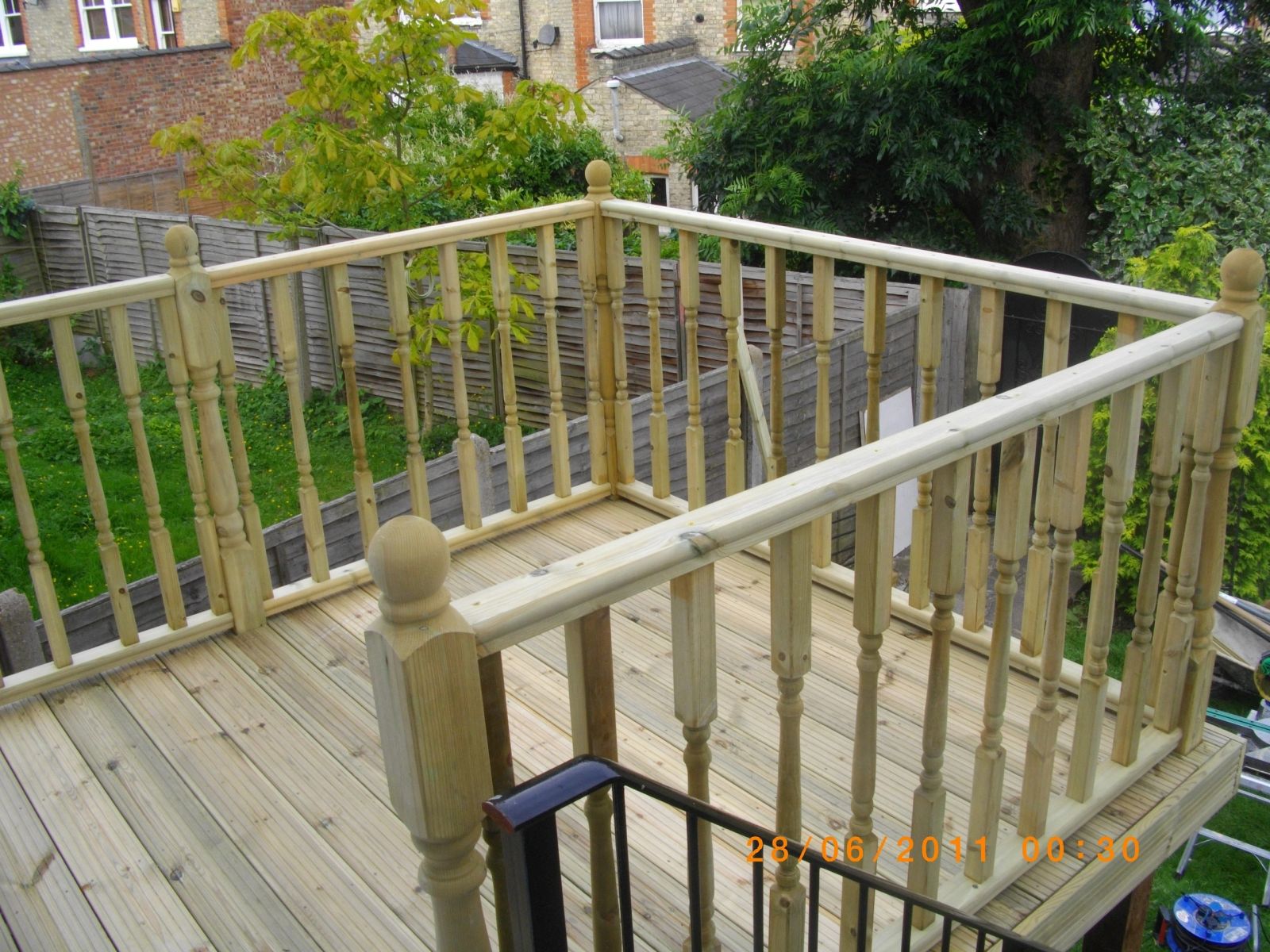
Arched top gates and curved rail jointing
An arched top gate needs a curved top rail jointed into straight stiles, and that curved rail is usually built up from several shaped sections rather than cut from a single curved timber, since a single piece cut across the grain to follow the curve would be structurally weak.
Repairs to a cracked arched rail need to identify which built-up section has failed rather than treating the whole curve as one component.
Working hours restrictions set by councils
Most councils set standard permitted working hours for construction noise, commonly something like 8am to 6pm on weekdays and a shorter window on Saturdays, with no noisy work at all on Sundays and bank holidays, though the exact hours vary by borough.
These restrictions apply regardless of whether formal planning permission was needed for the work itself, and are usually enforced under separate environmental health powers rather than the planning system.
On a site with a specific planning condition attached, hours can be tighter still, so it's worth checking any condition notice as well as the general council policy before committing to a start time.
Use classes for ground-contact timber
Treated timber is graded into use classes according to how much moisture and ground contact it's expected to face, and specifying the wrong class for the job is a common cause of premature rot that isn't obvious until years later.
Use Class 3 covers above-ground timber exposed to the weather, such as boards and rails; Use Class 4 covers timber in direct or near-permanent ground contact, which is what posts and gravel boards should be specified to, not Use Class 3 stock used because it's cheaper or more available.
A supplier's treatment certificate should state the use class achieved, and it's worth asking for it on any job where posts are the expensive, hard-to-replace component of the run.
A spec checklist for comparing quotes
Two quotes at very different prices for what looks like the same fence often differ in the parts that aren't obvious from a headline description — post type and spacing, gravel board material, rail count, use class of treatment, and whether waste removal is included.
Worth confirming explicitly: post material and size, number of arris rails for the height quoted, gravel board type, treatment use class of ground-contact timber, fixing corrosion class, and whether post caps and capping rail are included as standard.
A written spec covering those points, rather than just a total price and a photo of a similar job, is the practical way to compare quotes on equal terms rather than discovering the difference once the fence is already up.
Diffraction over the top of a barrier
Sound bends over the top edge of any barrier, a behaviour called diffraction, which is why a fence's effectiveness depends heavily on height relative to the source and the listener rather than on the barrier material alone.
Adding even a modest amount of extra height near the top edge can improve performance more than making the whole barrier more massive, because it lengthens the path the diffracted sound has to travel.
When a boundary camera becomes part of a wider dispute
Boundary and fencing disagreements sometimes escalate to include complaints about cameras, lighting or noise, which can broaden a straightforward property dispute into several overlapping issues at once.
Keeping these strands separate in any correspondence — addressing the boundary question and any camera or nuisance concern individually — tends to keep discussions more focused and productive.
Where a dispute has genuinely broadened like this, a mediator or solicitor experienced in neighbour disputes more generally, rather than boundary-only expertise, may be the more useful next step.
Gate swing on a sloped driveway approach
A driveway gate installed at the top or bottom of a sloped approach needs its swing arc checked against the actual gradient, since a gate that clears the ground when closed can still catch the rising slope partway through its opening arc.
Sliding gates are sometimes preferred over swinging gates on a sloped approach for exactly this reason, since they don't need to clear a changing ground level along their travel.
Headroom and ground clearance on a rising site
A gate hung across ground that rises from one side to the other needs enough clearance built into its swing to clear the highest point of that rise without the bottom rail dragging as it opens.
We measure ground level across the full arc of swing, not just at the gate posts, before setting hinge height on a sloping or uneven site.
Made ground and buried rubble
Plots built on old industrial land, demolished outbuildings or infilled yards often have a layer of brick, concrete or hardcore sitting a foot or two down rather than natural subsoil.
An auger that hits rubble at 300-400mm usually means hand-digging or breaking out that layer rather than fighting it, because a post set on top of loose fill will rock within a year regardless of how much concrete goes round it.
It's worth budgeting extra time for this on any plot with a known history of redevelopment, rather than assuming a standard dig will go to plan.
Ring-shank versus smooth nails
Ring-shank nails have a series of raised rings machined into the shank, which bite into surrounding timber fibres as they're driven and resist being pulled back out far more effectively than a plain smooth shank.
That extra grip matters on fencing components subject to repeated movement from wind load, such as feather-edge boards on rails, where smooth nails can gradually work loose over several seasons of flexing.
The trade-off is that ring-shank nails are harder to remove cleanly for repairs, often splitting the timber around them rather than sliding out, whereas smooth nails can usually be levered free without damaging the board.
Expansion allowance in a sealed timber run
Timber expands and contracts with moisture content through the seasons, and a fully sealed acoustic run built with zero allowance for that movement can bow, crack or force joints open as the boards swell.
A small, deliberate allowance built into panel widths and fixing centres lets the timber move without disturbing the seal, which is a different consideration from a standard fence where slight movement rarely matters.