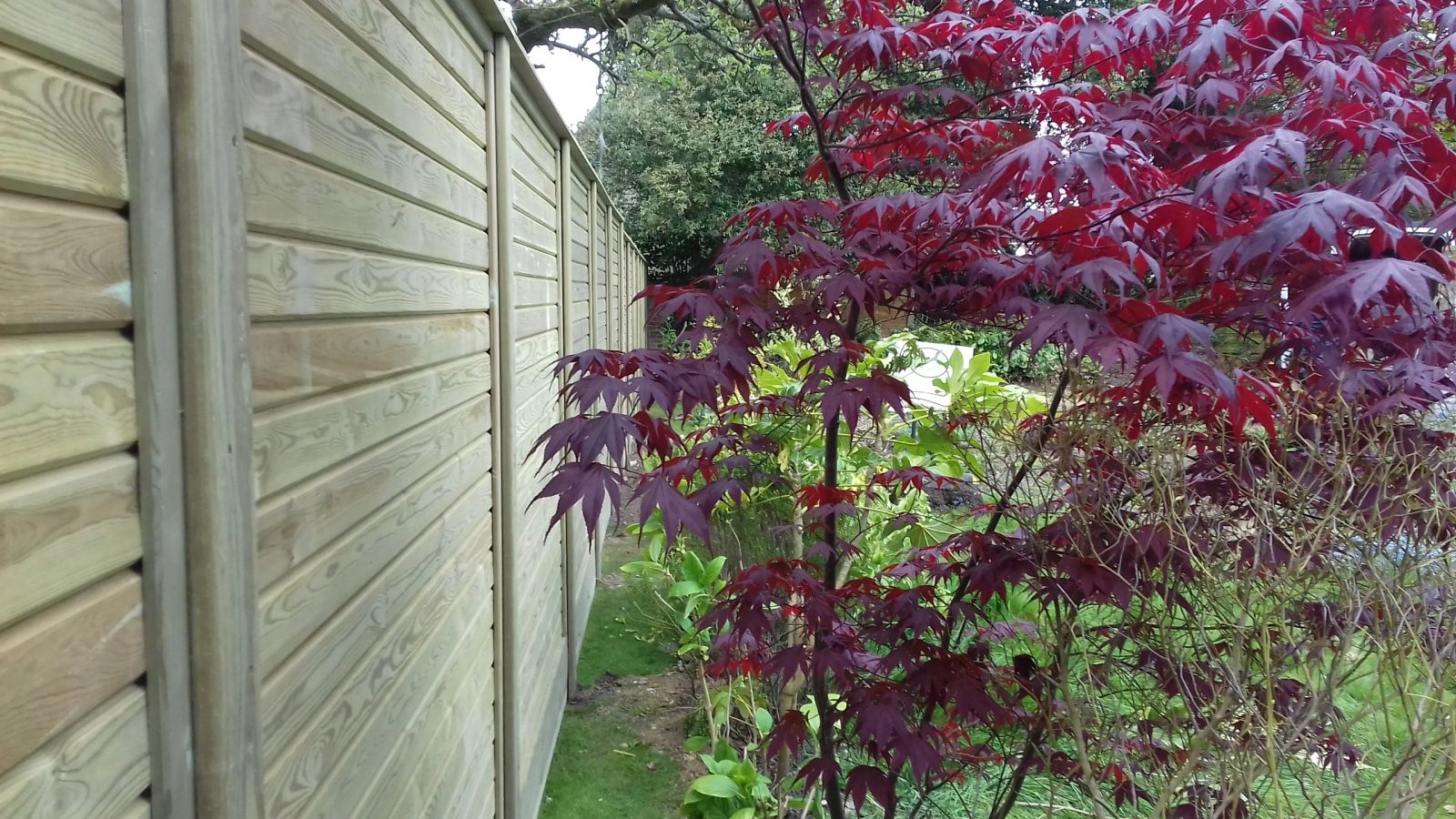
Tongue-and-groove versus overlap boards
Overlap boards, as used on a standard lap-panel fence, leave a thin air gap at every joint that sound passes through almost unimpeded, undermining any acoustic benefit from the timber's mass.
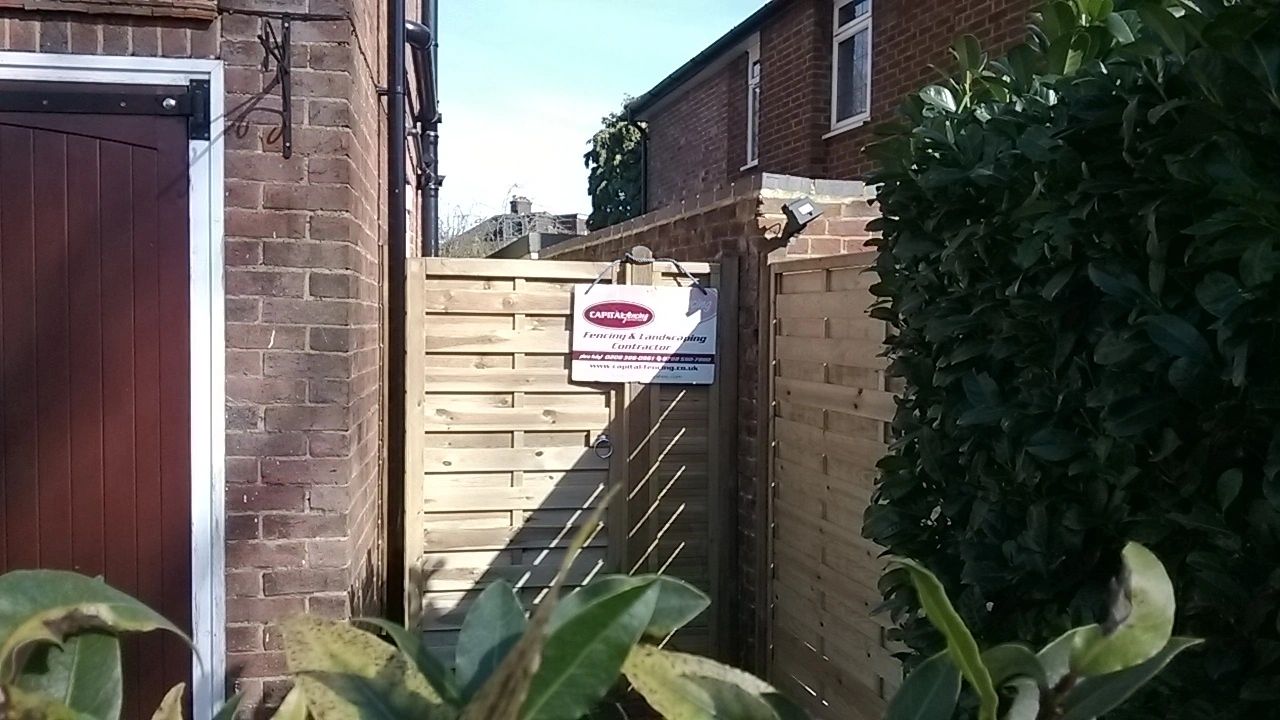
Tongue-and-groove or shiplap boarding interlocks at each joint, closing that gap and giving the face genuine continuity, which is why it's the standard choice for a timber acoustic skin rather than overlap boarding.
Boundary work near underpinning or subsidence repairs
A property that's had underpinning or subsidence repair work sometimes has ground disturbance extending into the garden near the boundary, which can affect where a new fence line can safely be dug without disturbing settled ground.
Where underpinning is recent, it's worth checking with whoever carried out the structural work before digging post holes nearby, since the settlement process can continue for some time after the visible repair is finished.
Cracking in an existing boundary wall running close to a subsidence-affected building is sometimes an early symptom worth reporting rather than just repairing cosmetically.
Arris rail mortice joint wear
A traditional arris-rail panel fence uses a triangular-section rail slotted into a mortice cut through the post, and repeated wind loading can gradually enlarge that mortice, letting the rail rock and eventually loosen the whole panel.
A mortice cut slightly oversized from the start, or one that's been enlarged by rot before a replacement rail is fitted, is a common weak point that arris-rail brackets were largely developed to bypass.
Galvanised metal arris-rail brackets, fixed to the face of the post rather than through it, avoid weakening the post with a mortice at all and are now the more common detail on new panel fencing.
Checking the repair before signing off
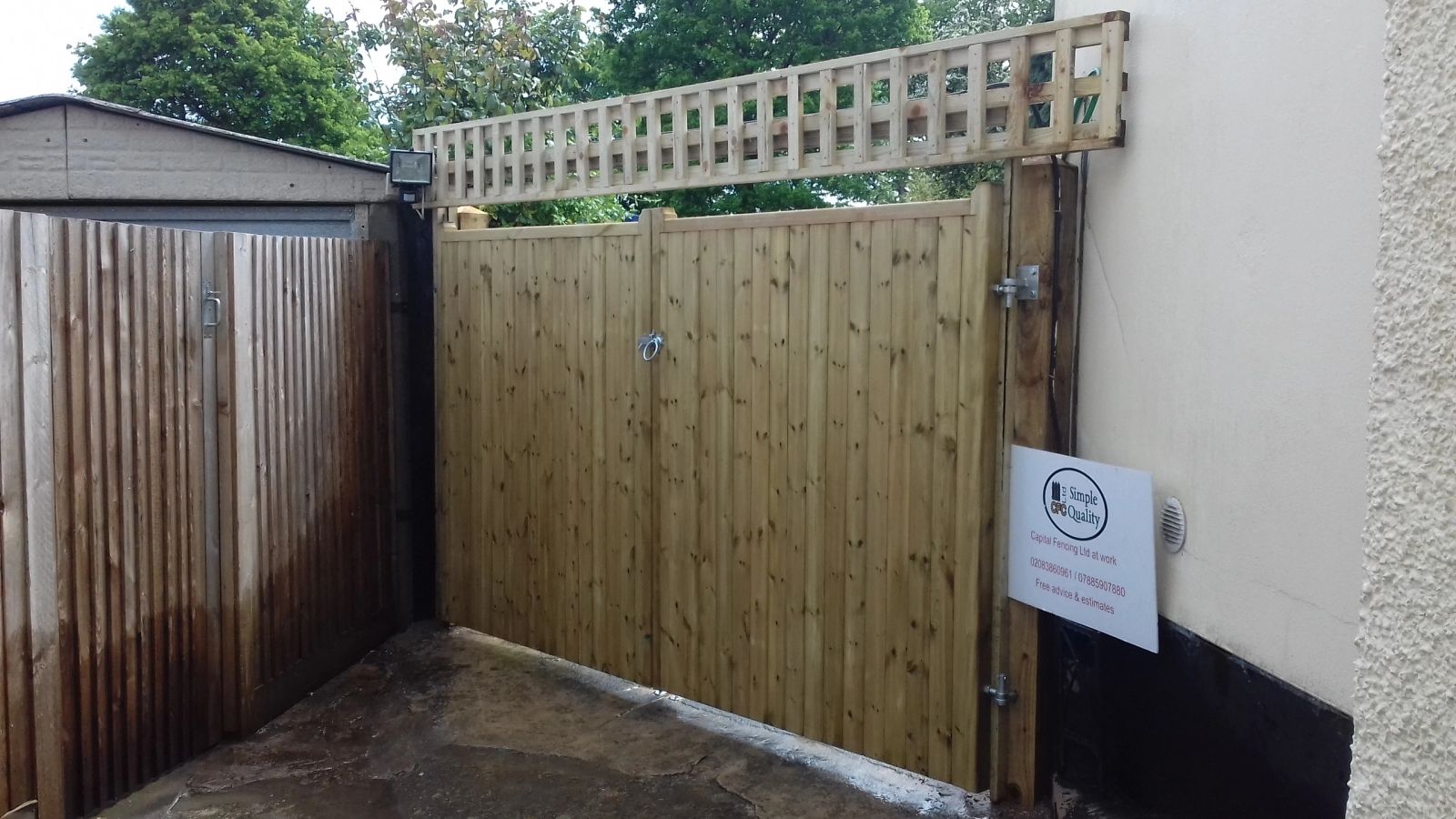
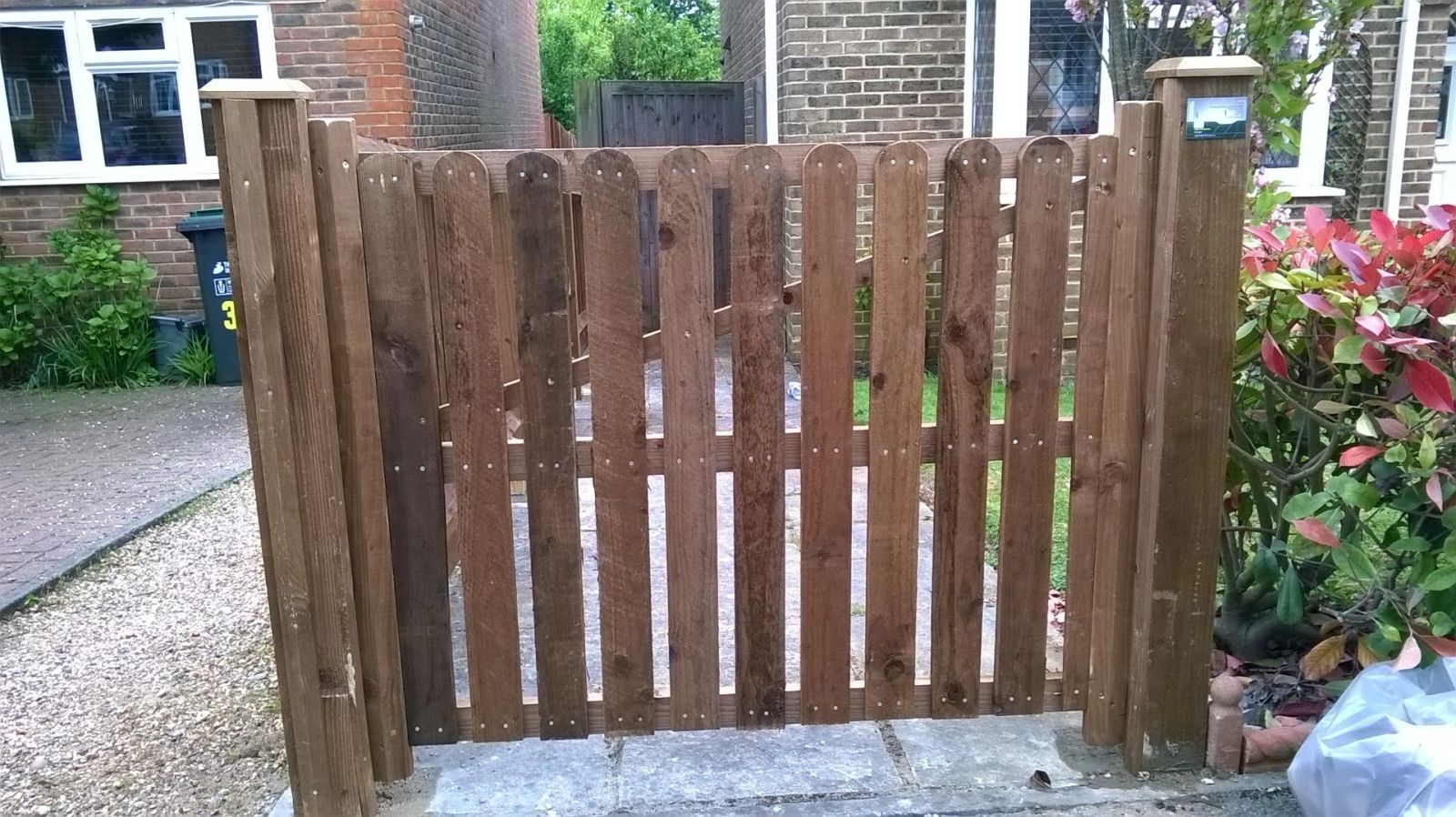
Once a repair is finished we open and close the gate repeatedly to check it swings cleanly and latches first time, since a gate that only closes properly on the first attempt in calm conditions can still catch once it's windy or the ground has moved slightly.
We also check the diagonal brace, where fitted, is taking the load evenly rather than pulling to one side.
Strimmer damage at the fence-to-lawn edge
Repeated strimming right up against the base of gravel boards or post bases scars the timber surface and removes any protective coating exactly at the point most exposed to ground moisture.
A mowing strip of paving or gravel along the base of the fence line removes the need to strim that close, protecting both the timber finish and the lawn edge itself.
This is a small design addition worth suggesting on new installs, since the damage it prevents is otherwise mistaken for premature timber failure rather than a maintenance habit.
Urban heat and timber movement
Fencing against south-facing brick walls, paved courtyards or close to parked vehicles in dense urban plots experiences more extreme daily temperature swings than the same timber in an open garden, due to heat absorbed and re-radiated by hard surfaces.
That repeated expansion and contraction can open joints in panels and loosen fixings faster than in a more moderate microclimate, particularly on darker-stained timber that absorbs more heat.
Stainless or coated fixings and slightly looser panel-to-post tolerances both help absorb this movement without splitting timber over successive summers.
Digging near land drains
Older gardens, especially those on heavier clay, sometimes have unrecorded clay pipe or perforated plastic land drains laid to relieve waterlogging, and these rarely appear on any plan.
Hitting one with an auger usually shows up as a sudden drop in resistance followed by water pooling in the hole from a direction that doesn't match the water table generally on site.
A damaged land drain should be reconnected or rerouted rather than just backfilled over, since a broken run can redirect water against a post base for years afterwards.
Adjusting closing force on a self-closing gate
A spring or hydraulic closer set too strong can slam a gate hard enough to damage the latch or frame over repeated cycles, while one set too weak may not fully latch, especially into a headwind on an exposed boundary.
Closers are adjustable and should be tuned on site after fitting rather than left at a factory default, with a final check that the gate reliably latches under the worst wind condition it's likely to face.
Air source heat pump fan directivity
An air source heat pump's fan doesn't radiate noise evenly in all directions — it's typically louder directly in front of the unit than to the sides or rear, so orientation relative to a neighbouring boundary matters as much as distance.
A screen placed to intercept the direct-line noise from the fan face, rather than simply run along the boundary, addresses the loudest path without needing to enclose the whole unit.
Protecting a boundary fence during nearby building work
Where building work, an extension or a loft conversion is happening on an adjoining property, existing boundary fences and their footings are sometimes shifted, undermined or damaged by machinery or excavation.
It's reasonable to raise this in advance with a neighbour undertaking major building work, ideally recording the fence's condition beforehand with photographs.
Where a party wall notice has been served for related works, that process can sometimes address boundary condition issues as part of a schedule of condition, which is worth asking about.
Working on a gate with restricted access
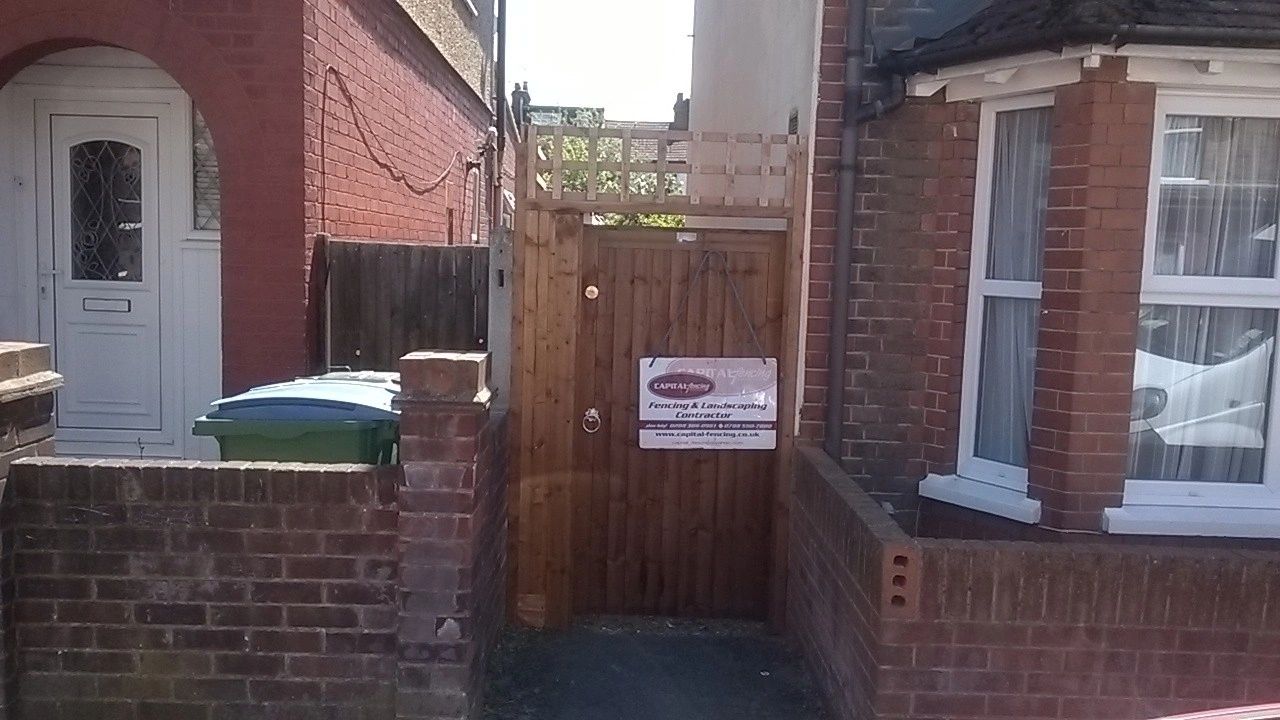
A side gate in a narrow return often has to be worked on from one side only, which changes how a hinge repair or frame rebuild is approached compared with a driveway gate that can be accessed from both sides.
We plan tool and material access before starting so a repair in a tight space doesn't take longer than it needs to.