Thermally modified timber
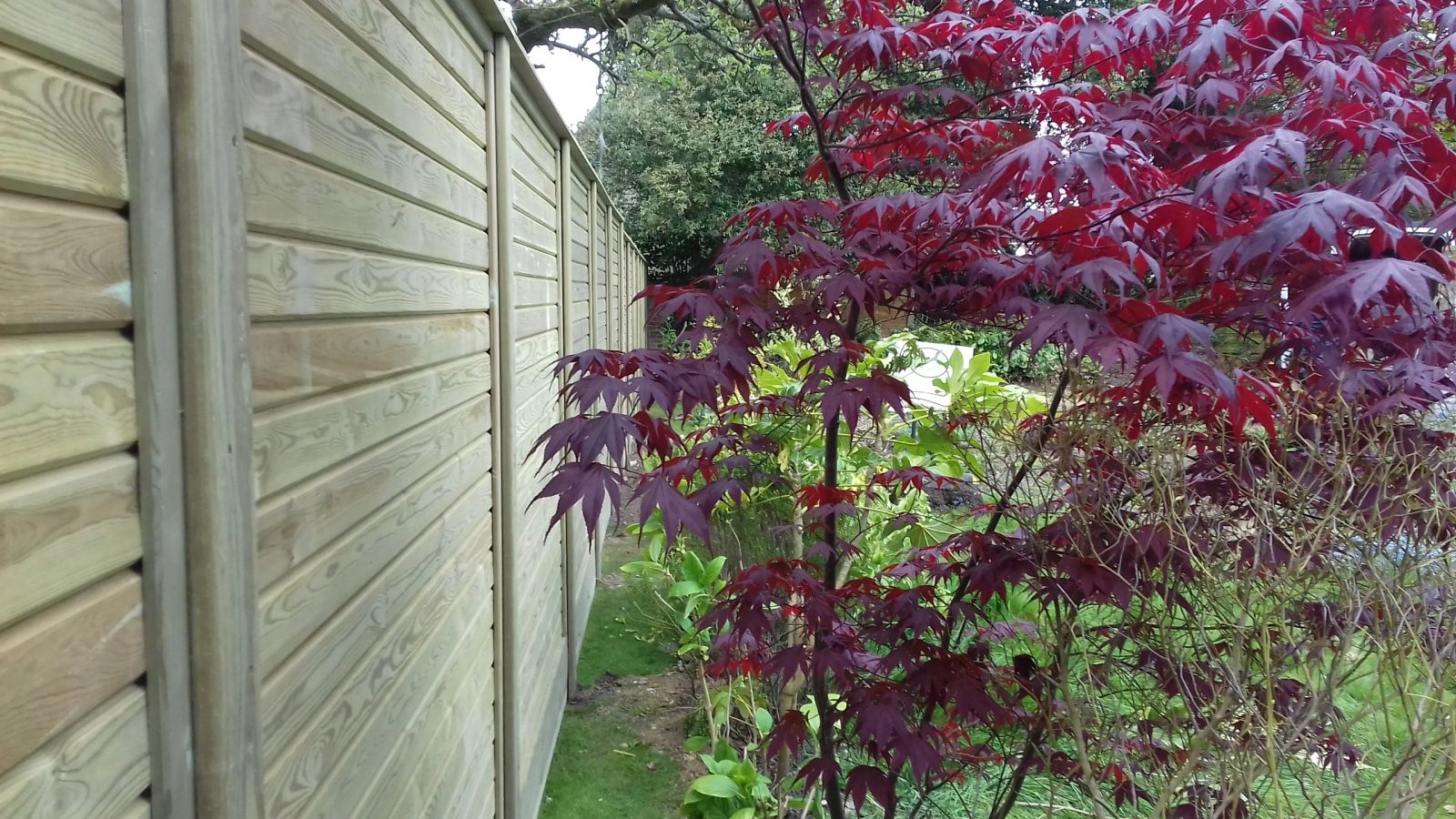
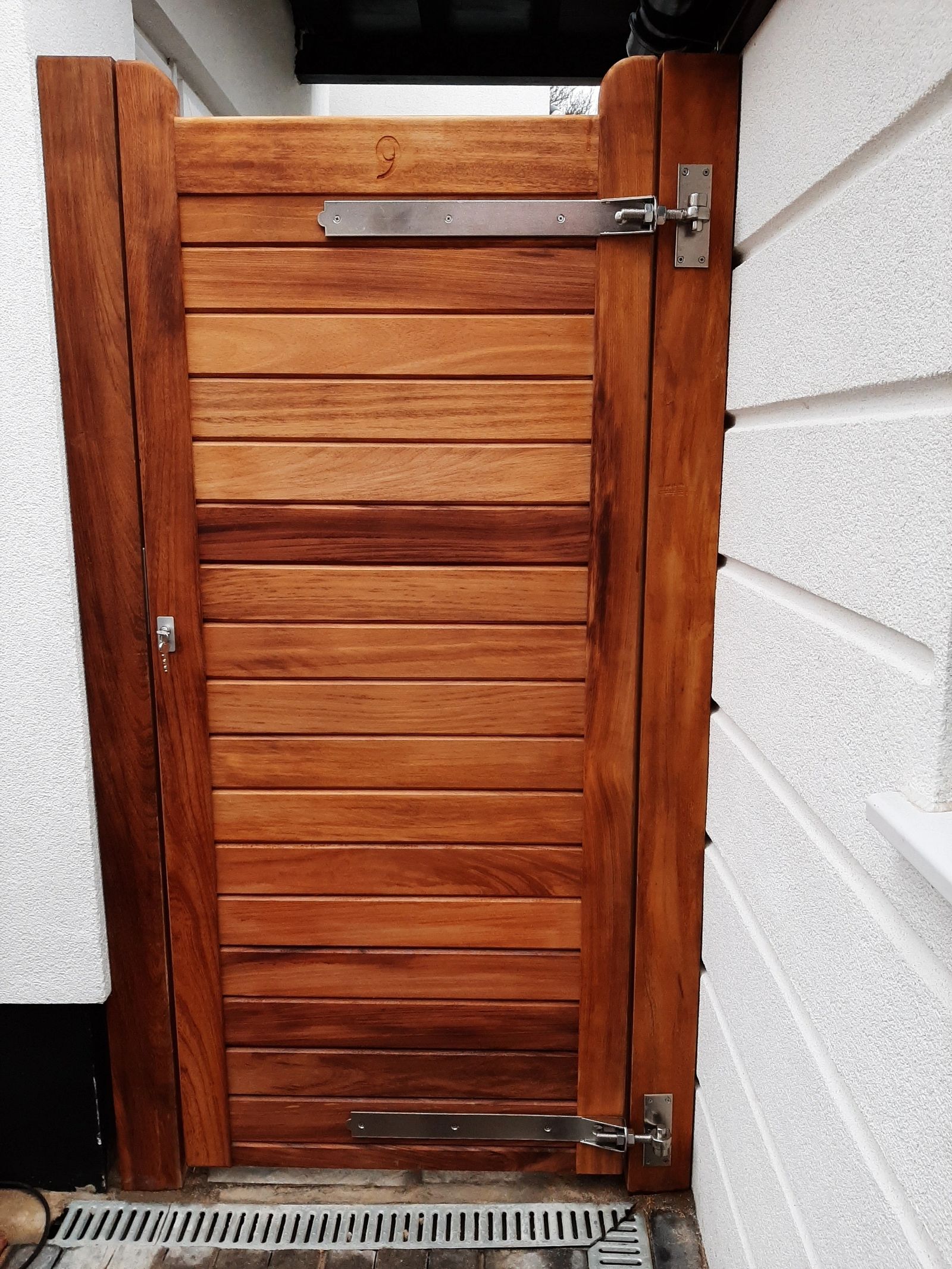
Thermal modification heats timber to high temperatures in a low-oxygen environment, which alters its cell structure to reduce moisture absorption and improve decay resistance without adding any chemical preservative.
The process also darkens the timber throughout its thickness, which means a scratch or cut face shows a similar colour to the surface rather than exposing paler untreated wood underneath.
The heat treatment reduces the timber's flexural strength somewhat, so thermally modified timber is more commonly specified for cladding and decorative boarding than for load-bearing posts and rails.
Timber grading marks
Structural and treated timber is typically stamped with a grading mark showing the strength class, treatment use class, and sometimes the treatment company's code, which is the practical way to verify what was actually supplied rather than taking a description on trust.
For fencing, the marks that matter most day to day are the use class (confirming it's rated for the ground or above-ground exposure intended) and a visible batch or treatment date, useful if a defect needs tracing back to a supplier.
Unmarked or unstamped 'treated' timber from an unclear source is harder to verify and is one of the more common shortcuts on cut-price quotes.
Welded joint failure on metal gates
A cracked or failed weld at a metal gate's frame corner is usually a fatigue failure from repeated flexing rather than a one-off impact, particularly on a gate that's been slightly out of square for some time before the weld gave way.
Re-welding without first correcting the underlying rack or misalignment tends to fail again at the same point.
Deciding between stepping and raking a panel run
Stepped panels stay level themselves and drop in increments post to post, leaving a small triangular gap under each panel that grows towards the low end of a run; raked panels are cut at an angle so the top edge follows the slope continuously with no gap.
Stock panels can be stepped without alteration, but raking almost always means cutting a panel's top rail and infill to an angle on site, which only works with materials that can be cut and re-fixed cleanly, such as featheredge or slatted boards.
A steep, uneven slope generally favours stepping for speed and future repairability; a long, gentle and even gradient often looks better raked, since the steps would otherwise be very shallow and visually fussy.
Keeping weep holes and drainage gaps clear after fixing
Some fixings and bracket systems include small drainage gaps or weep holes designed to let water escape from behind a post-to-wall connection, and these can be inadvertently sealed over with excess sealant or packed with debris during fitting.
Checking that these gaps remain open once a fixing is complete is a quick final step that's easy to skip once the main structural work feels finished.
A blocked weep hole doesn't cause an obvious immediate problem, but it lets moisture accumulate behind the fixing point where it isn't visible, quietly encouraging rot or corrosion out of sight.
Board overlap orientation relative to prevailing weather
Featherboard and closeboard panels are built with each board overlapping the next, and the direction of that overlap affects how well the panel sheds driven rain — the leading edge of each board should face the prevailing wind and rain direction so water runs off rather than being driven behind the board.
This is straightforward to get right at manufacture but is occasionally reversed on a bespoke or site-built run, which shows up over time as faster localised rot on the boards facing the wrong way for the local prevailing weather.
Checking overlap direction against the site's known prevailing wind is a small detail worth confirming before a bespoke run is built rather than assuming a standard orientation will suit every site.
Boundary fence position relative to a neighbour's extension
A recently built extension or conservatory next door can sometimes have its own planning conditions relating to adjacent boundary treatments, particularly around overlooking or privacy screening.
Where this applies, it's the extension's planning history rather than general permitted development rules that governs what's expected at that specific boundary.
Checking a neighbour's relevant planning permission, available on the council's public register, can clarify this before assuming standard rules apply to that stretch of boundary.
Slide bolts and staple alignment
A slide bolt needs its guide staples and keep perfectly in line along the bolt's travel, since even a slight misalignment makes the bolt bind partway rather than sliding freely, which is often mistaken for a stiff or rusted bolt.
Re-aligning the staples after a gate has settled or a post has moved usually resolves this without needing to replace the bolt hardware itself.
A fence's role alongside a formal noise complaint
Where noise from a specific source has escalated to a formal complaint to a local authority's environmental health team, a garden barrier can reduce day-to-day disturbance but doesn't replace or resolve that separate regulatory process.
Installing a barrier while a complaint is ongoing is a reasonable practical step, but it's not evidence that the underlying noise source itself has been addressed, and the two should be treated as separate tracks.
Laminated engineered timber posts
Laminated posts are built up from several thinner timber sections glued face to face under pressure, which can even out natural defects like knots across the section and produce a straighter, more dimensionally stable post than a single sawn piece of the same size.
Because the lamination process distributes any given defect across a smaller proportion of the overall section, a laminated post is generally less likely to fail suddenly at a single knot or grain irregularity than solid sawn timber.
The adhesive bond line itself becomes a potential weak point if it's exposed to sustained moisture without an appropriate exterior-rated glue, so laminated posts intended for outdoor use need adhesives specifically rated for damp exposure rather than interior-grade bonding.
Level crossings and barrier warning tones
A level crossing adds a warning klaxon or bell ahead of each train movement on top of the train noise itself, and that alert tone sits at a frequency designed to carry, which a garden barrier does little to soften.
For a plot near a crossing, expectations are set around reducing the train pass-by noise rather than the warning signal, which is a safety device operating independently of any fence.