Hinge pin wear and greasing
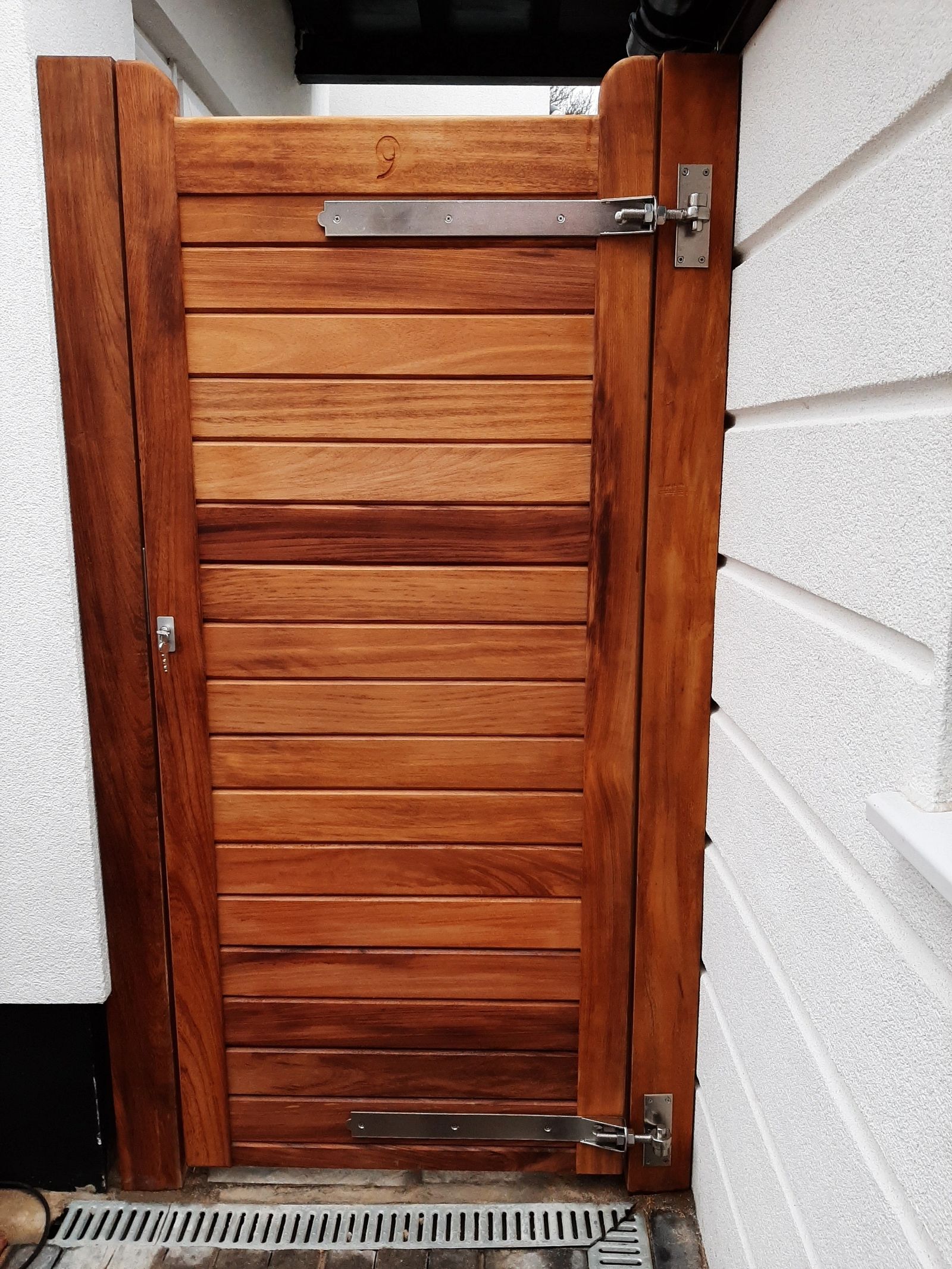
A band-and-gudgeon or heavy tee hinge relies on a pin bearing surface that wears over years of use, and a worn pin lets the gate drop slightly at that hinge even when the fixings into the post are still sound.
Greasing the pin periodically slows this wear considerably, and on an older gate that's started to drop, checking pin wear before assuming a post or fixing fault saves an unnecessary repair.
Aluminium and steel railings
Aluminium railings are lighter, don't rust, and hold a powder-coated finish well without the ongoing maintenance steel needs, which makes them common for low-boundary and pool-safety railings where upkeep is meant to be minimal.
Steel railings are heavier and stiffer for the same section size, which suits taller or higher-security applications, but the finish has to be maintained — a scratch through galvanising or powder coating exposes bare steel to rust from that point.
Both are usually supplied as welded panels between posts rather than built up rail-by-rail on site, so panel width and post spacing need to be agreed before ordering rather than adjusted afterward.
Brown versus green treatment pigments
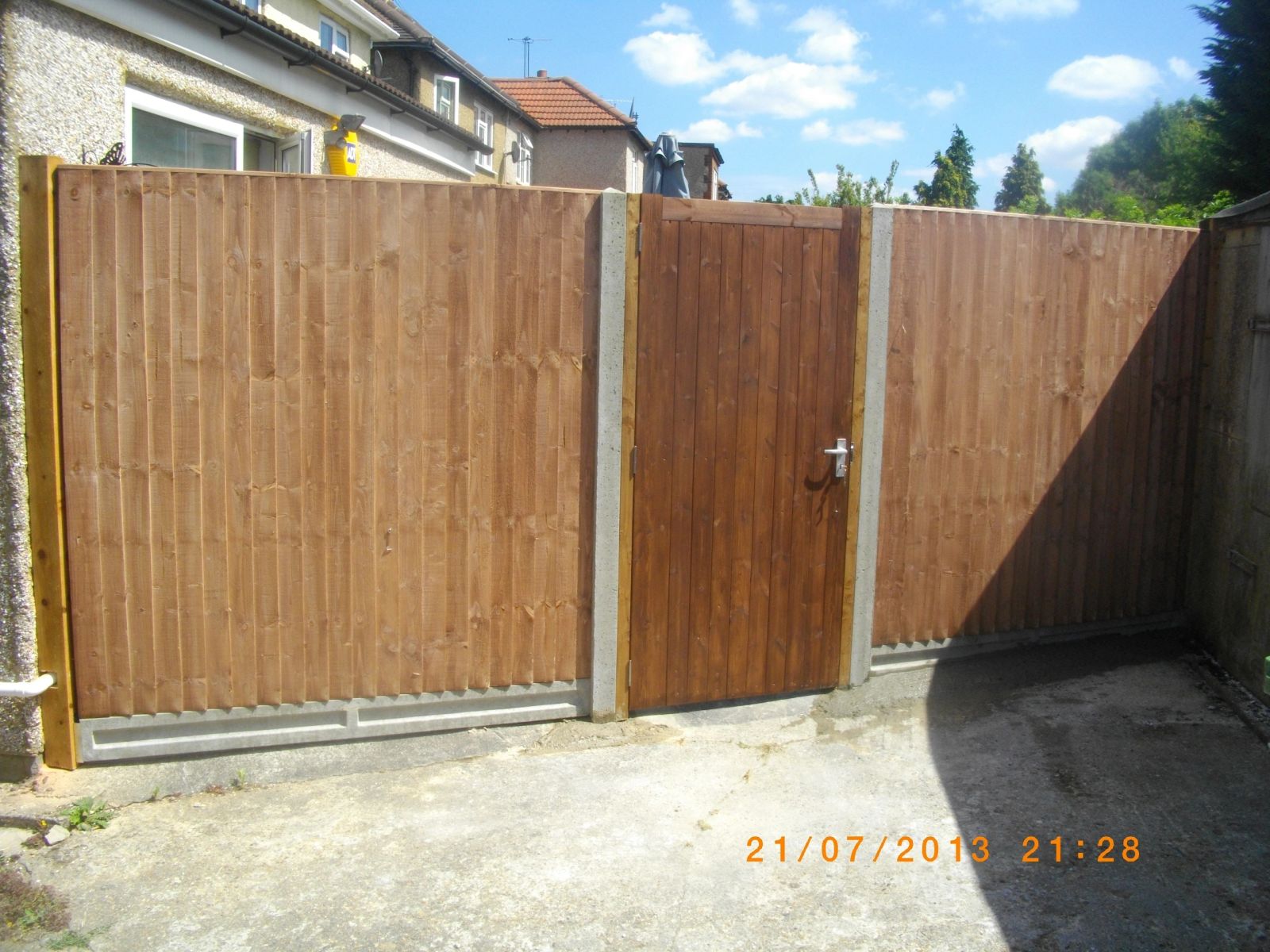
The green or brown tint in pressure-treated softwood comes from a pigment or dye added to the preservative solution during treatment, largely as a visual indicator that the timber has been through the process rather than for any protective purpose.
Green pigments were historically more common but have become less fashionable, with brown or 'tanalised brown' now the more usual finish for fencing timber sold in the UK.
Because the colour is only pigment-deep in places, freshly cut ends and any surface planing during fitting will expose the paler, untreated-looking wood beneath, which is another reason to treat cut ends separately.
Maintaining ground sockets for gate drop bolts
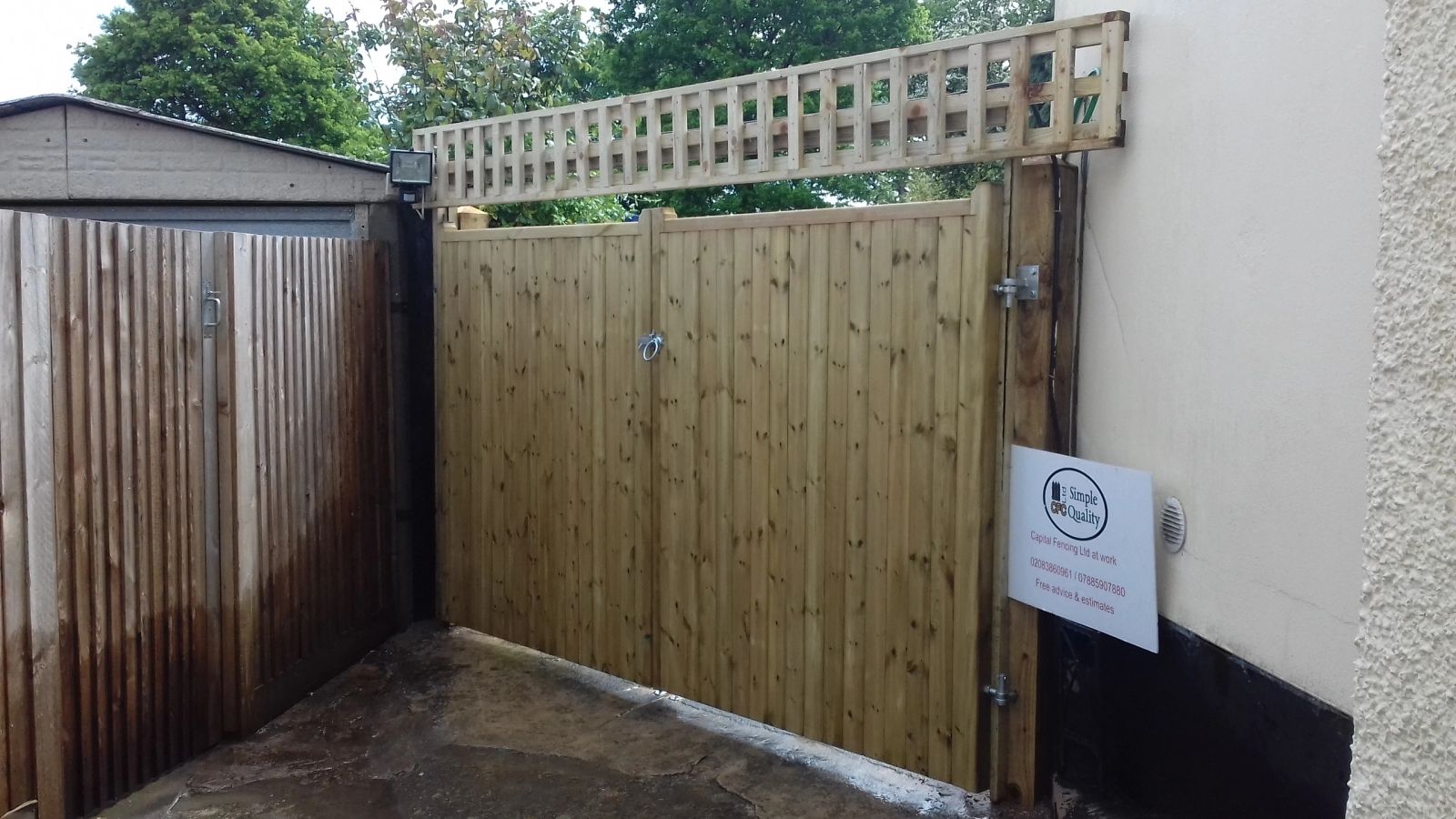
A drop bolt socket set into the ground or a hardstanding surface collects grit, leaves and standing water over time, and a socket that isn't kept clear will stop the bolt seating fully, leaving a gate leaf that looks locked but isn't actually secured at that point.
Clearing and lightly lubricating the socket as part of routine maintenance is a small task that prevents a far more disruptive failure where a socket has to be dug out and reset after becoming completely blocked.
Checking fall along the base of a fence line for drainage
Where a fence runs along the low side of a garden or parallel to a slight natural fall, water can collect and run along the fence line itself rather than away from it, sitting against gravel boards and post bases for longer than on flatter ground.
A shallow channel or a slightly raised base at the lowest points along the run helps water continue past rather than pool against the timber.
This is worth checking during a wet spell before finalising post positions, since a dry-weather site visit can miss a drainage pattern that only shows up after sustained rain.
Reading a title plan's boundary responsibility marks
Land Registry title plans sometimes show a T-mark against a boundary line, indicating which owner is responsible for maintaining that section — though many properties, especially older ones, have no such marks and the deeds are simply silent.
Where marks exist they're a strong steer but not always conclusive, and where they're absent, ownership defaults to being agreed between neighbours or, in a genuine dispute, determined by a boundary surveyor.
Getting a copy of the title plan before quoting a replacement fence is a five-minute step that avoids rebuilding a boundary neither party is formally responsible for.
Strainer posts and wire tensioning loads
A strainer, or straining post, anchors the end of a tensioned wire or mesh run and needs to resist a sustained pulling load along the line of the fence, which is a materially different stress to the mostly lateral wind load an intermediate post experiences.
Strainer posts are typically set deeper, in a larger concrete footing, or braced with a diagonal strut back to a second post, specifically to resist this sustained pull rather than an occasional gust.
Under-specifying a strainer post relative to the wire tension applied is a common cause of an entire fence run gradually leaning inward from one end, since the strainer post itself moves rather than the wire actually loosening.
Scrap value theft targeting fence fittings
Cast aluminium or brass post caps and decorative finials have occasionally been targeted for scrap value on isolated boundaries, in the same way capping rails have, so lower-value steel or composite alternatives are sometimes specified deliberately on an exposed run for that reason alone.
Where a decorative metal fitting is wanted for appearance, fixing it with concealed or one-way screws reduces how quickly it can be removed compared with an exposed standard fixing.
Noise sources above garden level from flats or extensions
A rear extension or block of flats overlooking a garden can direct noise — voices, music, mechanical plant on a flat roof — downward and across in a way a ground-level fence doesn't intercept at all.
Where the dominant complaint comes from an elevated source like this, the practical response usually shifts toward screening at the receiving property's own upper floors or terrace rather than the ground-level boundary.
Child safety at gaps and low openings
Gaps between vertical balusters or slatted infill wide enough to trap a small child's head are a recognised hazard, and the common guidance used for balustrades and railings — keeping gaps under 100mm — is a sensible benchmark for garden fencing near play areas too.
Horizontal rails on an otherwise vertical fence design can also create an unintentional climbing frame for a young child trying to get over a boundary, which is worth considering near a pool, driveway or road-facing frontage.
These details matter most on fences separating a garden from open water, a road, or a shared driveway, where the consequence of a small gap or easy foothold is more serious than on an internal garden division.
Softwood species used in fencing
Most UK fencing timber is a European redwood or whitewood softwood, chosen for cost and workability rather than natural durability, which is why it's almost always sold pressure-treated rather than untreated.
Redwood (Scots pine) takes preservative more readily than whitewood (spruce) because of its structure, which is part of why it's the more common species specified for treated fencing components.
Species alone isn't a durability guarantee — the treatment class and detailing (post caps, gravel boards, drainage at the base) generally matter more to service life than which softwood was used underneath it.