Security at a garage flank wall boundary junction
A garage flank wall often forms part of the boundary line itself, and the gap between the end of the garage and the next boundary feature is a common blind spot that gets missed when a security upgrade focuses only on the open fence sections either side.
Where a flank wall is lower than the rest of the boundary's security height, an additional short fence run or topping across just that gap brings the whole line back up to a consistent standard.
Washing off mould before treatment
Black mould spotting, distinct from green algae, tends to appear on shaded timber with poor airflow behind it, such as a fence panel sitting close against dense shrub planting on one side.
A proprietary fungicidal wash left to dwell before rinsing removes far more of the surface growth than a plain water wash, which can spread spores across the surface rather than lifting them off.
Cutting back planting to restore airflow behind the affected section addresses the underlying cause; treating the timber alone without improving ventilation usually sees the mould return within a year.
Self-closing pedestrian gates
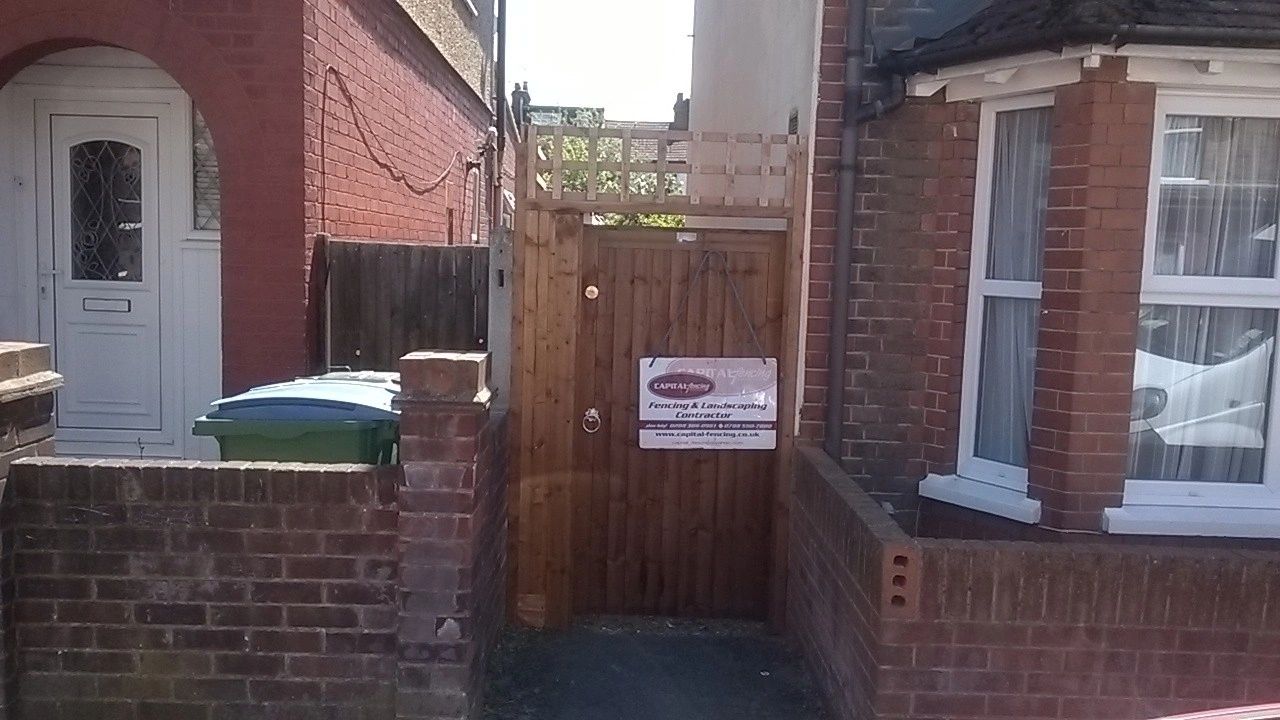
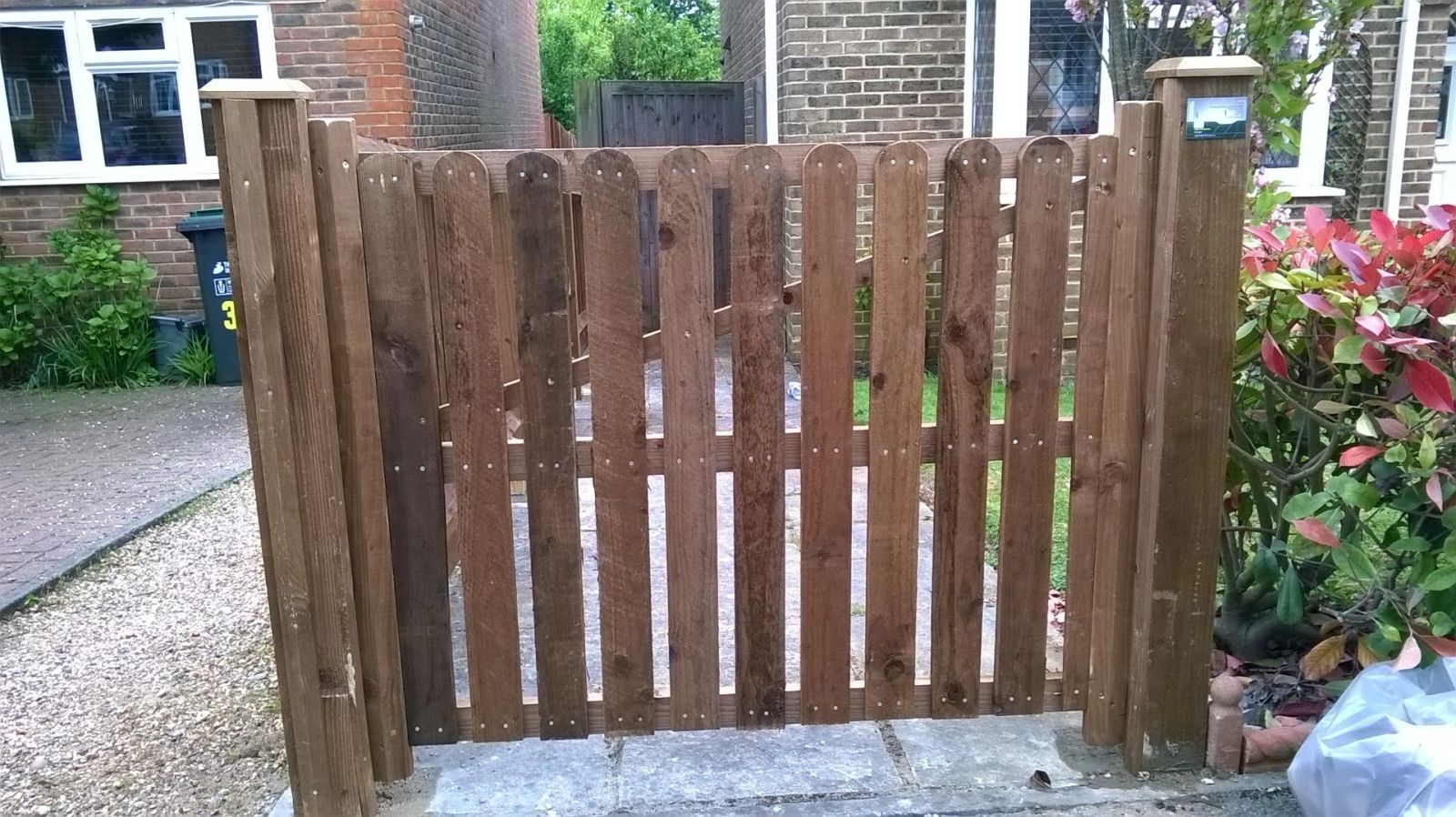
A self-closing hinge or spring closer on a pedestrian gate stops it being left open by accident, which matters on a boundary where the fence is only as secure as the gate that's routinely used.
On a school, nursery or pool boundary a self-closing, self-latching gate is often a specific requirement rather than an optional extra, and the closer needs enough force to shut fully without slamming.
Barrier height relative to source and receiver height
The effective height of a barrier is judged relative to both the noise source and the listener — a fence that clears a car's exhaust height does far less for noise from an elevated railway or a first-floor extract fan.
Where the source sits above ground level, such as a raised road or a rooftop unit, a taller barrier or one positioned closer to the source is needed to keep the line of sight broken.
Framed, ledged and braced gate frames
A framed, ledged and braced gate combines a proper mortice-and-tenon perimeter frame with ledges and a diagonal brace behind the boarding, giving more racking resistance than a simple ledged-and-braced gate that has no frame at all.
This construction costs more to build than a basic ledged gate but holds its shape for longer, which matters on a wider or more exposed opening.
Setting gate posts before the rest of a fence run
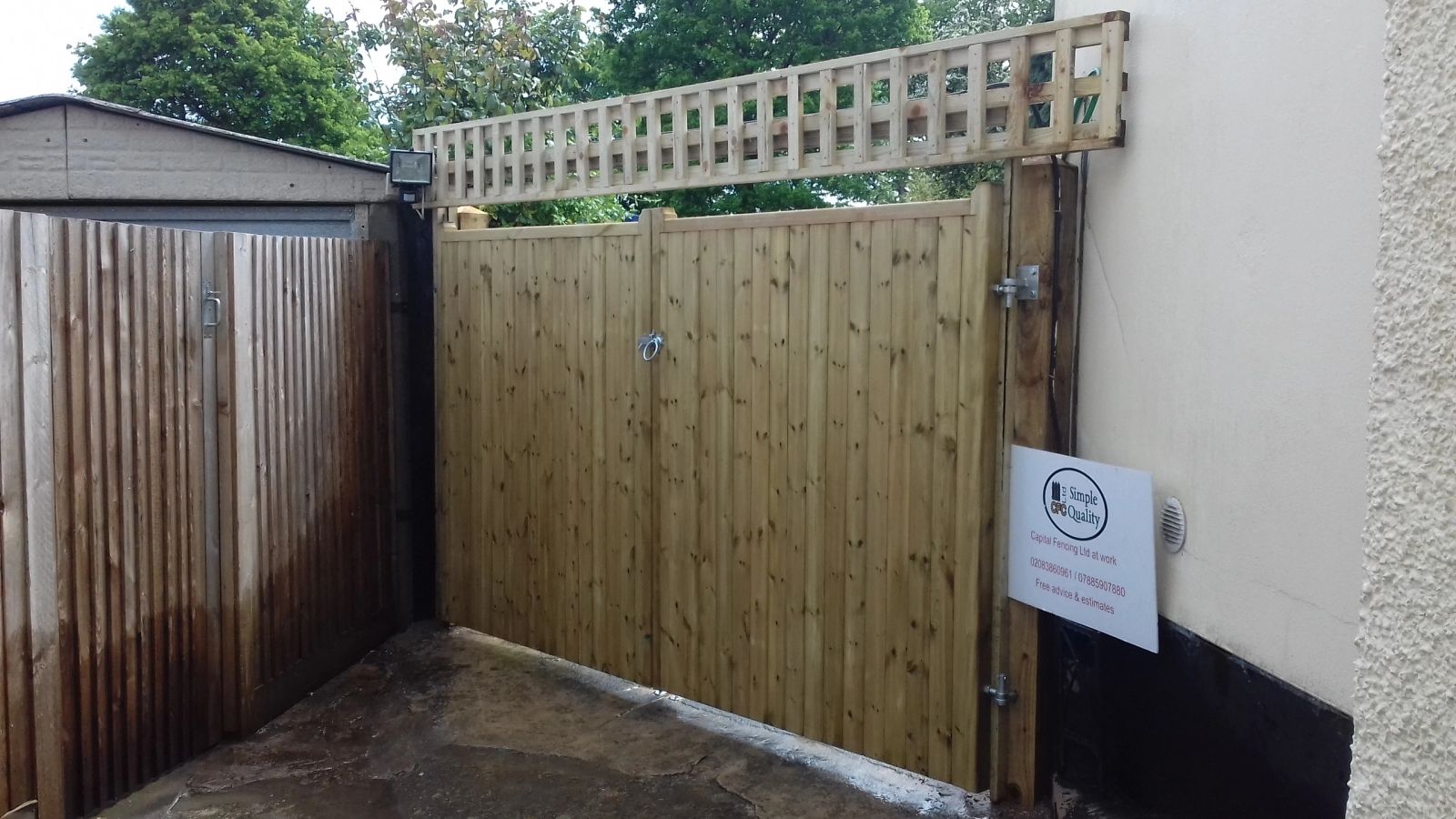
Gate posts carry more load and need tighter tolerances on spacing and plumb than intermediate fence posts, so they're normally set and checked first, with the rest of the run measured out relative to the confirmed gate opening rather than the other way round.
Where a gate is ordered to a bespoke size, its exact opening width has to be locked in before that section of the run is built, since a fence panel either side can absorb small adjustments far more easily than a made-to-measure gate can.
A gate post is also usually set with extra depth or a wider concrete base than a standard fence post, given the additional leverage a swinging gate applies, so it needs its own dig rather than being treated the same as its neighbours.
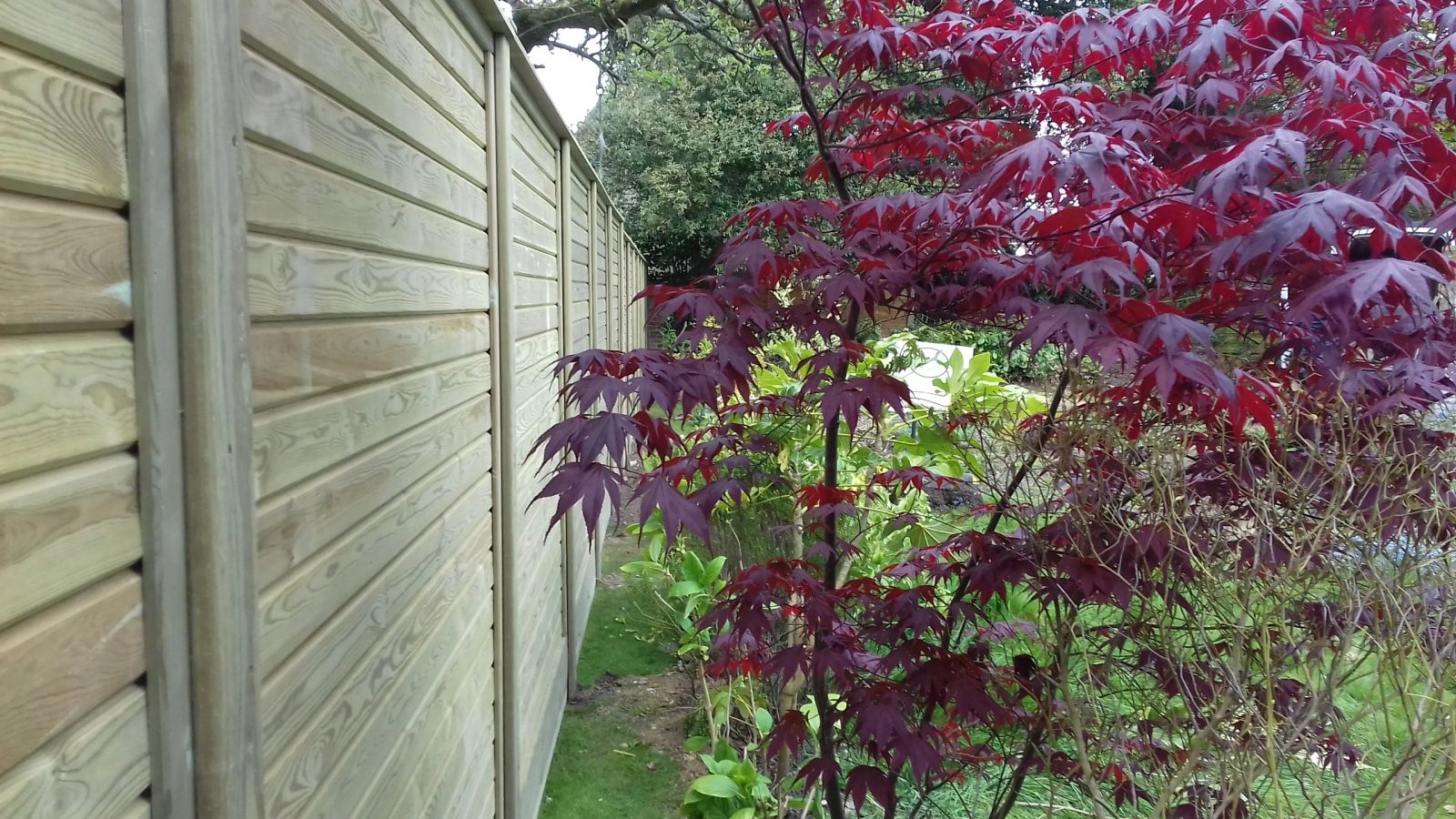
Setting realistic expectations for an acoustic fence
An acoustic fence noticeably softens noise rather than removing it, and the degree of improvement depends on the source, distance, height achievable and existing site conditions, not on the fence alone.
We discuss what a specific site can realistically achieve before quoting, rather than letting a general acoustic product description set an expectation the site can't deliver.
Backfilling technique around a set post
Backfilling isn't just tipping soil or concrete into the gap around a post — compacting it in stages as it's added, rather than filling the hole in one go, avoids leaving voids that let the post shift later.
Where soil rather than concrete is used as backfill on a lighter garden fence, layering and firming it every 100-150mm gives a noticeably more stable result than one loose fill tamped only at the top.
Overfilling and mounding backfill above ground level around the post, rather than finishing flush or slightly domed for drainage, is a common shortcut that leaves a lip where water collects against the post face.
Checking battery backup on an automated security gate
An automated gate reliant on mains power for its motor and control panel usually has a battery backup to allow a limited number of open-close cycles during a power cut, and this backup is worth testing periodically rather than trusting it will work when actually needed.
A gate left stuck open or shut during a power outage because an untested backup battery had already failed defeats the purpose of automation entirely, so a manual release mechanism is also checked as part of the same inspection.
Combining a barrier with secondary glazing
An external acoustic fence addresses noise reaching the garden, but noise entering through windows is a separate path that a garden barrier can't fully control, particularly for an upstairs room facing the same source.
Secondary glazing addresses that separate path and is sometimes considered alongside an external barrier as part of a wider approach, though it falls outside fencing work itself.
Post depth rules of thumb by height
A common trade rule of thumb is burying roughly a third of the total post length below ground, so a 2.4m fence post typically needs around 600-750mm set depth in reasonable ground.
That ratio needs adjusting upward on wind-exposed sites, in poor bearing ground, or on taller runs above around 1.8m, where the extra leverage on the post multiplies the load on the buried section.
On very firm chalk or dense gravel, slightly shallower depths can be adequate, but as a rule it's easier to justify going deeper than to explain a leaning post two winters later.