Access and material handling on site
Concrete, posts and panels are heavy, and a site with only a narrow side return or no vehicle access changes how a job is priced and sequenced — materials sometimes have to be carried through rather than dropped at the boundary.
On a commercial yard the opposite problem applies: keeping a working site operational around a delivery of steel palisade or mesh panels needs a delivery and storage plan agreed before the first post goes in.
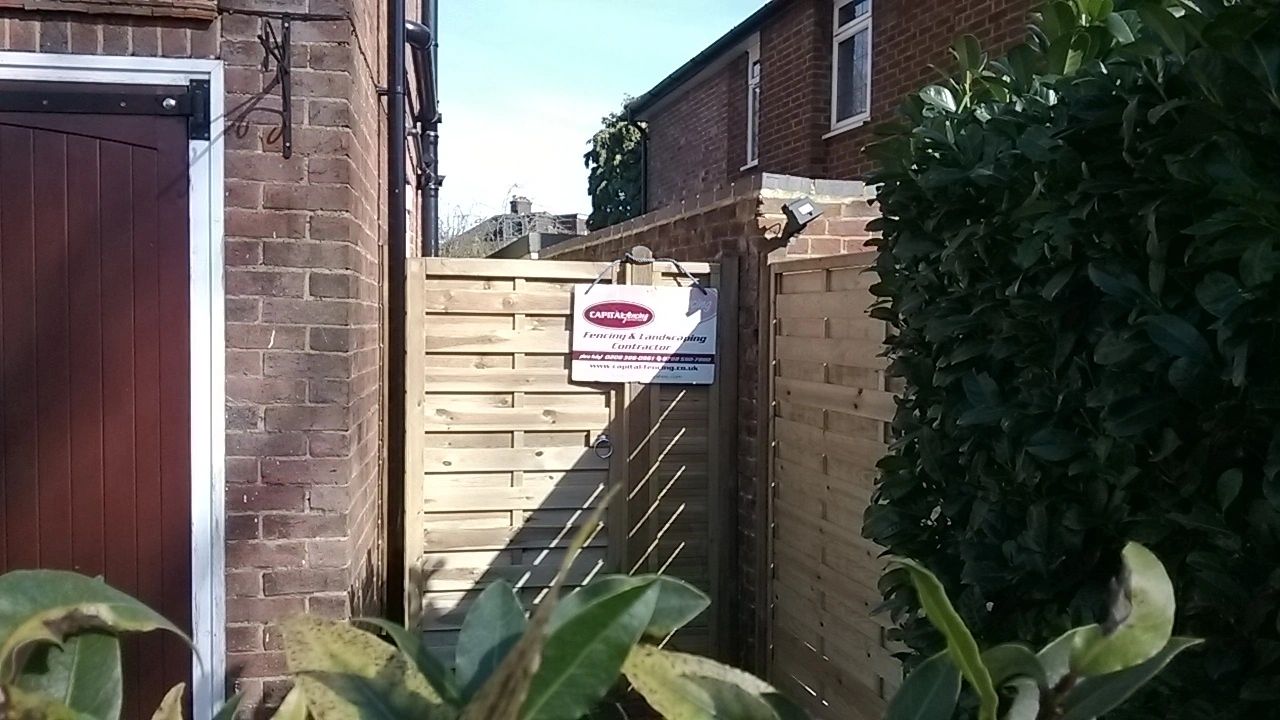
Side gates on narrow plots
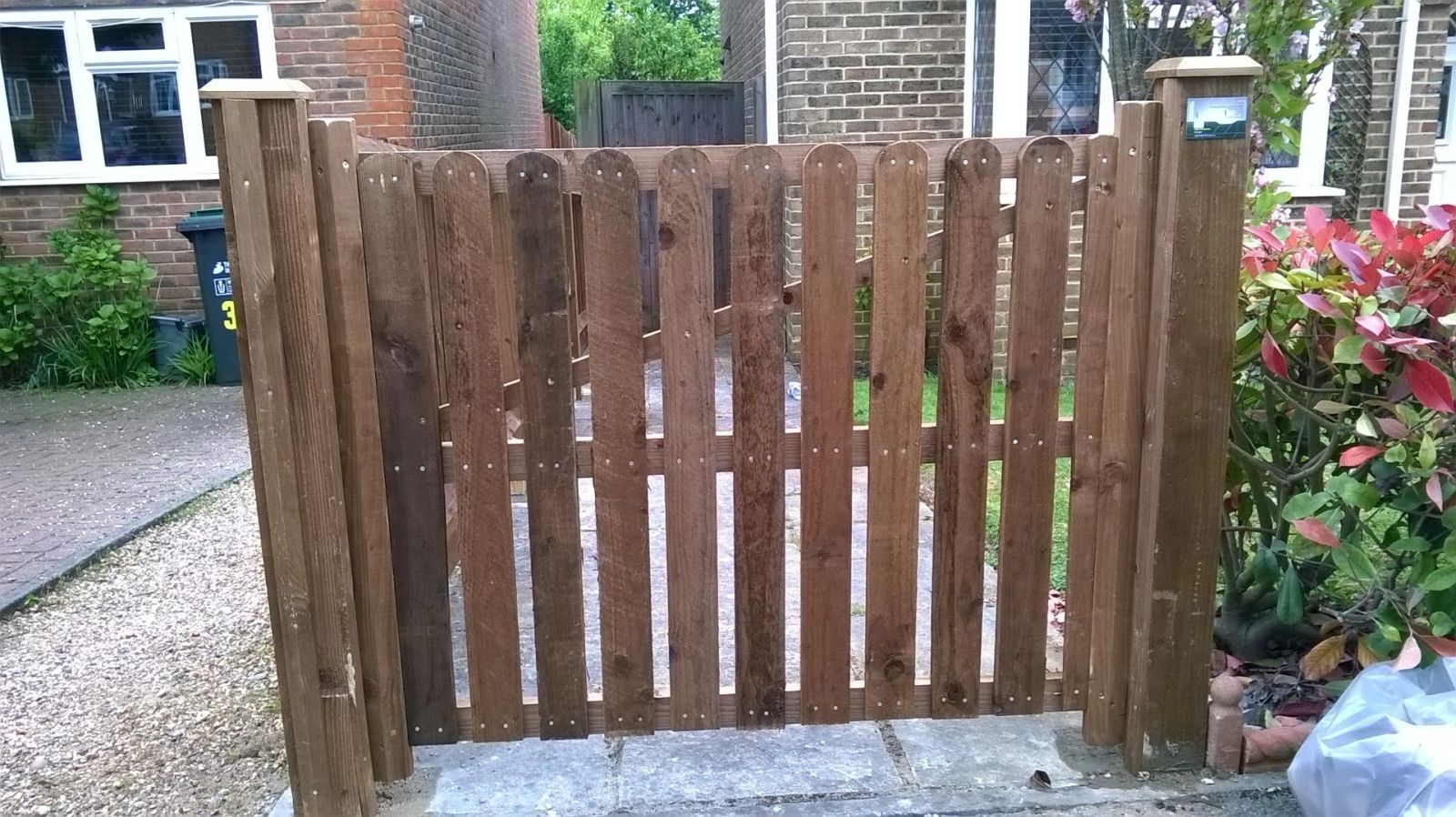
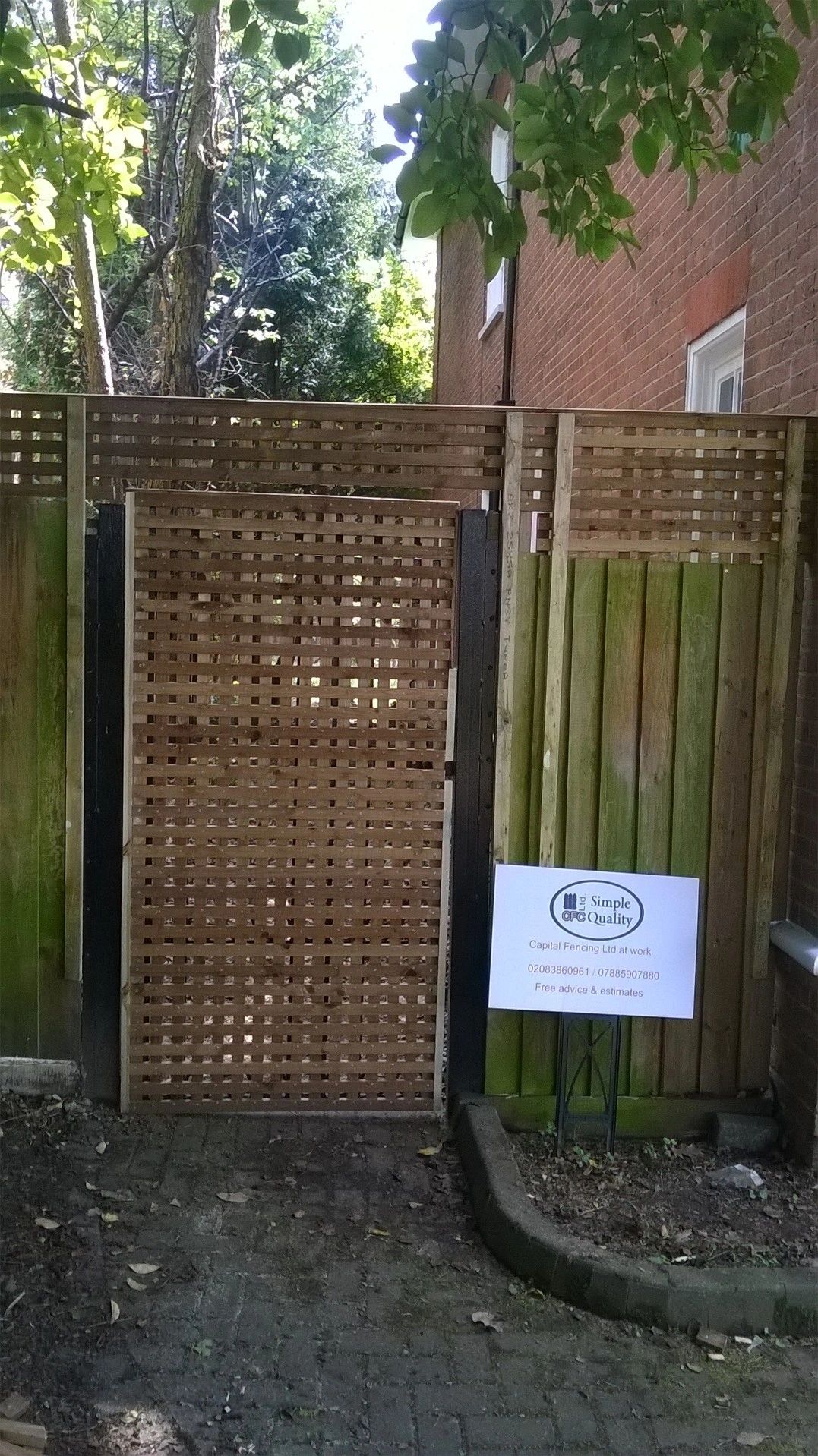
A side gate typically sits in a tighter opening than a driveway or garden gate, often between the house wall and a boundary fence, which limits post size and leaves little room for a wide frame or heavy bracing.
Access for materials and tools is also restricted on these jobs, so repairs are usually planned around what can be carried through the gap by hand rather than what a fully equipped van pitch would allow.
Cill board water-shedding function
A cill or capping rail fitted along the top of a panel fence sheds rainwater clear of the panel's top edge, in the same way a window cill sheds water clear of a wall, reducing the time the top edge of boards stays saturated.
Without a cill, the end grain along the top of vertical boards absorbs water directly and repeatedly, which is a common cause of premature rot starting specifically at the top of a panel rather than the base.
A cill with a slight forward overhang and a drip groove on its underside sheds water further clear of the face below it than a flush-fitted cill, reducing streak staining on the boards beneath.
Cassette fixing tolerance and rattle
A cassette panel needs enough tolerance in its housing to allow for manufacturing variation and seasonal movement, but too much tolerance leaves the panel loose enough to rattle in wind, which both looks and sounds like a fault.
Getting that fixing tolerance right — snug enough to stay quiet, loose enough not to bind — is a detail checked at installation rather than left to whatever gap the framing happens to leave.
Temporary Heras fencing during works
Heras-style temporary panels on concrete feet secure a site while permanent fencing is being installed, and are the standard interim measure on a commercial job where the boundary can't be left open overnight.
Panels need linking clamps and enough ballast or feet weight to resist wind, and a site with public footfall nearby usually needs anti-climb or block-tied panels rather than freestanding ones.
Community Infrastructure Levy and larger boundary projects
The Community Infrastructure Levy is a charge some councils apply to larger new development, and while it rarely touches ordinary domestic fencing, larger boundary projects tied to bigger planning permissions can occasionally interact with it.
This is a specialist area mainly relevant to substantial developments rather than a single garden fence, but worth being aware of if boundary work forms part of a larger planning permission.
Anyone unsure whether a larger project's boundary elements might be affected should check with the council's planning or CIL team directly.
Low bottom rails as a trip hazard
A gate's bottom rail set slightly proud of the finished ground or paving level can become a trip hazard, particularly at a frequently used pedestrian entrance, and this is worth checking as part of a repair rather than only assessing the gate's swing and hardware.
Adjusting the ground level either side or resetting the gate's hung height can resolve this without altering the gate's construction.
Tree roots and root protection areas
A tree's root protection area is calculated from its stem diameter and generally extends well beyond the canopy spread, meaning a fence line can fall inside it even where the tree itself looks distant.
Excavation within a root protection area should avoid cutting roots over around 25mm diameter where possible, using hand tools and routing the post line slightly off-square if that avoids a structural root.
For a fence contractor this usually means agreeing a no-dig or reduced-depth post solution on the affected section rather than a standard auger run across the whole boundary.
Screws versus nails and fixing corrosion classes
Nails are faster to drive and flex slightly with timber movement, which suits high-volume boarding work like closeboard fencing; screws hold better under the racking loads a gate or a panel on an exposed run experiences, at the cost of more time to fit.
Fixings are corrosion-rated much like timber is use-classed, and a fixing rated for indoor or sheltered use will rust and stain the timber around it within a season or two if used outdoors.
Galvanised or coated fixings suit most external fencing work, but anywhere the fixing is in near-permanent wet contact — gravel boards, ground-level brackets — a higher corrosion class is worth the small extra cost over standard bright or galvanised fixings.
Sequencing work when more than one person is digging
On a longer run with more than one person digging simultaneously, working from both ends toward the middle rather than each person working independently along the same stretch reduces the risk of small setting-out errors compounding in the middle of the run.
Whoever sets out the string line and corner points needs to communicate any adjustment immediately to everyone digging, since a post dug to an outdated mark before a correction is passed on means redoing that hole.
Checking in at the midpoint, where the two ends meet, catches any accumulated drift before panels are ordered or cut to a spacing that assumed the line stayed perfectly true throughout.
Gabion baskets as a partial acoustic barrier
A gabion basket filled with stone provides considerable mass and some absorptive benefit from the irregular stone surface, though the open structure between stones means it isn't as fully sealed as a solid panel.
Gabions tend to work best combined with a solid backing or facing rather than relied on alone, and their weight brings its own foundation requirements that need checking before a run is planned along a boundary.