Protecting a driveway surface during on-site concrete mixing
Mixing concrete directly on a resin-bound, block-paved or stamped concrete driveway risks permanent staining if spilt mix isn't cleared immediately, since cement staining bonds into a porous surface far more readily than it wipes off.
A mixing board or tray, and a bucket of clean water kept nearby to rinse tools and any spillage straight away, are simple precautions that cost little time compared with the alternative of professionally cleaning a stained driveway afterwards.
Where a mixer is used rather than hand-mixing, positioning it so any spill or overflow lands on a protected area rather than the finished surface is worth doing before the first batch rather than after the first mess.
Composite thermal expansion
Wood-plastic composite boards expand and contract with temperature considerably more than solid timber, since the polymer content responds more to heat than wood fibre does on its own.
Manufacturers specify a mandatory expansion gap at both board ends and between boards laid end to end, and skipping that gap during installation is one of the most common causes of composite decking or fencing buckling in hot weather.
Dark-coloured composite absorbs more solar heat than lighter shades and expands correspondingly more, so the expansion allowance recommended for a dark board is often greater than for a pale one of the same profile.
Staining and finishing heavy timber
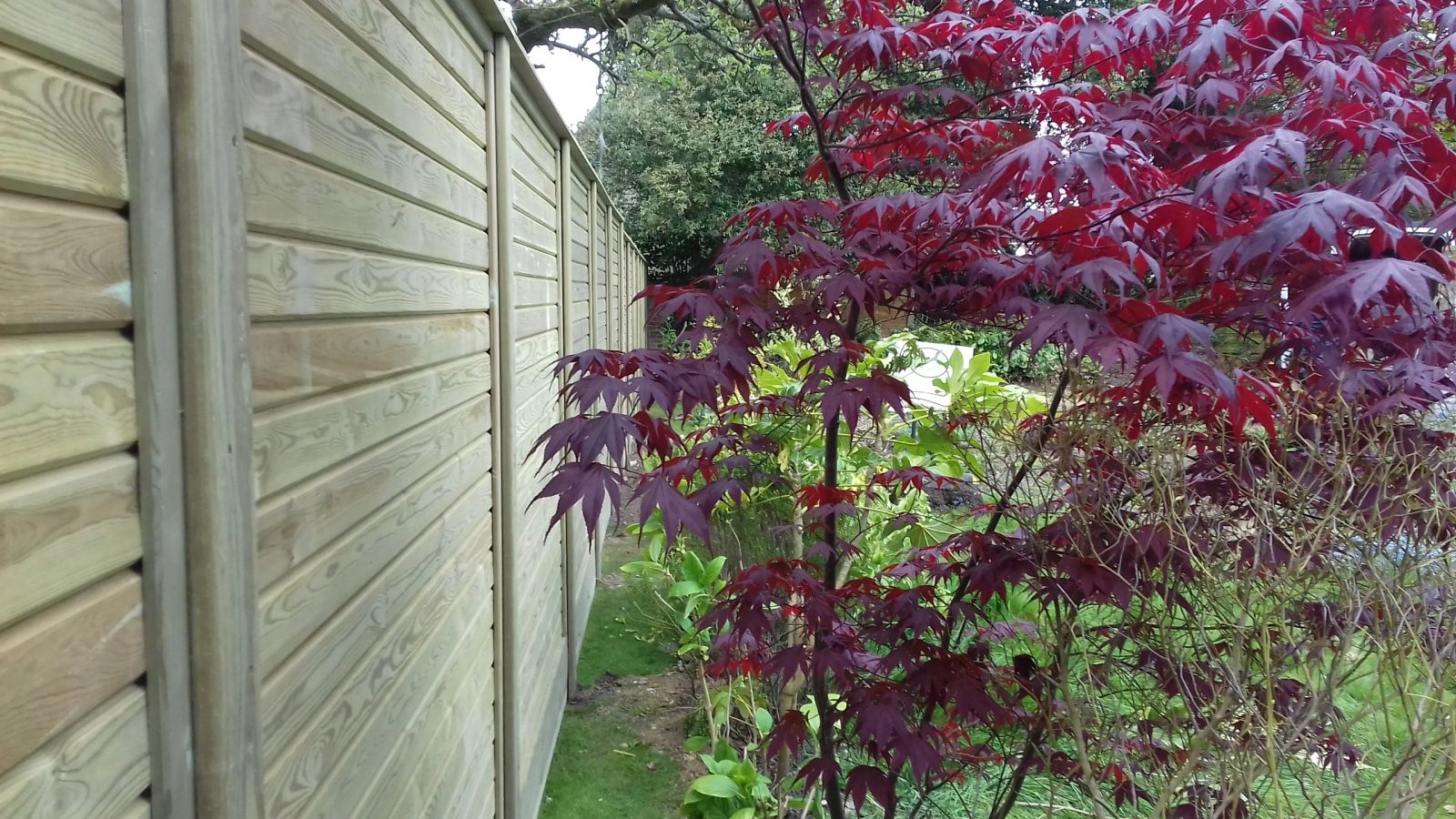
A dense acoustic timber skin takes stain or preservative in the same way as any timber fence, but the thicker section and the sealed cavity behind it mean both faces need proper coverage since the inner face is harder to reach for future maintenance.
Finishing before final assembly, where the design allows, ensures the inner skin gets a proper coat rather than being left untreated once the infill and outer skin are in place.
Ventilation requirements under a deck
A low-level deck with boxed-in sides and no airflow underneath traps moisture against the joists and the underside of the boards, which is one of the most common causes of premature timber rot on an otherwise well-built deck.
Leaving gaps in the skirting, or fitting purpose-made ventilation grilles, allows air to circulate beneath the structure and lets the timber dry out between wet periods rather than staying permanently damp.
Decks built very close to ground level with minimal void beneath them are particularly at risk and sometimes need a raised design specifically to allow enough clearance for airflow.
Temporary acoustic hoarding for construction sites
A temporary acoustic hoarding, sometimes required around a construction site near housing, uses a similar mass-and-seal principle to a permanent domestic barrier but is built for a fixed duration and easier removal rather than long-term weathering.
These hoardings are usually panelised for quick assembly and disassembly, trading some of the sealing refinement of a permanent build for speed of installation and removal once the works finish.
Metal panel systems as an alternative on very exposed sites
On sites where timber panel failure from wind loading is a recurring problem despite heavier posts and shorter bays, a powder-coated steel or aluminium panel system offers a genuinely different approach, since the material doesn't flex, crack or delaminate the way a timber panel eventually does under repeated wind load.
These systems cost more than timber upfront and have a different aesthetic that not every client wants, but on a genuinely difficult exposed boundary they remove the recurring panel-replacement cycle entirely.
It's worth presenting as an option specifically where a client has already replaced timber panels on the same exposed run more than once, rather than as a default first suggestion.
Setting corner posts before intermediate posts
Corner and end posts are normally set first and their positions checked and finalised before any intermediate post along the run, since every other post's position is measured relative to those fixed points.
Setting intermediate posts first and corners last risks a corner ending up slightly off the true line established by the string, which then means either accepting a visible kink or redoing intermediate posts to correct it.
This sequence matters even more on a run with two changes of direction, where getting one corner wrong compounds the error along the whole of the next leg.
Anti-climb toppings and their legal limits
Rotating spikes, barbed wire and razor coils are all restricted on a domestic or public-facing boundary because they can injure someone who isn't the intended target, and case law treats an unreasonably dangerous topping as an occupier's liability risk rather than a deterrent.
Where a topping is genuinely needed, angled anti-climb brackets carrying plain or barbed wire set back from a public path are the usual compromise, with height and setback checked against the boundary's use before anything is fitted.
Kitchen and commercial extract fan noise
An extract fan on a restaurant, takeaway or commercial kitchen runs continuously through opening hours and produces a steady mechanical drone rather than an intermittent noise, which some people find more intrusive precisely because it doesn't stop.
Where the fan outlet sits above head height on a wall, a fence alone may not break the line of sight to it, and a taller localised screen close to the outlet is sometimes more effective than a full boundary run.
Perimeter fencing around a school playing field
A playing field perimeter separate from the main school building boundary is usually lower and more open than the building line itself, since its job is containing pupils during use and deterring casual trespass out of hours rather than resisting a determined intrusion.
Gates onto a playing field are positioned to give staff a clear sightline for supervision, and a field boundary shared with a public path often needs a stock-proof rather than fully solid design to keep sightlines open both ways.
Staining versus painting: different maintenance cycles
A translucent or semi-transparent stain penetrates the timber surface and wears gradually, so re-application every two to three years is a top-up rather than a full strip-back, and overlap patches between old and new coats blend reasonably well.
Opaque exterior paint or solid-colour masonry-style coatings sit on the surface as a film, which looks crisper initially but is prone to flaking and cracking as the timber moves seasonally, and once it starts to fail it usually needs full removal rather than a top coat.
Clients choosing paint for a specific colour should budget for that more disruptive maintenance cycle rather than assuming it behaves like a stain with a different finish.