London & Hertfordshire Free Site Visit
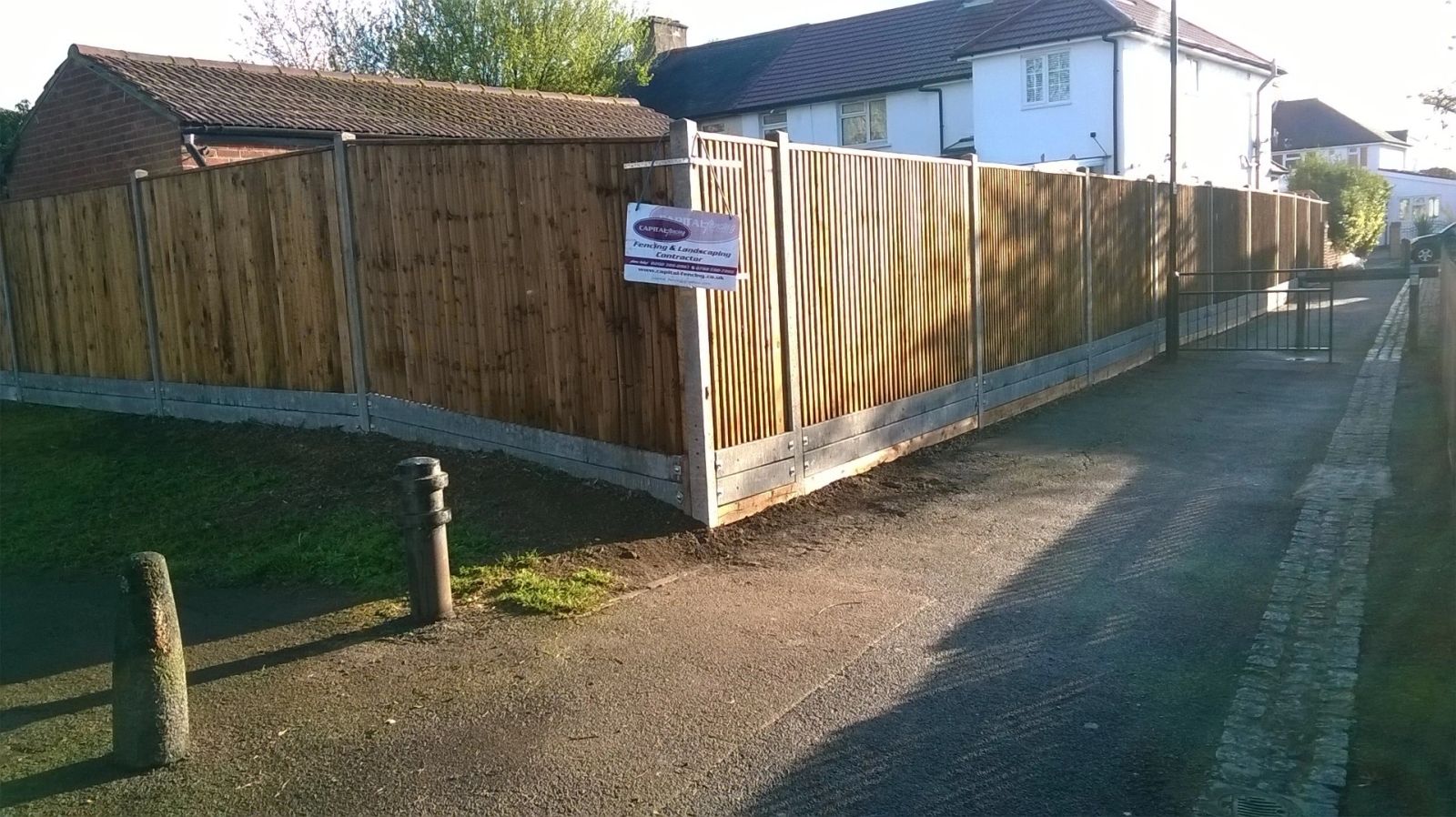
closeboard fence run installed by Capital Fencing in Hatfield (AL9)
Hatfield · AL9 / AL10

Local commercial yard fencing specialist covering Hatfield & welwyn garden city

Capital Fencing installs commercial yard fencing across Hatfield and out toward welwyn garden city and st albans. What separates a commercial yard fencing job from a standard boundary is the detail: 2.4m palisade perimeter with anti-climb spike and matching double vehicle gates. That's the work, not the marketing. Roads such as Comet Way and Wellfield Road are typical of the local layout. Galleria is a useful local reference point. The University of Hertfordshire's campus sits within the town, reflecting Hatfield's history as a centre of the aircraft industry.

Capital Fencing installs commercial yard fencing across Hatfield and out toward welwyn garden city and st albans. What separates a commercial yard fencing job from a standard boundary is the detail: 2.4m palisade perimeter with anti-climb spike and matching double vehicle gates. That's the work, not the marketing. Roads such as Comet Way and Wellfield Road are typical of the local layout. Galleria is a useful local reference point. The University of Hertfordshire's campus sits within the town, reflecting Hatfield's history as a centre of the aircraft industry.

Default spec

How we build commercial yard fencing in Hatfield

2.4m palisade or 358 weld-mesh, hot-dip galvanised then RAL-coded powder-coat, concrete-set 100SHS or 76CHS line posts. On Hatfield jobs we adjust for uniform new-build estates mean visual consistency across runs is important to keep frontages looking right.

Property mix locally: post-war new-town estates, university accommodation, and Old Hatfield's period cottages. Typical gardens: compact rectangular plots, mostly level, often shared with neighbour-owned fences. Postcodes we regularly service: AL9, AL10.

Why this spec, for trade yards, self-storage sites, workshops and small industrial units

  • hot-dip galvanised then powder-coated finishes carry a 25-year service life on a working yard
  • gate posts sized for daily commercial cycle counts rather than domestic once-a-day operation
  • we co-ordinate with the alarm and CCTV installer so cabling routes through the posts, not around them

Where commercial yard fencing isn't the right answer

  • premises with a landlord who prohibits perimeter modifications without formal Section 26 notice
  • client-visitor frontages where a soft timber-fronted boundary is on brand and palisade isn't

Typical commercial yard fencing briefs in Hatfield

  • 358 weld-mesh perimeter with CCTV pole mounts integrated into the line posts
  • 2.4m palisade perimeter with anti-climb spike and matching double vehicle gates

Commercial Yard Fencing FAQs — Hatfield

Do you provide out-of-hours install for occupied sites?

On commercial yard fencing jobs in Hatfield (AL9), our default answer is: 2.4m palisade or 358 weld-mesh, hot-dip galvanised then RAL-coded powder-coat, concrete-set 100SHS or 76CHS line posts. We'll walk you through hot-dip galvanised then powder-coated finishes carry a 25-year service life on a working yard on the site visit before you commit.

How long does hot-dip galvanised fencing last on a working yard?

Across Hatfield we spec around uniform new-build estates mean visual consistency across runs is important to keep frontages looking right, so on commercial yard fencing that usually means palisade for hard perimeter security. We'll walk you through hot-dip galvanised then powder-coated finishes carry a 25-year service life on a working yard on the site visit before you commit.

Palisade or weld-mesh — which fits my site?

Welwyn Hatfield Borough coverage means we can survey most AL9 addresses inside a week — trade yards, self-storage sites, workshops and small industrial units. We'll walk you through hot-dip galvanised then powder-coated finishes carry a 25-year service life on a working yard on the site visit before you commit.

Do you carry public liability suitable for occupied commercial sites?

Practically: 2.4m palisade perimeter with anti-climb spike and matching double vehicle gates. That's the Hatfield version of this job, not a generic one. For context: gate posts sized for daily commercial cycle counts rather than domestic once-a-day operation. Hot-dip galvanised, RAL-coded and installed to a 25-year service life.

Can you integrate CCTV poles into the fence line?

On commercial yard fencing jobs in Hatfield (AL9), our default answer is: 2.4m palisade or 358 weld-mesh, hot-dip galvanised then RAL-coded powder-coat, concrete-set 100SHS or 76CHS line posts. The honest trade-off is specifying domestic-grade hinges on a gate opening 40 times a day — six-month failure — which is exactly what our default spec designs out.

Recent commercial yard fencing work
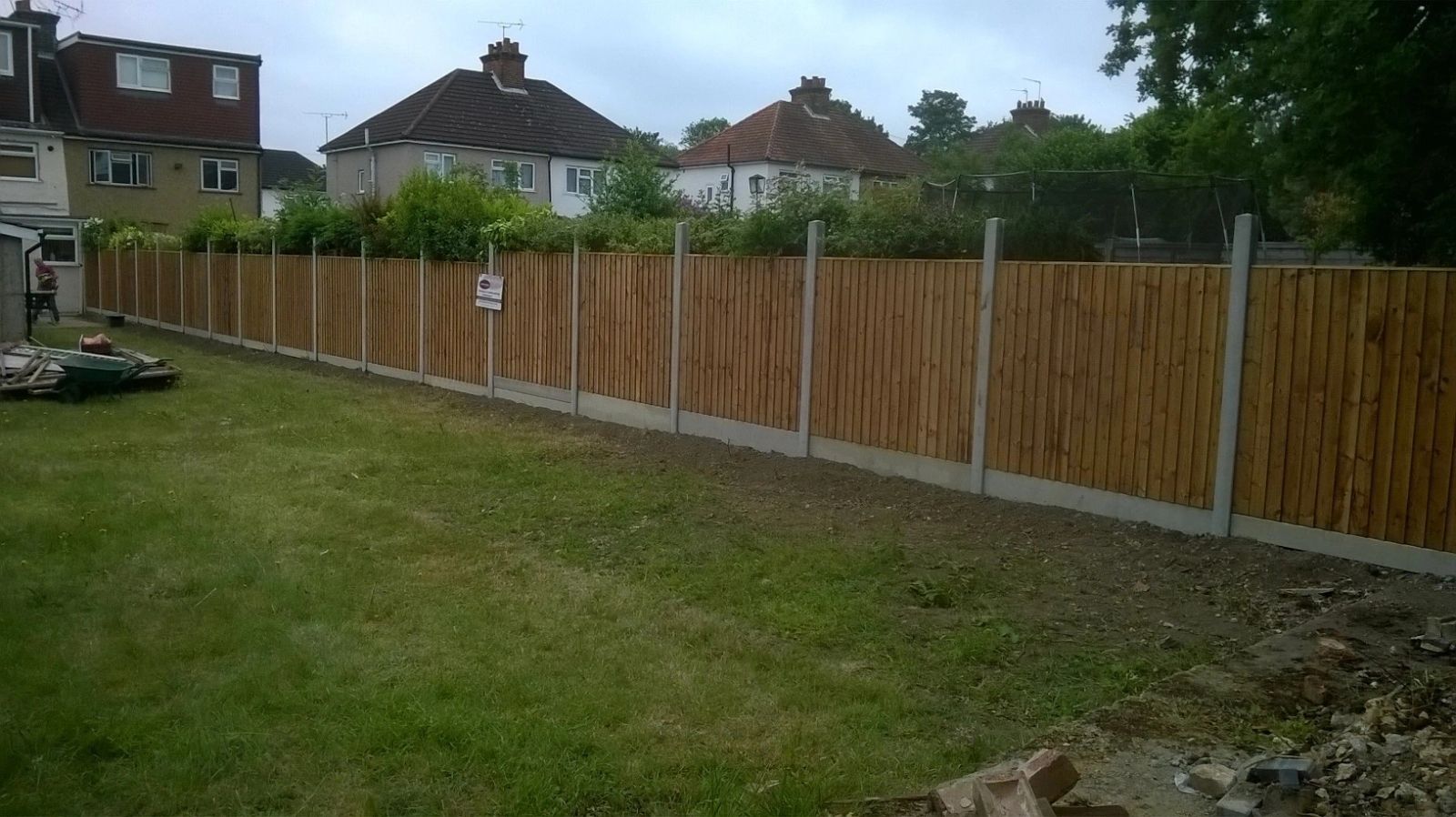
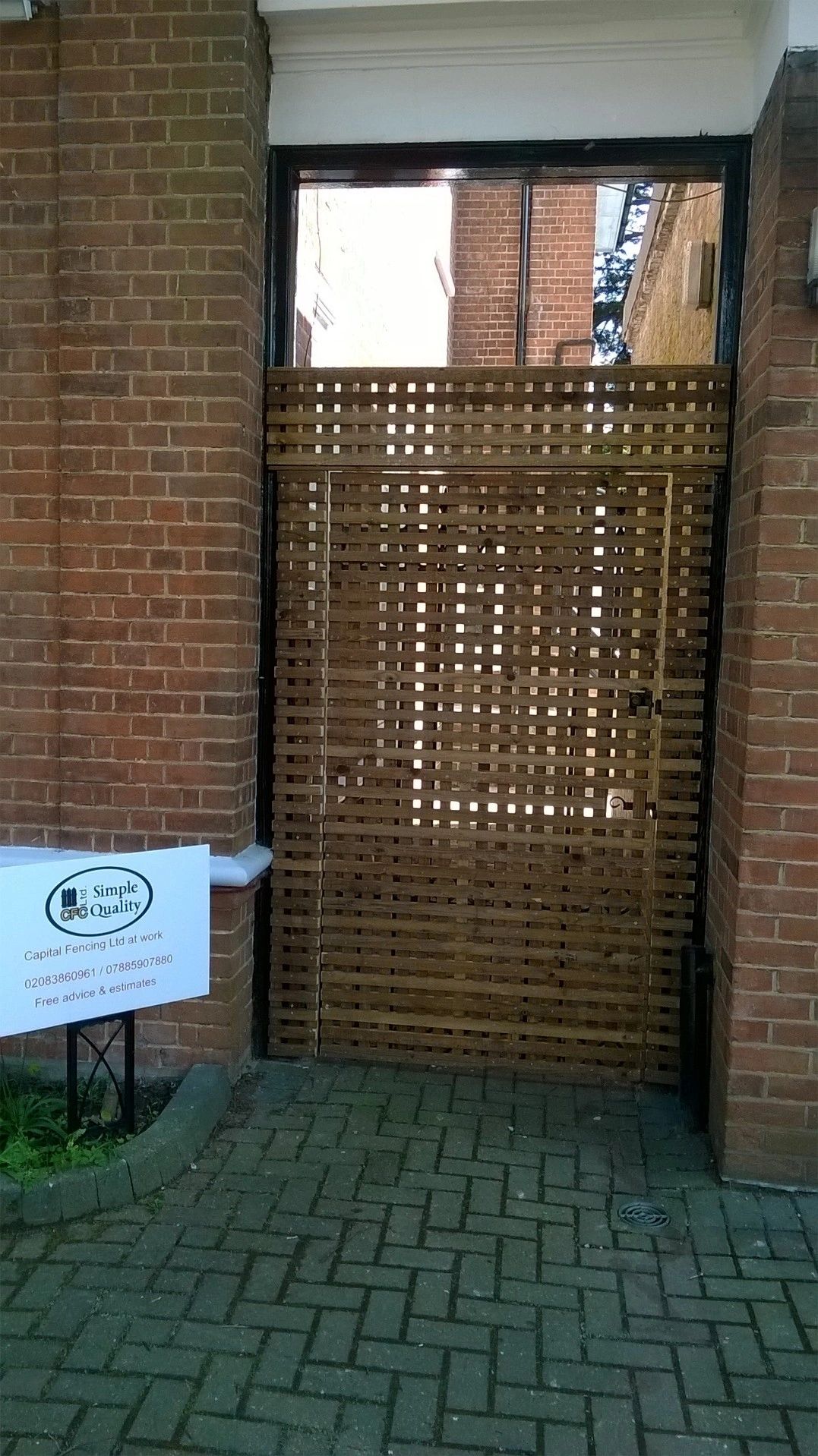
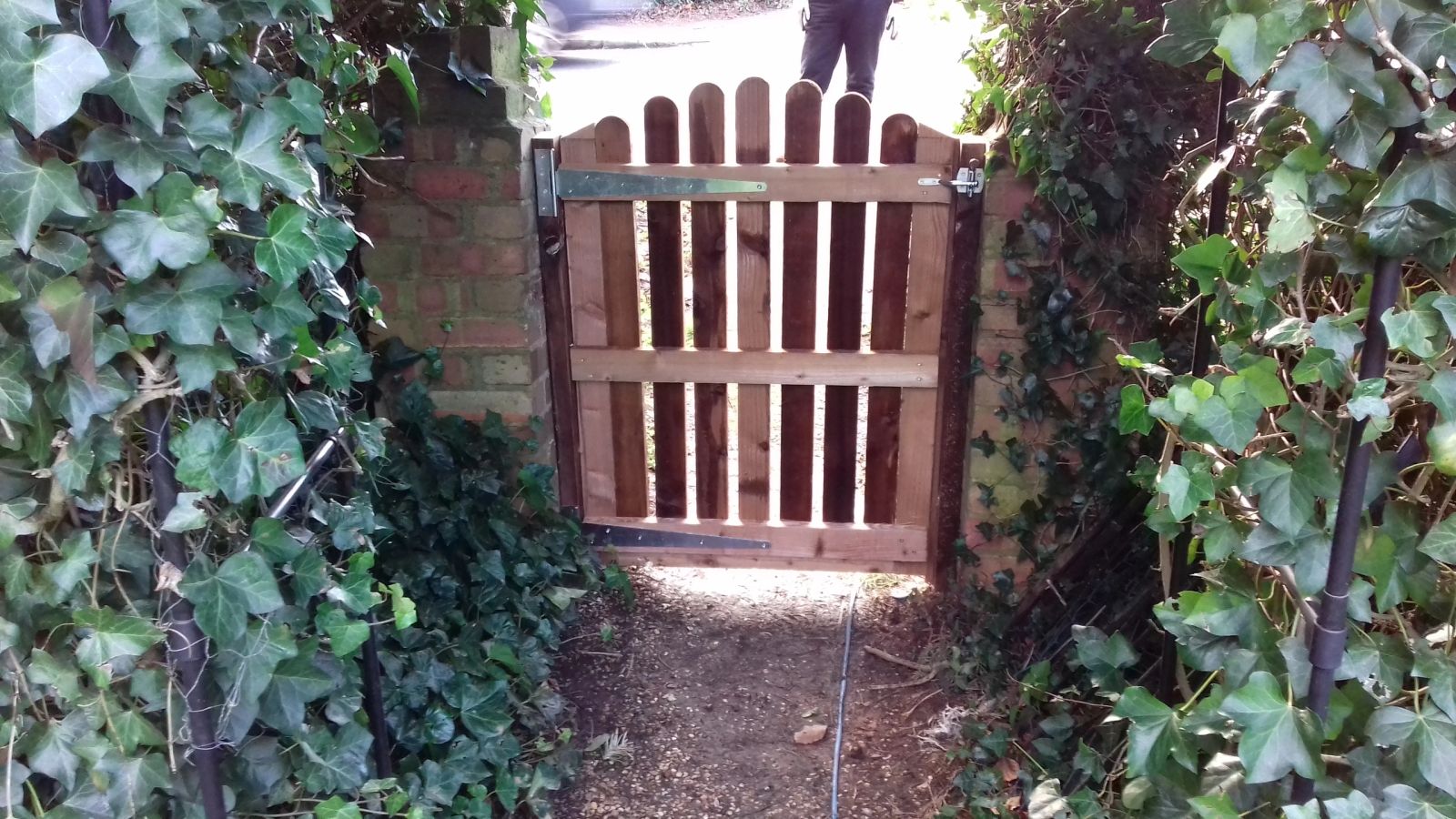
closeboard fence run installed by Capital Fencing in Hatfield (AL9)panel fence install installed by Capital Fencing in Hatfield (AL9)trellis-topped fence installed by Capital Fencing in Hatfield (AL9)bespoke decorative fence installed by Capital Fencing in Hatfield (AL9)

What actually matters for commercial yard fencing around Hatfield

Maintenance that prevents the next repair

Most repairs we're called out for could have been caught earlier with a simple seasonal check — a post that's started to lean, a gravel board showing early rot, or a hinge that's begun to sag are all cheaper to address before they fail outright.

We'll flag anything else on the boundary that looks like it's heading the same way while we're on site for an unrelated repair.

Boundary fencing on an allotment site

An allotment site boundary is often lower-spec than a commercial compound but still needs to deter casual theft of tools, produce and sheds, so a stock fence or low chain-link topped with a single strand of barbed wire is a common, proportionate choice.

Individual plot gates within the site are usually simpler again, since the main perimeter is doing the primary security work and plot-level fencing is more about defining boundaries between tenants.

Outbuildings close to a boundary and separate rules

Garden rooms, sheds and other outbuildings have their own distinct permitted development rules on height and proximity to a boundary, which are different from the rules governing fences, walls and gates.

It's a common mix-up to apply fence height limits to an outbuilding, or vice versa, when checking what's allowed near a boundary line.

Where a fence and a new outbuilding are being planned together near the same boundary, it's worth checking each against its own specific permitted development category.

Anti-twist shoulder details on post fixings

Some post shoe and anchor systems include a shaped shoulder or collar that grips the post's cross-section rather than relying purely on friction from clamping bolts, resisting the post twisting in the fitting under sustained wind load.

Without that shoulder detail, a smooth-sided post held only by bolted clamp plates can gradually rotate within the fitting as repeated gusts work it slightly each time, loosening the bolts further with each cycle.

This detail matters more on taller, more exposed posts carrying larger panel or gate areas, where the leverage from wind load is greatest, than on short, low-level fencing where twisting force is comparatively small.

Correcting mismatched post spacing discovered during a repair

Occasionally an older run turns out to have inconsistent post spacing from the original build, which only becomes apparent when a panel being fitted during a repair doesn't sit at the expected width against the next post.

Rather than forcing a standard panel into a non-standard gap, options include a site-cut infill panel or slightly repositioning the post if it hasn't already been set, since forcing a fit usually strains the panel's frame and shortens its life.

Bitumen paint on buried post bases

A bitumen-based coating applied to the section of a timber post that will sit below ground adds an additional moisture barrier on top of factory preservative treatment, aimed specifically at the zone in most sustained contact with damp soil.

It's a supplementary measure rather than a substitute for proper preservative treatment, since bitumen coating alone doesn't address fungal decay resistance the way a biocide-based preservative does.

The coating is usually stopped a short distance below the eventual ground line, since bitumen exposed to UV above ground degrades and can look unsightly, whereas below ground it's protected from sunlight entirely.

Haunching a post base above ground level

Haunching means shaping the concrete around a post so it stands slightly proud of the surrounding ground and slopes away from the post in all directions, rather than finishing flush or dished.

That slope sheds rainwater away from the timber-to-concrete interface, which is the point most prone to trapping moisture and starting rot at the base of an otherwise sound post.

A flush or dished base, by contrast, holds a shallow puddle around the post after every rainfall, quietly shortening the post's life regardless of how well the timber itself was treated.

Leylandii hedges and root competition near posts

A mature leylandii hedge planted close to a boundary develops a dense, shallow root mat that competes directly with a post base for space and moisture, often making standard post-hole digging difficult without cutting through live roots.

Leylandii also draws a large amount of water from the surrounding soil in summer, which can locally dry and shrink clay soil right along the fence line even where the wider garden isn't especially exposed.

Where a hedge is being kept, offsetting posts slightly from the direct root zone, or hand-digging around larger roots rather than augering through them, extends post life without needing to remove established planting.

Moisture content before staining or treating

Applying stain or preservative to timber that's still wet from recent rain or from fresh pressure treatment traps moisture under the coating rather than sealing it out, reducing how long the treatment lasts.

Repairs are timed, where possible, to let new or rain-affected timber dry to a suitable moisture level before any coating is applied.

Utility marker posts near a boundary line

Small yellow, blue or red marker posts near a boundary often indicate a buried gas, water or telecoms service running close to or along the line, placed there by the relevant utility company.

These markers are a useful early warning but aren't a precise map, so it's still worth requesting formal utility plans from the relevant providers before digging post holes nearby.

Damaging a utility service while digging can be both costly to repair and, in the case of gas or high-voltage cabling, genuinely dangerous, which is why checking first matters more than the fence design itself.

Diagnosing gate sag: hinge, post, or frame

A sagging gate can stem from three distinct causes that need different fixes — worn or undersized hinges, a hinge post that has itself leaned out of true, or a gate frame that has racked out of square through inadequate diagonal bracing.

Testing the diagonal measurement corner-to-corner on the gate frame quickly shows whether the frame itself has racked, while checking the hinge post with a spirit level separately identifies a foundation problem rather than a hardware one.

Treating a leaning-post problem with heavier hinges alone doesn't fix the underlying cause and the gate will sag again once the new hinges have taken up their own wear.

Commercial and site boundary fencing

Commercial boundaries — industrial units, retail yards, small business premises — usually prioritise security and low maintenance over appearance, which points toward galvanised steel palisade, weldmesh or heavy-duty timber closeboard rather than decorative panel fencing.

Access control matters more here too: wide vehicle gates need clearances checked against delivery vehicle turning circles, not just car dimensions, and a site with out-of-hours deliveries may need lockable pedestrian access separate from the main gate.

Any work adjoining a public footpath or road also needs to think about temporary hoarding and public safety during installation, not just the finished boundary.

Post cap design and end-grain water shedding

The cut top of a fence post exposes end grain, which absorbs water far faster than the sealed or treated face of the post, making it one of the most vulnerable points on an otherwise sound post if left uncapped.

A pyramid or weathered-top post cap sheds water away from that end grain rather than letting it pool on a flat cut surface, extending the practical life of the post noticeably for a small extra cost.

Where posts are cut to length on site rather than supplied pre-capped, re-treating the freshly cut end before fitting a cap matters just as much as the cap itself, since paint or preservative rarely penetrates deep enough at the mill to protect a subsequent site cut.

Touching up galvanising after on-site cutting

Cutting a galvanised post or rail to length on site removes the zinc coating from the cut edge, leaving bare steel exposed exactly where water is most likely to sit if the cut faces upward.

A cold galvanising paint or zinc-rich primer applied to the cut edge immediately after cutting restores meaningful protection, and skipping this step on a security run is a common reason a fence corrodes first at bay joints rather than along the main rail length.

Party fence wall versus an ordinary boundary fence

A 'party fence wall' has a specific meaning under the Party Wall etc. Act 1996 — a structure that stands astride the boundary line, jointly used by both properties, which is distinct from a garden fence panel that simply happens to mark a boundary.

Most timber panel fencing sits on one owner's land and isn't a party structure in that legal sense, even where it visually marks the boundary line.

Genuine party wall situations are more likely with masonry garden walls straddling the line, and those can bring the Act's notice procedures into play, which is worth checking before work starts.

Water ingress through a missing or damaged post cap

A post cap sheds rainwater off the exposed end grain at the top of a post, and once it's gone missing or cracked, that end grain absorbs water directly and rots from the top down rather than only from ground contact.

Refitting a cap is a cheap and quick repair on its own, but where a post has already been exposed for some time, it's worth checking how far rot has travelled down the post before assuming a new cap alone has solved the problem.

Handling heavy gate posts and large timbers safely

A large hardwood or oversized gate post can be too heavy to lift and position safely by hand, particularly into a deep hole, so a simple lifting aid such as a sack truck, roller bars or a block and tackle reduces the risk of a manual handling injury.

Lowering a heavy post into a hole under control, rather than dropping the last stretch, also protects the hole's sides from collapsing under the impact just as it's being positioned.

Where a post genuinely needs mechanical assistance to move safely, planning that equipment into the job at the outset avoids improvising with inadequate lifting methods on the day.

Gravel board rot and replacement

The gravel board takes the most ground contact and splashback of any timber component on the fence, so it's usually the first piece to need replacing regardless of how sound the panels or posts above it are.

Swapping a rotten timber gravel board for a concrete one at repair time removes that recurring failure point without needing to touch the panel above it.

Sealing cut end grain on site-modified gates

Cutting a gate down to fit a narrower opening exposes fresh end grain that takes up water far faster than a factory-sealed edge, and leaving that cut unsealed is one of the quickest ways to start rot in an otherwise sound gate.

Sealing or capping any cut edge before the gate goes back into service is a small step that significantly extends the life of an altered gate.

Acoustic fencing compared with planting-based screening

Dense planting alone reduces perceived noise mostly by psychological and visual screening rather than genuine sound-blocking, since a hedge thin enough to see through offers little real acoustic mass.

A solid acoustic fence combined with planting in front of it gets the best of both — genuine sound reduction from the solid barrier, softened by greenery that also helps with dust and visual softening.

Where space is tight, prioritising the solid barrier over depth of planting usually gives a better acoustic result than a wide but thin screen of shrubs.

Concrete post spalling and what can and can't be patched

Spalling is concrete breaking away from the surface as a corroding internal reinforcing rod expands, and once that process has started it keeps progressing even if the visible flaking is patched over cosmetically.

A post spalling only at the surface with the rod still fully protected can sometimes be repaired with a proprietary concrete repair mortar, but any post spalling down to exposed, rusted reinforcement is a replacement rather than a patch job.

Scrap value theft targeting fence fittings

Cast aluminium or brass post caps and decorative finials have occasionally been targeted for scrap value on isolated boundaries, in the same way capping rails have, so lower-value steel or composite alternatives are sometimes specified deliberately on an exposed run for that reason alone.

Where a decorative metal fitting is wanted for appearance, fixing it with concealed or one-way screws reduces how quickly it can be removed compared with an exposed standard fixing.

Trade yards, self-storage sites, workshops and small industrial units — that's who this page is for. In Hatfield and out to Welwyn Hatfield Borough, we run the commercial yard fencing spec that survives uniform new-build estates mean visual consistency across runs is important to keep frontages looking right. Roads such as Comet Way and Wellfield Road are typical of the local layout. Hatfield House park wall is a useful local reference point. Hatfield divides between Old Hatfield, a conservation area around the historic Hatfield House park wall, and the New Town estates built from the 1950s with standardised plot sizes.

Get In Touch

Get My Free Quote — 24h Response

No callout fee · Free site visit · Friendly local team covering London & Hertfordshire.

Call us
07885907880
or 02036484746
Email
capital_fencing@yahoo.com
WhatsApp
Message us anytime
Area
London & Hertfordshire
Payment
Card payments accepted

Pay by debit or credit card, bank transfer or cash once the work and price are agreed. No deposit taken online.

Request a Free Quote

We'll get back to you within 24 hours.

Free Site Visit No Callout Fee
Call WhatsAppQuote