London & Hertfordshire Free Site Visit
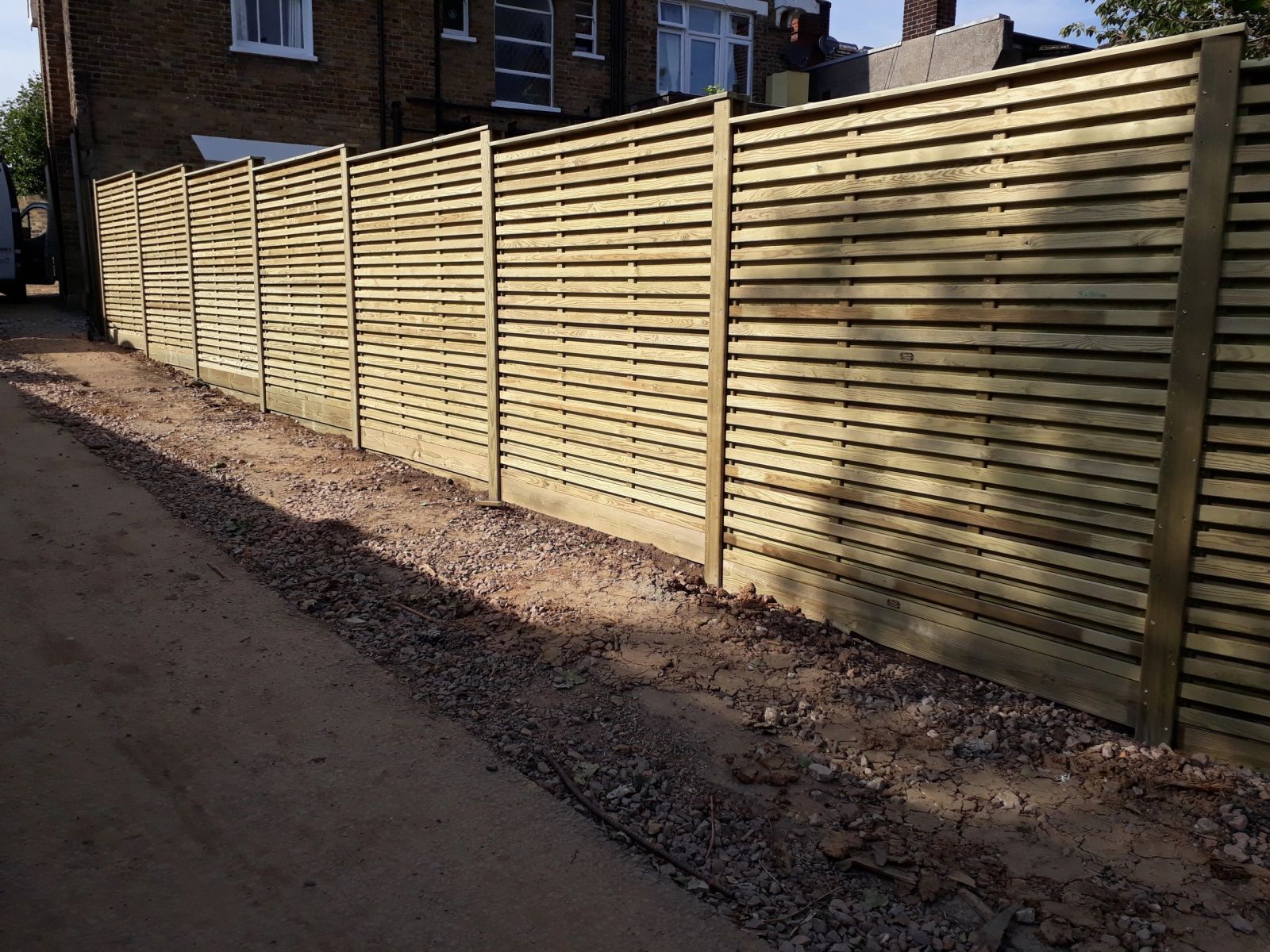
closeboard fence run installed by Capital Fencing in Stevenage (SG1)
Stevenage · SG1 / SG2

Local commercial yard fencing specialist covering Stevenage & hitchin

Commercial Yard Fencing in Stevenage is a specific brief for us — trade yards, self-storage sites, workshops and small industrial units. The default local answer isn't a stock catalogue drop: it's 2.4m palisade or 358 weld-mesh, hot-dip galvanised then RAL-coded powder-coat, concrete-set 100SHS or 76CHS line posts. On Stevenage sites we also spec around shared-with-neighbour fence runs are the norm — quotes need to cover boundary checks first, which is where a lot of commercial yard fencing jobs quietly fail two years in. Roads such as Lytton Way and High Street (Old Town) are typical of the local layout. Stevenage station is a useful local reference point. Six Hills Way runs alongside the Six Hills, a scheduled ancient monument comprising a row of Roman-era burial mounds.

Commercial Yard Fencing in Stevenage is a specific brief for us — trade yards, self-storage sites, workshops and small industrial units. The default local answer isn't a stock catalogue drop: it's 2.4m palisade or 358 weld-mesh, hot-dip galvanised then RAL-coded powder-coat, concrete-set 100SHS or 76CHS line posts. On Stevenage sites we also spec around shared-with-neighbour fence runs are the norm — quotes need to cover boundary checks first, which is where a lot of commercial yard fencing jobs quietly fail two years in. Roads such as Lytton Way and High Street (Old Town) are typical of the local layout. Stevenage station is a useful local reference point. Six Hills Way runs alongside the Six Hills, a scheduled ancient monument comprising a row of Roman-era burial mounds.

Typical commercial yard fencing briefs in Stevenage

  • hoop-top mesh around a client-visitor forecourt where palisade would look wrong
  • 2.4m palisade perimeter with anti-climb spike and matching double vehicle gates

Why this spec, for trade yards, self-storage sites, workshops and small industrial units

  • hot-dip galvanised then powder-coated finishes carry a 25-year service life on a working yard
  • gate posts sized for daily commercial cycle counts rather than domestic once-a-day operation
  • we co-ordinate with the alarm and CCTV installer so cabling routes through the posts, not around them
Default spec

How we build commercial yard fencing in Stevenage

2.4m palisade or 358 weld-mesh, hot-dip galvanised then RAL-coded powder-coat, concrete-set 100SHS or 76CHS line posts. On Stevenage jobs we adjust for shared-with-neighbour fence runs are the norm — quotes need to cover boundary checks first.

Property mix locally: post-war planned housing across Chells, Shephall and Bedwell, plus older properties in Stevenage Old Town. Typical gardens: modest rectangular plots, typically flat, with rear access alleyways on the planned estates. Postcodes we regularly service: SG1, SG2.

Where commercial yard fencing isn't the right answer

  • premises with a landlord who prohibits perimeter modifications without formal Section 26 notice
  • client-visitor frontages where a soft timber-fronted boundary is on brand and palisade isn't

Commercial Yard Fencing FAQs — Stevenage

Do you carry public liability suitable for occupied commercial sites?

On commercial yard fencing jobs in Stevenage (SG1), our default answer is: 2.4m palisade or 358 weld-mesh, hot-dip galvanised then RAL-coded powder-coat, concrete-set 100SHS or 76CHS line posts. We'll walk you through hot-dip galvanised then powder-coated finishes carry a 25-year service life on a working yard on the site visit before you commit.

What's the lead time on made-to-measure commercial gates?

Across Stevenage we spec around shared-with-neighbour fence runs are the norm — quotes need to cover boundary checks first, so on commercial yard fencing that usually means palisade for hard perimeter security. We'll walk you through hot-dip galvanised then powder-coated finishes carry a 25-year service life on a working yard on the site visit before you commit.

How long does hot-dip galvanised fencing last on a working yard?

Stevenage Borough coverage means we can survey most SG1 addresses inside a week — trade yards, self-storage sites, workshops and small industrial units. The honest trade-off is specifying domestic-grade hinges on a gate opening 40 times a day — six-month failure — which is exactly what our default spec designs out.

Do you provide out-of-hours install for occupied sites?

Practically: 2.4m palisade perimeter with anti-climb spike and matching double vehicle gates. That's the Stevenage version of this job, not a generic one. For context: gate posts sized for daily commercial cycle counts rather than domestic once-a-day operation. Hot-dip galvanised, RAL-coded and installed to a 25-year service life.

Can you match an existing colour on my other units?

On commercial yard fencing jobs in Stevenage (SG1), our default answer is: 2.4m palisade or 358 weld-mesh, hot-dip galvanised then RAL-coded powder-coat, concrete-set 100SHS or 76CHS line posts. For context: gate posts sized for daily commercial cycle counts rather than domestic once-a-day operation. Hot-dip galvanised, RAL-coded and installed to a 25-year service life.

Recent commercial yard fencing work
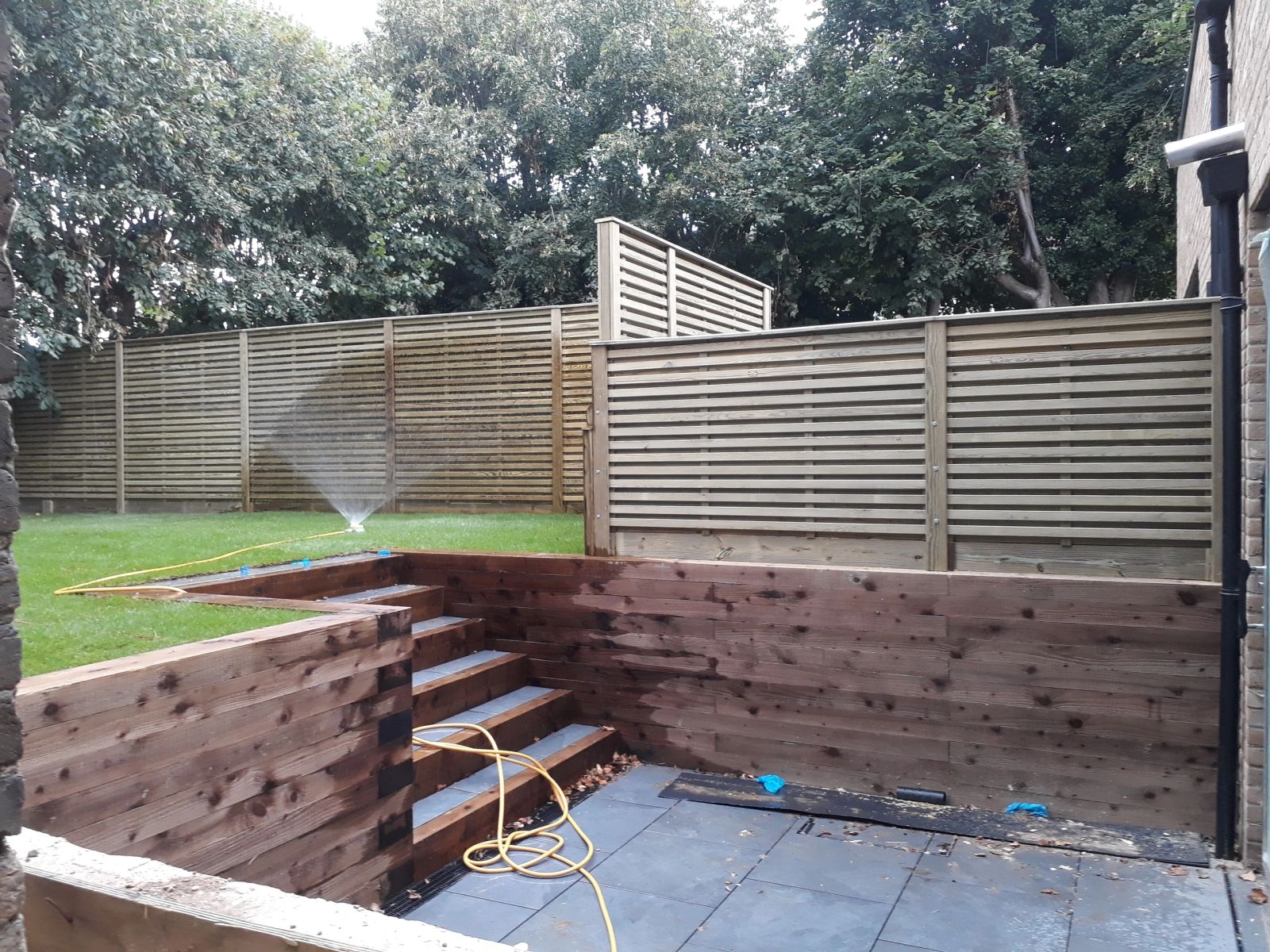
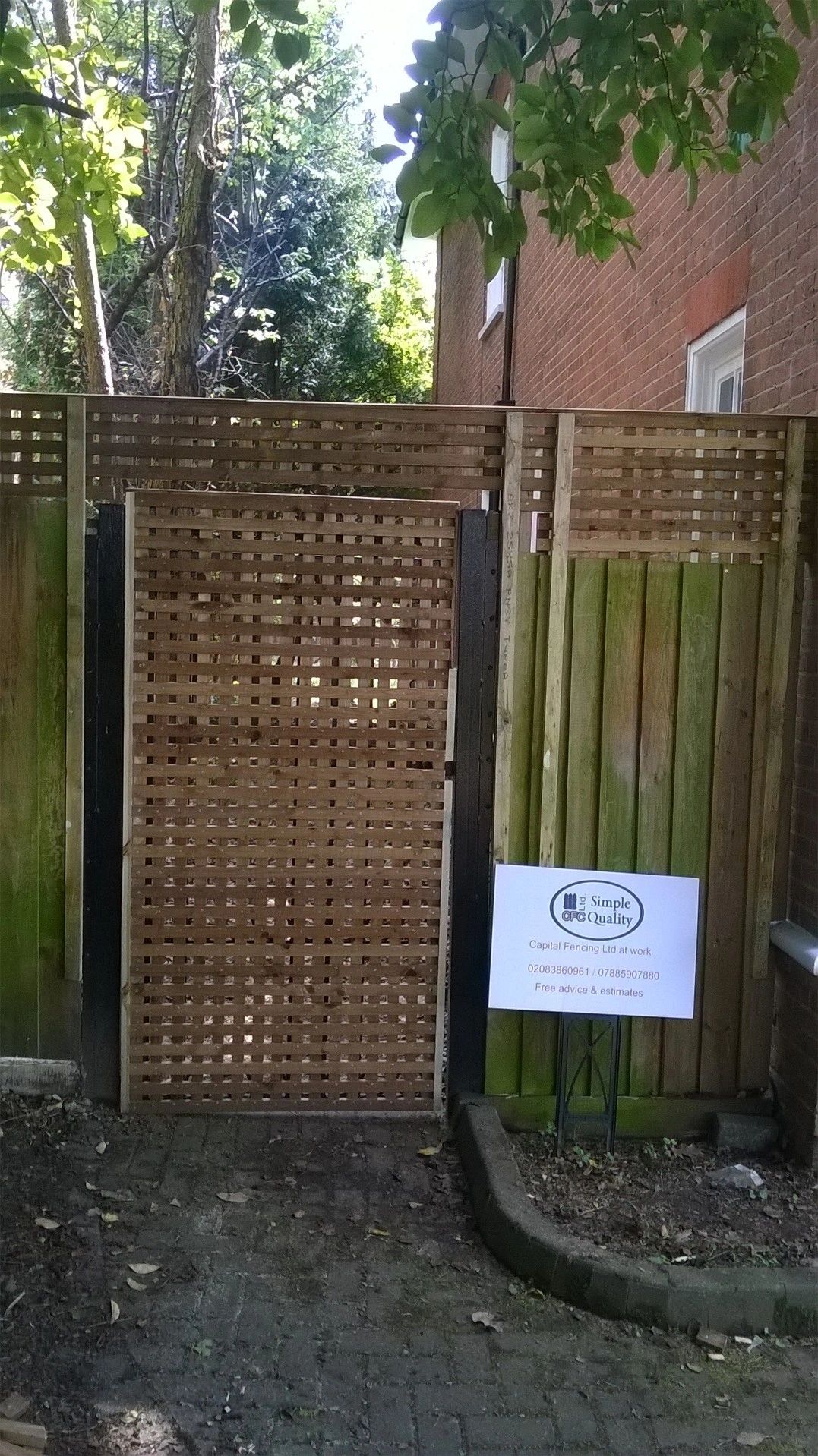
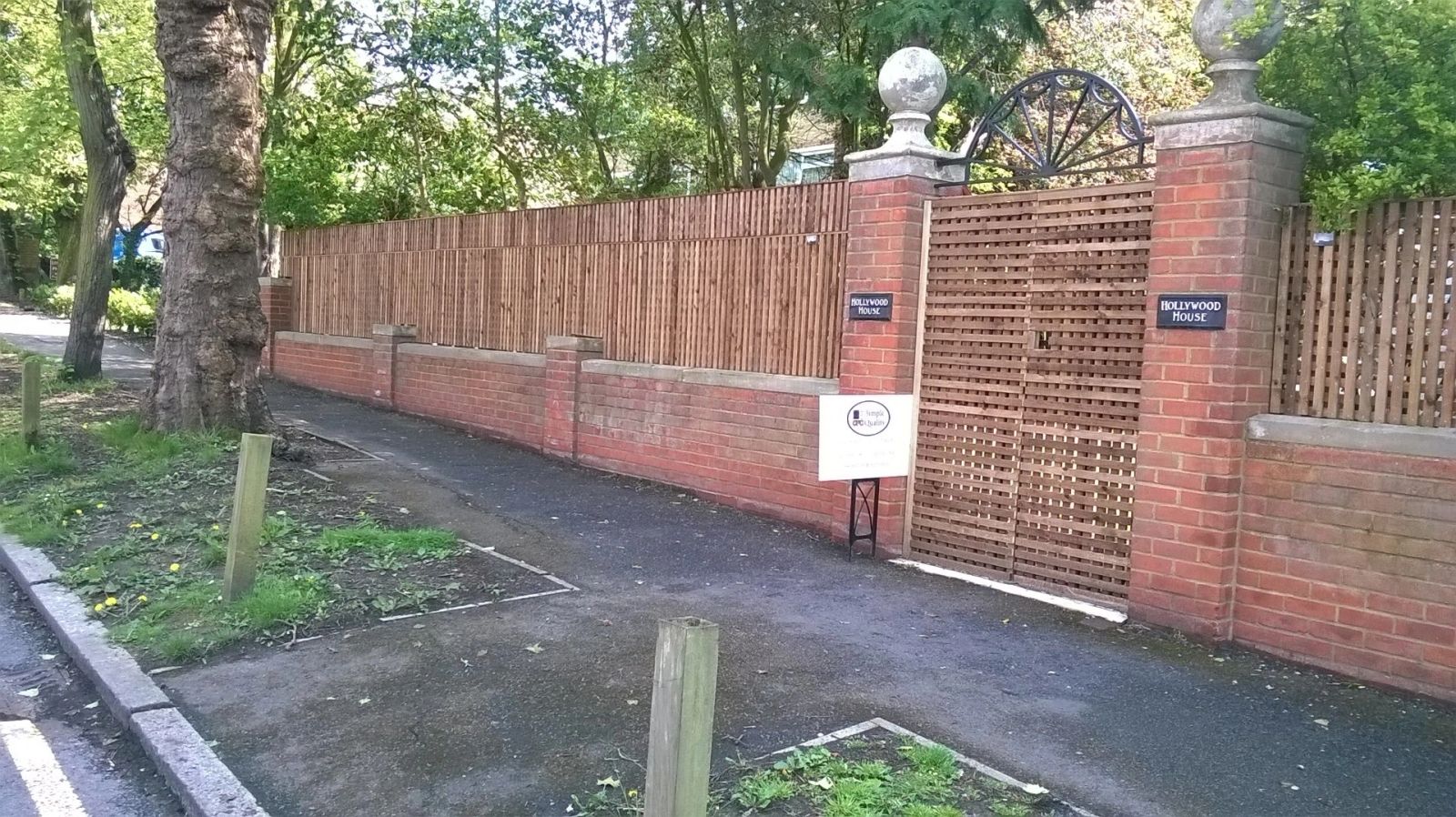
closeboard fence run installed by Capital Fencing in Stevenage (SG1)panel fence install installed by Capital Fencing in Stevenage (SG1)trellis-topped fence installed by Capital Fencing in Stevenage (SG1)bespoke decorative fence installed by Capital Fencing in Stevenage (SG1)

How we approach commercial yard fencing on Stevenage properties

Permitted development height limits

Height allowances differ between the front of a plot and the side or rear boundary, and drop further again near a highway where sightlines for road users have to be kept clear. We check the specific limit for the boundary in question rather than quoting a blanket height.

Conservation designation can reduce what's permitted even further, and a boundary next to a corner plot has its own separate sightline rule — both are checked against the site before a height is put on a quote.

BS 1722 and palisade fencing specification

BS 1722 covers dimensions, materials and fixing details for various fence types including steel palisade, and specifying to a named part of the standard gives a common reference point between client, contractor and any approving body rather than relying on informal descriptions of height and gauge.

Referencing the standard doesn't remove the need for site-specific judgement on threat level, but it does establish a baseline for pale gauge, post spacing and fixing that a site-specific spec can then be built up from.

Manual override on an automated gate

Most automated gates include a manual release so the gate can be opened by hand during a power cut or motor fault, and checking this release still works is worth doing periodically rather than only discovering it's seized in an emergency.

We check the mechanical gate and release mechanism; motor and control-board diagnosis is referred to a specialist.

Temporary propping and making safe

Where a full repair can't happen immediately, a leaning panel or post can be temporarily propped or strapped to stop it falling further, which reduces risk without committing to the final repair method on the spot.

Temporary propping is treated as exactly that — a stopgap — since a prop left in place over a wet season can itself start to sink or shift in soft ground.

Mesh tensioning on a chain-link or weld-mesh run

Mesh that's fitted slack sags between posts and can be pulled or climbed more easily, so a straining wire and turnbuckle at each end of a run tension the mesh evenly before it's clipped or tied to the line wires.

Re-tensioning is a routine maintenance task on an older mesh run, since posts settling slightly or ground movement over a season will slacken a mesh that was originally taut.

Preservative penetration envelope thickness

Pressure treatment doesn't necessarily saturate a timber section all the way through, and the depth of genuine preservative penetration, sometimes called the treatment envelope, can be shallower in dense or resistant species than the treated colour suggests.

Cutting a treated post in half reveals this directly, often showing a pale, untreated core surrounded by a darker treated outer band a few millimetres to a couple of centimetres deep depending on species and process.

This is the practical reason cut ends need separate end-grain treatment, since a fresh cut through the envelope exposes untreated core timber that the original pressure treatment never reached.

Timber versus metal for a replacement gate

A timber gate is easier to match to an existing fence line and easier to repair in sections, while a metal gate holds its shape better against warping and racking but is harder to alter once fabricated.

We recommend based on what the existing boundary is built from and what the client actually wants to maintain over time, not a single default material.

Protecting a shared alley during material delivery

A shared rear alley used by several households for bin access can't be blocked completely for a full day without agreement, so materials are often moved through in stages between other residents' access needs rather than left stacked across the full width.

Trailing cables, tools and offcuts left in a shared passage are a trip hazard for neighbours as well as the crew, so keeping the alley clear at the end of each working day matters even if the job isn't finished.

Any damage to the alley surface itself — cracked paving, a scraped wall corner from a wide panel — is worth flagging to the client immediately, since a shared area often has joint liability that's harder to unpick after the event.

Dealing with concealed or unusual legacy fixings

Older fence runs sometimes used fixings that aren't common today, such as coach-screws recessed and pelleted over, which take longer to locate and remove than a standard exposed nail or screw.

Identifying the fixing type before starting a repair avoids damaging surrounding sound timber by forcing a component free with the wrong method.

Fencing alongside a shared access driveway

A driveway shared by two or more properties usually carries a right of way that limits how close a new fence can come to the actual running surface, regardless of who legally owns the land beneath it.

Width needs checking against the widest vehicle that regularly uses the shared drive, not just a car, since delivery vans and refuse vehicles are a common reason an otherwise reasonable-looking fence line turns out too tight.

Gates across a shared driveway need agreement from all parties with a right of way over it, and usually a means of access — a code, a key, or simply leaving it unlocked — for everyone who needs to use the route.

Rights of access to maintain a boundary

Some older deeds include an explicit right for a neighbour to enter adjoining land to maintain their side of a boundary structure, but this isn't automatic everywhere and shouldn't be assumed.

Where no such right exists in the paperwork, entering a neighbour's garden to repair or replace a fence normally needs their permission, arranged directly rather than taken for granted.

The Access to Neighbouring Land Act 1992 provides a separate, more formal route for essential works where agreement can't be reached, though it's aimed at more serious situations than routine fence replacement.

Western red cedar characteristics

Western red cedar contains natural oils and extractives that give it decay and insect resistance without chemical treatment, which is why it's often left untreated and allowed to silver naturally over time rather than stained.

It's considerably lighter and softer than most fencing softwoods, which makes it easier to work but also more prone to surface denting and scuffing during handling and fitting.

Because it's naturally durable rather than pressure-treated, cedar doesn't carry the green or brown tint of treated softwood, and any colour change over its life comes from UV exposure rather than a fading dye.

Hinge pin wear and greasing

A band-and-gudgeon or heavy tee hinge relies on a pin bearing surface that wears over years of use, and a worn pin lets the gate drop slightly at that hinge even when the fixings into the post are still sound.

Greasing the pin periodically slows this wear considerably, and on an older gate that's started to drop, checking pin wear before assuming a post or fixing fault saves an unnecessary repair.

Hitting services when digging for a repair

A post-hole repair dug in the same spot as the original footing carries less risk of hitting a buried service than a hole dug in new ground, but any repair that shifts a post position even slightly should be checked against known service runs first.

Cable and pipe locations aren't always where drawings suggest, particularly on an older property, so digging with care near the first sign of resistance is standard practice.

Sloped gardens and retaining

A sloping plot usually rules out a single level run of panel fencing — the choice is between stepping the fence in even drops between posts, or raking the panels to follow the slope continuously.

Stepped runs look tidier on a steeper gradient and are simpler to repair panel-by-panel; raked runs suit a gentler, more even slope and avoid the small triangular gaps a stepped fence leaves underneath.

Where the drop is severe enough to need a retaining structure rather than just a stepped fence, that's a different job with its own drainage and engineering requirements, not something to bolt onto a fencing quote as an afterthought.

Bearer support on adjustable pedestals

Adjustable plastic pedestals supporting deck bearers let each support point be levelled individually, which is useful over an uneven concrete base, a sloped patio, or ground that isn't practical to excavate level.

Pedestal spacing still needs to follow the same span logic as timber joists, since an adjustable base doesn't change how far the bearer above it can safely span before it needs another support point.

Pedestals also raise the whole deck slightly, which is worth checking against a threshold or step height at the house before committing to the system.

Redwood versus whitewood softwood

Redwood, more accurately European or Baltic redwood pine, has a denser structure and a naturally more durable heartwood than whitewood, which is typically spruce and has almost no natural decay resistance.

Both take preservative treatment reasonably well, but whitewood's tighter, harder-to-penetrate structure is one of the species that benefits most from incising before treatment.

In practice most fencing softwood sold as generic 'treated timber' doesn't distinguish clearly between the two, so the preservative treatment does more of the durability work than the species itself.

Urban heat and timber movement

Fencing against south-facing brick walls, paved courtyards or close to parked vehicles in dense urban plots experiences more extreme daily temperature swings than the same timber in an open garden, due to heat absorbed and re-radiated by hard surfaces.

That repeated expansion and contraction can open joints in panels and loosen fixings faster than in a more moderate microclimate, particularly on darker-stained timber that absorbs more heat.

Stainless or coated fixings and slightly looser panel-to-post tolerances both help absorb this movement without splitting timber over successive summers.

Fence junctions above a retaining wall

A fence sitting on top of a retaining wall adds lateral load the wall wasn't necessarily designed for, particularly on a taller solid-faced security screen catching wind, so the wall's condition and the fence's fixing method both need checking before installation rather than assumed to be compatible.

Where the wall can't safely take a bolted post, a freestanding post line set back slightly from the wall edge, tied back if needed, keeps the fence load off the retaining structure entirely.

Wire supports for climbing plants on a fence

Climbers like clematis or trained fruit need their own tensioned wire or trellis support rather than relying on the fence panel itself, since the twisting and clinging growth habit can distort thin battens over time.

Vine eyes and straining wire fixed into posts, not into panel infill, spreads the load onto the structural timber rather than the part of the fence most likely to need replacing first.

Planning wire runs at the time a fence is built, rather than drilling into finished posts later, avoids weakening a post at exactly the point that already carries the most load.

Transition detail from decking down to lawn or planting

The edge where a deck meets an adjoining lawn or border needs a defined transition — a fascia board with a small step down, or a gravel or edging strip — rather than boards simply stopping at soil level, which otherwise leads to soil and organic matter migrating up against the deck edge.

That buildup against an unprotected deck edge holds moisture against the timber in exactly the way a raised bed built too close to a fence does, and is a common cause of localised rot along an otherwise sound deck perimeter.

A simple edging detail agreed at the design stage costs little compared with the deck itself but noticeably protects the vulnerable soil-contact edge.

Board orientation and grain direction

A board fixed with its bark side facing outward tends to cup away from the fixings as it dries, since the outer growth rings shrink tangentially more than the inner ones, pulling the board's edges outward.

Orienting the bark side inward on a fence board means any cupping pulls the edges toward the fixing rather than away from it, which keeps the board flatter and the fixings under less repeated strain.

This detail is easy to overlook when boards are cut from mixed stock without checking growth ring orientation, but it becomes visible within a season or two as boards from the same batch cup in opposite directions.

Commercial Yard Fencing across SG1, SG2 is a regular run for us. We'll quote honestly, tell you if commercial yard fencing isn't the right answer for your site, and book the job in within a week or two of a signed quote. hot-dip galvanised, RAL-coded and installed to a 25-year service life. Roads such as Broadhall Way and High Street (Old Town) are typical of the local layout. Fairlands Valley Park is a useful local reference point. The pedestrian underpass network built into the New Town design means much of Bedwell and Chells has limited rear vehicle access.

Get In Touch

Get My Free Quote — 24h Response

No callout fee · Free site visit · Friendly local team covering London & Hertfordshire.

Call us
07885907880
or 02036484746
Email
capital_fencing@yahoo.com
WhatsApp
Message us anytime
Area
London & Hertfordshire
Payment
Card payments accepted

Pay by debit or credit card, bank transfer or cash once the work and price are agreed. No deposit taken online.

Request a Free Quote

We'll get back to you within 24 hours.

Free Site Visit No Callout Fee
Call WhatsAppQuote