London & Hertfordshire Free Site Visit
closeboard fence run installed by Capital Fencing in Welwyn Garden City (AL7)
Welwyn Garden City · AL7 / AL8

Commercial Yard Fencing in Welwyn Garden City (AL7)

Commercial Yard Fencing in Welwyn Garden City is a specific brief for us — trade yards, self-storage sites, workshops and small industrial units. The default local answer isn't a stock catalogue drop: it's 2.4m palisade or 358 weld-mesh, hot-dip galvanised then RAL-coded powder-coat, concrete-set 100SHS or 76CHS line posts. On Welwyn Garden City sites we also spec around welwyn garden city has design covenants — front fences typically restricted in height and style, which is where a lot of commercial yard fencing jobs quietly fail two years in. Roads such as Digswell Road and Howardsgate are typical of the local layout. Sherrardswood is a useful local reference point. Digswell Road slopes toward the Digswell Viaduct, a Grade II listed railway viaduct and well-known local landmark.

Commercial Yard Fencing in Welwyn Garden City is a specific brief for us — trade yards, self-storage sites, workshops and small industrial units. The default local answer isn't a stock catalogue drop: it's 2.4m palisade or 358 weld-mesh, hot-dip galvanised then RAL-coded powder-coat, concrete-set 100SHS or 76CHS line posts. On Welwyn Garden City sites we also spec around welwyn garden city has design covenants — front fences typically restricted in height and style, which is where a lot of commercial yard fencing jobs quietly fail two years in. Roads such as Digswell Road and Howardsgate are typical of the local layout. Sherrardswood is a useful local reference point. Digswell Road slopes toward the Digswell Viaduct, a Grade II listed railway viaduct and well-known local landmark.

Typical commercial yard fencing briefs in Welwyn Garden City

  • 358 weld-mesh perimeter with CCTV pole mounts integrated into the line posts
  • hoop-top mesh around a client-visitor forecourt where palisade would look wrong
Default spec

How we build commercial yard fencing in Welwyn Garden City

2.4m palisade or 358 weld-mesh, hot-dip galvanised then RAL-coded powder-coat, concrete-set 100SHS or 76CHS line posts. On Welwyn Garden City jobs we adjust for welwyn garden city has design covenants — front fences typically restricted in height and style.

Property mix locally: the original Garden City Movement housing — neo-Georgian semis and short terraces with consistent frontages. Typical gardens: rear gardens hidden behind tall established hedgerows; many properties sit on the original 1920s grid. Postcodes we regularly service: AL7, AL8.

Why this spec, for trade yards, self-storage sites, workshops and small industrial units

  • hot-dip galvanised then powder-coated finishes carry a 25-year service life on a working yard
  • gate posts sized for daily commercial cycle counts rather than domestic once-a-day operation
  • we co-ordinate with the alarm and CCTV installer so cabling routes through the posts, not around them
What goes wrong

Common failure modes on commercial yard fencing

  • specifying domestic-grade hinges on a gate opening 40 times a day — six-month failure
  • not accounting for the fork-lift or delivery vehicle turning circle — the corner post gets clipped in month one

Commercial Yard Fencing FAQs — Welwyn Garden City

How long does hot-dip galvanised fencing last on a working yard?

On commercial yard fencing jobs in Welwyn Garden City (AL7), our default answer is: 2.4m palisade or 358 weld-mesh, hot-dip galvanised then RAL-coded powder-coat, concrete-set 100SHS or 76CHS line posts. For context: gate posts sized for daily commercial cycle counts rather than domestic once-a-day operation. Hot-dip galvanised, RAL-coded and installed to a 25-year service life.

What's the lead time on made-to-measure commercial gates?

Across Welwyn Garden City we spec around welwyn garden city has design covenants — front fences typically restricted in height and style, so on commercial yard fencing that usually means palisade for hard perimeter security. The honest trade-off is specifying domestic-grade hinges on a gate opening 40 times a day — six-month failure — which is exactly what our default spec designs out.

Do you provide out-of-hours install for occupied sites?

Welwyn Hatfield Borough coverage means we can survey most AL7 addresses inside a week — trade yards, self-storage sites, workshops and small industrial units. For context: gate posts sized for daily commercial cycle counts rather than domestic once-a-day operation. Hot-dip galvanised, RAL-coded and installed to a 25-year service life.

Palisade or weld-mesh — which fits my site?

Practically: 2.4m palisade perimeter with anti-climb spike and matching double vehicle gates. That's the Welwyn Garden City version of this job, not a generic one. The honest trade-off is specifying domestic-grade hinges on a gate opening 40 times a day — six-month failure — which is exactly what our default spec designs out.

Can you integrate CCTV poles into the fence line?

On commercial yard fencing jobs in Welwyn Garden City (AL7), our default answer is: 2.4m palisade or 358 weld-mesh, hot-dip galvanised then RAL-coded powder-coat, concrete-set 100SHS or 76CHS line posts. The honest trade-off is specifying domestic-grade hinges on a gate opening 40 times a day — six-month failure — which is exactly what our default spec designs out.

Recent commercial yard fencing work
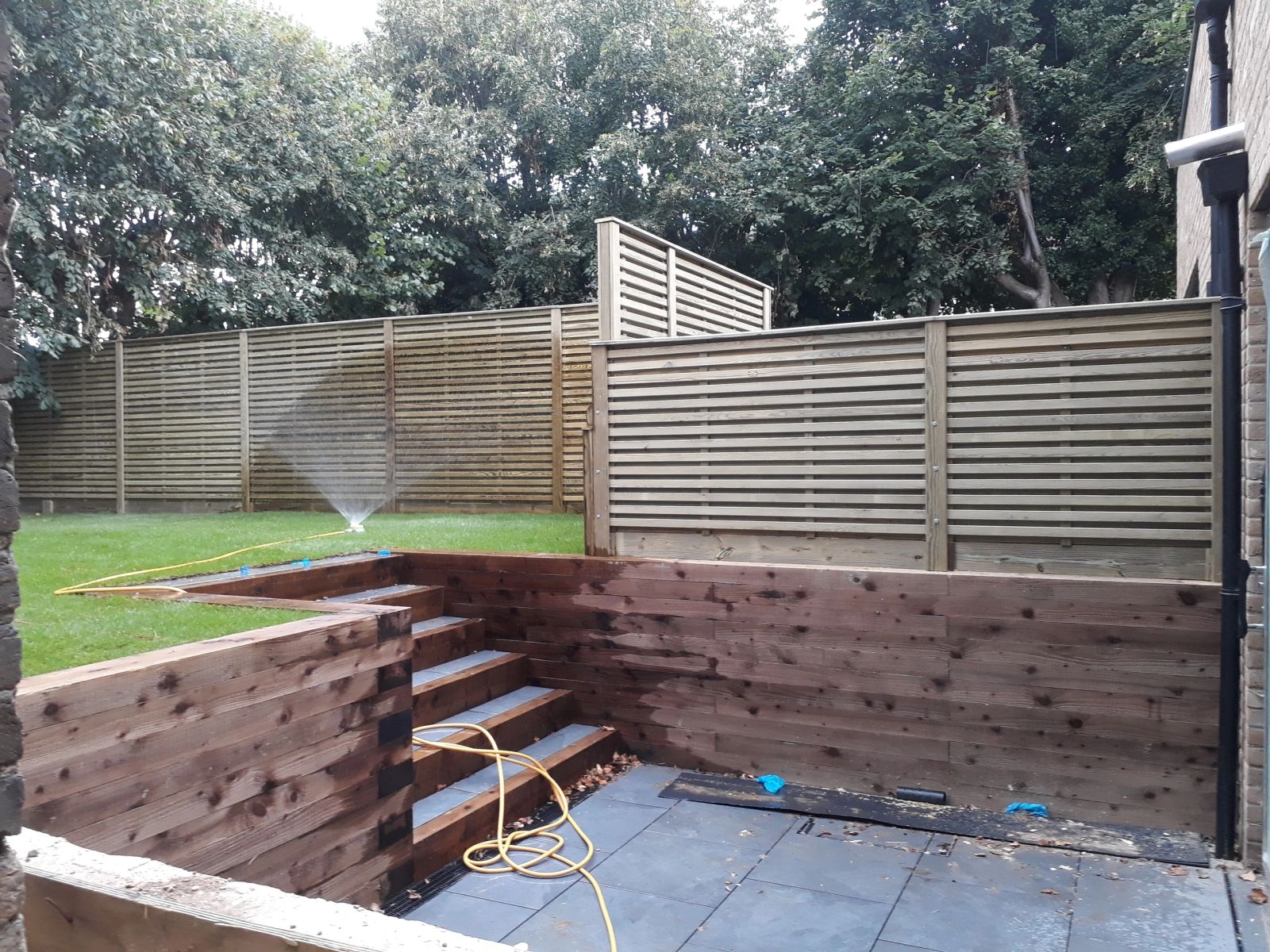
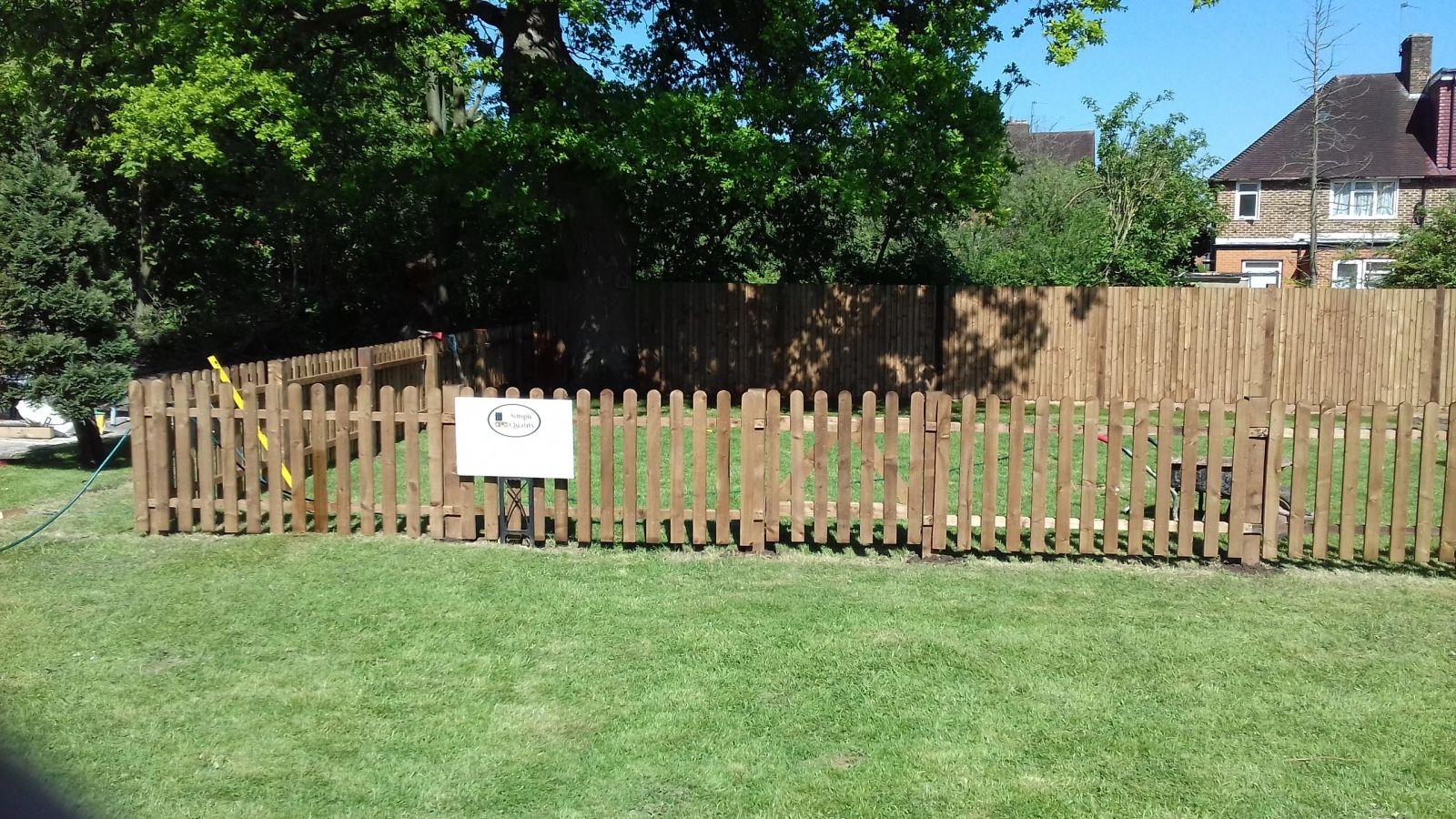
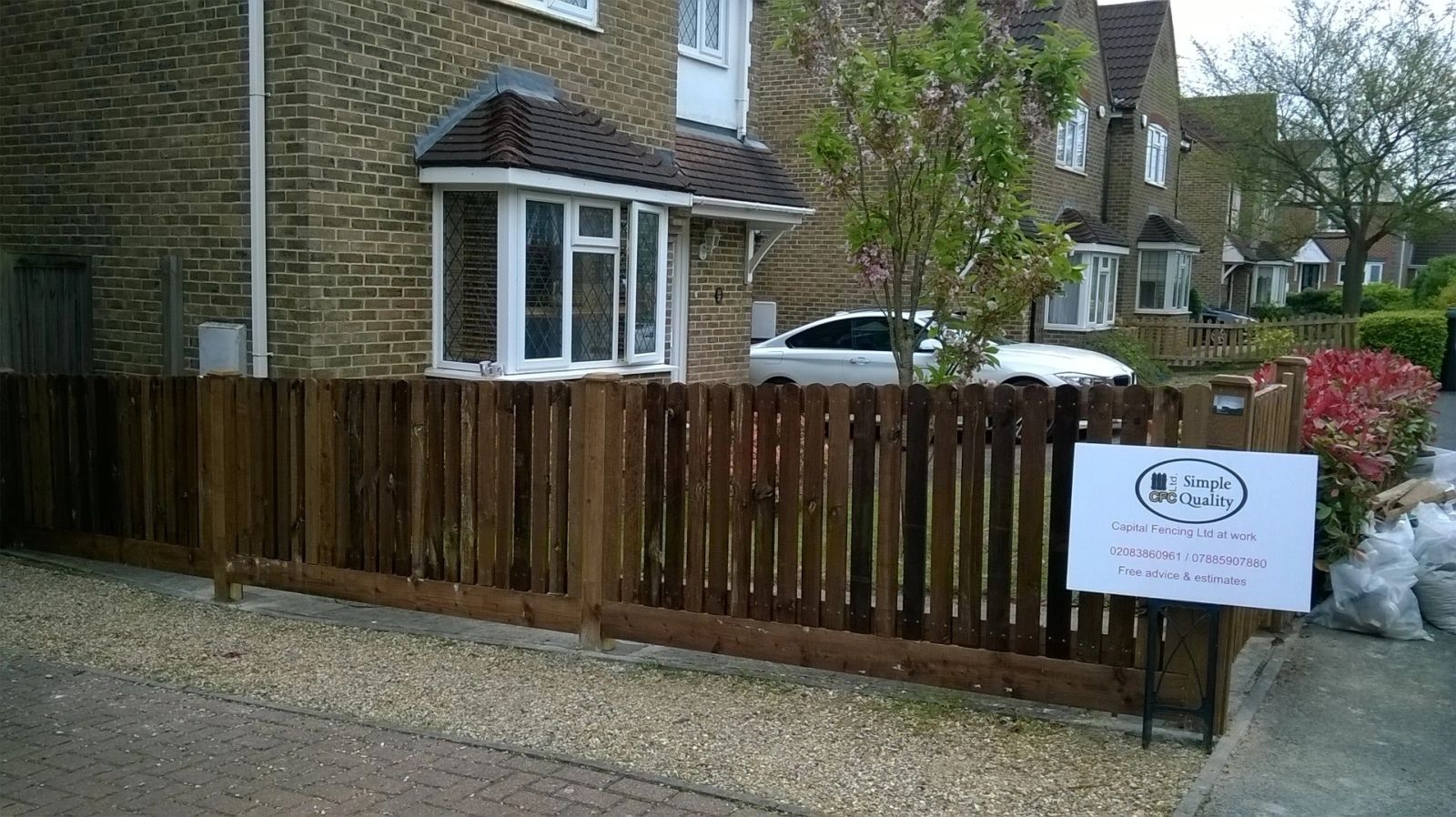
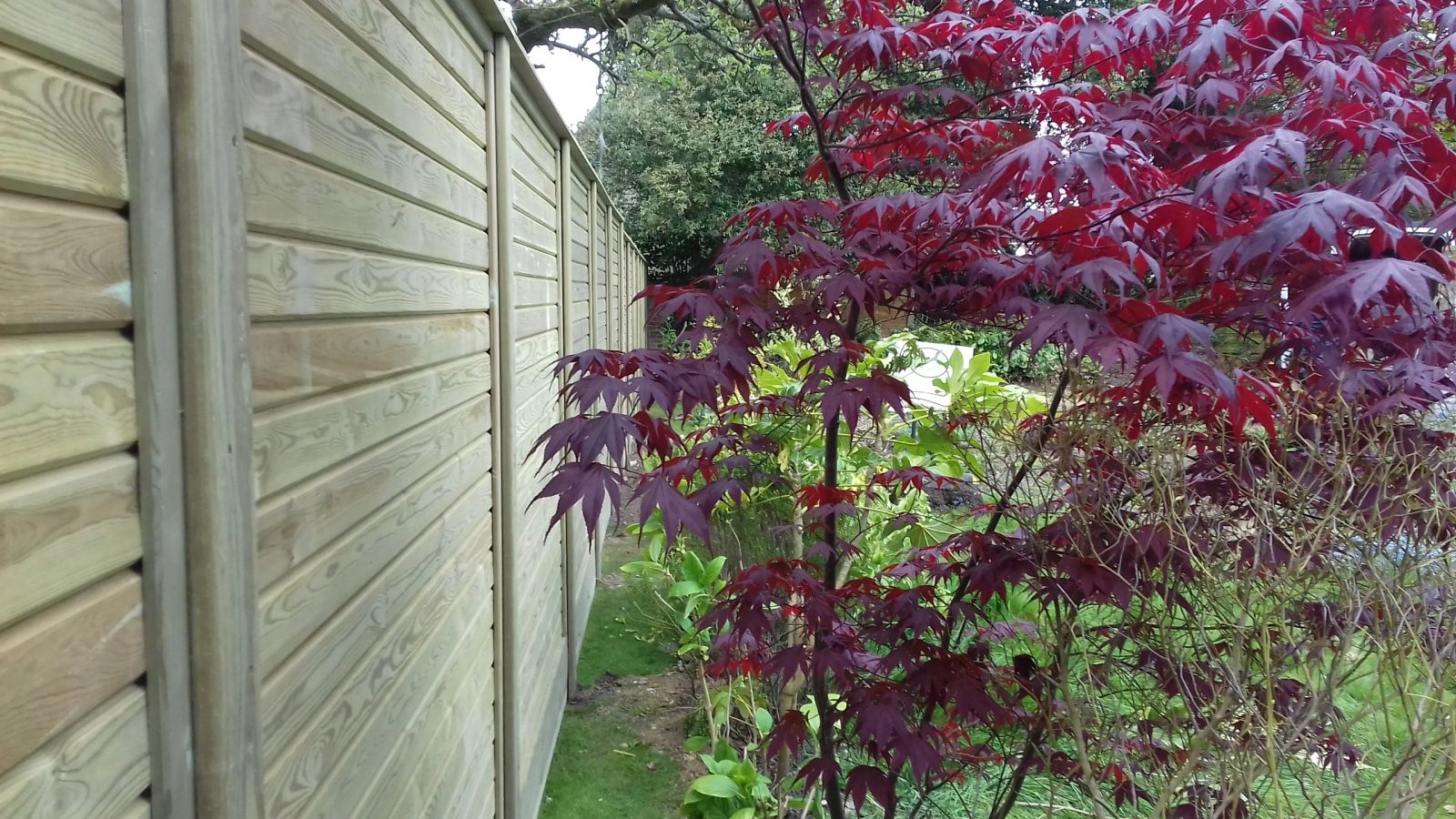
closeboard fence run installed by Capital Fencing in Welwyn Garden City (AL7)panel fence install installed by Capital Fencing in Welwyn Garden City (AL7)trellis-topped fence installed by Capital Fencing in Welwyn Garden City (AL7)bespoke decorative fence installed by Capital Fencing in Welwyn Garden City (AL7)

Site notes: commercial yard fencing in AL7

Headroom and ground clearance on a rising site

A gate hung across ground that rises from one side to the other needs enough clearance built into its swing to clear the highest point of that rise without the bottom rail dragging as it opens.

We measure ground level across the full arc of swing, not just at the gate posts, before setting hinge height on a sloping or uneven site.

Equestrian and paddock fencing basics

Post-and-rail is the standard equestrian boundary because it's forgiving on impact — a horse pushing against it is less likely to be injured than against wire or a rigid panel, and any wire used alongside timber rails needs to be clearly visible, not fine-gauge stock wire that a horse can't see.

Field gate widths for equestrian use are wider than a domestic garden gate, usually at least 3.6m, to allow a horse to be led through without crowding the gateposts.

Paddock fence lines also need checking for toxic hedge or tree species growing along the boundary, since horses can reach through post-and-rail in a way they can't through a solid fence.

Who owns which boundary

Boundary ownership in England isn't settled by which side the posts face — it's set by the title deeds, and where the deeds are silent the presumption (a T-mark on old Ordnance Survey-derived plans, or the 'ad medium filum' rule for some hedges) only gets you so far.

Before any post goes in we ask to see the deed plan, or at minimum agree the line and height with the neighbour in writing, because replacing a fence in the wrong place is a genuinely common and avoidable dispute.

Where ownership is contested we'll fit on the client's own side of the line rather than guess, even if that means a slightly narrower run.

Timber versus concrete gravel boards

A gravel board sits at the base of a fence panel to keep the panel itself clear of standing water and direct ground contact, which is where rot usually starts on an otherwise sound fence.

Timber gravel boards are cheaper and easier to match to a timber fence's finish, but need replacing more often than concrete boards, which resist rot indefinitely but can crack under impact and don't take a stain or paint finish as readily.

On a plot with poor drainage or a known damp problem, concrete gravel boards are usually the more economical long-term choice despite the higher initial cost.

Replacing broken trellis without disturbing the fence below

Trellis is usually fixed on top of a panel with its own separate posts or brackets, so a broken trellis section can normally be unbolted and replaced without touching the boundary fence it sits above.

Where the trellis has been nailed directly to the fence's own posts rather than fixed independently, a broken section is more likely to have taken the fence posts slightly out of plumb too, which is worth checking before assuming a simple like-for-like swap.

Latch and drop-bolt corrosion over a gate's lifecycle

A gate latch or drop bolt sees repeated mechanical wear on top of weather exposure, and standard zinc-plated steel components typically show surface corrosion and stiffening action within a few years of regular outdoor use.

Stainless steel or marine-grade fittings cost more initially but avoid the seized or snapped bolt that is one of the most common minor gate failures, particularly on a drop bolt that isn't operated daily and can seize unnoticed.

An annual light oiling of moving parts, alongside the general hinge check, keeps a latch mechanism working smoothly well beyond the point a neglected one would start sticking.

Moss build-up on shaded paths beside a north boundary fence

A path or step running alongside a permanently shaded north-facing fence often develops moss faster than the same surface elsewhere in the garden, since the fence itself blocks low winter sun that would otherwise help the surface dry.

This isn't strictly a fence maintenance issue but is worth mentioning to clients, since a fence replacement project is often the moment a client is already thinking about that part of the garden and receptive to fixing a related slip hazard at the same time.

A lighter, more open fence design along that boundary, where privacy allows, can let in enough additional light to measurably reduce moss growth on the path beside it.

Ecology checks and protected species on boundary sites

Removing a mature hedge, dense scrub or an old fence with ivy growth can disturb species protected under the Wildlife and Countryside Act, and on larger or commercial sites a preliminary ecological appraisal is often required before consent is granted for the works.

Bats in particular can roost in gaps behind old fascia boards, dense ivy or timber sheds attached to a boundary, and disturbing a roost is an offence regardless of whether it was known about in advance.

Where a boundary feature shows signs of established wildlife use, a short ecological check before removal is a reasonable precaution on any job larger than a routine domestic fence swap.

Sapwood versus heartwood durability

Heartwood is the older, inner part of a tree trunk that's stopped conducting sap and often contains natural extractives that resist fungal decay, while sapwood is the outer, still-active layer with little inherent durability.

Species like oak and western red cedar owe much of their reputation for longevity to heartwood content, but any board can include a strip of pale sapwood at the edge that will rot faster than the rest of the same piece.

Because sawn fencing timber is rarely graded strictly by heartwood content, some sapwood is inevitable in most runs, which is exactly why preservative treatment matters even on naturally durable species.

Fence or gate height near roof-mounted solar panels

A tall fence, gate, or dense trellis topper built close to a boundary can cast shade onto a neighbouring roof-mounted solar array during parts of the day, which isn't usually a planning matter but can become a point of neighbourly friction worth being aware of.

This is a relatively new consideration compared with the traditional daylight and boundary height concerns, but is increasingly relevant as more households install solar panels close to shared boundaries.

Discussing height and position informally with a neighbour before installing a particularly tall boundary feature near their south-facing roof avoids a dispute that has no clear formal regulation to resolve it.

Hedge disputes and the high hedge complaint route

A hedge over 2m tall made up mainly of evergreen or semi-evergreen species can be the subject of a formal 'high hedge' complaint to the local council under the Anti-social Behaviour Act 2003, but only after direct attempts to resolve it with the neighbour have failed and a fee is paid.

The council can then issue a remedial notice requiring the hedge to be reduced to a specified height, enforceable in the same way as a planning enforcement notice, though it typically won't require complete removal.

This process is separate from ordinary fence or boundary work and doesn't apply to deciduous hedges or single ornamental trees, which fall under general nuisance and tree law instead.

Setting out a line over a sloping plot

On a slope, a string line pulled level between two posts of equal height will sit above the ground at one end and below it at the other, so setting out has to work from a boning rod or a laser level rather than the string alone.

The usual method is to fix the top and bottom posts first, establish the actual fall between them, then decide bay by bay whether intermediate posts step down in even drops or follow the ground continuously.

Getting this decision agreed before any post is concreted matters, because changing from a stepped to a raked layout partway along a run after posts are set means starting again.

Post cross-section and wind load resistance

A post's resistance to bending under wind load increases with the square of its cross-sectional depth in the direction the load is applied, meaning a modest increase in post thickness gives a disproportionately larger gain in stiffness.

This is why taller fences and larger gate leaves, which present more surface area to the wind, are specified with noticeably thicker posts rather than simply the same section set deeper, since depth alone doesn't address bending strength above ground.

Orientating a rectangular post section with its greater dimension facing the prevailing wind direction, where the panel design allows it, makes better use of the timber's strength than an arbitrary orientation chosen for appearance alone.

Snapped concrete posts and slotted-panel swaps

A slotted concrete post system lets a panel be lifted out and a new one dropped in without disturbing the posts either side, which makes panel replacement quick, but the post itself is far less forgiving to repair once it's cracked or snapped.

A snapped concrete post is generally replaced outright rather than patched, since a repaired crack under load doesn't reliably hold the same weight as the original casting.

Party wall notices and communication

The Party Wall etc. Act 1996 covers work to a shared wall or excavation near a neighbour's foundations, and while an ordinary timber fence on a boundary line usually falls outside it, a new masonry boundary wall built astride the line, or deep post holes close to a neighbour's foundations, can bring it into play.

Where the Act applies, formal written notice is required before work starts, giving the neighbour a defined period to consent or dissent, and proceeding without notice risks an injunction even on otherwise straightforward work.

Even where the Act doesn't strictly apply, a simple letter or conversation confirming line, height and access before work starts avoids most of the disputes that end up needing formal resolution.

Restrictive covenants on newer estates

Many post-war and modern estates carry restrictive covenants in the original transfer deeds that go beyond planning law, commonly limiting fence height, requiring a specific style, or banning solid boundary treatments on front gardens entirely to preserve open-plan sightlines.

These covenants are a private legal matter between landowner and the estate's management company or original developer, so full planning permission being unnecessary doesn't mean the fence is automatically allowed.

Breach of covenant is usually enforced by a neighbour, resident's association or management company rather than the council, and can result in a requirement to remove the work at the owner's cost, so checking the title register for covenants before ordering is worthwhile on any estate build.

Screw pull-out values in timber

A screw's resistance to being pulled straight out of timber depends on thread depth, shank diameter and the density of the timber it's driven into, with denser hardwoods offering significantly higher pull-out resistance than softwoods for the same screw.

Coarse-thread screws designed for softwood construction generally have deeper, wider-spaced threads than fine-thread screws intended for hardwood or metal, since softwood's lower density needs more thread engagement to achieve comparable grip.

Pre-drilling a pilot hole reduces the risk of splitting dense or knotty timber but also slightly reduces ultimate pull-out resistance compared with a screw self-tapping fully into undrilled timber, which is a trade-off worth balancing against the specific timber and screw.

Compression versus tension fixing of infill panels

Some panel systems clip into a compression-fit channel between posts, relying on the panel being cut to a precise size to stay in place under load; others are bolted under tension to the post face, which tolerates more variation in panel size but adds visible fixing points.

Compression-fit systems look cleaner but are harder to make tamper-resistant, since a panel that can be removed without tools for maintenance can usually also be removed without tools by someone else.

Disposing of rotten timber and green waste from a repair

Rotten fence timber is general waste rather than green waste, and larger quantities from a full-run repair usually need a licensed waste carrier or a permitted tip run rather than a domestic green bin, which only takes garden material.

Treated timber in particular shouldn't be burned on site, since older treatments can contain preservatives that produce harmful smoke, so timber waste from a repair should be taken away rather than disposed of on the plot.

Tongue-and-groove privacy panels

Tongue-and-groove boards interlock edge to edge with no overlap, giving a genuinely solid, gap-free face that's the most private board profile available in timber fencing.

Because the boards key into each other rather than overlapping, the panel needs to be built with a small allowance for seasonal swelling, or the interlocking edges can bind and cup as the timber moves.

It's a heavier, stiffer panel than lap or slatted profiles, so it's usually paired with more substantial posts, and it's a common choice for pool or hot-tub screening where sightlines matter more than airflow.

Boundary fencing on land in a flood risk zone

Properties within a designated flood risk zone can be subject to additional requirements around solid boundary structures that might obstruct floodwater flow across the site.

A solid close-boarded fence can behave differently to a more open picket or post-and-rail design when it comes to how water moves through a garden during a flood event.

Where flood risk mapping shows a property is affected, checking with the local authority or Environment Agency for any relevant guidance is sensible before choosing a boundary style.

Estate gates hung from masonry piers

An estate-style gate is often hung from brick or stone piers rather than timber posts, which changes the repair approach entirely since a loose hinge fixing means re-drilling or resin-fixing into masonry rather than replacing a post.

Pier movement itself, from ground settlement or frost heave, can throw two gates out of alignment with each other even when both gates and their hinges are otherwise sound.

Commercial Yard Fencing across AL7, AL8 is a regular run for us. We'll quote honestly, tell you if commercial yard fencing isn't the right answer for your site, and book the job in within a week or two of a signed quote. hot-dip galvanised, RAL-coded and installed to a 25-year service life. Roads such as Handside Lane and Digswell Road are typical of the local layout. Stanborough Lakes is a useful local reference point. The Garden City Movement's design principles, associated with Ebenezer Howard, are still referenced informally by residents on streets such as Applecroft and Handside.

Get In Touch

Get My Free Quote — 24h Response

No callout fee · Free site visit · Friendly local team covering London & Hertfordshire.

Call us
07885907880
or 02036484746
Email
capital_fencing@yahoo.com
WhatsApp
Message us anytime
Area
London & Hertfordshire
Payment
Card payments accepted

Pay by debit or credit card, bank transfer or cash once the work and price are agreed. No deposit taken online.

Request a Free Quote

We'll get back to you within 24 hours.

Free Site Visit No Callout Fee
Call WhatsAppQuote