London & Hertfordshire Free Site Visit
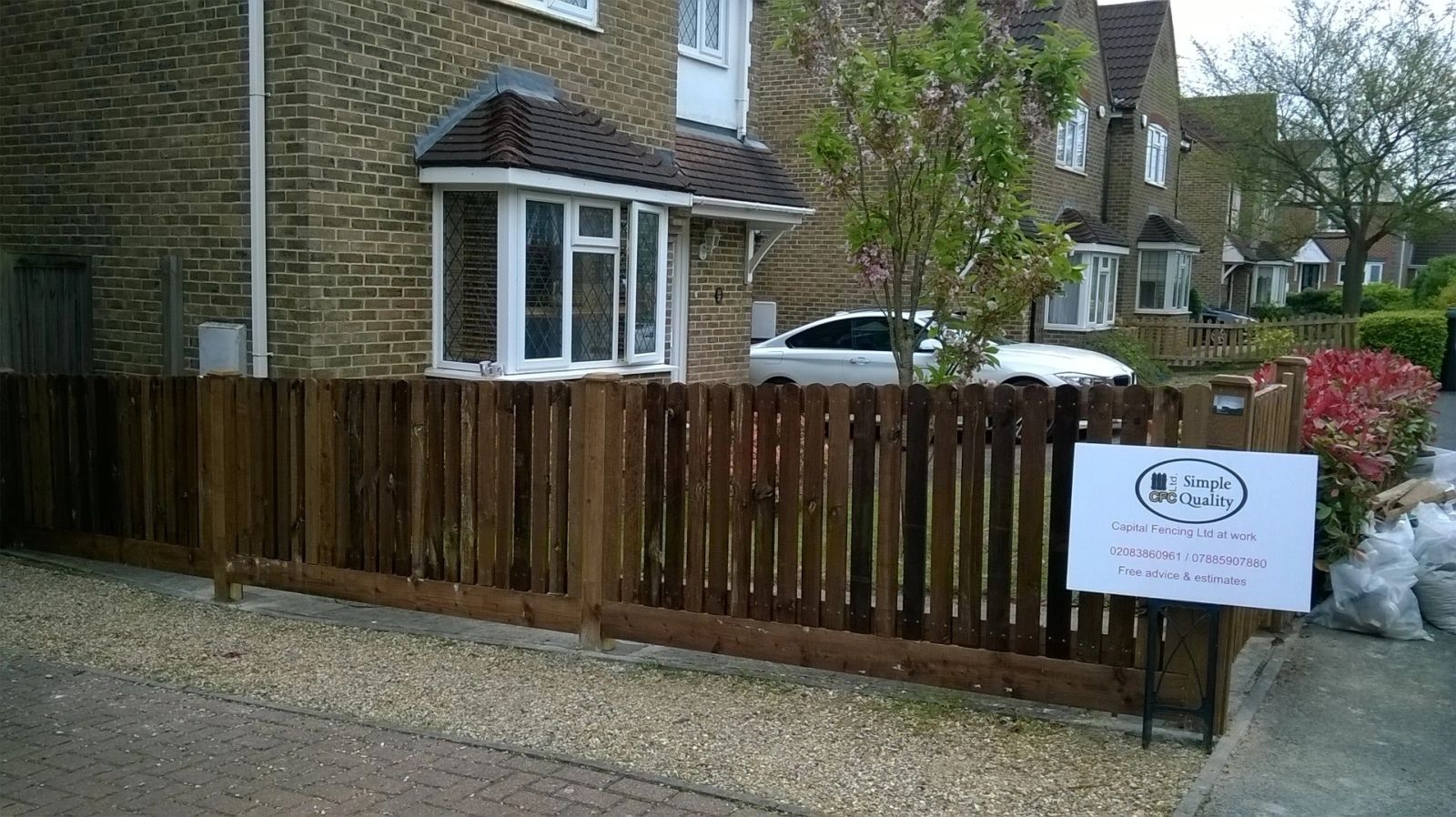
closeboard fence run installed by Capital Fencing in Hertford (SG13)
Hertford · SG13 / SG14

Local commercial yard fencing specialist covering Hertford & ware

Capital Fencing installs commercial yard fencing across Hertford and out toward ware and hoddesdon. What separates a commercial yard fencing job from a standard boundary is the detail: 2.4m palisade perimeter with anti-climb spike and matching double vehicle gates. That's the work, not the marketing. Roads such as Bengeo Street and Port Vale are typical of the local layout. Hertford Castle grounds is a useful local reference point. The Bengeo ridge to the north sits on higher, better-draining ground than the river-level streets below it.

Capital Fencing installs commercial yard fencing across Hertford and out toward ware and hoddesdon. What separates a commercial yard fencing job from a standard boundary is the detail: 2.4m palisade perimeter with anti-climb spike and matching double vehicle gates. That's the work, not the marketing. Roads such as Bengeo Street and Port Vale are typical of the local layout. Hertford Castle grounds is a useful local reference point. The Bengeo ridge to the north sits on higher, better-draining ground than the river-level streets below it.

Typical commercial yard fencing briefs in Hertford

  • 2.4m palisade perimeter with anti-climb spike and matching double vehicle gates
  • hoop-top mesh around a client-visitor forecourt where palisade would look wrong

Why this spec, for trade yards, self-storage sites, workshops and small industrial units

  • hot-dip galvanised then powder-coated finishes carry a 25-year service life on a working yard
  • gate posts sized for daily commercial cycle counts rather than domestic once-a-day operation
  • we co-ordinate with the alarm and CCTV installer so cabling routes through the posts, not around them
Default spec

How we build commercial yard fencing in Hertford

2.4m palisade or 358 weld-mesh, hot-dip galvanised then RAL-coded powder-coat, concrete-set 100SHS or 76CHS line posts. On Hertford jobs we adjust for conservation areas and listed buildings around the castle restrict heights and finishes.

Property mix locally: Georgian and Victorian townhouses in the centre, with newer estates on the Bengeo and Sele Farm sides. Typical gardens: long, sloping plots dropping toward the River Lea — terracing and retaining work are often part of the job. Postcodes we regularly service: SG13, SG14.

Where commercial yard fencing isn't the right answer

  • premises with a landlord who prohibits perimeter modifications without formal Section 26 notice
  • client-visitor frontages where a soft timber-fronted boundary is on brand and palisade isn't

Commercial Yard Fencing FAQs — Hertford

What's the lead time on made-to-measure commercial gates?

On commercial yard fencing jobs in Hertford (SG13), our default answer is: 2.4m palisade or 358 weld-mesh, hot-dip galvanised then RAL-coded powder-coat, concrete-set 100SHS or 76CHS line posts. For context: gate posts sized for daily commercial cycle counts rather than domestic once-a-day operation. Hot-dip galvanised, RAL-coded and installed to a 25-year service life.

Can you match an existing colour on my other units?

Across Hertford we spec around conservation areas and listed buildings around the castle restrict heights and finishes, so on commercial yard fencing that usually means palisade for hard perimeter security. For context: gate posts sized for daily commercial cycle counts rather than domestic once-a-day operation. Hot-dip galvanised, RAL-coded and installed to a 25-year service life.

How long does hot-dip galvanised fencing last on a working yard?

East Hertfordshire District coverage means we can survey most SG13 addresses inside a week — trade yards, self-storage sites, workshops and small industrial units. The honest trade-off is specifying domestic-grade hinges on a gate opening 40 times a day — six-month failure — which is exactly what our default spec designs out.

Do you carry public liability suitable for occupied commercial sites?

Practically: 2.4m palisade perimeter with anti-climb spike and matching double vehicle gates. That's the Hertford version of this job, not a generic one. For context: gate posts sized for daily commercial cycle counts rather than domestic once-a-day operation. Hot-dip galvanised, RAL-coded and installed to a 25-year service life.

Palisade or weld-mesh — which fits my site?

On commercial yard fencing jobs in Hertford (SG13), our default answer is: 2.4m palisade or 358 weld-mesh, hot-dip galvanised then RAL-coded powder-coat, concrete-set 100SHS or 76CHS line posts. The honest trade-off is specifying domestic-grade hinges on a gate opening 40 times a day — six-month failure — which is exactly what our default spec designs out.

Recent commercial yard fencing work
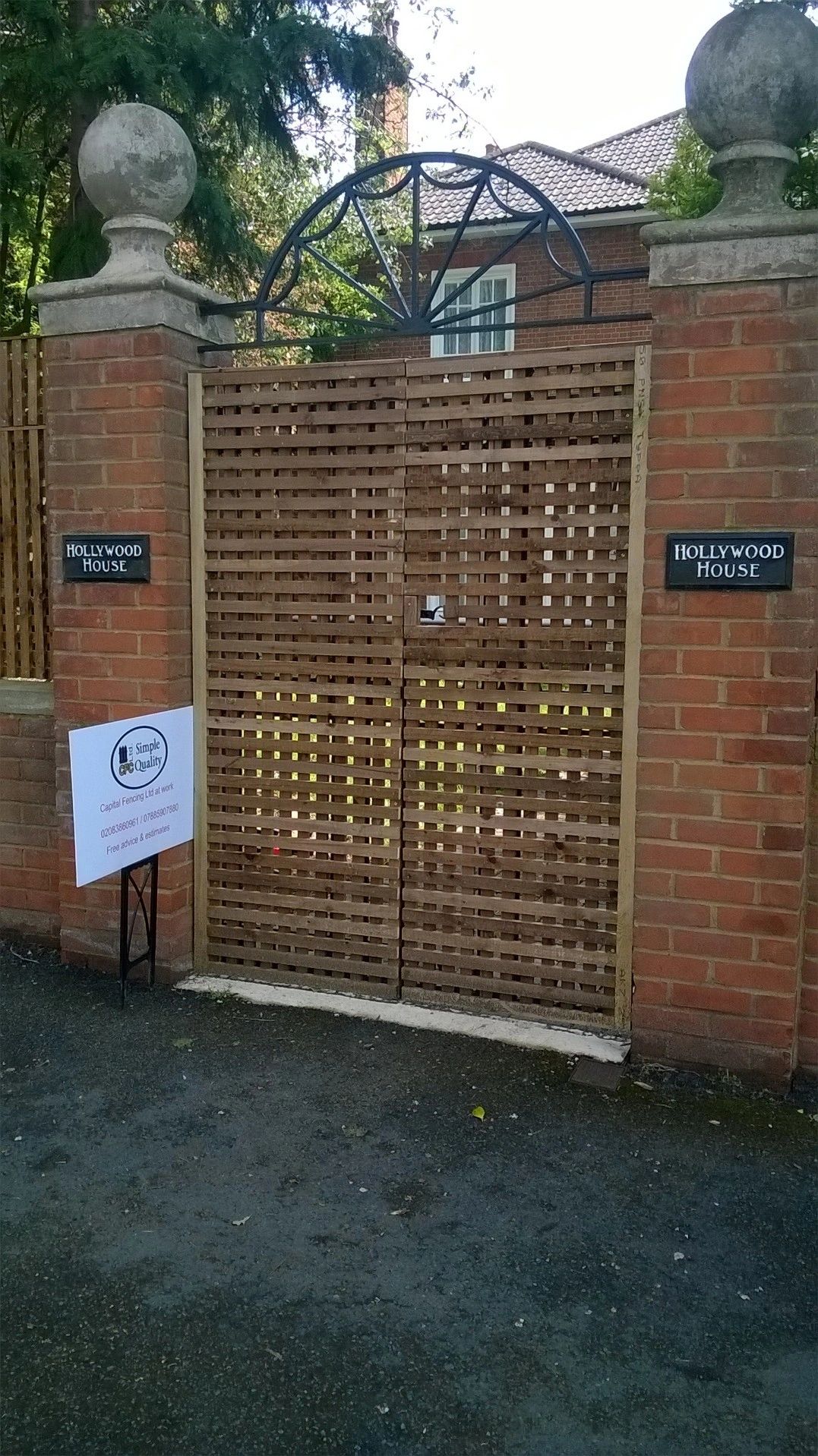
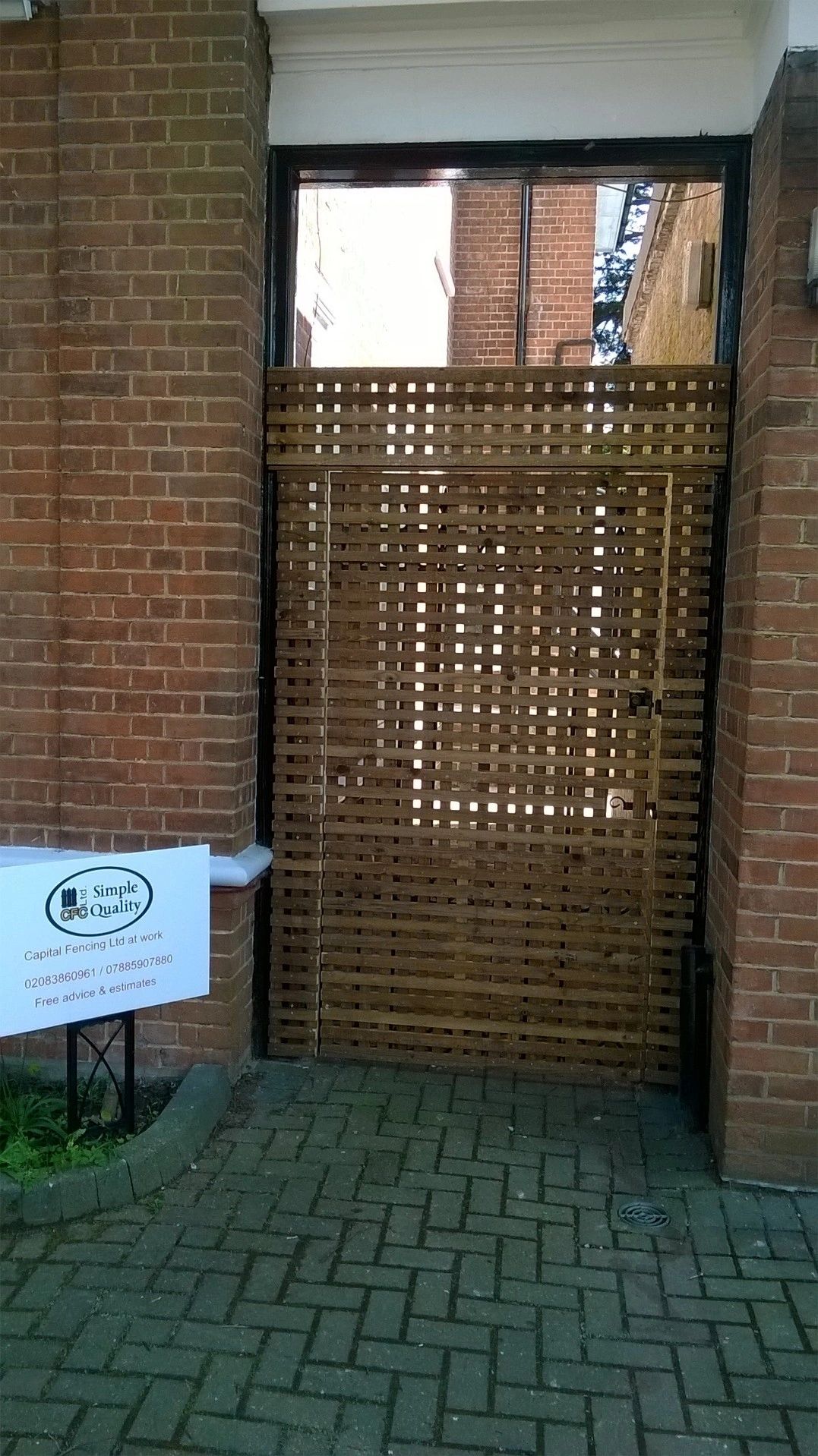
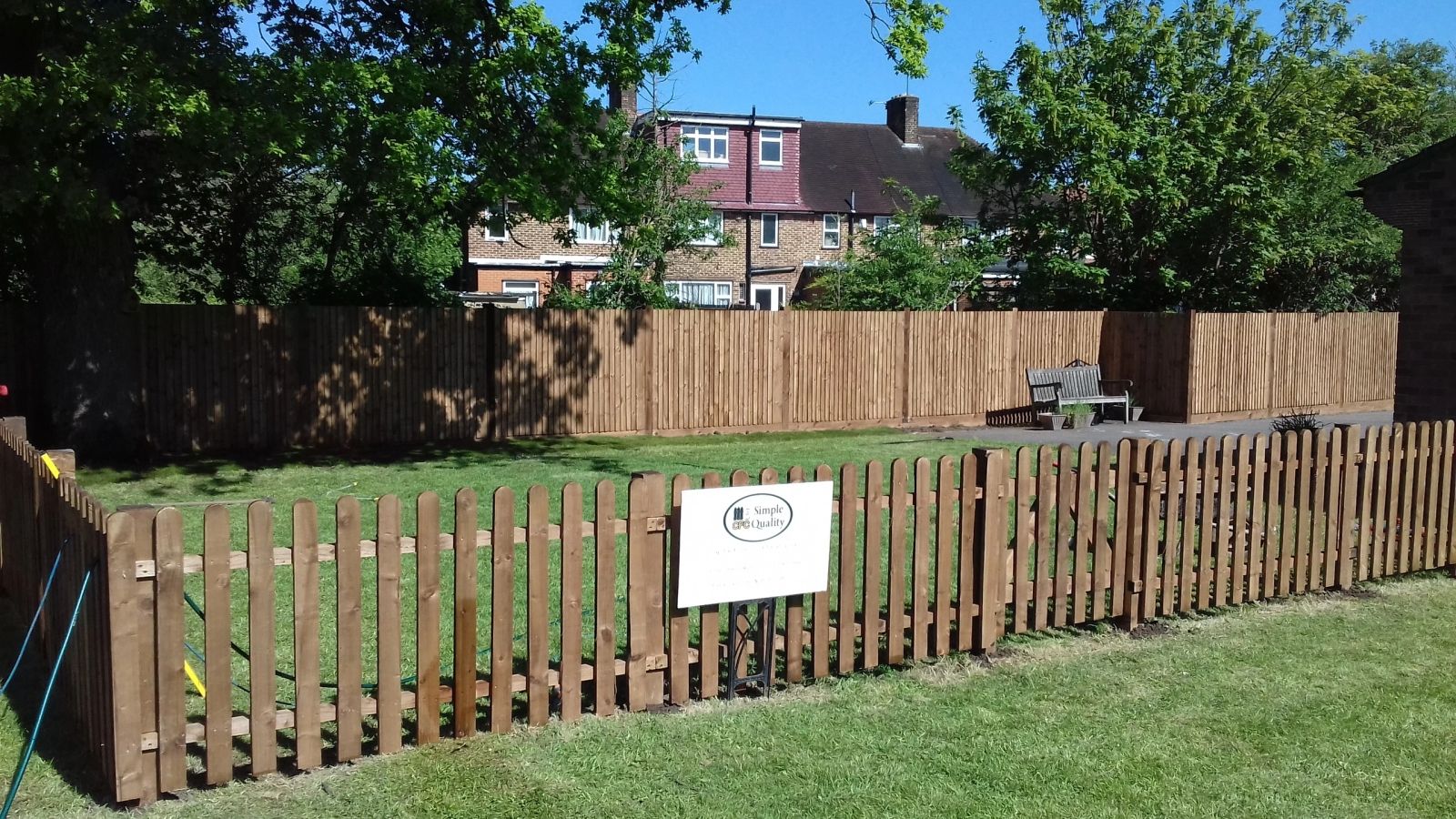
closeboard fence run installed by Capital Fencing in Hertford (SG13)panel fence install installed by Capital Fencing in Hertford (SG13)trellis-topped fence installed by Capital Fencing in Hertford (SG13)bespoke decorative fence installed by Capital Fencing in Hertford (SG13)

Site notes: commercial yard fencing in SG13

Perimeter security at a GP surgery or health centre

A GP surgery boundary balances public accessibility during opening hours against protecting drug storage, equipment and the building itself outside them, so a low decorative frontage often gives way to a more solid, higher fence around plant areas, bin stores and rear access at the same site.

Step-free, wide gate openings are needed anywhere patients using wheelchairs or mobility aids pass through the boundary, which can constrain gate hardware choices compared with a purely commercial yard.

Sleeper thresholds beneath field and driveway gates

A timber or concrete sleeper set into the ground beneath a wide field or driveway gate gives the gate's bottom edge a firm, level reference to close against, preventing the bottom rail from dropping into soft or rutted ground over time.

This detail is particularly useful on unsurfaced openings where the ground either side of the gate sees regular vehicle or livestock traffic and would otherwise rut unevenly.

Stumps in the fence line

An old hedge or tree stump sitting directly on the new fence line needs grinding or digging out before a post can go in, since a post set against or on top of decaying root wood will eventually settle as that timber breaks down.

Stump grinding leaves a mix of wood chip and soil that compacts poorly, so backfilling a post hole in that material generally needs a wider excavation and imported hardcore rather than reusing the arisings.

Where a stump is close to but not on the line, it's often quicker to shift the post position slightly than to fully remove a large root system.

Post anchor sockets versus set-in posts

A bolt-down or drive-in post anchor holds a timber post entirely above ground level, isolating the post's end grain from the direct soil and moisture contact it would face if simply set into a concreted hole.

Because the post itself never touches the ground, anchor-mounted posts largely avoid the ground-line rot that's the single most common failure point for concreted posts, though the anchor and its fixings become the new focus for corrosion.

Anchors do transfer more concentrated leverage into a smaller fixing area at the base than a post set deep in concrete, so they generally need a correspondingly larger or deeper concrete footing beneath them for the same wind load.

Gate widths for cycle access

A side gate wide enough for a wheelbarrow isn't automatically wide enough for a cargo bike or a bike with panniers, which is worth checking against the actual bikes a household owns rather than a generic standard width.

Cycle storage tucked behind a side gate also needs a gate that can be propped open safely while wheeling a bike through, rather than one that swings shut under its own weight mid-manoeuvre.

Where cycle access is a genuine daily-use requirement, a slightly wider opening at quote stage is a cheap addition compared with widening an existing narrow gate later.

Inspecting welded joints on mesh panel frames

A welded mesh panel's frame corners are a common early failure point under repeated wind loading or impact, since a poor weld can crack internally while still looking intact from the outside until the joint finally gives way.

A visual check for hairline cracking, rust bleeding from a joint, or slight movement when the frame corner is pushed by hand can catch a failing weld before the panel actually comes loose from its post.

Non-slip decking finishes

A grooved board profile gives some grip when dry but can still become slippery once algae builds up in a shaded or north-facing spot, which is a maintenance issue rather than something a profile alone solves permanently.

Anti-slip decking strips or grit-impregnated coatings can be added to steps and high-traffic areas as a supplementary measure, and are worth specifying on steps or ramps even where the main deck area doesn't need them.

Some composite ranges are manufactured with a textured or embossed surface aimed specifically at slip resistance, which is worth checking against a wet-slip rating rather than assuming all composite boards perform the same underfoot.

Making a storm-damaged fence temporarily safe before full repair

Where a fence has failed suddenly — a fallen tree, a collapsed panel — and a full repair can't happen immediately, propping the affected section and taping off the area reduces the immediate risk to people or pets before proper repair work starts.

A temporary make-safe isn't a substitute for the repair itself, and a client should understand it's a stop-gap measure rather than something that resolves the underlying failure.

Dog damage and low-level reinforcement

Repeated pushing, chewing or digging by a dog tends to damage the lowest section of a fence first, since that's the section within reach and the section closest to any dug-out gap at ground level.

Reinforcing the repaired section with a mesh liner or a kickboard behind the lower boards addresses the recurring cause rather than just replacing the damaged timber.

Retrospective applications and planning appeals

A retrospective planning application can be made for work already carried out without permission, and is assessed against exactly the same policies as if it had been applied for in advance, so there's no guarantee of a more lenient outcome simply because the fence already exists.

If a retrospective application or an enforcement notice is refused or unfavourable, there's a right of appeal to the Planning Inspectorate, but appeals take months to determine and the structure may need to remain unchanged or be altered in the meantime depending on the notice.

It's worth noting that a refused retrospective application still leaves the underlying breach live, so appealing or reapplying with a revised, compliant design is often quicker than contesting the principle of refusal.

When a boundary camera becomes part of a wider dispute

Boundary and fencing disagreements sometimes escalate to include complaints about cameras, lighting or noise, which can broaden a straightforward property dispute into several overlapping issues at once.

Keeping these strands separate in any correspondence — addressing the boundary question and any camera or nuisance concern individually — tends to keep discussions more focused and productive.

Where a dispute has genuinely broadened like this, a mediator or solicitor experienced in neighbour disputes more generally, rather than boundary-only expertise, may be the more useful next step.

Tree roots and Tree Preservation Orders

Mature trees close to a boundary do two things to a fence: their roots can heave a post out of true over several years, and if the tree is protected by a Tree Preservation Order or sits in a conservation area, digging within its root protection area needs care and sometimes council sign-off.

Where roots are already present we'll usually hand-dig around them rather than auger through, and set the post slightly off the direct line if that avoids cutting a structural root.

It's worth checking with the local authority's tree officer before any excavation near a TPO tree, since unauthorised root damage carries the same penalties as felling the tree itself.

Minimum clear width for pedestrian gate access

A pedestrian gate needs enough clear width once open to comfortably pass through with hands full, a pushchair or a wheeled bin, and a gate that technically opens but leaves very little usable width against an adjacent wall or post is a common design oversight on tight side returns.

Checking the actual clear opening, not just the gate leaf's nominal width, avoids this problem before a gate is ordered.

Positioning posts relative to existing paving slabs

A post position that lands directly on or straddling an existing paving slab or patio edge either means lifting and relaying that slab, or nudging the post along the line to land in a joint or open ground instead.

Where lifting a slab is unavoidable, checking what's bedded underneath — a solid mortar base rather than loose sand — before committing to reinstating it in the same spot avoids an unpleasant surprise partway through.

On a patio the client wants kept intact, agreeing acceptable post positions against the actual slab layout at the survey stage avoids a decision being made on the day between two imperfect options.

Scribing a gravel board to uneven ground

Ground level rarely runs perfectly straight between two posts, so a gravel board cut square often leaves a gap under one end and digs into the ground at the other unless it's scribed to follow the actual contour.

Scribing means holding the board in position, marking the ground profile onto its face, and cutting along that line so the board's bottom edge follows the undulation rather than an assumed flat datum.

On concrete gravel boards this isn't possible after casting, so uneven ground either needs the board bedded on a shaped mortar bed or a timber board used instead where the ground profile is particularly irregular.

Retail yards and car parks

Fencing around a retail unit's rear yard or customer car park usually has to satisfy insurer requirements for secured perimeters as well as simple boundary marking, particularly where stock or delivery cages are stored outside.

Vehicle impact is a real consideration in a car park boundary, and posts near a marked bay or turning circle are often specified heavier or protected by a bollard rather than relying on the fence itself to survive a low-speed shunt.

Work here is usually scheduled around trading hours and delivery windows, since blocking a rear yard during a delivery slot can hold up a retailer's whole day.

Corner visibility splays affecting fence height specifically

Some corner plots have a specific visibility splay condition attached to their planning history that limits fence, hedge or wall height at the junction to well below the normal 1m road-facing limit.

This is separate from the general permitted development height rule and takes precedence where it applies, since it's usually tied to road safety at a specific junction.

Checking the property's planning history for this kind of condition before fencing a corner plot boundary avoids building something that later needs cutting back.

Front boundary choices and kerb appeal

A front boundary is one of the first things anyone sees of a property, and low-key choices — a consistent gate style, tidy capping, a colour that complements the brickwork — do more for kerb appeal than an expensive but mismatched material choice.

Open or low front boundaries tend to suit properties where the frontage itself is attractive and worth showing off, while a higher, more solid front boundary suits a busier road or a desire for more privacy from passers-by.

It's worth thinking about a front boundary as a long-term fixture rather than following short-lived trends, since it's one of the more visible and slower-to-replace elements of a property's exterior.

Checking for older asbestos-containing gravel boards before repair

Some older fence installations used asbestos-cement gravel boards or panels, which look similar to concrete at a glance but need identifying and handling differently if disturbed during a repair.

Where a boundary fence predates the ban on asbestos cement products and shows a grey fibrous-looking board rather than standard reinforced concrete, it's worth having it checked before cutting, breaking or disposing of it as ordinary waste.

Rising butt hinges for self-lifting clearance

A rising butt hinge lifts the gate slightly as it opens, which helps it clear a rug, threshold upstand or slightly uneven paving that a standard hinge would catch on, then lowers it again as it closes.

They're more common on side gates and garden doors than on driveway gates, where the clearance problem they solve is less likely to occur.

Self-storage and depot perimeters

Self-storage sites and vehicle depots typically run a continuous high-security perimeter with limited access points, and any repair work has to maintain that perimeter's integrity throughout rather than leaving a gap open overnight.

Because these sites often operate extended or 24-hour access for customers or drivers, fencing work needs scheduling around live access hours, with any section requiring full closure agreed and communicated in advance.

Lighting and CCTV mounted on perimeter fencing at these sites adds a coordination step most domestic jobs don't have — services need identifying and protecting before any post is removed or reset.

Using wall plates to transition timber to masonry

A wall plate — a length of timber bolted flat to a masonry wall — gives a stable timber fixing point for arris rails or panel frames to run into, avoiding the need to drill and plug the wall at every rail height individually.

Setting the plate slightly proud of the wall face with packers behind it can help keep it clear of surface damp on an older solid wall, rather than fixing it flush against a face that holds moisture.

The bolts holding the plate need to be sized for the wall material — heavier-duty fixings for old lime-mortar brickwork than for modern dense blockwork — since an undersized fixing can work loose under repeated wind load on the panels.

Commercial Yard Fencing across SG13, SG14 is a regular run for us. We'll quote honestly, tell you if commercial yard fencing isn't the right answer for your site, and book the job in within a week or two of a signed quote. hot-dip galvanised, RAL-coded and installed to a 25-year service life. Roads such as Ware Road and Hagsdell Road are typical of the local layout. McMullen brewery site is a useful local reference point. The conservation area through Castle Street limits visible boundary materials to traditional close-board or painted picket to protect the historic street scene.

Get In Touch

Get My Free Quote — 24h Response

No callout fee · Free site visit · Friendly local team covering London & Hertfordshire.

Call us
07885907880
or 02036484746
Email
capital_fencing@yahoo.com
WhatsApp
Message us anytime
Area
London & Hertfordshire
Payment
Card payments accepted

Pay by debit or credit card, bank transfer or cash once the work and price are agreed. No deposit taken online.

Request a Free Quote

We'll get back to you within 24 hours.

Free Site Visit No Callout Fee
Call WhatsAppQuote