London & Hertfordshire Free Site Visit
closeboard fence run installed by Capital Fencing in Ware (SG12)
Ware · SG12

Commercial Yard Fencing in Ware — Built for daily cycle counts, vehicle turning circles and CCTV integration

Capital Fencing installs commercial yard fencing across Ware and out toward hertford and hoddesdon. What separates a commercial yard fencing job from a standard boundary is the detail: 2.4m palisade perimeter with anti-climb spike and matching double vehicle gates. That's the work, not the marketing. Roads such as Star Street and Watton Road are typical of the local layout. Ware Priory is a useful local reference point. Ware Priory, a former Franciscan friary, sits on the riverbank in the town centre.

Capital Fencing installs commercial yard fencing across Ware and out toward hertford and hoddesdon. What separates a commercial yard fencing job from a standard boundary is the detail: 2.4m palisade perimeter with anti-climb spike and matching double vehicle gates. That's the work, not the marketing. Roads such as Star Street and Watton Road are typical of the local layout. Ware Priory is a useful local reference point. Ware Priory, a former Franciscan friary, sits on the riverbank in the town centre.

What goes wrong

Common failure modes on commercial yard fencing

  • specifying domestic-grade hinges on a gate opening 40 times a day — six-month failure
  • not accounting for the fork-lift or delivery vehicle turning circle — the corner post gets clipped in month one
Default spec

How we build commercial yard fencing in Ware

2.4m palisade or 358 weld-mesh, hot-dip galvanised then RAL-coded powder-coat, concrete-set 100SHS or 76CHS line posts. On Ware jobs we adjust for riverside plots can hit the water table within two spades — concrete-set posts and proper drainage are essential.

Property mix locally: Georgian and Victorian properties in the centre, with newer suburban estates around Wengeo Lane. Typical gardens: long thin riverside plots — many drop down to the New River and need retaining work. Postcodes we regularly service: SG12.

Why this spec, for trade yards, self-storage sites, workshops and small industrial units

  • hot-dip galvanised then powder-coated finishes carry a 25-year service life on a working yard
  • gate posts sized for daily commercial cycle counts rather than domestic once-a-day operation
  • we co-ordinate with the alarm and CCTV installer so cabling routes through the posts, not around them

Typical commercial yard fencing briefs in Ware

  • hoop-top mesh around a client-visitor forecourt where palisade would look wrong
  • 2.4m palisade perimeter with anti-climb spike and matching double vehicle gates

Commercial Yard Fencing FAQs — Ware

Can you match an existing colour on my other units?

On commercial yard fencing jobs in Ware (SG12), our default answer is: 2.4m palisade or 358 weld-mesh, hot-dip galvanised then RAL-coded powder-coat, concrete-set 100SHS or 76CHS line posts. For context: gate posts sized for daily commercial cycle counts rather than domestic once-a-day operation. Hot-dip galvanised, RAL-coded and installed to a 25-year service life.

How long does hot-dip galvanised fencing last on a working yard?

Across Ware we spec around riverside plots can hit the water table within two spades — concrete-set posts and proper drainage are essential, so on commercial yard fencing that usually means palisade for hard perimeter security. The honest trade-off is specifying domestic-grade hinges on a gate opening 40 times a day — six-month failure — which is exactly what our default spec designs out.

Do you carry public liability suitable for occupied commercial sites?

East Hertfordshire District coverage means we can survey most SG12 addresses inside a week — trade yards, self-storage sites, workshops and small industrial units. For context: gate posts sized for daily commercial cycle counts rather than domestic once-a-day operation. Hot-dip galvanised, RAL-coded and installed to a 25-year service life.

Palisade or weld-mesh — which fits my site?

Practically: 2.4m palisade perimeter with anti-climb spike and matching double vehicle gates. That's the Ware version of this job, not a generic one. The honest trade-off is specifying domestic-grade hinges on a gate opening 40 times a day — six-month failure — which is exactly what our default spec designs out.

What's the lead time on made-to-measure commercial gates?

On commercial yard fencing jobs in Ware (SG12), our default answer is: 2.4m palisade or 358 weld-mesh, hot-dip galvanised then RAL-coded powder-coat, concrete-set 100SHS or 76CHS line posts. We'll walk you through hot-dip galvanised then powder-coated finishes carry a 25-year service life on a working yard on the site visit before you commit.

Recent commercial yard fencing work
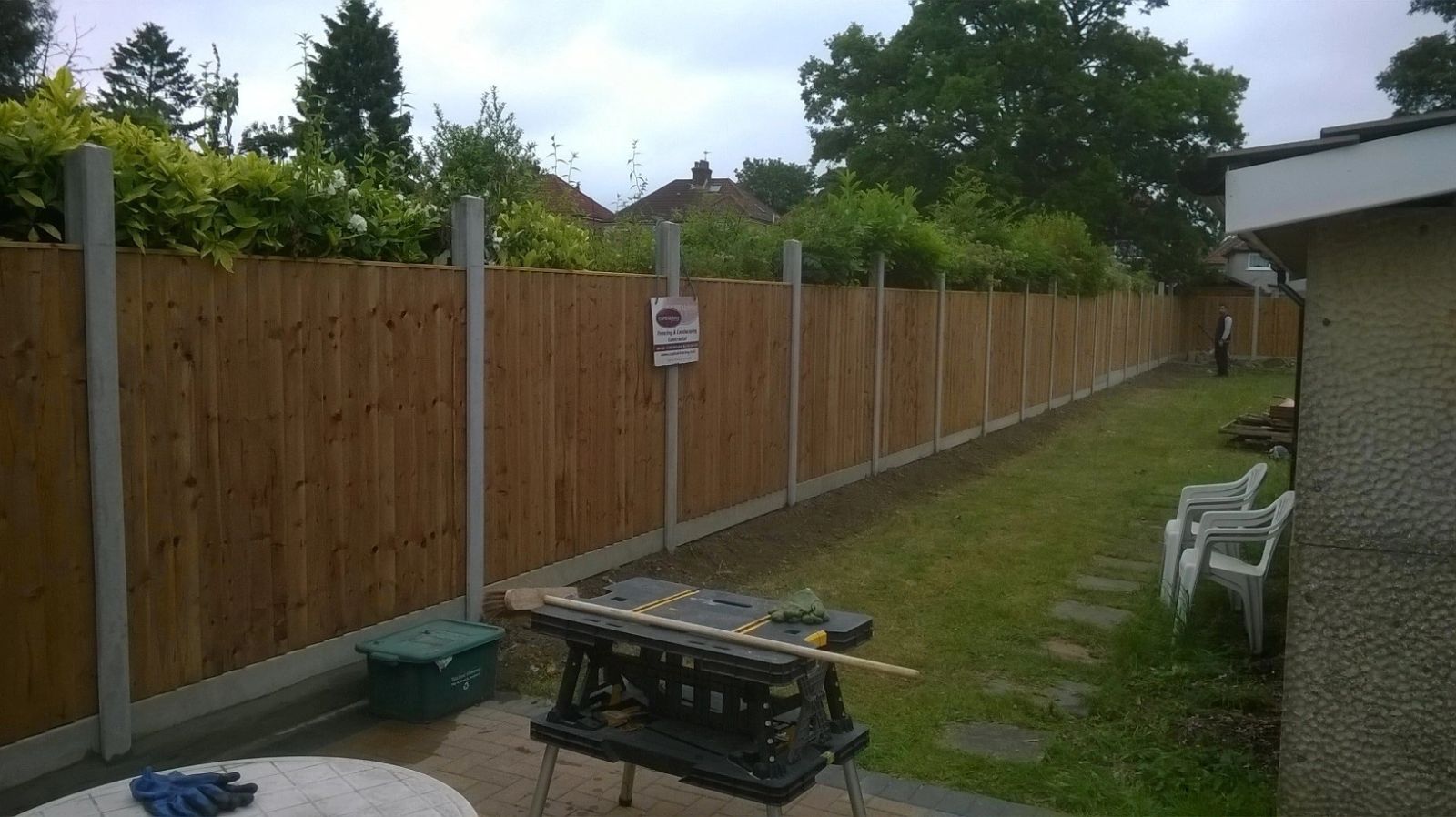
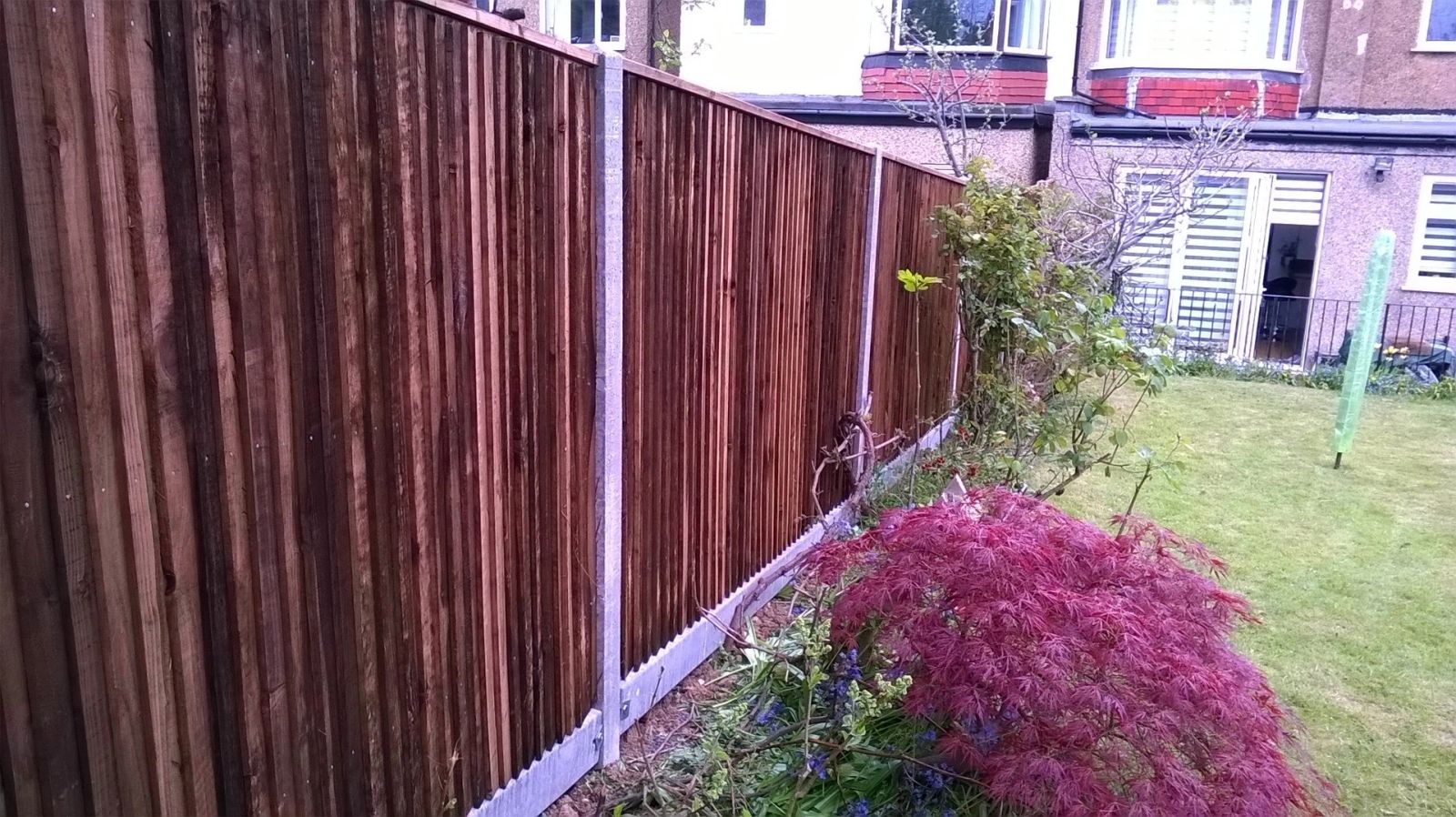
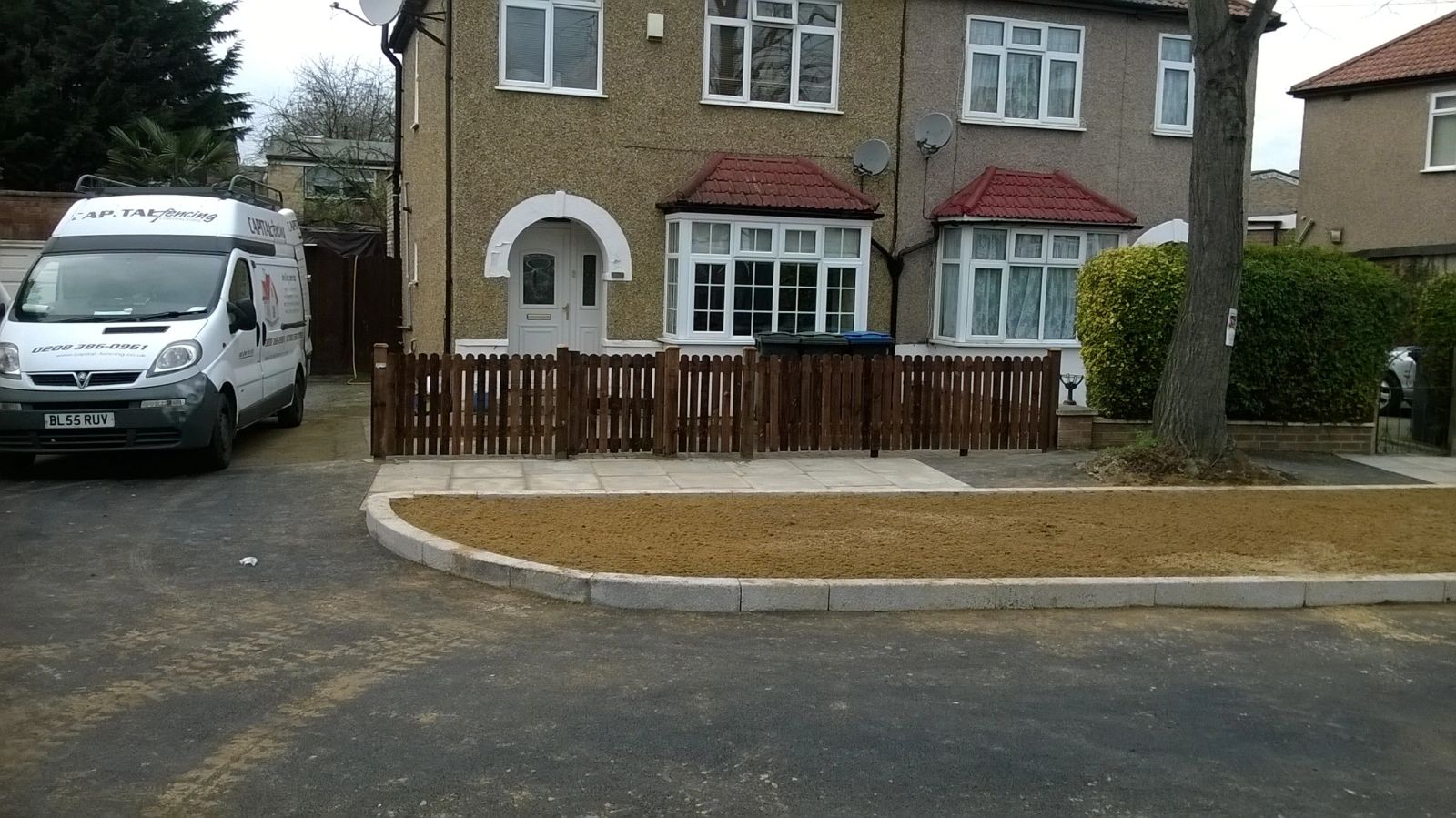
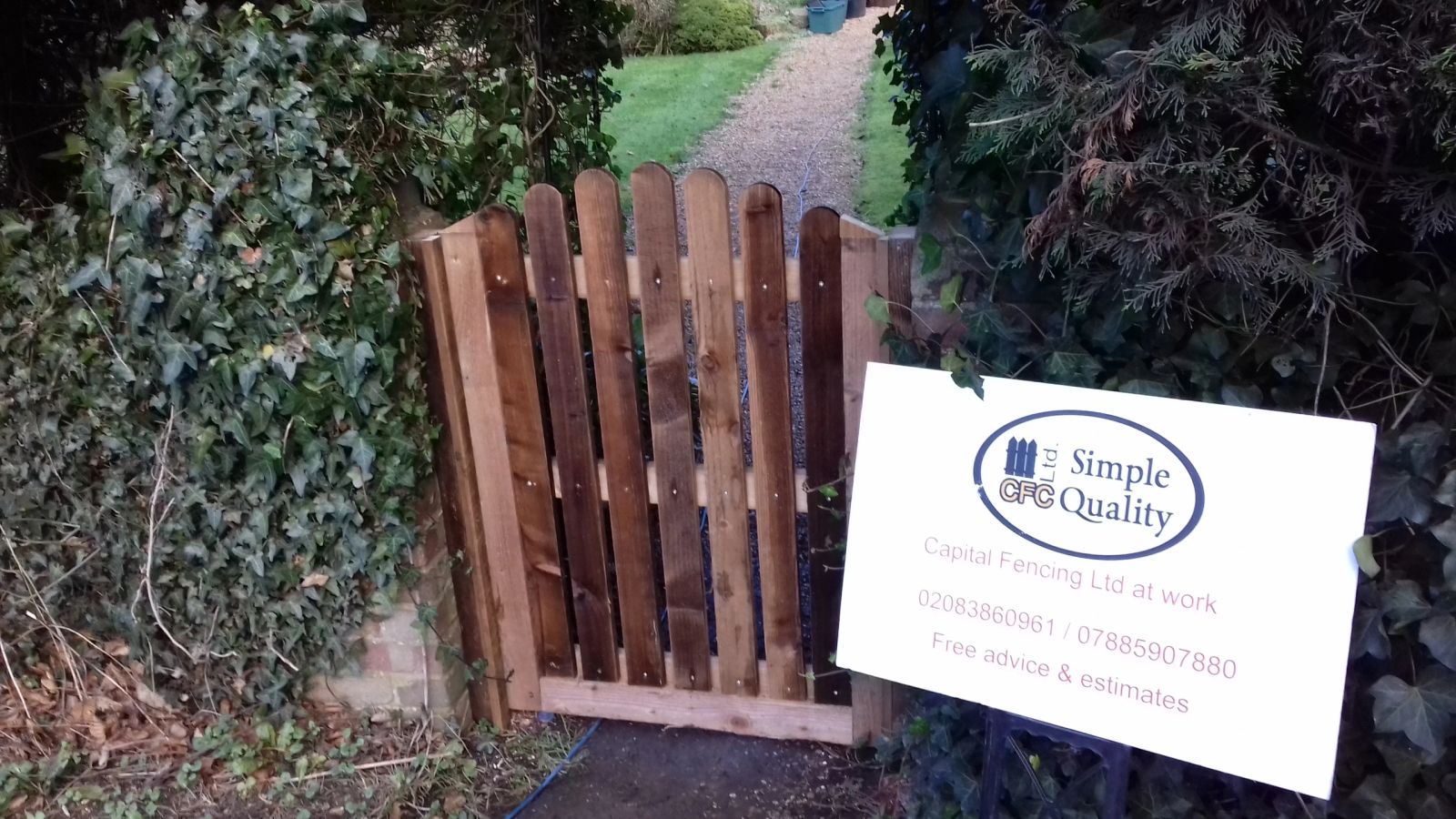
closeboard fence run installed by Capital Fencing in Ware (SG12)panel fence install installed by Capital Fencing in Ware (SG12)trellis-topped fence installed by Capital Fencing in Ware (SG12)bespoke decorative fence installed by Capital Fencing in Ware (SG12)

Before you book commercial yard fencing in Ware

Prioritising repairs ahead of the windier months

A post or panel that's borderline rather than fully failed is more likely to come down completely once autumn and winter storms start, so repairs identified in summer are worth scheduling before the exposed season rather than left until something actually blows over.

This is particularly relevant on exposed boundaries or end bays that have already shown signs of movement, since those are the sections most likely to fail first under wind load.

Concreted posts against bolted baseplates for a semi-permanent compound

A concreted post gives a stronger, more permanent fixing appropriate to a fence expected to stay in place indefinitely, but it's disruptive and costly to remove if the boundary line needs to move later, such as when a leased yard's layout changes.

A bolted baseplate fixed to an existing hardstanding trades some ultimate strength for the ability to relocate or remove the fence relatively cleanly, which suits a semi-permanent compound on a leased site better than a fully concreted installation.

Repairing post damage caused by an added light fitting or wiring

A post drilled to carry a solar light, festoon wiring or a mounted fitting has extra penetration points that can let water into the timber, accelerating rot at a spot that wouldn't otherwise be a weak point on that post.

Repair means addressing both the rot and, ideally, resealing or relocating the fitting so the same penetration doesn't cause the same damage again once the post section has been renewed.

Boundary structures on Green Belt land

Land designated as Green Belt carries additional planning restrictions aimed at preventing inappropriate development, which can extend to boundary treatments beyond the usual permitted development framework in some cases.

Most domestic garden fencing on an existing residential plot within the Green Belt is unaffected, but larger boundary structures or those on paddock and agricultural land nearby can be treated differently.

Checking with the local planning authority is the reliable way to confirm what applies to a specific Green Belt property before committing to a boundary project.

Aligning capping rail over a stepped run

Capping rail fitted along the top of a level fence run is a straightforward continuous fix, but on a stepped run each panel sits at its own level, so the capping has to be cut and joined at each step rather than run through in one length.

A clean joint at the step usually means mitring or scarfing the capping ends rather than butting them square, since a square joint leaves an open gap where the two levels meet.

Where the steps are shallow, some fitters run the capping level in short horizontal sections with a visible small drop at each post, which is faster to fit but reads as more obviously stepped than a mitred joint.

Consent needed to connect drainage across a boundary

Running a new drainage connection across a neighbouring property's land, sometimes done alongside boundary works, needs the neighbour's consent and possibly a formal easement, not just a friendly verbal understanding.

Water companies can also require notice for new connections joining an existing public sewer, separate from any neighbour agreement about crossing their land.

Where fencing work uncovers or affects a drainage connection crossing the boundary, it's worth pausing to confirm what rights actually exist before proceeding.

Matching paint or stain colour to an existing scheme

Replacing or refinishing a single gate on a property with an established fence or gate colour scheme needs the new finish matched as closely as possible, since a slightly different tone stands out far more on a single gate than it would across a whole run of fencing.

Weathering of the existing scheme also needs accounting for, since a colour matched to a faded existing finish can look mismatched again once the new work weathers at a different rate.

Invasive plants and boundary work

Japanese knotweed and other invasive species near a boundary line carry specific legal obligations around disposal — cut material can't simply go in a garden waste bin, and spreading it to a neighbour's land or public land is itself an offence.

Digging near a known knotweed stand needs specialist handling rather than routine post-hole digging, since disturbing the rhizome can make an existing infestation worse rather than clearing it.

Where a boundary survey or site visit turns up suspected knotweed, the sensible step is a specialist identification and treatment plan before any fencing work goes ahead in that area of the garden.

Tree Preservation Orders and a post line

A Tree Preservation Order protects specified trees from work that would damage them, and that protection extends below ground to root systems, not just the visible trunk and canopy.

Digging post holes within a protected tree's root protection area can count as damage even without touching the trunk, so it's worth checking the local TPO register before finalising a post line near a mature tree.

Where a TPO applies, the local authority can require an application before any groundworks proceed, and unauthorised damage carries meaningful penalties.

Painted versus stained finish maintenance

A painted gate hides the timber grain and needs a full film to stay intact, so any crack or chip in that film lets water in behind the coating and can accelerate local rot if left unaddressed.

A stained or oiled finish penetrates the timber rather than sitting as a film, so it wears more evenly and is easier to top up in patches without a full strip-back.

The 1m limit next to a highway

Where a boundary fronts a highway used by vehicles — which includes most residential roads, not just main routes — permitted development height drops to 1 metre rather than 2 metres.

This lower limit exists mainly for visibility and road safety reasons, so it applies even where the fence itself is set back slightly from the actual carriageway edge.

Corner plots can be caught by this rule on more than one side, which is easy to miss when only the main frontage is considered.

Dealing with a manhole cover sitting on the boundary line

A manhole or inspection chamber cover on or near the fence line has to stay accessible, since utility companies and drainage authorities retain a right to lift covers for maintenance regardless of what's built nearby.

The practical fix is usually to offset the nearest post to one side and let a shortened panel or gravel board span across above the cover, rather than boxing it in or fencing directly over it.

Where the chamber serves a shared drain, it's worth confirming with a neighbour or the water company which covers must stay clear before finalising post positions, since covering one by mistake can mean taking the fence apart again later.

Gravel boards in timber and concrete

A gravel board sits at the base of a fence, between the ground and the lowest board or panel, taking the ground contact and splash-back so the panels above it don't have to.

A timber gravel board is cheaper and easier to cut to length but is the component most likely to need replacing within a few years, since it sits closest to damp ground; a concrete gravel board costs more up front but essentially removes that recurring repair.

Either type should sit slightly proud of finished ground level with a stone bed beneath it, rather than being buried, so water can drain away instead of sitting against the timber or panel edge.

A physical boundary survey versus the title plan

A chartered surveyor's physical boundary survey measures the actual position of fences, walls and other features on the ground, which can differ noticeably from the general boundary shown on a Land Registry plan.

These two sources sometimes tell different stories on older plots, particularly where fences have shifted, been rebuilt slightly off-line, or the original conveyance plan was drawn at a small scale.

For a routine fence replacement this rarely matters, but where a genuine discrepancy is suspected, a professional survey carries more evidential weight than either party's assumption.

Protecting a patio surface during fencing work

Dragging posts, panels or a wheelbarrow across paving can chip edges or scratch a polished or textured finish, so boards or protective sheeting laid along the route reduce that risk on a patio the client wants kept intact.

Concrete spillage from mixing or haunching is another common cause of permanent staining on natural stone or porous paving, and it sets far harder to remove than it is to prevent with a simple dust sheet under the mixing point.

Where post holes have to be dug close to a patio edge, protecting the adjoining slabs from spoil and tool marks is worth doing before digging starts rather than cleaning up afterwards.

CDM regulations on domestic and commercial jobs

The Construction (Design and Management) Regulations 2015 apply to domestic projects as well as commercial ones, though on a domestic job the homeowner's CDM duties normally pass automatically to the contractor or principal contractor rather than sitting with the client directly.

On a commercial or public sector site, or a domestic job involving more than one contractor, formal duty-holder roles (principal designer, principal contractor) need to be identified and a construction phase plan put in place before work starts.

Even a straightforward domestic fencing job benefits from basic CDM thinking — safe access, checking for overhead cables or buried services, and clear site boundaries during the works — regardless of whether the formal paperwork threshold is met.

Timber choice for a long-lasting gate

A gate takes more repeated stress at its joints than a static fence panel ever does, so a denser hardwood section at the hinge stile holds up noticeably better over time than a standard softwood frame in the same position.

Full treatment penetration at the joints matters more on a gate than anywhere else on the boundary, since that's where moisture gets trapped.

Painting and re-treating repaired sections

New timber fitted into a repair should be treated before it's fixed as well as after, since end grain and cut edges exposed during fitting are the points most likely to take on moisture if left untreated.

Matching the existing stain or paint colour on a repaired section is easier once the new timber has had at least one season to weather, rather than trying to match it immediately.

Sequencing a multi-day install

A typical multi-day fence installation runs old fence removal and waste clearance first, then post setting with time for concrete to go off, then panels, gravel boards and capping once posts are firm enough to take a load.

Rushing panels onto posts before the concrete has cured enough — particularly in cold weather when curing slows down — is a common cause of a fence leaning within its first few weeks.

On a longer run it often makes sense to work in sections so part of the boundary is never left fully open overnight, rather than removing the entire old fence before any new posts are in.

End-grain sealing on cut timber

Any cut made on site — trimming a post to length or cutting a rail to fit — exposes end grain that draws in moisture far faster than the treated face of the timber, making it a common starting point for rot if left unsealed.

Sealing cut ends with an end-grain preservative at the time of cutting, not afterward, closes off that entry point before the timber is fixed in place.

Gating a shared driveway

A gate across a driveway shared by more than one property needs the agreement of everyone with a right to use it, since restricting access — even with a key provided to all parties — changes how that access can practically be used, especially for larger vehicles or emergency access.

Automated gates on a shared drive raise additional questions about who controls the opening mechanism, who pays for maintenance, and what happens if the power or motor fails, all of which are worth agreeing in writing before installation.

Where the shared drive is used by refuse collection or emergency services, checking minimum clear widths and turning circles with the council or fire service before fitting a gate avoids a structure that later has to be removed.

Subdividing a garden and creating a new boundary

Splitting part of a garden off for a new dwelling, annexe, or sale to a neighbour creates a brand new legal boundary that needs to be properly defined and registered with the Land Registry, not just marked with a fence.

A fence alone doesn't create or confirm legal ownership of subdivided land — the conveyancing and registration is what actually establishes the new boundary in law.

Anyone considering this kind of garden subdivision should involve a solicitor for the legal transfer before, rather than after, any physical fence goes in to mark the new line.

On commercial yard fencing in Ware you get the same crew from first site visit to hand-over. That's the whole model — small team, operational-grade spec, written quote before we start. Roads such as Star Street and Crane Mead are typical of the local layout. Ware station is a useful local reference point. Ware Priory, a former Franciscan friary, sits on the riverbank in the town centre.

Get In Touch

Get My Free Quote — 24h Response

No callout fee · Free site visit · Friendly local team covering London & Hertfordshire.

Call us
07885907880
or 02036484746
Email
capital_fencing@yahoo.com
WhatsApp
Message us anytime
Area
London & Hertfordshire
Payment
Card payments accepted

Pay by debit or credit card, bank transfer or cash once the work and price are agreed. No deposit taken online.

Request a Free Quote

We'll get back to you within 24 hours.

Free Site Visit No Callout Fee
Call WhatsAppQuote