Expansion allowance in a sealed timber run
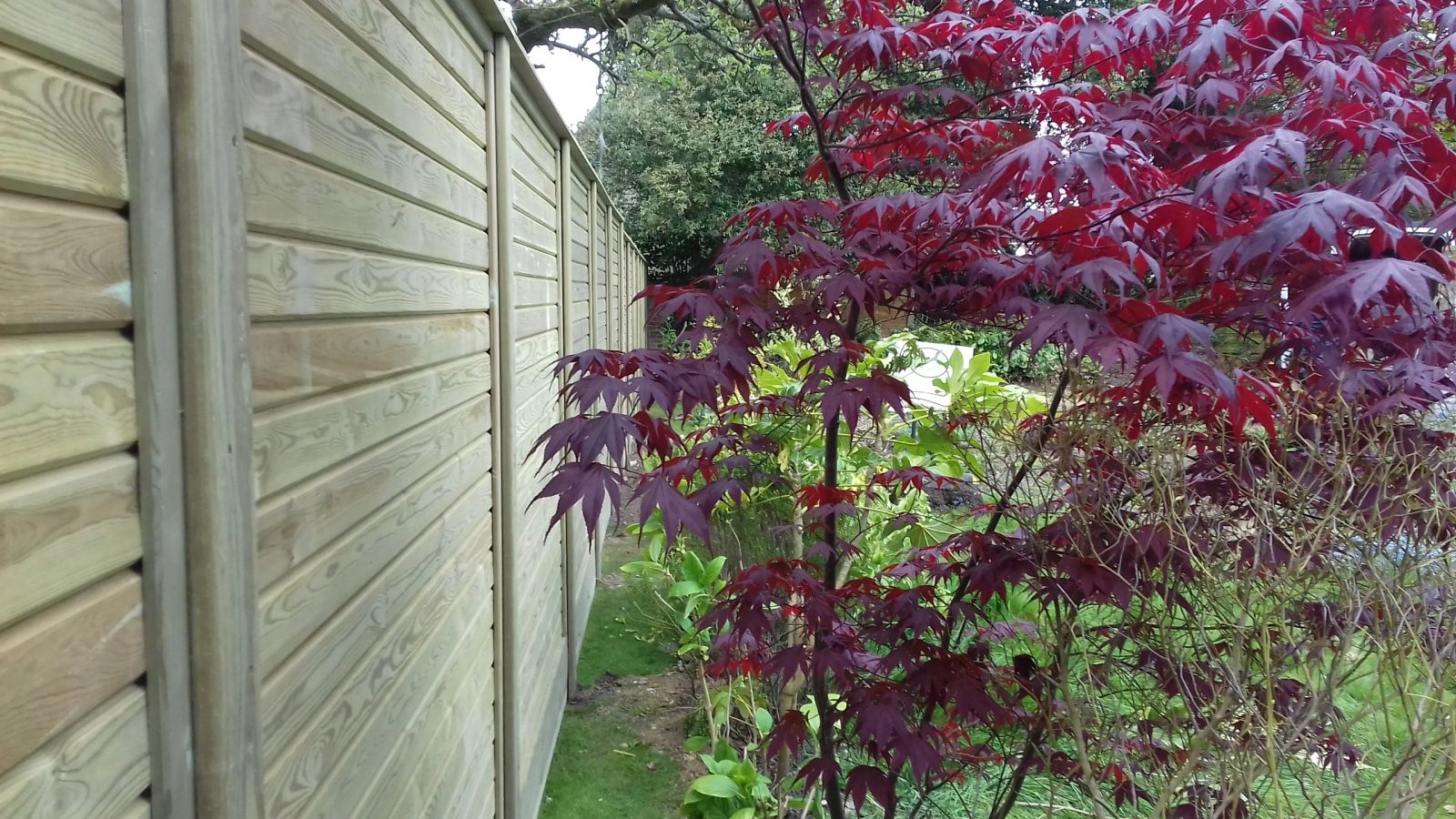
Timber expands and contracts with moisture content through the seasons, and a fully sealed acoustic run built with zero allowance for that movement can bow, crack or force joints open as the boards swell.
A small, deliberate allowance built into panel widths and fixing centres lets the timber move without disturbing the seal, which is a different consideration from a standard fence where slight movement rarely matters.
Timber species and surface spread of flame
Untreated softwood used for fencing and cladding has a fairly modest natural resistance to flame spread, and where fencing sits close to a building boundary, some specifications reference surface spread of flame classification for the cladding or fencing material used.
Flame-retardant treatments can be applied to timber to improve its classification, working by charring the surface to slow flame spread rather than by making the timber genuinely non-combustible.
This consideration applies mainly to close-boundary or party-wall-adjacent structures rather than typical open garden fencing, where fire classification of the timber itself is rarely a specified requirement.
Hot-dip galvanising thickness
Hot-dip galvanising coats steel in a layer of zinc by immersing it in a molten zinc bath, and the resulting coating thickness is largely governed by the steel's own thickness, since thicker sections react with the zinc for longer and build a heavier layer.
British Standard BS EN ISO 1461 sets minimum coating thickness by section thickness rather than a single blanket figure, which is why a heavy structural post gains a thicker, longer-lasting coating than thin wire mesh galvanised in the same process.
The coating protects sacrificially as well as by barrier, meaning even where it's scratched the surrounding zinc corrodes preferentially and continues to protect the exposed steel underneath, at least until that local zinc reserve is used up.
Wind-tunnelling in gaps between barriers and buildings
A gap between a solid acoustic fence and an adjacent building or wall can accelerate wind through that narrow channel, a wind-tunnelling effect that increases load on both the fence and anything positioned near it.
Closing that gap with a return panel, or accepting a lower barrier height where a gap can't be closed, avoids concentrating wind load onto a single narrow section.
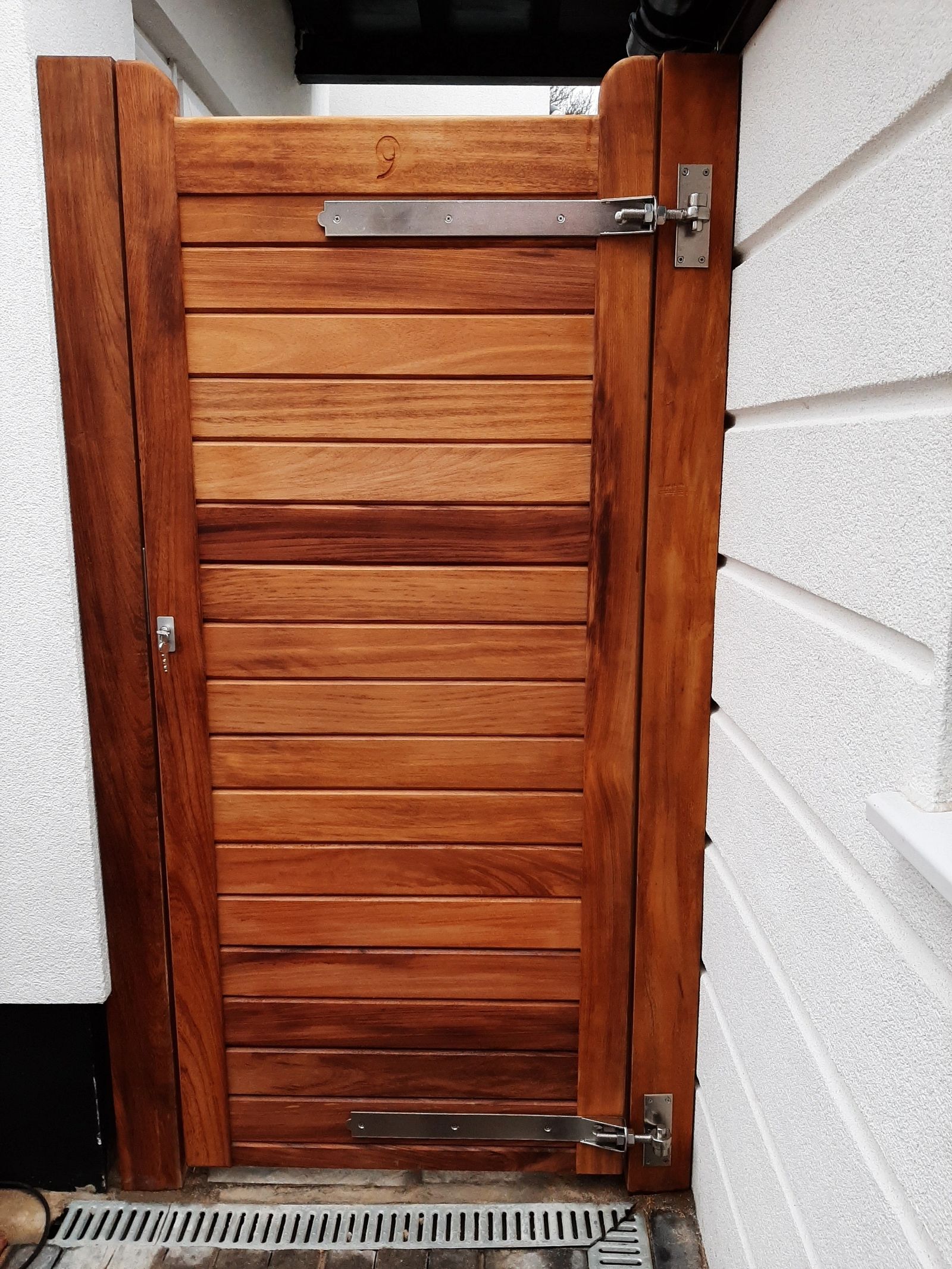
Sanding and re-treating a timber gate
A timber gate that's greying or losing its finish benefits from a light sand back to bare or sound timber before re-treating, since coating over a failed or flaking existing finish traps moisture underneath rather than sealing it out.
This is worth doing every few years depending on exposure, well before the timber itself starts to soften or split.
Restaurants and pub gardens
Boundary fencing around a pub garden or restaurant terrace often does double duty as noise and light screening for neighbouring residential properties, and its height and permeability can be a condition attached to the premises licence rather than a free choice.
Trading hours mean access for fencing work is usually easiest early morning before service starts, since a garden in active use for covers can't have posts being dug mid-lunch.
Where outdoor seating sits close to the boundary, fixings and post positions need checking against any licensed seating plan so the finished fence doesn't reduce covers below what the licence allows.
UV silvering rates by aspect and species
Untreated or lightly-treated softwood exposed to full sun typically silvers to a grey patina within twelve to eighteen months, while the same timber on a shaded north face can take several years to reach the same appearance.
Hardwoods like oak silver more evenly and hold their structural integrity through the process better than softwood, which is one reason clients choosing a natural weathered look often move toward hardwood despite the higher upfront cost.
Because silvering rate varies so much by aspect, a run that turns a corner from full sun to full shade can look like two different ages of fence within its first two years even though it was installed on the same day.
Capped versus uncapped composite boards
Capped composite boards have a thin outer polymer shell bonded over the wood-polymer core, giving better resistance to moisture ingress, staining and UV fade than an uncapped board with the core material exposed directly to weather.
Uncapped composite is generally cheaper and machines more like traditional timber, since the surface can be cut, drilled or profiled without exposing a different material underneath, but it's more prone to surface fading and moisture absorption over time.
A capped board's protective shell is only on the finished faces, so a cut end on site exposes the uncapped core underneath, which some manufacturers address with an end-cap trim while others leave it exposed.
Keeping new-build estates consistent
Uniform estates built to a single developer specification often have an unwritten (or sometimes written, via estate covenant) expectation that boundary fencing matches the original height, colour and panel style across the whole street.
Departing from that pattern on a single plot — a taller fence, a different stain colour, an unusual gate style — tends to stand out more starkly on a visually consistent estate than it would on a street of individually built houses.
Where a management company or residents' association enforces an estate covenant, it's worth checking the permitted specification before ordering materials, since a non-compliant fence can sometimes have to be replaced at the owner's cost.
Timber stain versus paint breathability
A translucent or semi-transparent stain generally remains vapour-permeable, allowing moisture that gets into the timber to escape back out again as the wood dries, which reduces the risk of trapped moisture driving rot.
Solid, opaque paint films are often less permeable, and a paint film that cracks or is breached can trap moisture behind it against the timber, sometimes accelerating localised decay compared with an unpainted equivalent.
Modern microporous exterior paints aim to combine paint's fuller colour coverage with a degree of vapour permeability, narrowing but not eliminating this trade-off between appearance and moisture management.
Working safely on a roadside or public-facing boundary
A security fence often runs along a frontage that faces a pavement, a school run or a shared access road, so material storage, tool use and post-hole cover are managed to keep the public side of the works safe throughout.
On a commercial site this extends to keeping a fire route or loading bay clear while the new line goes in.