Gating a shared driveway
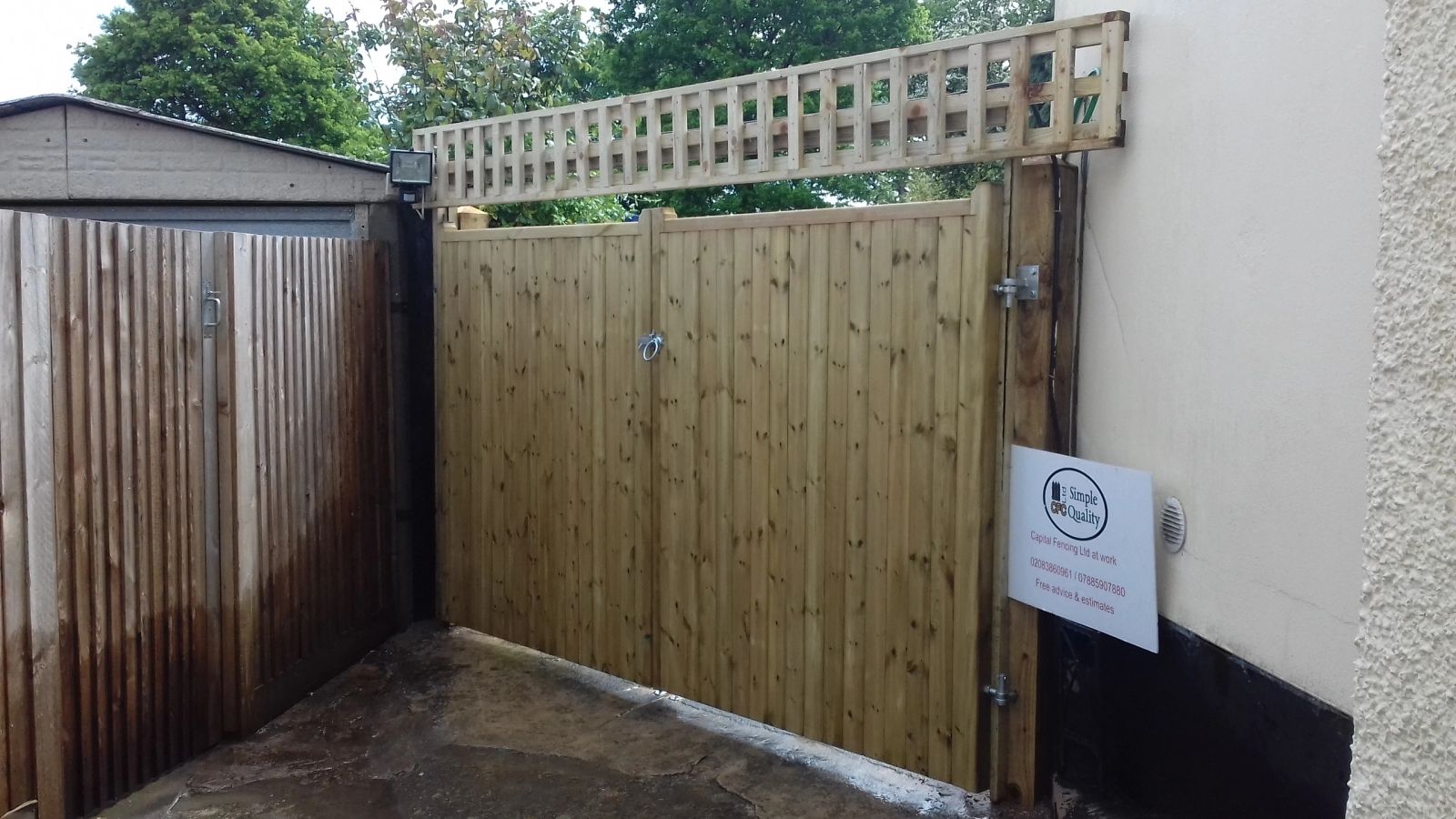
A gate across a driveway shared by more than one property needs the agreement of everyone with a right to use it, since restricting access — even with a key provided to all parties — changes how that access can practically be used, especially for larger vehicles or emergency access.
Automated gates on a shared drive raise additional questions about who controls the opening mechanism, who pays for maintenance, and what happens if the power or motor fails, all of which are worth agreeing in writing before installation.
Where the shared drive is used by refuse collection or emergency services, checking minimum clear widths and turning circles with the council or fire service before fitting a gate avoids a structure that later has to be removed.
Fire escape routes and non-lockable egress
A secure gate on a fire escape route or final exit path must allow people to get out without a key, even if it stays locked against entry from outside — a simple push-bar or thumb-turn release satisfies this on the inside face.
This is checked against the building's fire strategy before a lockable gate is fitted on any route marked as an escape path, because a fully keyed gate on both faces is a genuine life-safety fault.
Resin anchor fixings for a bolted baseplate post
A resin anchor sets a threaded stud into a drilled hole in existing concrete or masonry using a two-part chemical resin, giving a strong fixing for a bolted baseplate post where excavating a new footing isn't practical, such as on an existing hardstanding.
Anchor depth and resin cure time both need to match the manufacturer's data for the load expected, and a resin anchor installed into damp or dusty concrete without proper hole cleaning will pull out well below its rated capacity.
Drop bolt materials and corrosion resistance
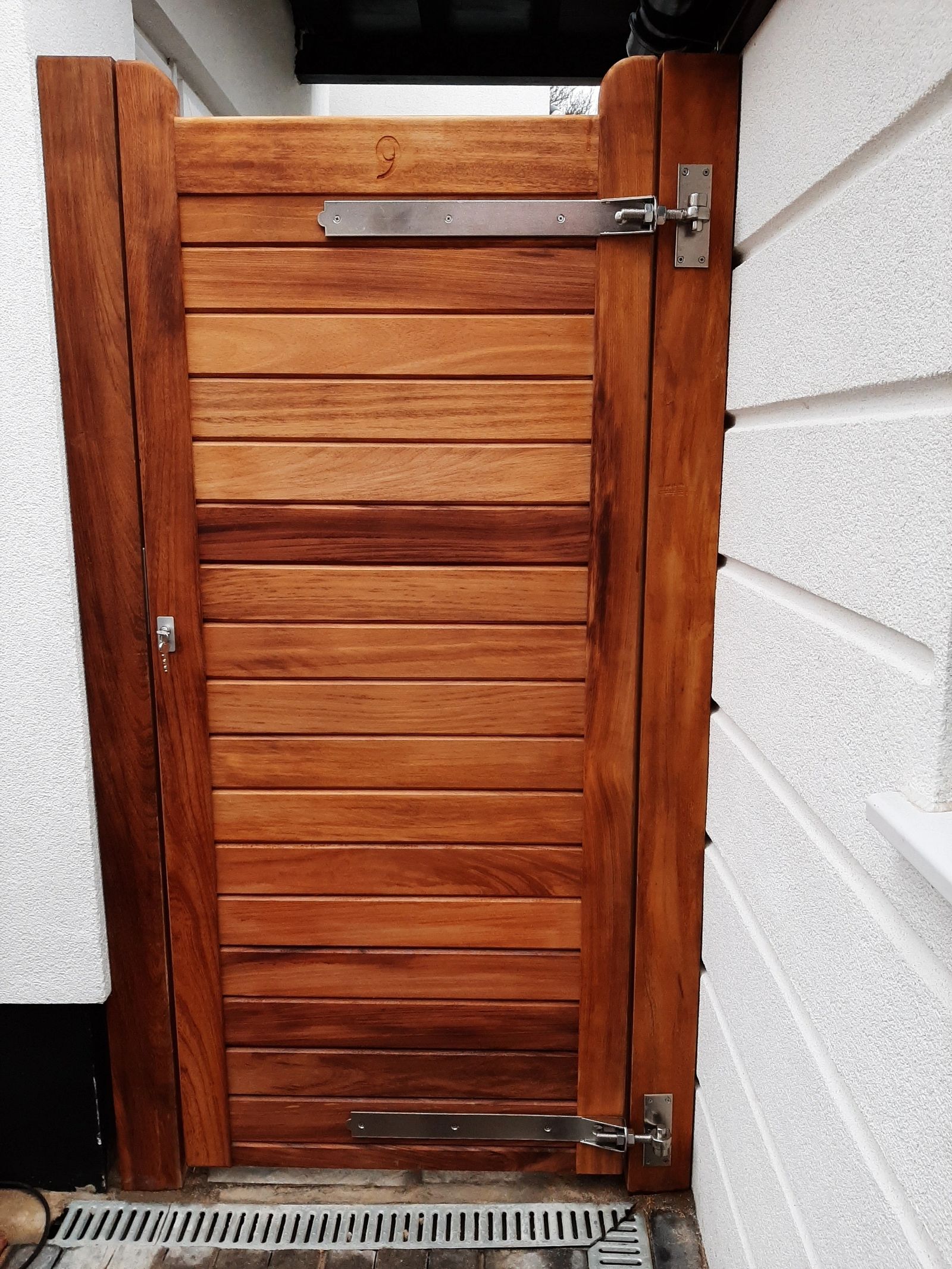
A drop bolt is typically dropped into a socket set in the ground or a hard surface to secure the closed leaf of a double gate, and that socket is one of the most exposed fittings on a gate to standing water and debris.
Galvanised or stainless drop bolts resist the corrosion that a plain steel bolt develops from sitting in a damp, dirt-filled socket, which can otherwise seize the bolt in place within a season or two.
Regularly clearing debris from the ground socket does more for a drop bolt's long-term function than the bolt's material alone, since even a corrosion-resistant bolt can jam against compacted grit and soil.
Composite versus timber
Composite decking and fencing boards trade a higher upfront cost for lower ongoing maintenance — no annual staining or oiling, and better resistance to rot in permanently damp or shaded spots where timber struggles.
The trade-off is that composite doesn't weather the way timber does; it stays close to its original colour rather than silvering or taking on the character some clients want, and off-cuts and end sections need cutting and capping carefully to stop moisture getting into the core.
For a boundary fence that's mostly out of sight, timber with a reapplied treatment every few years is often the more economical long-term choice; for a heavily-used deck, composite's lower maintenance burden usually wins out.
Powder coating versus galvanising for steel security fencing
Hot-dip galvanising bonds a zinc layer to the steel that self-heals minor scratches through sacrificial corrosion, making it the more durable base finish for an exposed or coastal boundary.
Powder coating adds colour and a smoother surface but relies on the coating staying intact — galvanised-then-powder-coated steel combines both, giving corrosion protection under a decorative finish, and is the usual spec where appearance matters as much as longevity.
Mesh tensioning on a chain-link or weld-mesh run
Mesh that's fitted slack sags between posts and can be pulled or climbed more easily, so a straining wire and turnbuckle at each end of a run tension the mesh evenly before it's clipped or tied to the line wires.
Re-tensioning is a routine maintenance task on an older mesh run, since posts settling slightly or ground movement over a season will slacken a mesh that was originally taut.
Converted flats and shared bin storage
Houses converted into two or three flats often have a shared bin store or side passage boundary that wasn't part of the original single-dwelling fence layout, and responsibility for repair can be unclear where the freeholder retains the passage but individual flats use it daily.
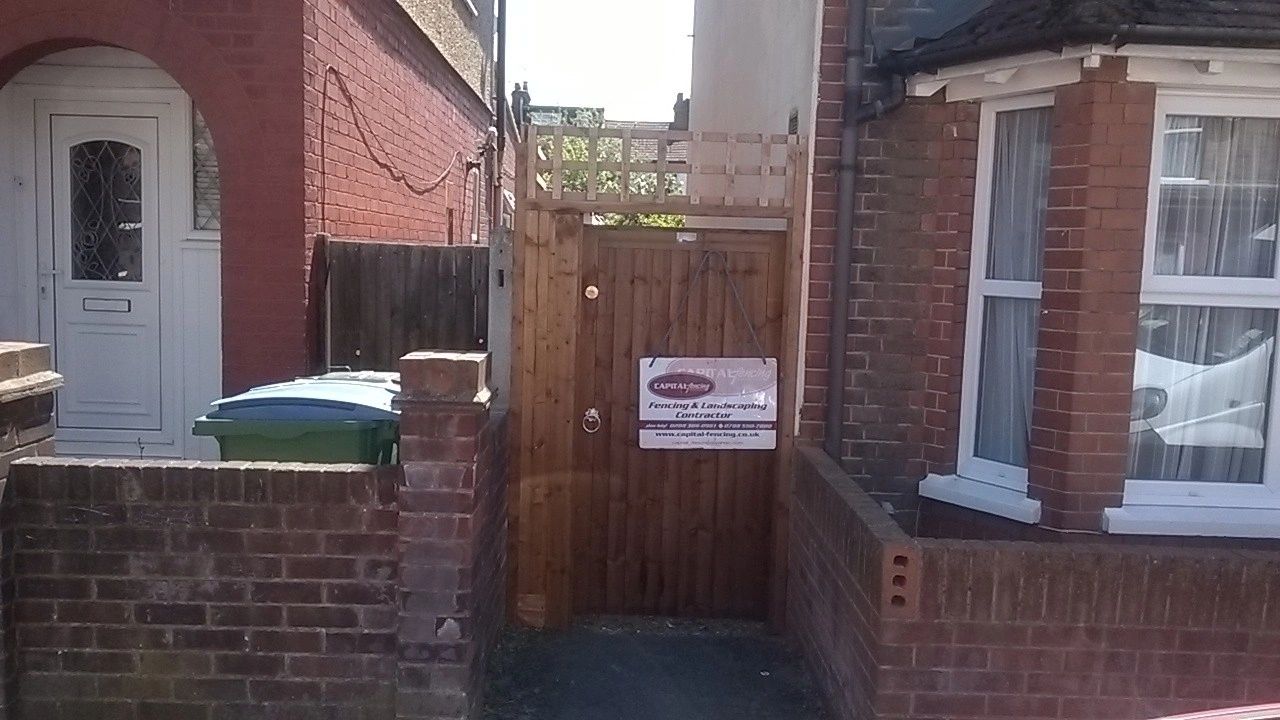
A gate onto a shared bin store needs to be wide enough for wheelie bins to pass without lifting them over a threshold, and a self-closing latch is worth specifying so the gate isn't left open between collections.
Where flats were converted without formal division of the garden, it's worth clarifying in writing which flat is responsible for which section of boundary before starting any replacement work.
Retaining a slope under a heavy barrier
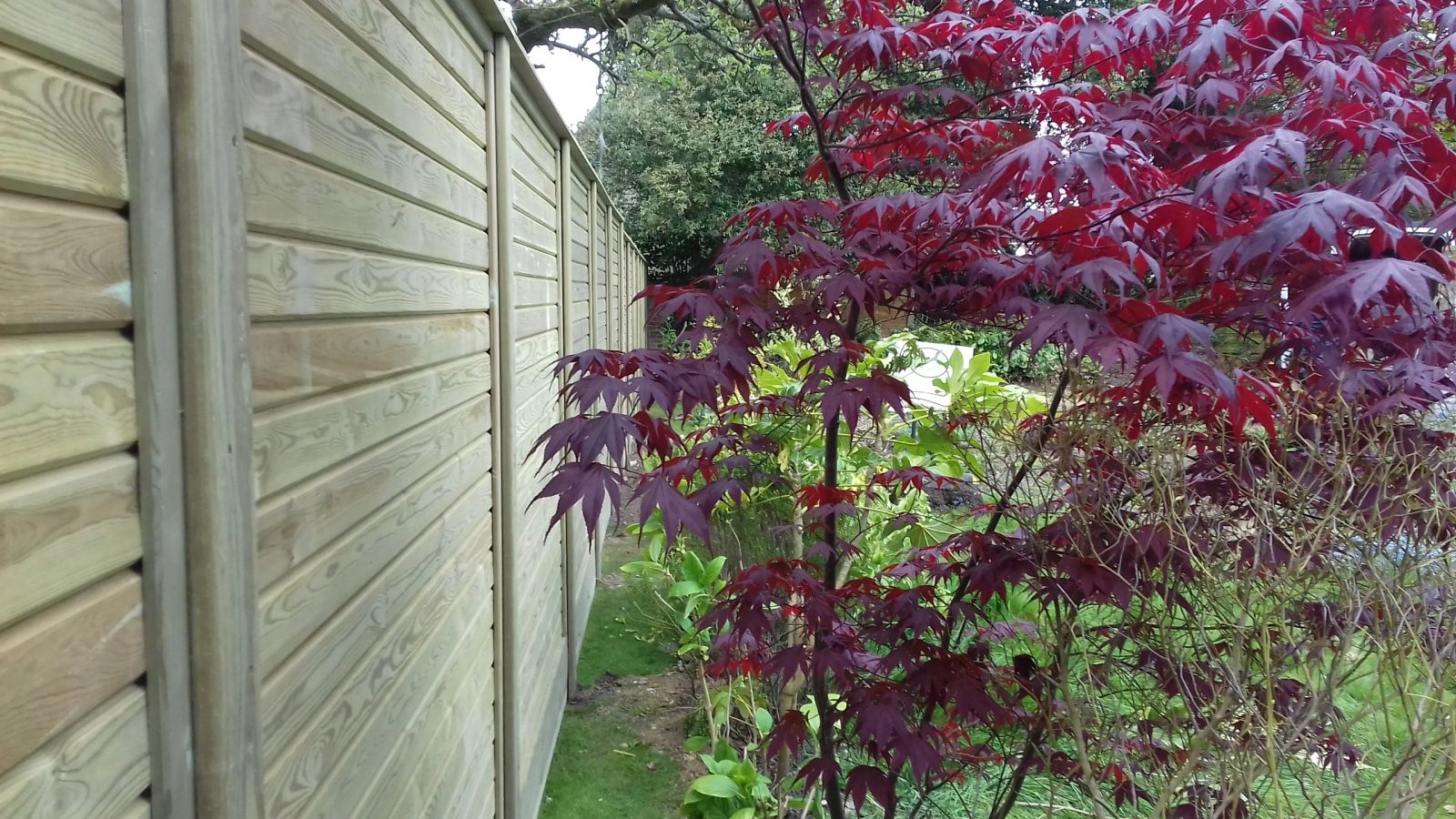
A sloped site under a heavy acoustic panel run may need a low retaining detail to keep post foundations level and consistent, rather than following the slope with a raked panel that would open a gap at the low end.
Retained ground behind the barrier also needs drainage considered, since trapped water against a retaining detail adds load and risks undermining the foundation over time.
Weld mesh panel bracket fixings
Rigid mesh panel systems are typically clamped to posts using bolt-through brackets rather than welded directly on site, allowing individual panels to be removed and replaced without disturbing the whole run.
The bracket material and coating need to match, or be galvanically compatible with, both the panel mesh and the post to avoid the same dissimilar-metal corrosion issue seen elsewhere in mixed-material fencing systems.
Bracket bolts torqued too tightly against a coated panel edge can crack a powder-coated finish at the clamp point, giving corrosion an entry point at exactly the spot under the most mechanical stress.
Post spacing on a run that doesn't divide evenly
Standard panels are usually 1.83m (6ft) wide, but very few boundary runs measure out as an exact multiple of that, so the layout has to absorb the remainder somewhere rather than pretend it isn't there.
The common approach is to split the shortfall across the two end bays so both are cut slightly narrower and roughly matched, rather than leaving one full-width bay and one very narrow offcut at a single end.
Where a fixed feature — a gate opening, a manhole, an existing post that must stay — sits partway along the run, setting out works outward from that fixed point in both directions rather than from one end only.