London & Hertfordshire Free Site Visit

Chells: Fencing & Decking Within Stevenage

Chells (SG2) is a distinct pocket within stevenage, under Stevenage Borough Council — 1960s planned estates with mid-rise terraces and patio bungalows, gardens compact gardens with consistent boundaries across the estate. The recurring factor on jobs here is estate fences typically replaced as runs of multiple gardens at once. Step riser heights on a raised deck: Steps down from a raised deck work best with consistent riser heights throughout the flight, since an irregular step height is a common trip hazard, particularly where the top or bottom step differs slightly from the others. Building regulations guidance for steps in a domestic setting generally favours risers in the range of roughly 150-170mm with adequate going (tread depth), though garden steps have more flexibility than an internal staircase. Boundary agreements where more than one property is affected: Corner plots and properties on an L-shaped or irregular boundary sometimes have more than one neighbouring owner whose land touches a single fence run, each with potentially different views on style or cost sharing.

Capital Fencing project in Chells, SG2Capital Fencing project in Chells, SG2Capital Fencing project in Chells, SG2
SG2

Chells is part of our Stevenage coverage under Stevenage Borough Council, with its own property mix and its own recurring brief.

Property & garden in Chells

Property: 1960s planned estates with mid-rise terraces and patio bungalows

Gardens: compact gardens with consistent boundaries across the estate

estate fences typically replaced as runs of multiple gardens at once

Nearest arterial: A602, A1(M) J7. Served from Stevenage (East Coast). Nearby commercial anchors: Chells parade.

Practical points for boundary work in Chells

Step riser heights on a raised deck

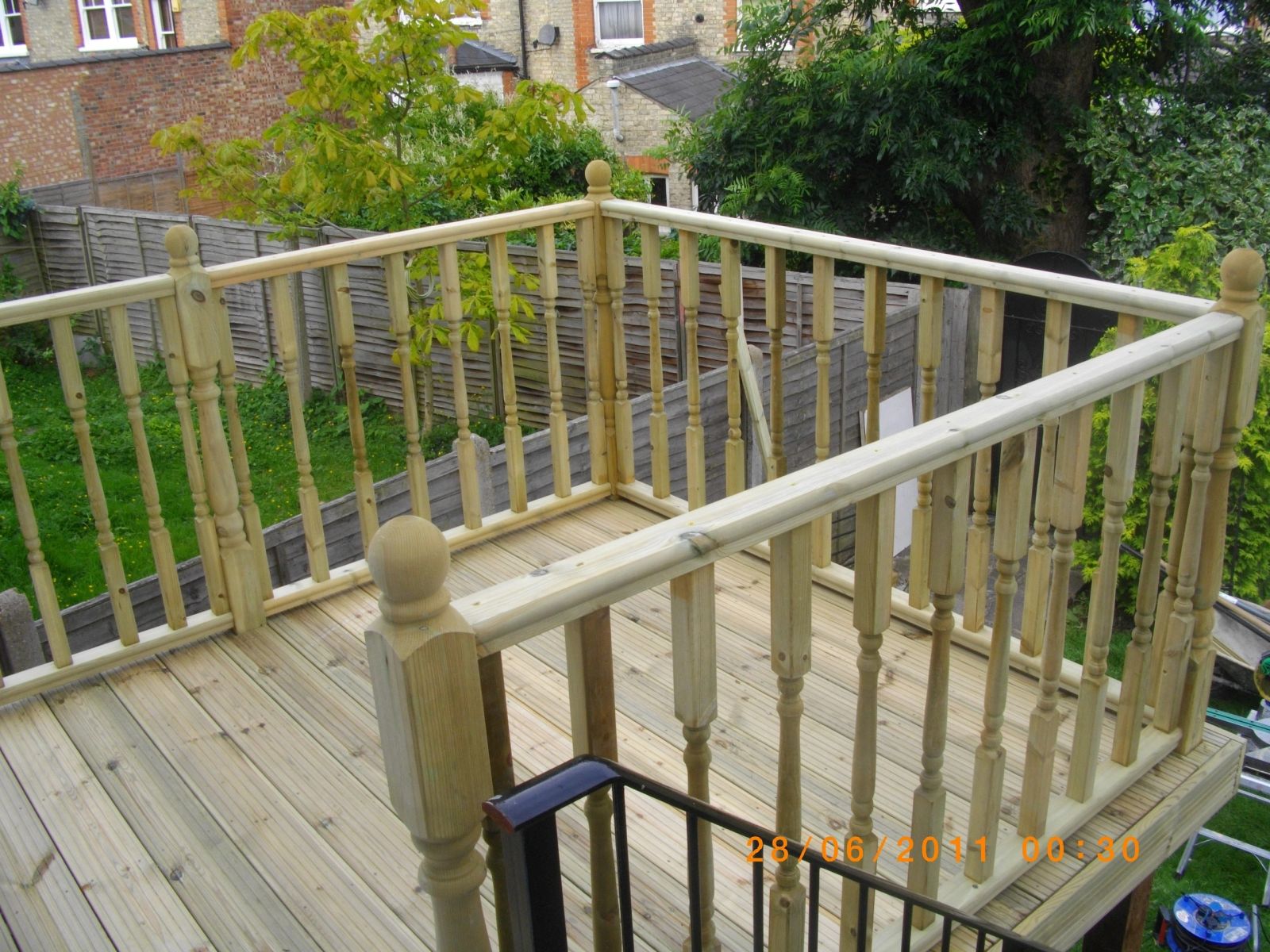
Steps down from a raised deck work best with consistent riser heights throughout the flight, since an irregular step height is a common trip hazard, particularly where the top or bottom step differs slightly from the others.

Building regulations guidance for steps in a domestic setting generally favours risers in the range of roughly 150-170mm with adequate going (tread depth), though garden steps have more flexibility than an internal staircase.

Where a deck sits at a height that doesn't divide evenly into consistent risers, it's better to adjust the deck height slightly at the design stage than to build one oddly-sized step to make up the difference.

Boundary agreements where more than one property is affected

Corner plots and properties on an L-shaped or irregular boundary sometimes have more than one neighbouring owner whose land touches a single fence run, each with potentially different views on style or cost sharing.

Getting agreement from all affected neighbours before work starts, even where only one side has requested the fence, avoids a situation where one owner later objects to a fence built partly on a boundary they share.

Keeping a simple written record of who agreed to what, particularly on more complex multi-boundary plots, is worth the small extra effort.

Contaminated or capped land general caution

Land with a history of industrial, landfill or heavy commercial use can be capped with a clean soil or membrane layer over contaminated material below, installed specifically to prevent exposure, and breaking through that cap with a post hole risks disturbing what it was designed to contain.

Signs worth treating with caution include unusually dark or ashy soil, chemical odours, unexpected debris at shallow depth, or a site known to have had a previous industrial use even if long redeveloped for housing.

Where contamination is a realistic possibility, checking any available site history or environmental report before excavating is a sensible precaution, and hand-digging with careful observation of the spoil is safer than blind augering.

Listed building curtilage and garden structures

Listed building protection doesn't stop at the walls of the house — structures within its curtilage that were there at the date of listing, including some garden walls, gate piers and railings, can be treated as part of the listing itself.

That means a wall or gate that looks like an ordinary garden feature can technically need listed building consent for repair or replacement, and unauthorised work is a criminal offence rather than a simple planning breach.

Where a period boundary feature might be curtilage-listed, it's worth confirming with the council's conservation team before any demolition, since consent (or confirmation that it's not required) can usually be obtained in parallel with getting quotes.

Decking joist spans by board thickness

Joist spacing for a deck is set by the thickness and species of the board being laid over it, not by a single universal figure — a standard 28mm softwood board typically wants joists no more than about 400-450mm apart, while thinner composite boards often need closer spacing again.

Manufacturers publish specific span tables for their composite products because the flex characteristics differ from timber, and installing outside those tables is one of the most common causes of a bouncy or springy deck.

Diagonal laying patterns also reduce the safe span compared with a straight run, since the board is effectively supported at a shorter distance along its length.

Wayleaves for overhead cables crossing a boundary

A wayleave is an agreement, sometimes recorded on the title, allowing a utility company to run cables or equipment across private land, which can include overhead lines crossing directly above a garden boundary.

Fence or gate height near a low-slung overhead cable is worth checking against the clearance the utility company expects, particularly for any structure involving machinery or long materials being lifted into place.

Where an overhead line crosses close to planned fence or gate posts, contacting the relevant utility company for guidance before work starts is the sensible precaution.
Services in Chells

Free quote for Chells

Send your postcode and a couple of photos — we'll get back with a written quote.

Chells — frequently asked

Contaminated or capped land general caution — what does that mean for a job in Chells?

Land with a history of industrial, landfill or heavy commercial use can be capped with a clean soil or membrane layer over contaminated material below, installed specifically to prevent exposure, and breaking through that cap with a post hole risks disturbing what it was designed to contain. Signs worth treating with caution include unusually dark or ashy soil, chemical odours, unexpected debris at shallow depth, or a site known to have had a previous industrial use even if long redeveloped for housing. Where contamination is a realistic possibility, checking any available site history or environmental report before excavating is a sensible precaution, and hand-digging with careful observation of the spoil is safer than blind augering.

How does "decking joist spans by board thickness" affect fencing or decking work in Chells?

Diagonal laying patterns also reduce the safe span compared with a straight run, since the board is effectively supported at a shorter distance along its length. Joist spacing for a deck is set by the thickness and species of the board being laid over it, not by a single universal figure — a standard 28mm softwood board typically wants joists no more than about 400-450mm apart, while thinner composite boards often need closer spacing again. Manufacturers publish specific span tables for their composite products because the flex characteristics differ from timber, and installing outside those tables is one of the most common causes of a bouncy or springy deck.

Does listed building curtilage and garden structures come up much on jobs around Chells?

That means a wall or gate that looks like an ordinary garden feature can technically need listed building consent for repair or replacement, and unauthorised work is a criminal offence rather than a simple planning breach. Where a period boundary feature might be curtilage-listed, it's worth confirming with the council's conservation team before any demolition, since consent (or confirmation that it's not required) can usually be obtained in parallel with getting quotes. Listed building protection doesn't stop at the walls of the house — structures within its curtilage that were there at the date of listing, including some garden walls, gate piers and railings, can be treated as part of the listing itself.

What's the most common issue you plan around in Chells?

Estate fences typically replaced as runs of multiple gardens at once.

What should I know about wayleaves for overhead cables crossing a boundary in Chells?

A wayleave is an agreement, sometimes recorded on the title, allowing a utility company to run cables or equipment across private land, which can include overhead lines crossing directly above a garden boundary. Fence or gate height near a low-slung overhead cable is worth checking against the clearance the utility company expects, particularly for any structure involving machinery or long materials being lifted into place. Where an overhead line crosses close to planned fence or gate posts, contacting the relevant utility company for guidance before work starts is the sensible precaution.
What's the typical garden like in Chells?

Compact gardens with consistent boundaries across the estate is typical, alongside 1960s planned estates with mid-rise terraces and patio bungalows.

Reached off A602, near Stevenage (East Coast). Contaminated or capped land general caution: Land with a history of industrial, landfill or heavy commercial use can be capped with a clean soil or membrane layer over contaminated material below, installed specifically to prevent exposure, and breaking through that cap with a post hole risks disturbing what it was designed to contain. Signs worth treating with caution include unusually dark or ashy soil, chemical odours, unexpected debris at shallow depth, or a site known to have had a previous industrial use even if long redeveloped for housing. Listed building curtilage and garden structures: Listed building protection doesn't stop at the walls of the house — structures within its curtilage that were there at the date of listing, including some garden walls, gate piers and railings, can be treated as part of the listing itself.

Get In Touch

Get My Free Quote — 24h Response

No callout fee · Free site visit · Friendly local team covering London & Hertfordshire.

Request a Free Quote

We'll get back to you within 24 hours.

Free Site Visit No Callout Fee
Call WhatsAppQuote