London & Hertfordshire Free Site Visit
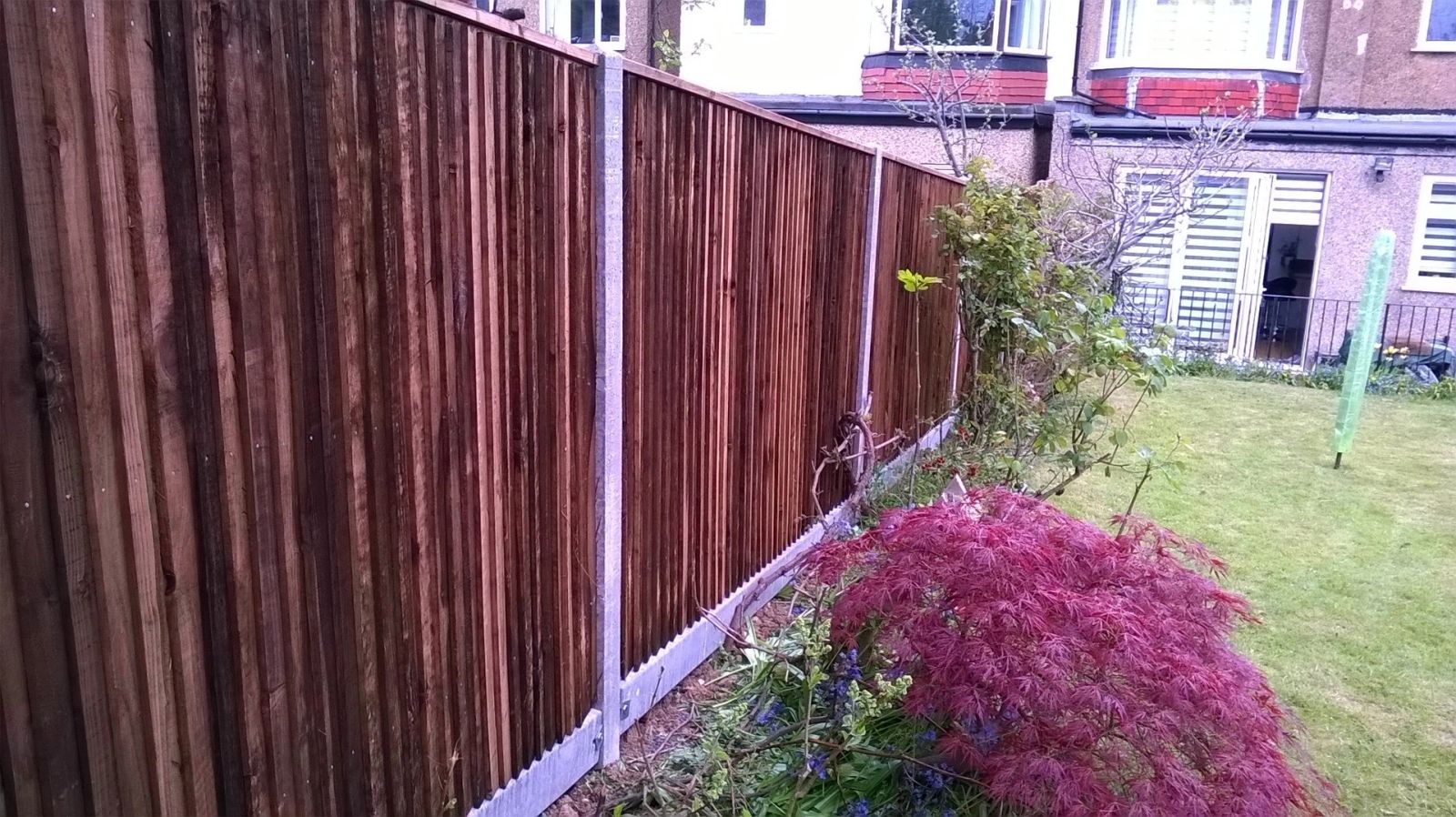
closeboard fence run installed by Capital Fencing in Ware (SG12)
Ware · SG12

School & Nursery Fencing in Ware — Built for climbable geometry and finger-trap points at gate hinges

School & Nursery Fencing in Ware is a specific brief for us — primary schools, nurseries and early-years settings needing safeguarding-compliant boundaries. The default local answer isn't a stock catalogue drop: it's 1.2m or 1.8m bow-top or 358 weld-mesh, hot-dip galvanised then RAL powder-coated posts, self-closing gates with anti-finger-trap hinges. On Ware sites we also spec around riverside plots can hit the water table within two spades — concrete-set posts and proper drainage are essential, which is where a lot of school and nursery fencing jobs quietly fail two years in. Roads such as Star Street and High Street are typical of the local layout. New River is a useful local reference point. Musley Hill, behind the town centre, is on higher and drier ground than the river-level streets.

School & Nursery Fencing in Ware is a specific brief for us — primary schools, nurseries and early-years settings needing safeguarding-compliant boundaries. The default local answer isn't a stock catalogue drop: it's 1.2m or 1.8m bow-top or 358 weld-mesh, hot-dip galvanised then RAL powder-coated posts, self-closing gates with anti-finger-trap hinges. On Ware sites we also spec around riverside plots can hit the water table within two spades — concrete-set posts and proper drainage are essential, which is where a lot of school and nursery fencing jobs quietly fail two years in. Roads such as Star Street and High Street are typical of the local layout. New River is a useful local reference point. Musley Hill, behind the town centre, is on higher and drier ground than the river-level streets.

Default spec

How we build school and nursery fencing in Ware

1.2m or 1.8m bow-top or 358 weld-mesh, hot-dip galvanised then RAL powder-coated posts, self-closing gates with anti-finger-trap hinges. On Ware jobs we adjust for riverside plots can hit the water table within two spades — concrete-set posts and proper drainage are essential.

Property mix locally: Georgian and Victorian properties in the centre, with newer suburban estates around Wengeo Lane. Typical gardens: long thin riverside plots — many drop down to the New River and need retaining work. Postcodes we regularly service: SG12.

we install to BS 1722-14 for bow-top and BS 1722-10 for weld-mesh, provide safeguarding-relevant sign-off notes, and can attend outside term time only.

Why this spec, for primary schools, nurseries and early-years settings

  • no horizontal rails at climbable heights — safeguarding-first geometry
  • hot-dip galvanised then powder-coated finishes carry a 25-year service life
  • welded rather than bolted joints so nothing works loose over a school year

Where school and nursery fencing isn't the right answer

  • conservation-area primary schools where planning restricts galvanised finish visible from the street
  • domestic-scale nurseries in a converted house where a timber boundary already meets Ofsted line-of-sight rules

Typical school and nursery fencing briefs in Ware

  • matched pedestrian and vehicle gates with mag-lock and DDA-compliant pedestrian access
  • 1.8m weld-mesh on galvanised posts around a primary school MUGA

School & Nursery Fencing FAQs — Ware

Are your fitters DBS-checked?

On school and nursery fencing jobs in Ware (SG12), our default answer is: 1.2m or 1.8m bow-top or 358 weld-mesh, hot-dip galvanised then RAL powder-coated posts, self-closing gates with anti-finger-trap hinges. For context: hot-dip galvanised then powder-coated finishes carry a 25-year service life. Installed to BS 1722 standards, with fitter details available on request.

Can the job be scheduled inside a half-term break?

Across Ware we spec around riverside plots can hit the water table within two spades — concrete-set posts and proper drainage are essential, so on school and nursery fencing that usually means bow-top 1.2m for EYFS boundaries. We install to BS 1722-14 for bow-top and BS 1722-10 for weld-mesh, provide safeguarding-relevant sign-off notes, and can attend outside term time only.

How do you avoid finger-trap points on self-closing gates?

East Hertfordshire District coverage means we can survey most SG12 addresses inside a week — primary schools, nurseries and early-years settings needing safeguarding-compliant boundaries. For context: hot-dip galvanised then powder-coated finishes carry a 25-year service life. Installed to BS 1722 standards, with fitter details available on request.

Do you install to BS 1722 for school fencing?

Practically: bow-top mesh replacing tired timber around a nursery outdoor area. That's the Ware version of this job, not a generic one. For context: hot-dip galvanised then powder-coated finishes carry a 25-year service life. Installed to BS 1722 standards, with fitter details available on request.

Do you supply RAMS and public-liability certificate ahead of works?

On school and nursery fencing jobs in Ware (SG12), our default answer is: 1.2m or 1.8m bow-top or 358 weld-mesh, hot-dip galvanised then RAL powder-coated posts, self-closing gates with anti-finger-trap hinges. The honest trade-off is specifying decorative railings with climbable finials near a play area — trips a safeguarding audit every time — which is exactly what our default spec designs out.

Recent school & nursery fencing work
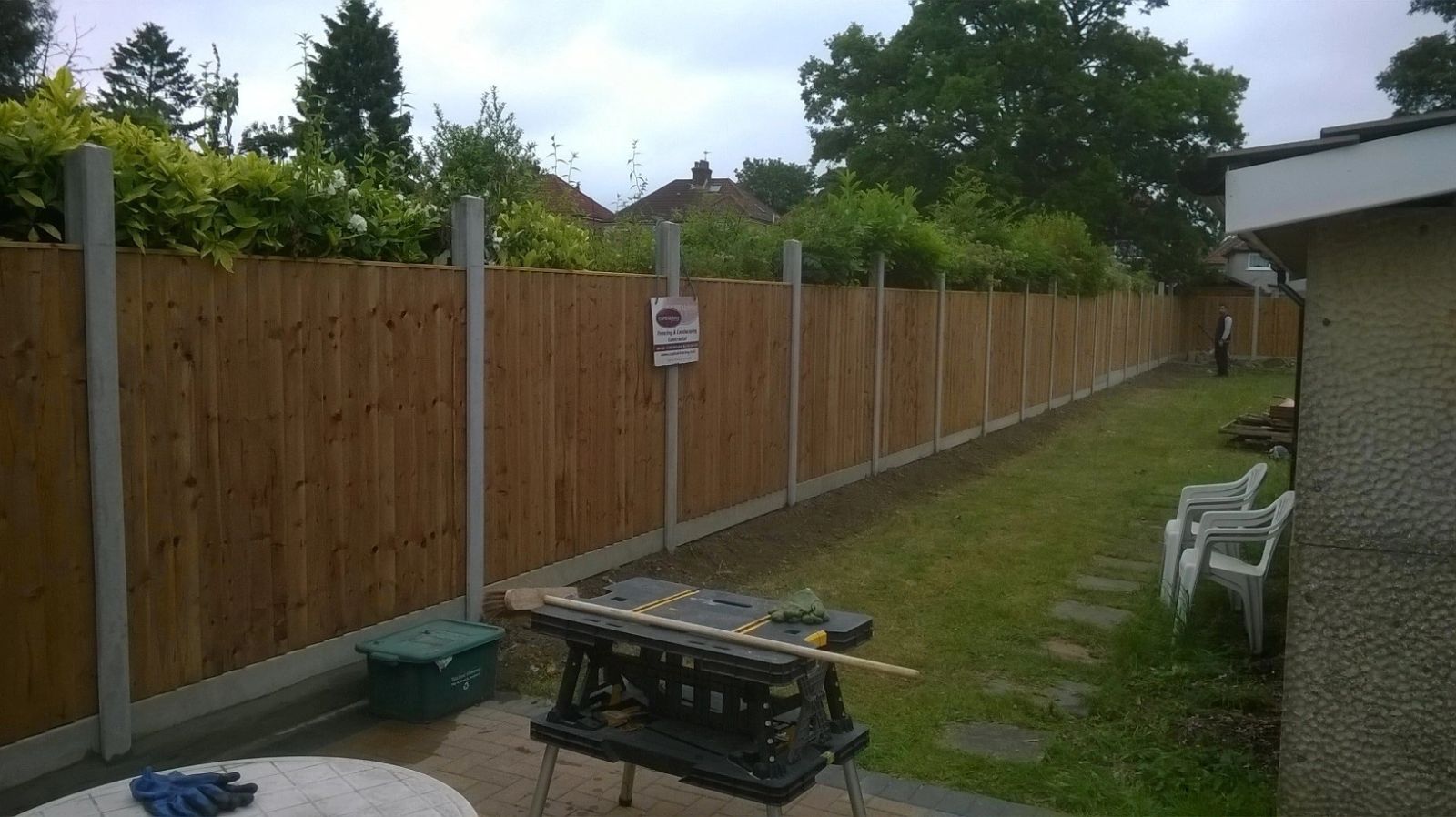
closeboard fence run installed by Capital Fencing in Ware (SG12)panel fence install installed by Capital Fencing in Ware (SG12)trellis-topped fence installed by Capital Fencing in Ware (SG12)bespoke decorative fence installed by Capital Fencing in Ware (SG12)

Local considerations across Ware and hertford

Cane bolt leverage on wide leaves

The long shaft of a cane bolt gives more leverage against a wide gate leaf twisting in wind than a short bolt fixed close to the bottom rail, which is why they're specified on wider double-gate leaves rather than narrow pedestrian gates.

A cane bolt still needs a properly prepared ground socket to work, and a shaft dropped onto uneven paving without a socket wears quickly and loses its holding grip.

Phasing a perimeter security upgrade

Replacing an entire perimeter in one go isn't always practical on an occupied commercial site, so work is often phased section by section, with each completed run left secure before the next section is opened up.

Phasing needs a sequence that never leaves the whole boundary compromised at once — usually working round from the least to most vulnerable elevation rather than a simple left-to-right order.

Dust and noise control in a tight garden

Cutting timber, breaking out old concrete bases or using a petrol auger all generate noise and dust that carries further in a small enclosed garden between close-set houses than on an open plot.

Local authorities can restrict noisy work hours under the Control of Pollution Act, and even where no formal restriction applies, starting before a reasonable hour or working into the evening is one of the fastest ways to draw a neighbour complaint.

Sheeting off concrete-cutting dust and keeping cut ends away from a neighbour's washing line or open windows is a small step that avoids most of the friction on a shared boundary job.

UV stabilisers in composite and PVC fencing

UV stabiliser additives are blended into composite and PVC fencing products during manufacture to slow the surface degradation and colour fade that ultraviolet exposure otherwise causes in polymer materials over time.

Products with a lower proportion of UV stabiliser, often reflected in a lower price point, tend to show chalking, a dusty faded surface, and colour loss earlier than better-stabilised equivalents exposed to the same sunlight.

South and west-facing runs receive substantially more cumulative UV exposure than shaded or north-facing runs, so the same product can visibly fade at different rates depending purely on orientation and surrounding shade.

Conservation covenants affecting boundary land

A relatively newer legal tool, the conservation covenant, allows landowners to agree binding restrictions on land use for conservation purposes, which can in principle extend to boundary treatments on affected plots.

These are still uncommon on ordinary residential properties but more likely on larger plots, smallholdings, or land near protected habitats.

Checking the title register for any registered covenant of this kind is worth doing on larger or more unusual plots before assuming standard rules apply.

Using a post hole auger effectively

A petrol or manual auger clears loose, stone-free ground far faster than hand-digging, but it works by shearing soil rather than levering it, so it struggles the moment it meets a root, a buried stone or compacted rubble.

Lifting the auger clear and clearing spoil from the flutes every 150-200mm of depth keeps it cutting efficiently; forcing it deeper without clearing spoil just packs the hole and stalls the motor.

On heavy clay an auger can also polish and seal the hole's sides, which reduces drainage around the base — a quick scoring of the sides with a spade before concreting helps break that glazed surface.

Planting distances from a new fence line

Shrubs and hedging planted hard against a new fence eventually push against the panel faces as they mature, trapping moisture against the timber and making later maintenance or panel replacement far harder without disturbing established roots.

A gap of a few hundred millimetres, sized to the expected mature spread of the species chosen, keeps airflow behind the fence and leaves room to work if a panel needs replacing years later.

This is worth raising at the design stage, since it is far easier to plan spacing before planting than to relocate mature shrubs once they have grown into the fence line.

Gate stop positioning for correct swing angle

A gate stop set into the ground or fixed to the post limits how far a gate can swing open, protecting the hinges from being forced past their working range by wind or an over-enthusiastic push.

Positioning the stop correctly against the gate's actual swing arc, rather than a generic distance from the post, avoids the stop being struck at an angle that damages the gate's bottom rail.

Height restrictions on a fence directly fronting a public footpath

A boundary that fronts directly onto a public footpath is often subject to a lower permitted height than a rear or side boundary under general planning rules, since a tall solid structure close to a pavement can affect sightlines and pedestrian safety.

Where security needs push toward a taller specification than the footpath frontage rule allows, planning permission is sought explicitly rather than assumed to fall under permitted development, and a mesh or picket design can sometimes reach greater height than a solid panel under the same visual-impact assessment.

Mediation as a step before a formal boundary dispute

Community and property mediation services exist specifically to help neighbours resolve disagreements, including boundary and fencing disputes, without going straight to solicitors or court.

Mediation is generally faster and considerably cheaper than formal legal action, and can preserve a working relationship between neighbours who will, after all, remain neighbours.

Where a boundary disagreement is becoming entrenched, raising the idea of mediation early is often more productive than escalating straight to legal correspondence.

When a failed post means replacing the gate too

A hanging post that's rotted at ground level usually needs full replacement rather than repair, and because the gate is bolted directly to that post, the gate itself often has to come off and be reassessed for damage during the process even if the gate was previously sound.

This is worth explaining clearly to a client who's expecting a simple post swap, since the gate's own hinges and fixings may need attention at the same time.

Height and visibility rules for gates

A driveway or front gate is subject to the same permitted development height limits as a boundary fence, and a gate near a junction or a shared driveway has additional visibility requirements to keep sightlines clear for road users.

We check these before recommending a taller or more solid replacement gate, not just when repairing an existing one.

Slamming post and gate stops

The slamming post on the latch side takes a repeated impact load every time the gate closes, and a stop fitted to it prevents the gate over-swinging past its closed position and straining the hinges on the return.

A missing or worn stop is a common, low-cost cause of a gate that gradually racks out of square from repeated over-travel.

Handling scope changes discovered once a repair is underway

A repair quoted from an initial inspection sometimes turns out larger once work starts — a post probed as sound at the surface but soft further down, or a neighbouring post found to be equally close to failure.

Agreeing a clear process for confirming any change in scope with the client before continuing, rather than proceeding on assumption, avoids disputes about what was and wasn't included in the original repair.

Off-street parking and dropped kerbs

Converting a front garden to off-street parking usually requires a dropped kerb permit from the highway authority, and a boundary fence or gate across that new access has to be positioned clear of the visibility splay the dropped kerb creates.

Where a low front boundary already exists specifically to preserve sightlines onto the new parking, replacing it with a taller or solid fence can undo the safety benefit the dropped kerb approval was granted on.

It's worth checking whether the dropped kerb approval included any conditions on boundary treatment before ordering a new front fence or gate.

Removing an old panel without damaging sound posts

Panels are usually fixed to posts with clips, brackets or nails through the frame, and levering a panel out with a bar without first locating and releasing those fixings risks splitting a post that would otherwise have been reusable.

Cutting through corroded nails with a reciprocating saw, rather than forcing the panel free, is often quicker and safer for the post than sustained levering.

Where only one panel in a run has failed, working carefully to free just that panel's fixings keeps the neighbouring panels and their posts undisturbed rather than loosening more of the run than necessary.

Matching a railing gate to adjacent railings

A gate set into a run of metal railings needs its bar spacing, finial style and rail heights to match the railings either side, otherwise the opening reads as an obvious later addition rather than part of the original run.

Repro railing gate sections are available in standard spacings, but an older or bespoke railing run sometimes needs a gate made to match rather than bought off the shelf.

Round post versus square-sawn post sections

A round, or half-round, post retains more of the log's original strength-giving fibre continuity around its circumference than a square-sawn post cut from the same log, since sawing removes material and can cut across some outer fibres.

Square-sawn posts are easier to fix panels and brackets to flush, since flat faces align with flat rail ends, whereas round posts often need a notched or curved bracket to seat components securely.

Round fencing stock is more common in agricultural post-and-rail and stock fencing where raw strength per log matters most, while square-sawn posts dominate garden and boundary fencing where flush fixing detail matters more.

Matching gate infill to the adjoining fence

A gate with a different infill pattern to the fence either side is a visible weak point as well as an inconsistency, because an intruder targets the section that looks different from the rest of the run.

Matching pale spacing, mesh aperture or panel style across the gate and fence keeps the whole perimeter to one standard rather than leaving the gate as the obvious soft spot.

Repairing a fence on a sloped or stepped boundary

A boundary on a slope often fails first at the lowest point of each step, where water naturally collects, so a repair there sometimes needs a revised drainage detail rather than simply replacing the failed section like-for-like.

We check the fall of the whole run before repairing one section, since a step that's settled unevenly can be the real cause of a failure further along.

Cranked arm angle for wire toppings

A cranked topping arm angled outward at roughly 45 degrees forces a climber to overcome gravity as well as grip when reaching over the top, which is significantly harder to defeat than a vertical extension of the same height.

Angling the arm inward is sometimes specified instead where the security concern is people leaving a site rather than entering it, such as around a compound holding valuable scrap awaiting collection.

Working off a ladder without scaffold on fencing jobs

Most domestic fencing and gate work is low enough to manage from stepladders rather than needing scaffold, but a ladder still needs a firm, level footing and, on soft ground, a board or plate under the feet to stop it sinking unevenly.

Working at the top of a tall gate post or over a wall with a ladder means keeping three points of contact and avoiding overreaching sideways, which is usually the point a ladder starts to slide rather than tip.

Where capping or a top rail needs fixing along an entire run at height, moving the ladder in short, frequent steps is safer and generally faster than overreaching from a single position to save moving it.

Primary schools, nurseries and early-years settings needing safeguarding-compliant boundaries — that's who this page is for. In Ware and out to East Hertfordshire District, we run the school and nursery fencing spec that survives riverside plots can hit the water table within two spades — concrete-set posts and proper drainage are essential. Roads such as Musley Hill and Watton Road are typical of the local layout. Ware station is a useful local reference point. Musley Hill, behind the town centre, is on higher and drier ground than the river-level streets.

Get In Touch

Get My Free Quote — 24h Response

No callout fee · Free site visit · Friendly local team covering London & Hertfordshire.

Call us
07885907880
or 02036484746
Email
capital_fencing@yahoo.com
WhatsApp
Message us anytime
Area
London & Hertfordshire
Payment
Card payments accepted

Pay by debit or credit card, bank transfer or cash once the work and price are agreed. No deposit taken online.

Request a Free Quote

We'll get back to you within 24 hours.

Free Site Visit No Callout Fee
Call WhatsAppQuote