London & Hertfordshire Free Site Visit
bespoke wooden gate installed by Capital Fencing in Waltham Cross (EN8)
Waltham Cross · EN8

Side Return Gates, Waltham Cross: match-what-you-have spec for Victorian and Edwardian terraces near the town centre

Capital Fencing installs side-return gates across Waltham Cross and out toward cheshunt and enfield. What separates a side-return gates job from a standard boundary is the detail: hardwood side gate between a rendered wall and a brick pier, 780mm opening, drop-bolt into a concrete slab socket. That's the work, not the marketing. Roads such as Park Lane and Eleanor Cross Road are typical of the local layout. Lee Valley White Water Centre is a useful local reference point. Waltham Cross sits at the junction of the M25 and A10, historically a coaching-road crossing point marked by the medieval Eleanor Cross monument.

Capital Fencing installs side-return gates across Waltham Cross and out toward cheshunt and enfield. What separates a side-return gates job from a standard boundary is the detail: hardwood side gate between a rendered wall and a brick pier, 780mm opening, drop-bolt into a concrete slab socket. That's the work, not the marketing. Roads such as Park Lane and Eleanor Cross Road are typical of the local layout. Lee Valley White Water Centre is a useful local reference point. Waltham Cross sits at the junction of the M25 and A10, historically a coaching-road crossing point marked by the medieval Eleanor Cross monument.

Typical side-return gates briefs in Waltham Cross

  • matched pedestrian and bin-store gate serving a shared side alley between two flats
  • tongue-and-groove side gate framed on adjustable ball-race hinges to cope with seasonal timber movement
Default spec

How we build side-return gates in Waltham Cross

44mm framed hardwood or planed softwood, tongue-and-groove infill, adjustable ball-race hinges, closing stop and drop-bolt. On Waltham Cross jobs we adjust for shared boundaries plus a high turnover of rental properties means landlord-friendly specs matter.

Property mix locally: Victorian and Edwardian terraces near the town centre, with newer estates toward Theobalds. Typical gardens: small to medium gardens; many older properties share boundary fences with both neighbours. Postcodes we regularly service: EN8.

Why this spec, for London terraces and semis with a narrow alley between the house and the neighbouring wall

  • framed builds don't drop the way board-and-batten side gates do in year two
  • adjustable hinges handle the seasonal timber movement every London side gate experiences
  • made to the exact opening — no packing pieces, no gaps for burglars or foxes
What goes wrong

Common failure modes on side-return gates

  • fitting a full-weight hardwood gate on domestic pin hinges — drops within six months
  • not shooting a drop-bolt into a concrete socket — kicked or pried open too easily

Side Return Gates FAQs — Waltham Cross

Can you match the gate to my existing side-return fencing?

On side-return gates jobs in Waltham Cross (EN8), our default answer is: 44mm framed hardwood or planed softwood, tongue-and-groove infill, adjustable ball-race hinges, closing stop and drop-bolt. The honest trade-off is fitting a full-weight hardwood gate on domestic pin hinges — drops within six months — which is exactly what our default spec designs out.

Is a drop-bolt necessary as well as a lock?

Across Waltham Cross we spec around shared boundaries plus a high turnover of rental properties means landlord-friendly specs matter, so on side-return gates that usually means iroko hardwood on galvanised ironmongery for 15+ year service. For context: adjustable hinges handle the seasonal timber movement every London side gate experiences. Measured, quoted and installed by the same small crew.

How wide can a single side gate span before it needs a wheel?

Broxbourne Borough coverage means we can survey most EN8 addresses inside a week — London terraces and semis with a narrow alley between the house and the neighbouring wall. For context: adjustable hinges handle the seasonal timber movement every London side gate experiences. Measured, quoted and installed by the same small crew.

Can bin-store and pedestrian access share one gate?

Practically: hardwood side gate between a rendered wall and a brick pier, 780mm opening, drop-bolt into a concrete slab socket. That's the Waltham Cross version of this job, not a generic one. We'll walk you through framed builds don't drop the way board-and-batten side gates do in year two on the site visit before you commit.

Do you handle the wall fixing on both sides?

On side-return gates jobs in Waltham Cross (EN8), our default answer is: 44mm framed hardwood or planed softwood, tongue-and-groove infill, adjustable ball-race hinges, closing stop and drop-bolt. We'll walk you through framed builds don't drop the way board-and-batten side gates do in year two on the site visit before you commit.

Recent side return gates work
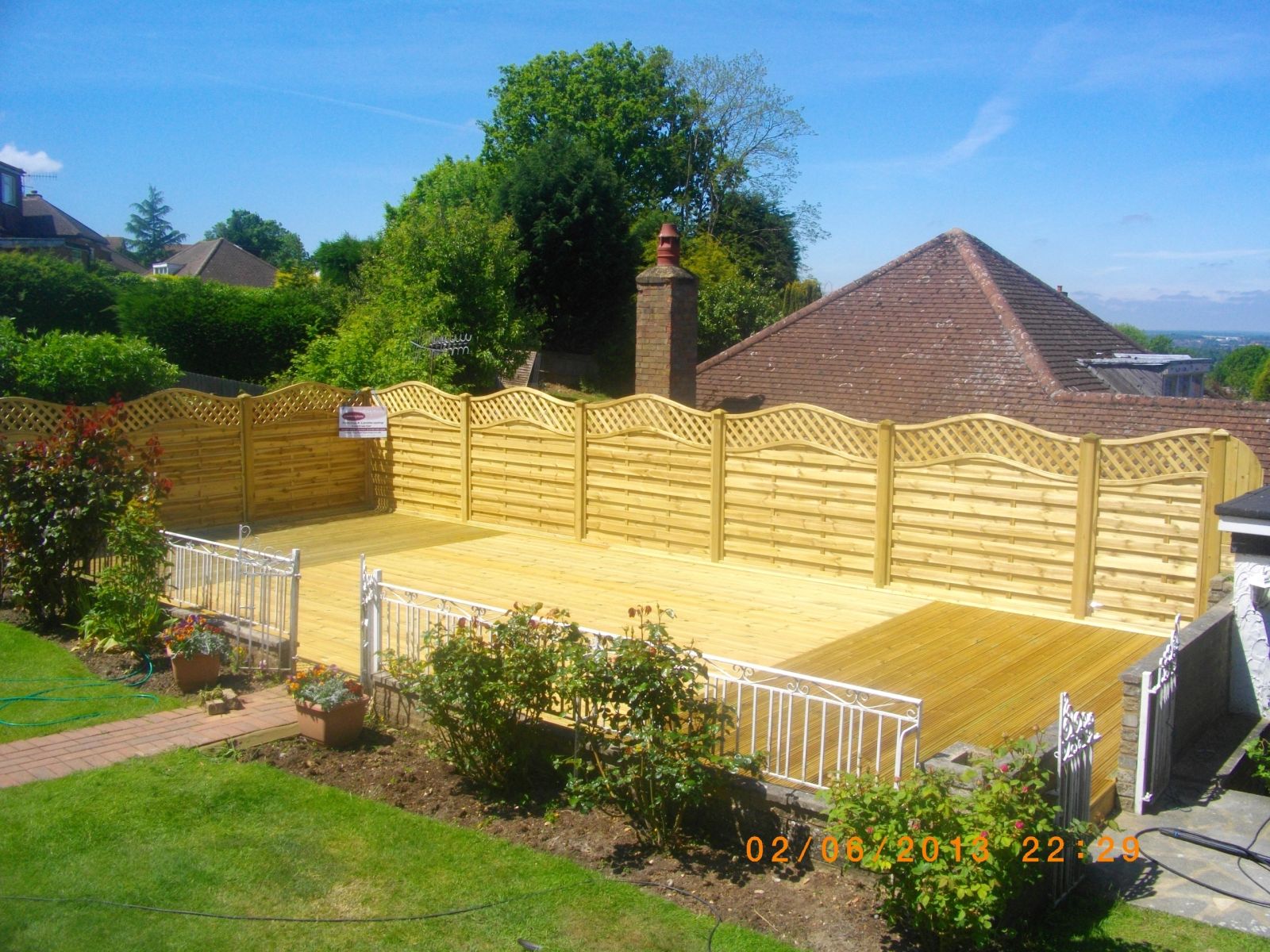
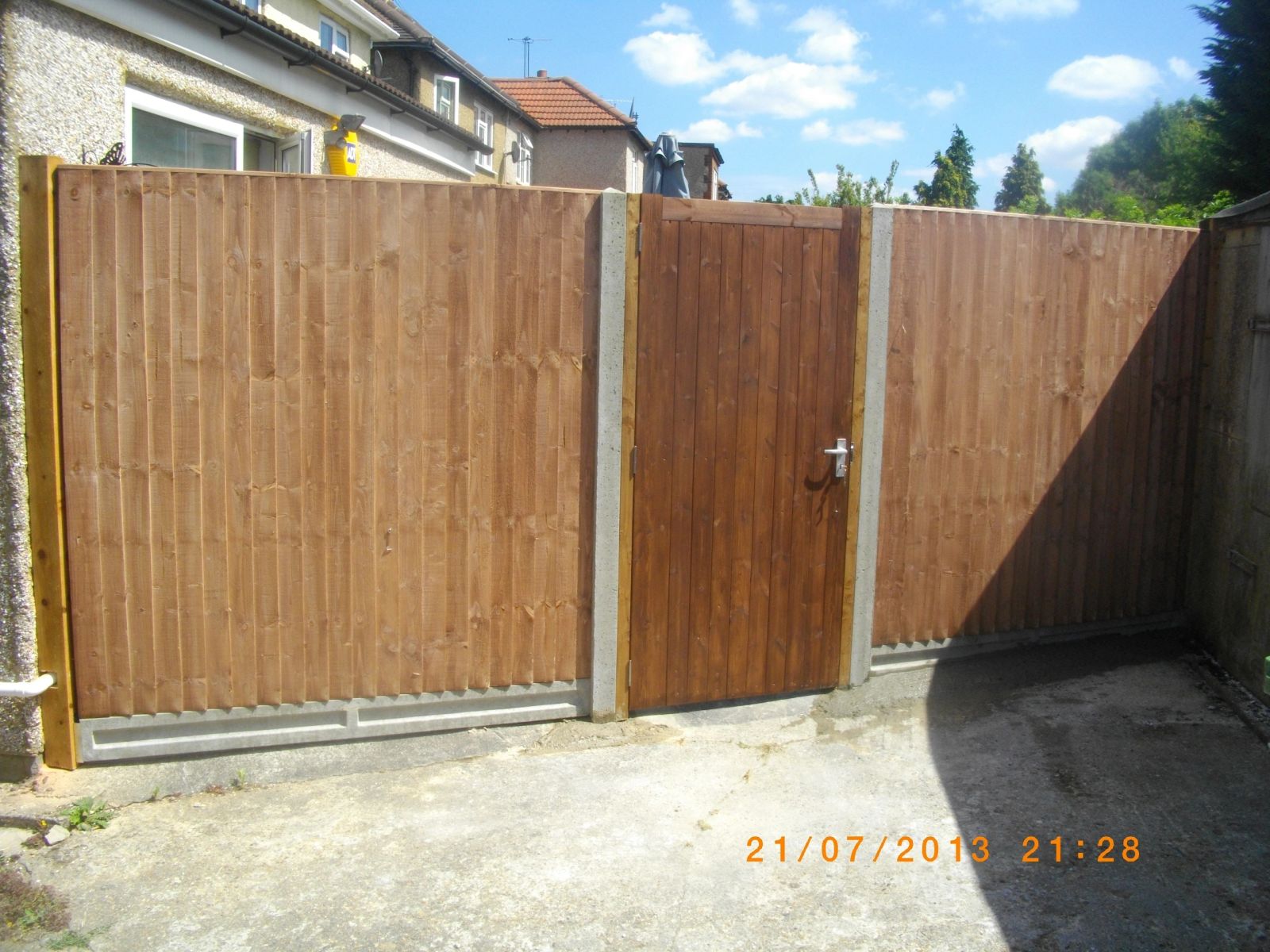
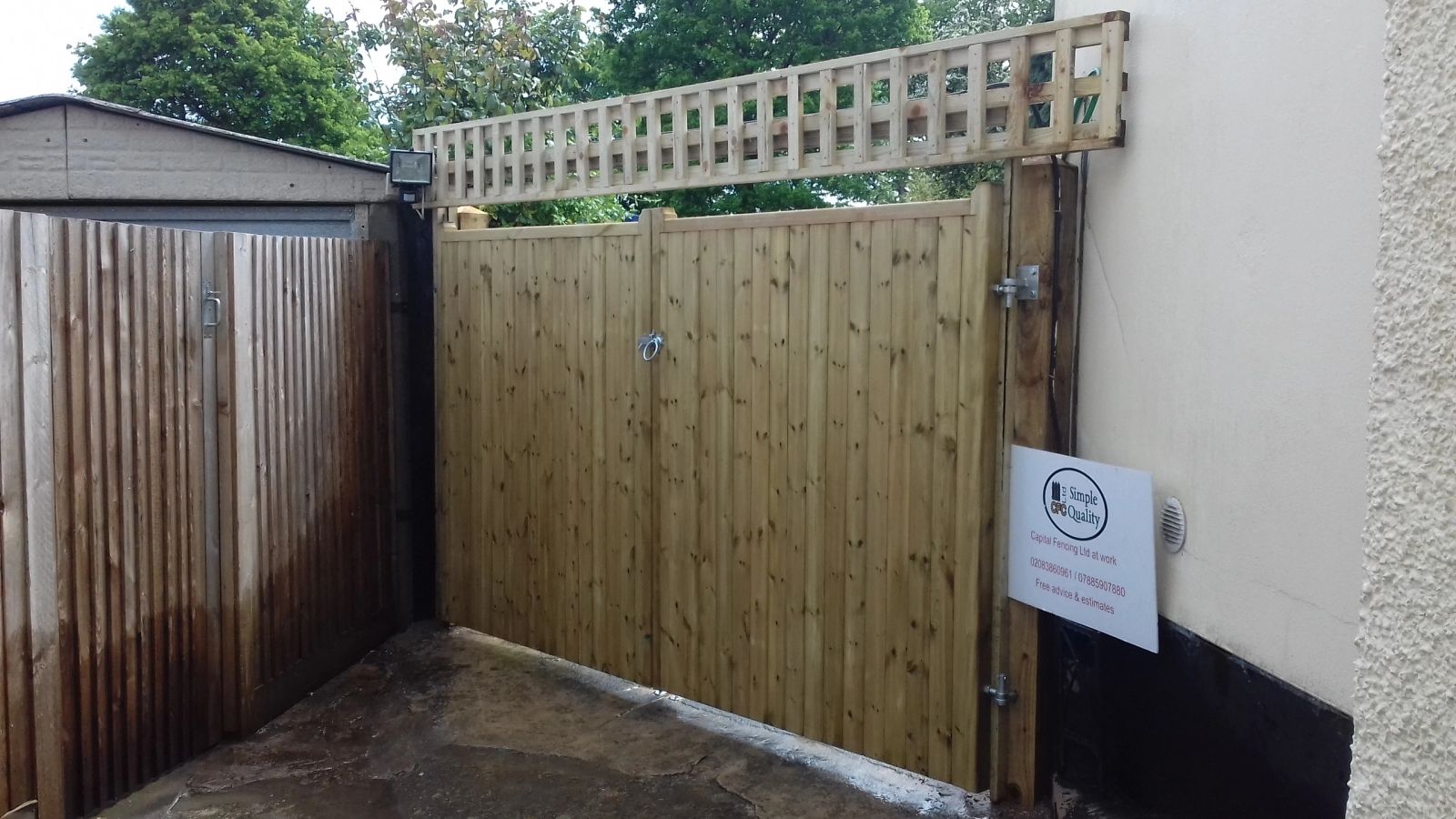
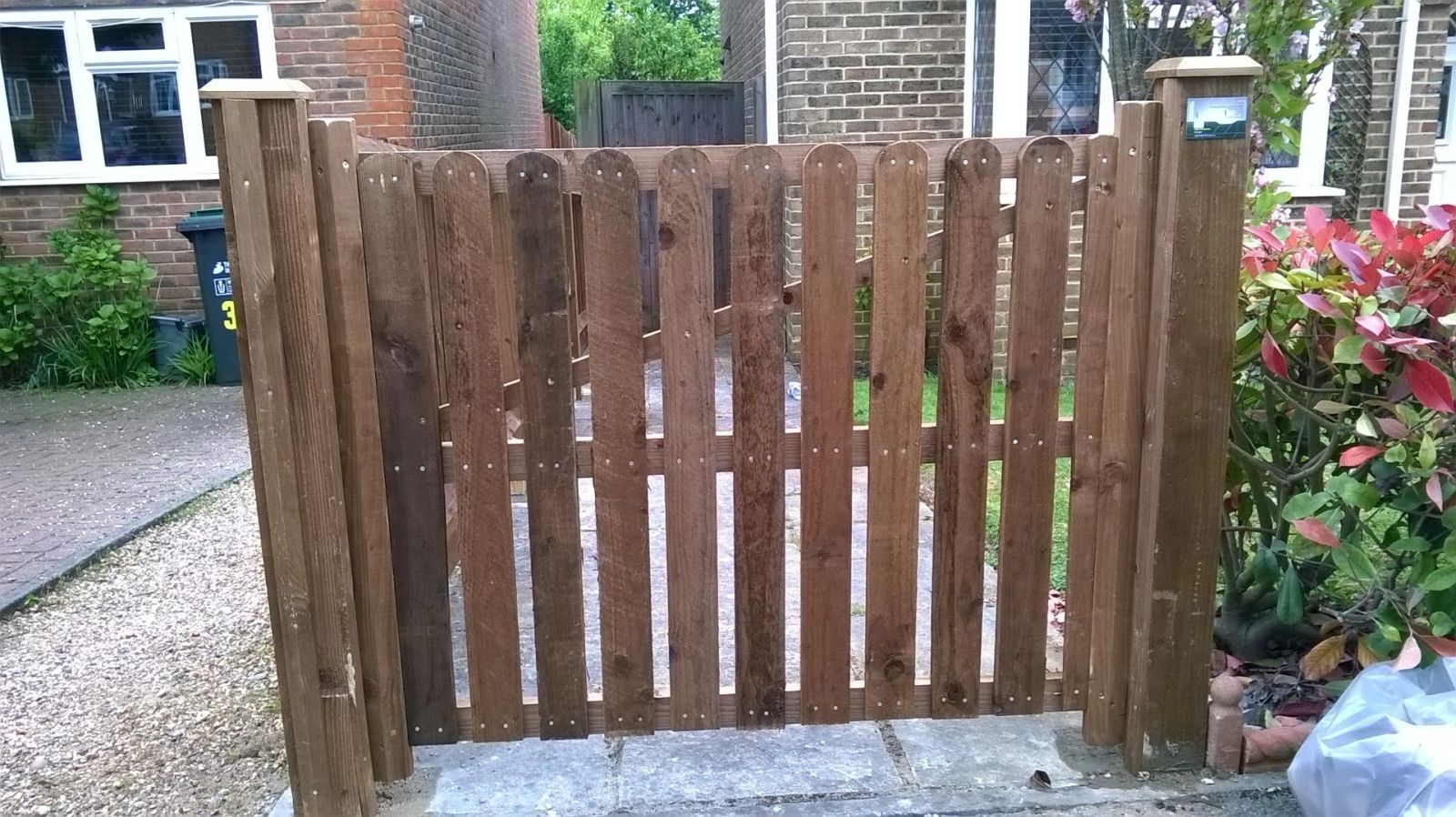
bespoke wooden gate installed by Capital Fencing in Waltham Cross (EN8)double driveway gates installed by Capital Fencing in Waltham Cross (EN8)hardwood side gate installed by Capital Fencing in Waltham Cross (EN8)metal entrance gate installed by Capital Fencing in Waltham Cross (EN8)

Side Return Gates in Waltham Cross: the practical detail

Matching a new gate to the existing boundary

A replacement gate is sized and detailed to match the piers or posts either side of the opening rather than fitted as a stock size, since a gate that doesn't sit flush against its opening looks obviously replaced even when well built.

Where the surrounding fence has a specific profile or capping detail, the gate frame is matched to it.

Opening size tolerance for a new gate

A new gate needs to be built slightly narrower than the measured opening to allow clearance for hinges, swing and seasonal timber movement, and getting this tolerance wrong either leaves a gate that binds in wet weather or one with an unacceptably large gap either side.

The right tolerance also depends on the hinge type specified, since a hinge that sits proud of the post face takes up more of that clearance than a flush-fitting type.

Matching a discontinued panel style

Panel profiles and slat widths change between manufacturers and over time, so a boundary installed a decade or more ago may use a profile that's no longer produced.

Where an exact match isn't available, the closest equivalent height and style is used and the mismatch is pointed out honestly rather than presented as an exact replacement.

Working off a ladder without scaffold on fencing jobs

Most domestic fencing and gate work is low enough to manage from stepladders rather than needing scaffold, but a ladder still needs a firm, level footing and, on soft ground, a board or plate under the feet to stop it sinking unevenly.

Working at the top of a tall gate post or over a wall with a ladder means keeping three points of contact and avoiding overreaching sideways, which is usually the point a ladder starts to slide rather than tip.

Where capping or a top rail needs fixing along an entire run at height, moving the ladder in short, frequent steps is safer and generally faster than overreaching from a single position to save moving it.

Bearer support on adjustable pedestals

Adjustable plastic pedestals supporting deck bearers let each support point be levelled individually, which is useful over an uneven concrete base, a sloped patio, or ground that isn't practical to excavate level.

Pedestal spacing still needs to follow the same span logic as timber joists, since an adjustable base doesn't change how far the bearer above it can safely span before it needs another support point.

Pedestals also raise the whole deck slightly, which is worth checking against a threshold or step height at the house before committing to the system.

Addressing a retaining sleeper wall that has started to bulge

A timber sleeper retaining wall bulges where the soil behind it has built up more pressure than the wall's bracing or embedded posts were designed to hold, often after prolonged rain has saturated the retained ground.

A wall bulging only slightly can sometimes be reinforced with additional bracing posts driven in behind it, but a wall bulging enough that sleepers have visibly separated at their joints usually needs partial or full rebuilding with proper drainage behind it.

Gas and water service positions near boundaries

Gas and water services typically run from the property boundary to the meter position in the shortest practical line, which on many plots means they cross close to or directly under a side boundary fence.

Utility companies can usually supply a service plan on request, though older properties sometimes have connections that predate accurate record-keeping and were never mapped precisely.

Where a plan shows a service crossing the fence line, hand-digging that section and setting the post either side of the marked route avoids the need to relocate a damaged supply.

Scrap value theft targeting fence fittings

Cast aluminium or brass post caps and decorative finials have occasionally been targeted for scrap value on isolated boundaries, in the same way capping rails have, so lower-value steel or composite alternatives are sometimes specified deliberately on an exposed run for that reason alone.

Where a decorative metal fitting is wanted for appearance, fixing it with concealed or one-way screws reduces how quickly it can be removed compared with an exposed standard fixing.

Board thickness and deflection

A thin board fixed across a wide unsupported span will visibly bow or deflect under its own weight or a light push long before it's anywhere near breaking, because deflection increases sharply as thickness decreases.

Doubling a board's thickness roughly increases its stiffness eightfold for the same span, which is why panel manufacturers specify a maximum bay width for a given board thickness rather than treating thickness as purely a durability choice.

On wider bays it's usually cheaper overall to add an intermediate rail or reduce the bay width than to over-specify board thickness across the whole run to compensate.

Boundary rules in National Parks and AONBs

Properties within a National Park or an Area of Outstanding Natural Beauty can have reduced permitted development rights for boundary structures, reflecting the additional planning protection these areas carry.

Material and colour choices are often more tightly guided in these areas too, even where the height itself would otherwise be permitted.

The relevant National Park authority or council planning department is the right first point of contact for confirming what applies before ordering materials.

Matching hinge fixing type to post material

A hinge that's designed to be screwed into timber needs a different fixing approach entirely on a steel or concrete post, and retrofitting a timber-style hinge onto the wrong post material without adapting the fixing method is a common cause of early failure.

Confirming the post material before selecting hinge hardware avoids ordering fittings that then need substituting on site.

Corner plots with two effective road frontages

A corner plot bounded by two separate roads can be treated as having two frontages for permitted development purposes, meaning the lower 1m height limit potentially applies on both sides rather than just one.

This is a common point of confusion, since the 'front' of the house and the road-facing boundary aren't always the same thing on an L-shaped or wraparound plot.

Checking with the local planning authority which boundaries count as fronting a highway is worthwhile before fencing any corner plot to the maximum height.

Sliding versus swing gate mechanisms

A swing gate needs clear space to open into, whether that's the driveway itself or the street, while a sliding gate runs parallel to the boundary and suits plots where that swing space isn't available.

Sliding gates need a level, unobstructed track run at least as long as the gate itself, plus a foundation for the track and rollers that copes with the gate's full weight — cutting corners here is the most common cause of a sliding gate that jams.

Swing gates are generally simpler to install and service, which is worth weighing against a sliding gate's space-saving advantage on a tight or sloping driveway.

Supporting neighbouring posts while replacing a single panel

Removing one panel from an established run can momentarily remove lateral support the panel itself was providing to its neighbouring posts, particularly on an older run where posts have relied on the panels bracing each other.

Temporary bracing on the posts either side while the old panel is out and the new one is fitted avoids one of them leaning or shifting during the brief window it's unsupported.

This is more of a concern on taller or more exposed runs than on a short, sheltered garden fence, but it's a quick precaution worth taking on any repair rather than assuming the remaining structure will hold itself steady unaided.

Fixing into a rendered wall without cracking the render

Render sits as a relatively thin, brittle coat over the masonry beneath it, so drilling straight through without care can crack or blow a patch of render around the hole rather than leaving a clean fixing point.

Marking and drilling a pilot hole slowly through the render layer first, before switching to full hammer action once through into the masonry, reduces the chance of the render cracking outward from the drill's initial impact.

Where render is already loose or hollow-sounding when tapped near the intended fixing point, it's worth choosing a different spot or repairing that patch of render first rather than fixing into a surface that's already failing.

Handling a live boundary dispute discovered during a repair

Sometimes a repair call-out uncovers that neighbours actively disagree about where the boundary line sits, which is a different situation to simply not knowing who's responsible for maintenance, and it needs resolving before any post is reset rather than worked around.

In that situation the sensible step is pausing repair work on the disputed section until the neighbours have agreed the line, since resetting a post on a disputed line can itself become evidence in the dispute.

Continuous strip footing compared with individual post holes

A continuous concrete strip footing running the full length of a fence line gives even support and a clean base for a plinth wall or kickboard, and is generally chosen where the boundary also needs a level base to close gaps under the fence.

Individual post holes are quicker and cheaper on a long straight run over consistent ground, but they leave open ground between posts that needs a separate gravel board or infill strip if a continuous barrier at ground level is also required.

Waterlogged clay and accelerated post rot

Heavy clay that holds standing water around the base of a post keeps the timber saturated for long periods, which is the single biggest driver of rot at ground level regardless of how well the timber was treated.

The visible sign is usually a post that snaps cleanly at or just below ground level while the section above ground still looks sound, because that is exactly where moisture content stays highest for longest.

A free-draining stone key at the base of the hole, rather than a solid concrete collar with no escape for water, reduces how long the timber sits wet after rain.

Overhead cables and clearance for gate operation

A gate installed beneath or near an overhead service cable needs its swing or opening path checked against that cable's height and any sag, particularly for a wider vehicle gate that might otherwise catch a low cable at its highest point of travel.

This is a straightforward site check to make before installation, since moving a gate's position after cables have been identified as a clearance problem is far more disruptive than checking beforehand.

Refixing a concrete spur that has started to pull away

A spur bolted to a repaired post can work loose if its own footing wasn't set deep enough or wide enough to resist the same wind loading that failed the original post, showing up as a visible gap opening between spur and timber.

Refixing means re-tensioning or replacing the bolts and, where the footing itself has moved, breaking it out and repouring rather than simply pulling the spur back tight against a footing that's already failed.

Wire supports for climbing plants on a fence

Climbers like clematis or trained fruit need their own tensioned wire or trellis support rather than relying on the fence panel itself, since the twisting and clinging growth habit can distort thin battens over time.

Vine eyes and straining wire fixed into posts, not into panel infill, spreads the load onto the structural timber rather than the part of the fence most likely to need replacing first.

Planning wire runs at the time a fence is built, rather than drilling into finished posts later, avoids weakening a post at exactly the point that already carries the most load.

Boundary fencing between garden and agricultural land

Where a residential garden backs onto agricultural land, stock-proof fencing standards relevant to livestock containment may be a factor the adjoining farmer expects, separate from purely decorative garden fencing considerations.

Responsibility for maintaining this kind of boundary can be split differently to a typical suburban arrangement, sometimes reflecting historic agricultural tenancy agreements rather than standard residential conveyancing norms.

Checking with the adjoining landowner and the title documents together gives a fuller picture than assuming the same rules apply as between two ordinary garden neighbours.

Whether the brief is hardwood side gate between a rendered wall and a brick pier, 780mm opening, drop-bolt into a concrete slab socket or tongue-and-groove side gate framed on adjustable ball-race hinges to cope with seasonal timber movement, we quote it from a site visit, not a photo. Waltham Cross is inside our core working patch and most jobs are booked in inside a fortnight. Roads such as Park Lane and Theobalds Lane are typical of the local layout. Eleanor Cross monument is a useful local reference point. Theobalds Park, on the town's edge, includes land with heritage designations affecting nearby boundary treatments.

Get In Touch

Get My Free Quote — 24h Response

No callout fee · Free site visit · Friendly local team covering London & Hertfordshire.

Call us
07885907880
or 02036484746
Email
capital_fencing@yahoo.com
WhatsApp
Message us anytime
Area
London & Hertfordshire
Payment
Card payments accepted

Pay by debit or credit card, bank transfer or cash once the work and price are agreed. No deposit taken online.

Request a Free Quote

We'll get back to you within 24 hours.

Free Site Visit No Callout Fee
Call WhatsAppQuote