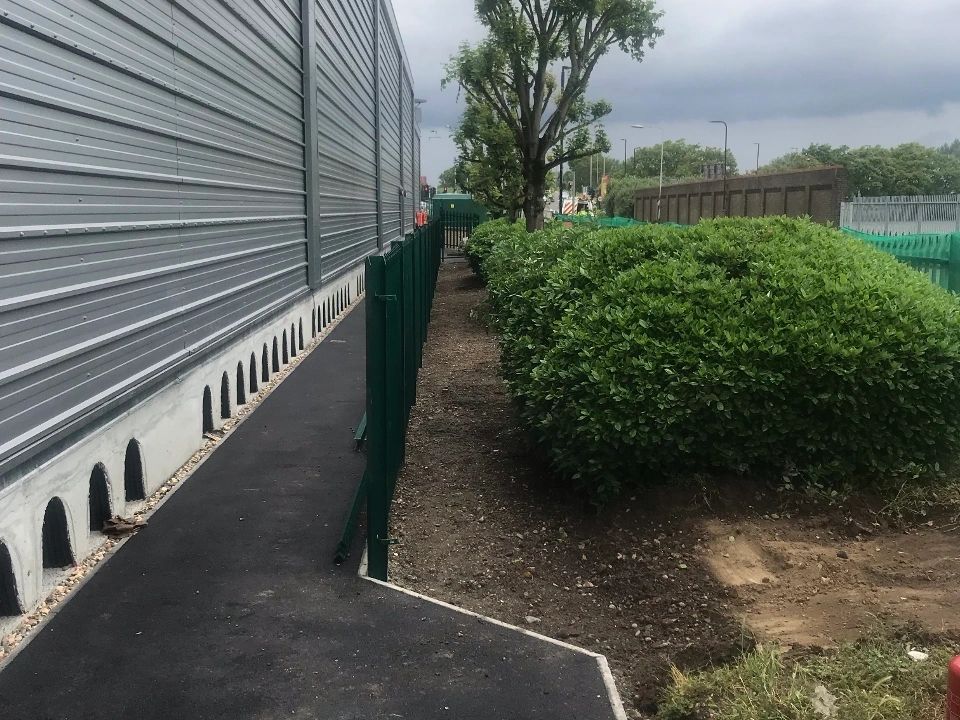
Safety on a gate that's failed near a road
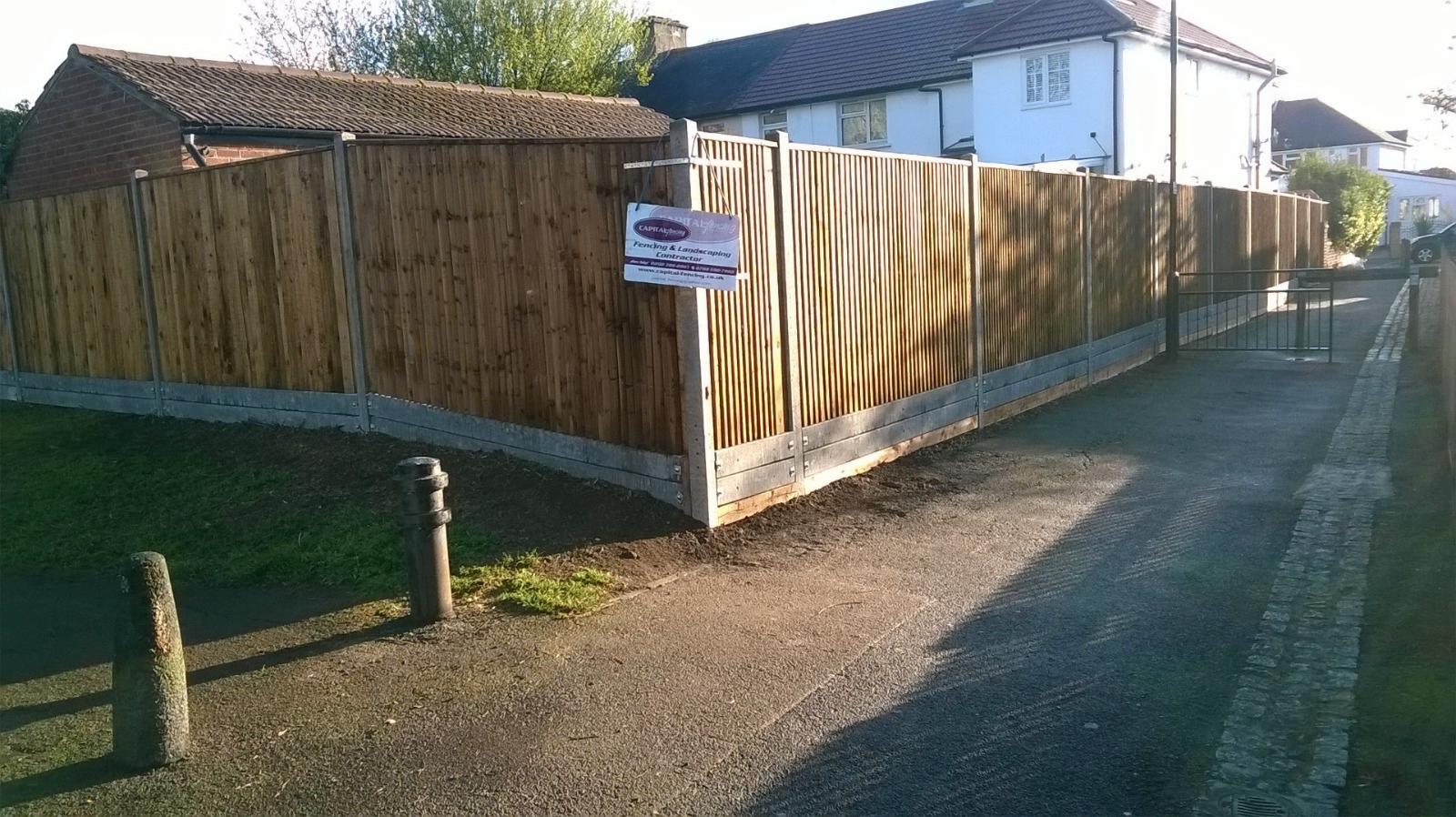
A driveway gate that's dropped or come off its hinges next to a road or shared path is treated as a priority repair, since a swinging or fallen gate in that position is a hazard to passers-by as well as an inconvenience.
We make a failed gate safe on the first visit where it poses any immediate risk, even if the full repair follows separately.
Timber grading and treatment for a security spec
Where timber is used on a security run, a denser, higher-grade section holds up to sustained pressure at gate junctions and pedestrian pinch points better than a standard fence-grade board, and pressure treatment needs to penetrate fully rather than sit on the surface.
We spec the grade to the load the section will actually see, not a single grade across the whole job.
Mesh aperture and 358 prison mesh
358 mesh — so called for its 3mm wire, 5mm x 76mm aperture — is specified where cutting or climbing resistance matters, because the small aperture won't take a boot toe or bolt-croppers the way a standard weld mesh will.
Standard weld mesh apertures run larger and cheaper for general perimeter use; the tighter 358 pattern is reserved for compounds, substations and sites where the threat model justifies the extra cost per metre.
Boundaries adjoining registered common land
Land registered as common land under the Commons Registration Act carries specific legal protections, and fencing along a boundary with it can require consent from the Planning Inspectorate under separate legislation.
This is a different and more specialist process than an ordinary planning application, reflecting the protected status of common land itself.
Anyone with a boundary adjoining registered common land should check its status carefully before assuming a straightforward fence replacement is all that's needed.
Striker plate and keep alignment
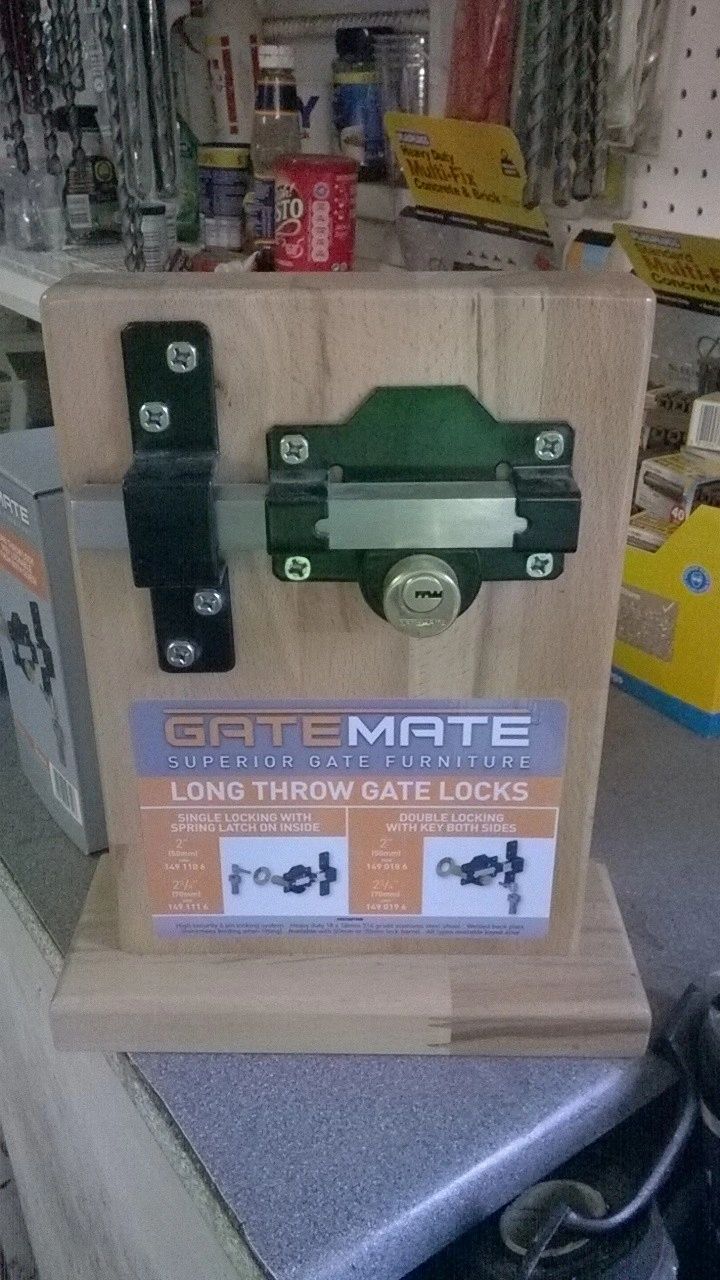
A latch that no longer catches is very often a striker or keep alignment problem rather than a broken latch, especially after a gate has dropped slightly or a post has moved seasonally.
Re-positioning the keep to match the gate's current resting position is usually quicker and cheaper than replacing the latch mechanism itself.
Temporary hoarding during other building work
Where fencing or gate work runs alongside a wider building project — an extension, a loft conversion with scaffolding, or a full renovation — a temporary hoarding or site fence often needs to go up before the permanent boundary work can start.
Temporary fencing adjoining a public footpath or road has its own public safety considerations, including visibility for pedestrians and vehicles passing the site.
Sequencing matters here — installing the final boundary fence before other trades have finished moving materials through that access point often means damage that has to be repaired before the job can be signed off.
Capping profile and how it sheds versus holds water
A flat-topped capping board holds a thin film of water after rain for longer than a capping profile with a rounded or angled top designed specifically to shed water to one side.
This difference seems minor but compounds over years, since the flat profile spends far more cumulative hours saturated, accelerating both rot and the lichen and algae growth that thrive on damp horizontal surfaces.
Choosing a weathered or torus capping profile over a plain flat board is a small upfront cost that measurably extends the component's realistic service life.
Tree root damage to a shared boundary structure
Where a neighbour's tree roots have visibly damaged a shared boundary wall or fence footing, resolving responsibility for repair can depend on tree ownership, the nature of any easement, and whether prior warning was given about root damage.
This is a fact-specific question rather than one with a single automatic answer, and can occasionally end up needing legal advice where the cost of repair is significant.
Documenting the damage with photographs and dates as it develops is useful evidence regardless of which direction a later conversation about responsibility takes.
Fixing classes for bolt-down base plates
Anchor fixings for base plates are classed by their approved use in cracked or uncracked concrete, and a fixing rated only for uncracked concrete can under-perform badly if used on an older slab that's already showing hairline cracking.
The manufacturer's technical data sheet gives pull-out and shear values for a specific concrete grade and thickness, and these figures are checked against the actual slab on site rather than assumed from a general spec sheet.
Embodied carbon in timber versus composite materials
Timber sequesters carbon as it grows and, if sourced from a well-managed forest, typically carries a lower embodied carbon footprint through manufacture than composite products that incorporate manufactured polymer alongside recycled wood fibre.
Composite products often use recycled plastic content, which offsets some of their footprint by diverting material from landfill, but the manufacturing energy involved in producing the composite board itself is generally higher than sawing and treating solid timber.
Comparing the two fairly also needs to account for service life, since a material lasting genuinely longer before replacement can offset a higher manufacturing footprint over the full life of the fence.
Galvanised versus stainless steel fixings on a coastal or corrosive site
Standard galvanised fixings perform well on most inland commercial sites, but a coastal, industrial or otherwise chemically aggressive environment accelerates corrosion at the fixing points well beyond what the same fence would experience on a typical inland yard.
Specifying stainless steel fixings instead of galvanised on an exposed site increases the outlay at installation but avoids a cycle of repeated fixing replacement that a standard galvanised specification would otherwise need in that environment.
How a gate rebuild is sequenced
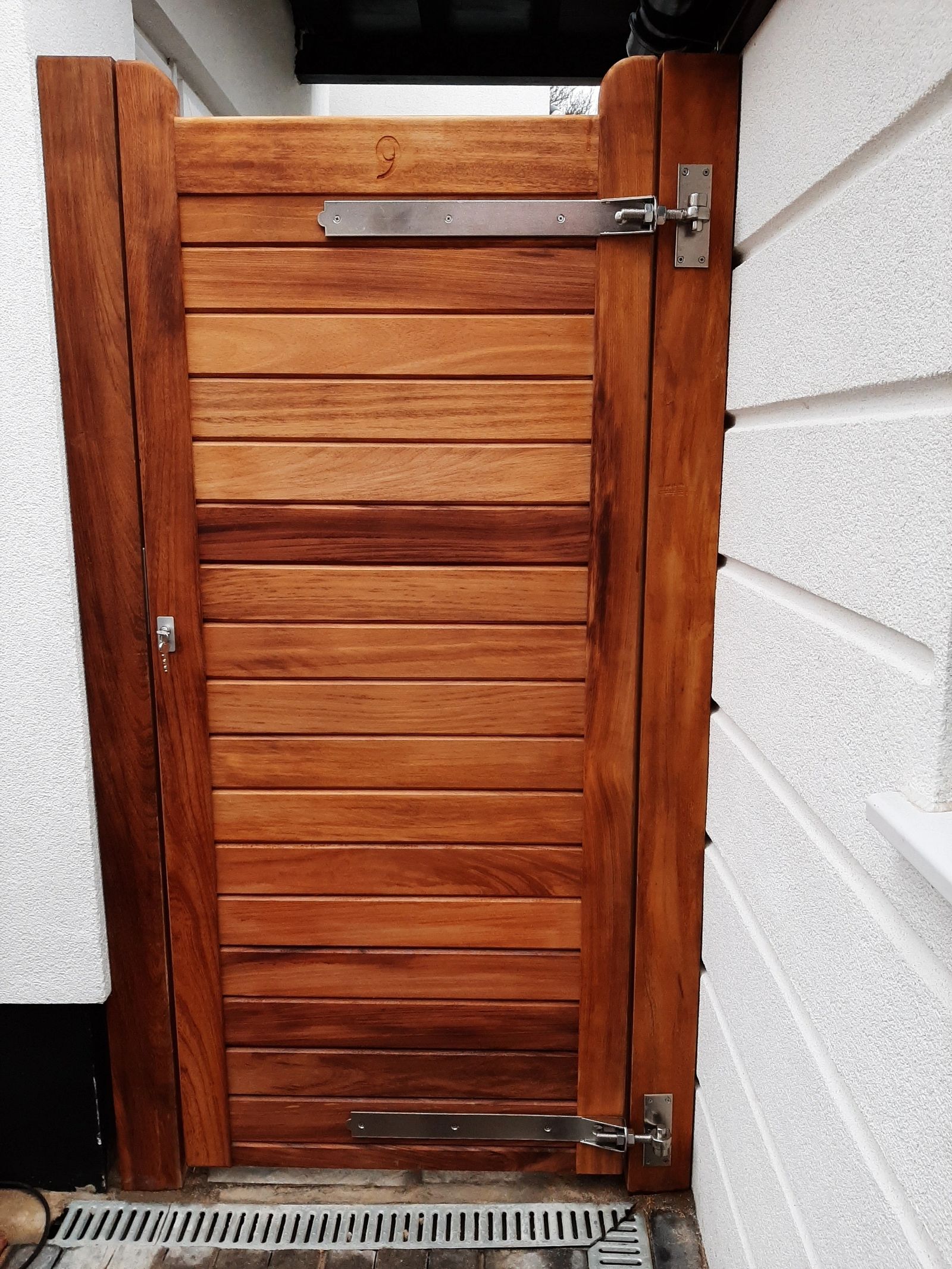
Where a frame needs rebuilding rather than just re-hanging, the frame is squared and fixed first, then the existing gate face is re-hung onto it, keeping as much of the original timber as is still sound rather than starting from scratch.
Hinges and latches are fitted last, once the frame and gate are confirmed square and level.
Pressure washing a fence before assessing the extent of repair needed
Algae, dirt and old flaking coatings can hide the true condition of timber underneath, so a light clean before a repair assessment sometimes reveals splits, rot or fixing corrosion that wasn't visible under the surface grime.
Pressure washing needs a gentle setting and some distance from the timber face, since an aggressive jet held too close can strip soft surface fibres from weathered wood and make marginal timber look more damaged than it actually is.
Post-support metal spikes and why they loosen
A drive-in metal spike relies entirely on ground compaction around the socket for stability, so any repeated wind loading or ground softening after heavy rain gradually works the socket wider and the post starts to rock.
Once a spike has loosened it rarely re-tightens on its own; the usual fix is a larger spike bedded in fresh concrete or a switch to a concreted timber post if the ground repeatedly won't hold a spike.
Fastener embedment depth in timber
A fixing's holding strength in timber depends heavily on how far its threaded or ring-shanked section penetrates into the receiving timber, not just its total length, since a screw mostly passing through a thin outer board contributes little grip in that board alone.
General guidance for screwed timber connections aims for at least the full thread length engaged in the receiving member, which for a typical fencing fixing means selecting screw length based on both boards' combined thickness rather than the visible board alone.
Under-length fixings that barely reach the receiving timber are a common, easily overlooked cause of boards or rails working loose within a season, particularly where a shorter screw was substituted for convenience during fitting.
Letterplates fitted into gate doors
A letterplate is occasionally fitted into a solid garden or side gate door serving as a secondary entrance, and its position needs to clear internal ledges, braces or a deadlock case before cutting the opening.
Weather sealing around a letterplate in an exterior gate door matters more than on a covered porch door, since the opening faces the weather directly with no canopy above it.
Surface preparation before re-coating
Re-coating over an existing failed or flaking finish without preparation traps whatever is underneath — old paint fragments, algae, or degraded stain — and the new coat fails at the same points within a season.
A light sand or wire-brush pass to remove loose material, followed by a full dry-out period, gives a fresh coat something sound to key into rather than a film sitting over compromised timber.
Timing matters as much as preparation: coating damp timber traps moisture under the new film and is one of the most common reasons a re-coat fails faster than the original application.
Slotted versus morticed concrete posts
Slotted concrete posts have a continuous groove cast into two or four faces so panels slide down into the slot from above, which makes them fast to erect but means every panel in a run has to come out to replace one in the middle.
Morticed concrete posts have discrete rectangular pockets for arris rail ends instead, matching closeboard or panel construction where individual boards or panels can be replaced without disturbing the rest of the run.
The choice is largely dictated by the fencing system being used — panel fencing wants slotted posts, boarded fencing wants morticed — rather than being a free preference at quote stage.
UV stabilisers in composite and PVC fencing
UV stabiliser additives are blended into composite and PVC fencing products during manufacture to slow the surface degradation and colour fade that ultraviolet exposure otherwise causes in polymer materials over time.
Products with a lower proportion of UV stabiliser, often reflected in a lower price point, tend to show chalking, a dusty faded surface, and colour loss earlier than better-stabilised equivalents exposed to the same sunlight.
South and west-facing runs receive substantially more cumulative UV exposure than shaded or north-facing runs, so the same product can visibly fade at different rates depending purely on orientation and surrounding shade.
Choosing rail section size for a security run
Rails on a palisade or railing run are sized in cross-section to the span between posts, not to the pale height alone, because a rail that's too slender for its span will visibly deflect under a leaning or pushing load.
A heavier box-section or channel rail is specified on wider bays or taller runs, and increasing bay width to save on posts only works if the rail section is upsized to match the extra span.
Checking for adjacent drainage runs before excavating
A land drain or perimeter drainage run laid to keep a garden from waterlogging is easy to miss during a routine dig, since it's often shallower and less obviously marked than a mains service.
Digging through one doesn't usually cause an immediate problem visible on the day, but it can quietly reintroduce a waterlogging issue the drain was originally installed to solve, sometimes not noticed until the following wet season.
Where a garden has a known history of standing water that was previously addressed with drainage work, it's worth asking the client what's down there before digging rather than finding out by breaking through a pipe.
Planting distances from a new fence line
Shrubs and hedging planted hard against a new fence eventually push against the panel faces as they mature, trapping moisture against the timber and making later maintenance or panel replacement far harder without disturbing established roots.
A gap of a few hundred millimetres, sized to the expected mature spread of the species chosen, keeps airflow behind the fence and leaves room to work if a panel needs replacing years later.
This is worth raising at the design stage, since it is far easier to plan spacing before planting than to relocate mature shrubs once they have grown into the fence line.