Matching a new run to an existing style
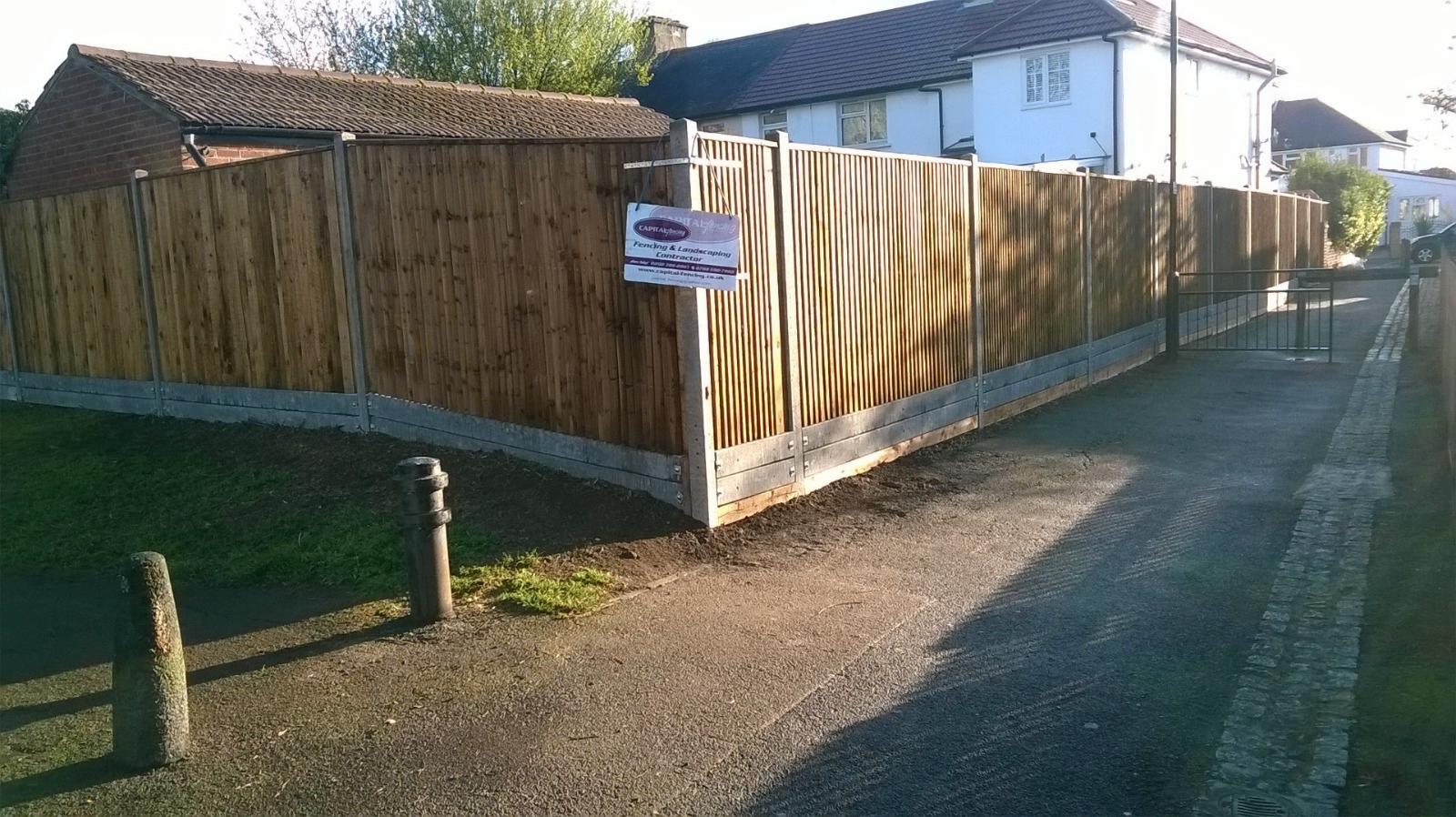
Matching an extension or repair to an existing fence starts with identifying the actual system in use — panel type, post type, rail count, board profile — rather than assuming any similarly-priced product from a different range will look consistent alongside it.
Weathered timber and faded composite are both difficult to match exactly with new material, so a visible seam between old and new sections is often unavoidable and worth agreeing with the client at quote stage rather than promising an invisible join.
Where a manufacturer has changed a profile or a colour range since the original was fitted, matching sometimes means re-doing a full run rather than extending it, which is worth flagging before ordering a small top-up quantity.
Wayleaves for overhead cables crossing a boundary
A wayleave is an agreement, sometimes recorded on the title, allowing a utility company to run cables or equipment across private land, which can include overhead lines crossing directly above a garden boundary.
Fence or gate height near a low-slung overhead cable is worth checking against the clearance the utility company expects, particularly for any structure involving machinery or long materials being lifted into place.
Where an overhead line crosses close to planned fence or gate posts, contacting the relevant utility company for guidance before work starts is the sensible precaution.
Bat and bird nesting season timing
Wild bird nests are protected while in use under the Wildlife and Countryside Act, which in practice means hedge-cutting and dense vegetation clearance along a boundary is generally best avoided during the main nesting season, roughly March to August, unless the hedge has been checked and confirmed clear.
Bats are protected year-round, but works affecting their roosting sites — old sheds, mature trees with cavities, ivy-clad walls — carry particular risk in spring and autumn when bats are moving between summer and winter roosts.
On any boundary job involving significant vegetation or old structure removal, a quick visual check for active nests or signs of bat use before starting is a simple way to avoid inadvertently committing an offence.
Hitting shallow services and CAT scanning
Electricity, gas and water connections into a house are often shallower than people expect, sometimes under 300mm in an older garden, well within reach of a hand auger let alone a mechanical one.
A cable avoidance tool (CAT scan) before digging a new post line is standard practice near any suspected service run, and is far cheaper than the cost and risk of striking a live cable or a gas pipe.
Where a scan can't rule out a service with confidence, hand-digging trial holes to confirm depth and position before committing to auger the rest of the line is the safer approach.
Ground clearance for airflow
Leaving a consistent gap, typically 50-75mm, between the underside of a fence panel or gate and the ground lets air circulate around the bottom rail, which is usually the first part of a timber fence to rot.
That clearance also stops the panel wicking moisture directly from wet grass or standing puddles after rain, something ground contact makes almost unavoidable over time.
On sites with soft or uneven ground, a gravel board fitted below the panel achieves the same protection while keeping the panel itself off the soil entirely.
Fitting band-and-gudgeon hinges correctly
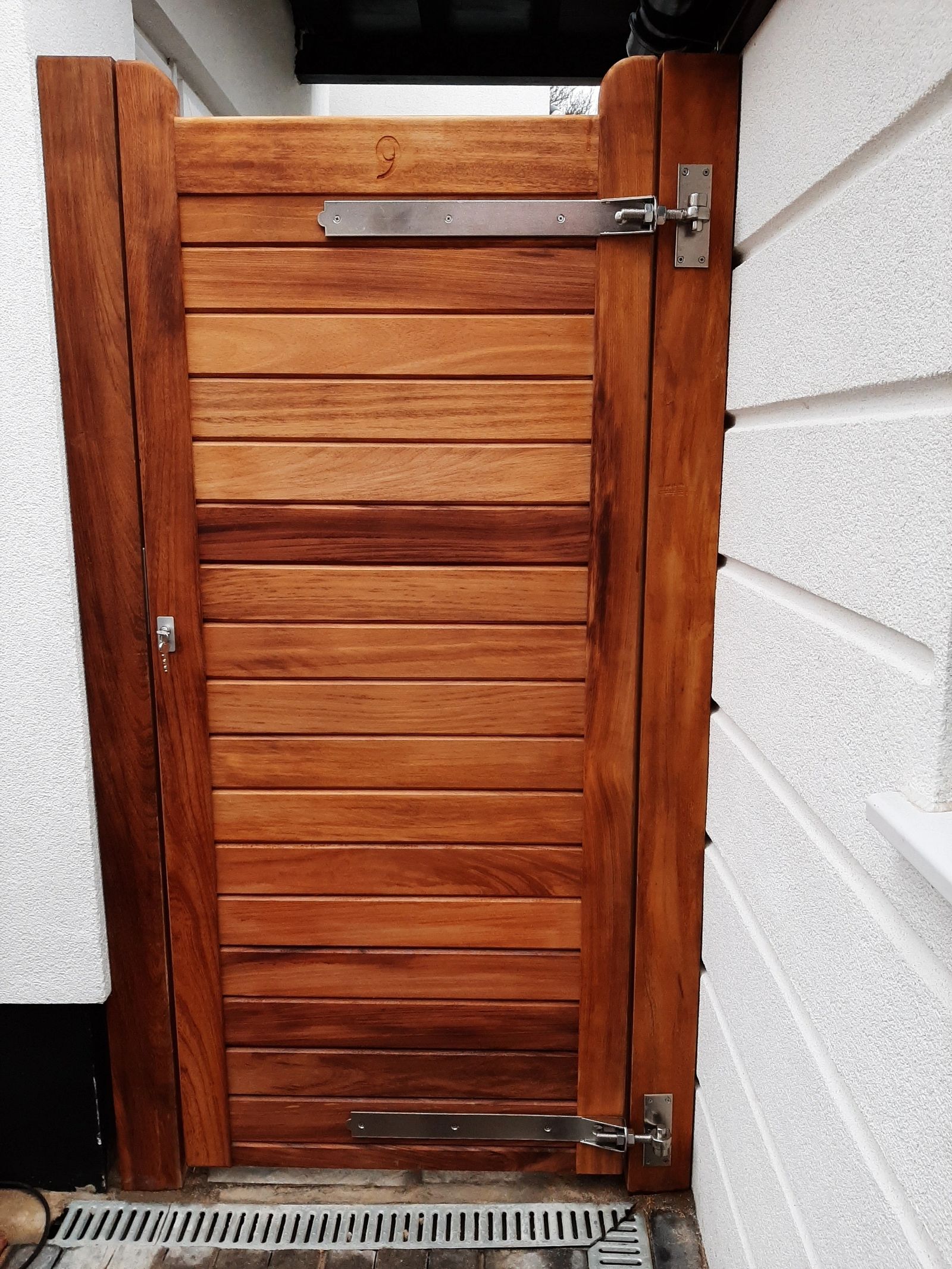
A band-and-gudgeon hinge splits into a band that's strapped across the gate and a gudgeon pin fixed to the post, and the two need to be perfectly vertical relative to each other or the gate will bind or swing awkwardly through its full arc.
Getting the gudgeon pins plumb and in line during fitting matters more with this hinge type than with a butt hinge, since there's no simple way to adjust alignment after fixing.
Maintenance intervals by material
Untreated or lightly treated softwood fencing generally needs a re-stain or re-oil every one to two years to keep its protective coating intact, while a well-detailed treated softwood fence left to weather naturally can go much longer between any active maintenance.
Composite and uPVC fencing need little more than an occasional wash down, since the material itself doesn't need a protective coating, though fixings and any timber sub-frame beneath it still age on their own separate schedule.
Metal railings and gates need their finish checked periodically for scratches or corrosion starting points, since a small breach in galvanising or powder coating left untreated will spread under the coating rather than staying contained.
Bollards and hostile-vehicle basics
Bollards protect a pedestrian area or building frontage from vehicle incursion and are specified separately from the fence line itself, usually to a recognised impact rating for the vehicle speed and mass expected.
Fixed, removable and retractable bollards each suit different access patterns — removable bollards are common where delivery vehicles need occasional access through an otherwise protected frontage.
Storm damage triage
After a storm, triage prioritises anything posing an immediate hazard — a fence leaning over a path, a snapped post near a driveway — ahead of cosmetic damage further along the same run.
A wider survey of the whole boundary is worth doing at the same visit, since storm stress often weakens bays that haven't visibly failed yet but are more likely to fail in the next event.
Tree Preservation Orders and a post line
A Tree Preservation Order protects specified trees from work that would damage them, and that protection extends below ground to root systems, not just the visible trunk and canopy.
Digging post holes within a protected tree's root protection area can count as damage even without touching the trunk, so it's worth checking the local TPO register before finalising a post line near a mature tree.
Where a TPO applies, the local authority can require an application before any groundworks proceed, and unauthorised damage carries meaningful penalties.
Digging near land drains
Older gardens, especially those on heavier clay, sometimes have unrecorded clay pipe or perforated plastic land drains laid to relieve waterlogging, and these rarely appear on any plan.
Hitting one with an auger usually shows up as a sudden drop in resistance followed by water pooling in the hole from a direction that doesn't match the water table generally on site.
A damaged land drain should be reconnected or rerouted rather than just backfilled over, since a broken run can redirect water against a post base for years afterwards.
Hedgerows as a boundary feature
Some countryside and village hedgerows are protected under the Hedgerow Regulations 1997, which can restrict removing an 'important' hedgerow even where it marks a private boundary.
This mainly affects longer, older hedges in rural or semi-rural locations rather than typical suburban garden hedges, but the distinction isn't always obvious without checking.
Where a fence is planned to replace or run alongside a hedge, it's worth confirming with the council whether the hedgerow itself has any protected status before removal work begins.
Galvanic corrosion between dissimilar metals
Galvanic corrosion occurs when two dissimilar metals are in direct contact in the presence of moisture, with the less noble metal corroding preferentially as electrons flow between the two through the electrolyte formed by the damp.
Aluminium fixed directly to steel, or stainless steel fixings used with certain aluminium alloys, are a commonly cited combination worth checking, since the galvanic reaction can accelerate corrosion of the aluminium component well beyond what it would experience alone.
Isolating dissimilar metals with a plastic washer, sleeve or compatible coating breaks the direct contact and largely prevents the reaction, which is a standard detail on aluminium gate fittings using steel fixings.
Strimmer damage at the fence-to-lawn edge
Repeated strimming right up against the base of gravel boards or post bases scars the timber surface and removes any protective coating exactly at the point most exposed to ground moisture.
A mowing strip of paving or gravel along the base of the fence line removes the need to strim that close, protecting both the timber finish and the lawn edge itself.
This is a small design addition worth suggesting on new installs, since the damage it prevents is otherwise mistaken for premature timber failure rather than a maintenance habit.
Keeping post hole depth consistent along a run
A hole dug slightly shallower than its neighbours because the ground got harder partway down is an easy shortcut to take under time pressure, but it leaves that one post less securely founded than the rest of the run.
Marking a consistent depth on the digging tool itself, rather than judging depth by eye each time, keeps every hole to the same standard regardless of how the ground conditions vary along the run.
Where genuinely harder ground forces a shallower hole at one point, compensating with a wider hole and more concrete at that post is a better response than simply accepting reduced depth and hoping it holds.
Working off a ladder without scaffold on fencing jobs
Most domestic fencing and gate work is low enough to manage from stepladders rather than needing scaffold, but a ladder still needs a firm, level footing and, on soft ground, a board or plate under the feet to stop it sinking unevenly.
Working at the top of a tall gate post or over a wall with a ladder means keeping three points of contact and avoiding overreaching sideways, which is usually the point a ladder starts to slide rather than tip.
Where capping or a top rail needs fixing along an entire run at height, moving the ladder in short, frequent steps is safer and generally faster than overreaching from a single position to save moving it.
Splash-back staining from adjacent paving
A fence running alongside a patio, path or driveway picks up rain splash-back off the hard surface, which carries fine grit and, on older paving, residual cement dust that leaves a pale tide-mark along the lowest boards.
This band of discolouration is separate from general weathering and won't fade with the rest of the timber, since it is a surface deposit rather than UV bleaching.
A gravel strip or planting border between paving and fence line reduces the splash distance, and a periodic wash-down of just the lower boards keeps the tide-mark from building up permanently.
Trading off fence height against site visibility from outside
Increasing a boundary's height improves resistance to climbing but also reduces visibility into the site from the street, which can work against security by giving an intruder who does get over the fence more concealment once inside.
A part-solid, part-mesh design, or a solid lower section topped with an open mesh upper section, is one way to gain height without losing all visibility, balancing the climbing deterrent against the loss of natural surveillance from passers-by.
Welded versus woven mesh
Welded mesh is formed from wires fused at each intersection, giving a rigid grid that holds its shape well and resists distortion under point loads such as someone leaning or climbing on it.
Woven mesh, including chain link, has wires interlaced rather than fused, which lets the whole panel flex and absorb impact rather than transferring load to a single joint, but it can also sag or distort more visibly over time.
Welded mesh is generally preferred where a crisp, rigid appearance matters, while woven mesh is favoured for larger open areas like sports enclosures where some give under impact is actually beneficial.
Decking fixings visible versus hidden
Face-fixed decking is screwed directly down through the board top, which is simple, cheap and easy to replace a single board on, but leaves visible screw heads that can work slightly proud over time as the timber moves.
Hidden fixing clip systems fit into the board's grooved edge and screw down into the joist from the side, giving an unbroken top surface, but they generally cost more per board and make it harder to lift a single damaged board without disturbing its neighbours.
Composite boards are more often specified with hidden clip systems since the clean, screw-free look is part of the appeal that justifies the material's higher cost.
Bin store enclosure security detailing
A bin store enclosure needs a lockable gate wide enough for collection crews to manoeuvre bins, balanced against keeping the enclosure secure between collections so it isn't used as a step-up point over an adjoining fence.
Louvred or slatted screening around a bin store gives ventilation while still blocking a direct climb line, and the roof of the store itself is worth capping or sloping so it can't be stood on.
Ring latch pull mechanisms
A ring latch uses a rotating ring handle connected to an internal bar, giving a pulling action from either side of the gate rather than the push-down action of a thumb latch, and is common on cottage-style timber gates.
The ring's fixing pin and the bar's guide staples are the usual wear points, since repeated twisting loosens the pin over time even when the bar itself is undamaged.